They were the faces that defined eras, the voices that echoed through generations, and the talents that shaped the very fabric of Hollywood. Yet, what if I told you that some of these stars didn’t just witness the golden age of cinema—they lived to see it transform beyond recognition? Their lives spanned decades, their stories woven into the history of film itself. And as they approached the century mark, their legacies only grew more profound.
But here’s the thing: not all of them reached that milestone. Some came achingly close, leaving us with a bittersweet reminder of mortality. Still, their contributions remain immortal, etched in the celluloid of our memories.
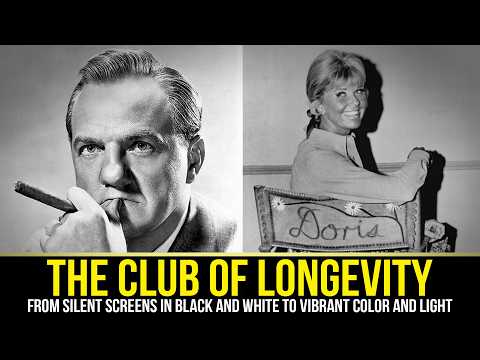
Take Doris Day, for instance. With her golden voice and radiant smile, she captured America’s heart from the moment she stepped into the spotlight. But did you know she was nearly 100 when she passed? At 97, she left behind a legacy of warmth and generosity, dedicating her later years to animal welfare. Her story is just one of many.
Then there’s Carl Malden, the everyman actor with the unforgettable face. He won an Oscar for ‘A Streetcar Named Desire’ and later became a TV staple in ‘The Streets of San Francisco.’ When he died at 97, Hollywood lost one of its most respected character actors.
Eli Wallach, just shy of 98, brought a unique blend of humor and gravitas to every role. From ‘The Magnificent Seven’ to ‘The Good, the Bad and the Ugly,’ he proved that character actors can steal the show. He even played Mr. Freeze in the 1960s ‘Batman’ series! His passion for acting never waned, and he worked well into his 90s.
Lillian Gish, the silent film pioneer, helped give Hollywood a soul. At 99, she left behind a legacy that redefined screen acting. She continued acting into her 90s, culminating in a poignant role in ‘The Whales of August.’ Her dedication to the craft was unmatched.
June Foray, the queen of animation, lent her voice to countless beloved characters. She fought tirelessly for animation to be recognized by the Academy, leading to the creation of the Best Animated Feature category. She passed away just two months shy of her 100th birthday, leaving a legacy that animator Chuck Jones perfectly summed up: “June Foray is not the female Mel Blanc. Mel Blanc was the male June Foray.”
Bob Hope, the one-man institution of entertainment, lived to be 100. He hosted the Oscars 19 times and entertained troops overseas for decades. His wit and charm made him a national treasure, and his legacy of laughter still resonates today.
Kirk Douglas, fierce and unapologetic, made it to 103. He founded his own production company and brought classics like ‘Spartacus’ to the screen. His impact on Hollywood is undeniable, even as his personal life cast shadows.
Olivia de Havilland, the picture of class and strength, lived to 104. She won a landmark court case against Warner Bros. that changed actors’ contracts forever. Her elegance and resilience remain an inspiration.
Louise Rainer, the first actor to win back-to-back Oscars, lived to 104. She left Hollywood behind for a quieter life in Europe, proving that fame isn’t everything. Her independence and brilliance shine through her story.
Norman Lloyd, the last living connection to old Hollywood, reached 106. He worked with Hitchcock, Welles, and Chaplin, and later charmed new generations in ‘Dead Poets Society’ and ‘Trainwreck.’ His life was deeply intertwined with Hollywood’s history.
These stars may be gone, but their light still shines through the stories they left behind. And as we remember them, we can’t help but wonder: who will be the next to join this exclusive club of centenarians? The answer might surprise you.
But before we get to that, let’s linger a little longer on the ones who came so close. Because there’s a quiet poetry in a life that stretches across an entire century—and an equally quiet ache in one that stops just short of the finish line. Each of these performers carried pieces of Hollywood’s soul with them, and when they left, a little of that soul went too.
Consider the ones who didn’t quite make the cut. Some were taken by illness, others by simple exhaustion after decades in the spotlight. Yet their names still echo through the corridors of film history, whispered by those who remember what it felt like to watch them light up a screen.
And that’s the thing about longevity in Hollywood—it isn’t just about years. It’s about relevance. It’s about staying vital in an industry that chews up the young and spits out the old without a second thought. The centenarians we celebrate weren’t just lucky; they were resilient, adaptable, and fiercely protective of their craft.
Take the case of those who reached their late nineties but never saw triple digits. Their stories are just as compelling, just as worthy of remembrance. They were the bridge between generations, the living memory of a Hollywood that no longer exists. When they spoke, people listened—not just out of respect, but out of genuine curiosity about a world that had vanished.
And here’s where it gets interesting. The club of Hollywood centenarians isn’t as small as you might think. There are more of them than you’d expect, scattered across the decades, each with a story that could fill a book. Some are household names. Others are forgotten by all but the most devoted film historians. But they all share one thing: they outlasted the odds.
So who else belongs in this exclusive circle? Who else defied the expectations of an industry that rarely rewards longevity?
The answer, as it turns out, includes a few names that might surprise you—and one in particular that will leave you speechless.
Let’s start with a name that still sparkles with old-world glamour: Gloria Stuart. Best remembered as the elderly Rose in James Cameron’s ‘Titanic,’ she was a genuine star of the 1930s, working alongside the likes of Claude Rains and Boris Karloff in horror classics like ‘The Invisible Man.’ When she died in 2010 at the age of 100, she had outlived nearly everyone from her era—and proved that a career could be reborn at 87.
Then there’s George Burns, who made it to 100 with a cigar in one hand and a joke in the other. He started in vaudeville, moved to radio, then television, and won an Oscar at 80 for ‘The Sunshine Boys.’ He famously said, ‘You can’t help getting older, but you don’t have to get old.’ He lived by that creed until the very end in 1996.
And who could forget Bob Hope‘s comedy partner in crime, Phyllis Diller? She didn’t quite hit the century mark—she died at 95—but her self-deprecating humor and wild wigs made her a pioneer for women in comedy. She once joked, ‘My photographs don’t do me justice—they look just like me.’ A legend in every sense.
But here’s where the story takes a turn. Not every centenarian was a household name. Some were character actors, the ones who never got top billing but whose faces you’d recognize instantly. Take Norman Lloyd—we mentioned him earlier, but his story deserves a closer look. He was blacklisted in the 1950s, yet he kept working, directing and producing, and later became a mentor to young actors. At 106, he was still giving interviews, still cracking jokes, still reminding everyone that Hollywood’s golden age wasn’t just about the stars—it was about the survivors.
And then there’s Mickey Rooney, who didn’t quite reach 100—he died at 93—but his career spanned nearly his entire life. From child star to teen idol to character actor, he did it all. He once said, ‘I’ve been in the business since I was 15 months old. I’ve never had a real job.’ That’s not just longevity; that’s a life lived entirely on screen.
So what’s the common thread? What did these performers have that others didn’t? It wasn’t just luck or genetics. It was a refusal to quit. They kept working, kept reinventing themselves, kept showing up. And in doing so, they became more than just actors—they became living history.
But the story doesn’t end here. There are still a few names left to uncover, and one of them might just be the most surprising of all. A star whose career was almost forgotten, whose legacy was nearly erased—and who lived to see a renaissance that no one could have predicted.
That star was Mary Carlisle, a blonde ingénue of the 1930s who sang alongside Bing Crosby and danced through a string of musicals before walking away from Hollywood at just 30. She lived quietly for decades—until fans rediscovered her, and she became the last surviving star of her era. She died in 2018 at 104, her legacy rescued from obscurity.
And then there’s Norman Lloyd‘s quiet counterpart: Patricia Morison, who originated the role of Kate in ‘Kiss Me, Kate’ on Broadway and lived to 103. She outlived nearly everyone who ever shared a stage with her. Her secret? She never stopped performing, even in small venues, until her body finally said enough.
But the most surprising name of all might be Ruthie Tompson. You’ve never seen her face, but you’ve seen her work. She was one of Disney’s first ink-and-paint artists, working on ‘Snow White’ and ‘Pinocchio.’ She lived to 111—the oldest Disney employee ever. She rode her bike to the studio until she was 85. When asked about her longevity, she shrugged: “I just kept moving.”
That’s the thread, isn’t it? Not fame, not fortune—just motion. These centenarians didn’t retire into silence; they kept creating, kept connecting, kept showing up. They remind us that a life in Hollywood isn’t measured in Oscars or box office—it’s measured in moments that outlast the credits.
So as the lights dim on this golden era, we’re left with a question that lingers like the last note of a song: Who among today’s stars will still be with us at 100—and what stories will they have to tell?
What do you think? Which modern star has the grit, the passion, and the sheer stubbornness to join this exclusive club? Drop your guess in the comments below—and let’s see who gets it right in fifty years.
Report this article
Select a reason for reporting:






