They spent three days crawling through enemy territory without making a single sound. No radio, no GPS, no signal of any kind. They were invisible—and that was exactly the plan. Then the sky started shaking, and everything fell apart. Not because the Taliban found them, but because their own allies decided to save soldiers who did not need saving.
What if the most advanced military tracking system ever built—a system worth billions—became the single greatest threat to the elite operators it was supposed to protect? What if Australian special forces had to hide not just from the enemy, but from their own coalition headquarters? And what if American generals, sitting in air-conditioned rooms thousands of kilometers away, repeatedly destroyed perfectly planned missions because they could not handle a blank screen?
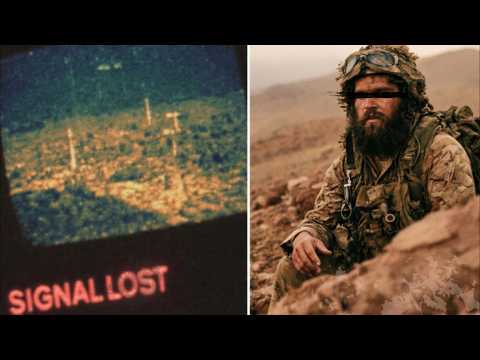
Somewhere in the scorched dust of Uruzgan province, a team of Australian special operators had spent three days crawling through enemy territory without making a single sound. They had tracked a high-value target across ridgelines and dry riverbeds, sleeping in shallow scrapes, eating cold rations, communicating only through hand signals. The trap was set. The target was minutes away from walking into the most precisely planned ambush the coalition had seen that year.
And then, the sky started to shake.
Two American Black Hawk helicopters roared over the horizon at full throttle, flanked by an Apache gunship with its chain gun scanning the valley floor. Dust exploded in every direction. Three days of painstaking work evaporated in 90 seconds of American noise.
The reason for this catastrophic interruption was not enemy action, not a battlefield emergency, and not a legitimate rescue. It was a blinking dot on a screen in a climate-controlled operations center thousands of kilometers away. The Americans had looked at their monitors, seen that the Australian team had disappeared from the digital map, and concluded that the patrol had been wiped out. They launched a full quick reaction force to recover what they assumed were remains.
What they found instead were some of the most furious soldiers on the planet.
This was not an isolated incident. It happened again and again throughout the Afghan War, and it exposed one of the most dangerous fault lines inside the coalition: the collision between American technological obsession and Australian tactical reality. It was the story of a system that was supposed to save lives, but instead nearly cost them. A story of generals who trusted screens more than soldiers, and a story of operators who decided that the only way to survive was to become invisible—not just to the enemy, but to their own allies.
To understand how this disaster kept repeating itself, you have to understand the machine that caused it. The Blue Force Tracker, known across the military as BFT, was the crown jewel of the Pentagon’s Networked Warfare Revolution. Developed during the late 1990s and deployed on a massive scale after 2001, it was designed to solve the oldest problem in warfare: knowing where your own people are.
The concept was seductively simple. Every coalition vehicle, every patrol, every forward operating base carried a GPS transponder that continuously broadcast its position to a satellite constellation overhead. That data was relayed in near real time to command screens at every level, from battalion headquarters in Kandahar all the way up to the United States Central Command in Tampa, Florida. On those screens, friendly forces appeared as glowing blue icons. Allied units showed up in green. Enemy positions, when identified, appeared in red. The entire battlefield became a video game display—clean and orderly, and utterly controllable.
Generals could sit in air-conditioned rooms, sip coffee, and watch tiny blue dots crawl across digital terrain maps that covered half of Central Asia. The system was, in American military culture, nothing short of a religious experience. It represented the ultimate fulfillment of what the Pentagon called full spectrum dominance—the doctrine that technology could eliminate the fog of war entirely.
But the fog of war does not care about doctrine. And in the mountains and valleys of southern Afghanistan, the Blue Force Tracker was about to collide with an enemy who did not play by American rules.
The Taliban could not hack the encrypted communications network of the International Security Assistance Force. They did not have the technical capability to intercept satellite uplinks or decode digital burst transmissions. But they did not need to. What they had were cheap, commercially available radio frequency scanners—the same kind of equipment that hobbyists use to listen to police frequencies in suburban garages back in Sydney or Denver. These scanners could not tell the Taliban what coalition forces were saying—the encryption was solid—but the scanners could do something almost as devastating. They could detect the electromagnetic signature of a transmission itself.
Every time a coalition radio sent a scheduled status report, every time a Blue Force Tracker pinged its position to the satellite overhead, it produced a brief but detectable spike of radio energy. And that spike had a location. The Taliban fighters operating in Uruzgan and Helmand provinces figured this out with remarkable speed. They did not need a degree in signals intelligence. They just needed to notice a pattern. When the scanners picked up a cluster of transmissions from an area of supposedly empty desert, it meant one thing: there were foreign soldiers hiding there.
The insurgents would then set up ambushes along likely patrol routes, plant improvised explosive devices on roads near the transmission source, or simply melt away from an area before a raid could be launched. The very system designed to protect coalition troops was betraying their position to the enemy.
And that is where the Australians entered the picture with a solution that horrified the American chain of command.
The Australian Special Air Service Regiment, known as the SASR, had been operating in Afghanistan since 2005 on a sustained rotation basis, with earlier deployments stretching back to 2001. Their area of responsibility was Uruzgan province—a sprawling, mountainous, and deeply hostile region in the south of the country. Unlike the Americans, who operated in large formations with overwhelming firepower and an almost unlimited logistics chain, the Australians worked in small, mobile patrols. Four to six vehicles, a dozen operators, minimal support, maximum stealth. Their entire tactical philosophy was built around one principle: do not be seen until it is too late.
For the SASR, the Blue Force Tracker was not a tool. It was a liability. Every ping from their transponder was a potential betrayal. Every scheduled radio check was a neon sign in the electromagnetic spectrum screaming, “Here we are” to anyone with a forty-dollar scanner. The operators had watched American patrols get ambushed after routine radio transmissions. They had seen how predictable communication schedules created patterns that even an illiterate farmer with a handheld receiver could exploit.
And they made a decision that would cause a bureaucratic firestorm stretching from Tarin Kowt to the Pentagon. They turned everything off. Not partially, not on a reduced schedule. They went completely dark. Before departing on deep reconnaissance patrols into enemy territory, SASR teams would physically disable their Blue Force Tracker transponders, power down their primary radios, and sever every electronic link to the coalition network. They called it going ghost.
In practical terms, it meant that from the moment they left the wire until the moment they returned, they did not exist on any American screen. Their blue dots simply vanished from the digital map as if the patrol had never departed. The tactical logic was flawless. Without any electromagnetic emissions, the Australian patrols became genuinely invisible. The Taliban scanners picked up nothing—no radio spikes, no GPS pings, no satellite uplinks. The SASR teams could move through enemy territory like shadows, spending days at a time in positions that were sometimes just hundreds of meters from Taliban compounds. They could observe, track, and set up ambushes with absolute patience, waiting for the perfect moment to strike. The silence was their greatest weapon, more effective than any rifle or airstrike.
But what made perfect sense in the dust and rocks of Uruzgan made absolutely no sense on the screens in Kandahar.
Imagine the scene inside a joint operations center. Rows of analysts and watch officers sit behind banks of monitors. Every friendly unit in southern Afghanistan is represented by a reassuring blue icon, slowly moving along planned routes. And then, one of the icons starts to flicker. The transponder signal becomes intermittent, and then it disappears entirely. The watch officer checks the last known position. It is deep inside hostile territory, in a region known for Taliban activity. No radio contact. No satellite check-in. Nothing.
The protocol for this exact situation had a name, and it was one of the most terrifying phrases in the military lexicon: broken arrow. Originally a Vietnam-era code for a unit about to be overrun, the term had evolved to encompass any situation where a friendly force could not be located and was presumed to be in extreme danger. Once that code was triggered, the entire machine lurched into action.
The response was automatic and overwhelming. A quick reaction force—typically a platoon-sized element mounted in armored vehicles or helicopters—would be scrambled immediately. Air assets, including attack helicopters and sometimes fixed-wing close air support, would be diverted to the last known coordinates. Medical evacuation teams would spin up their rotors. Intelligence analysts would begin scanning every available sensor, satellite imagery, signals intercepts, drone feeds, searching for any sign of the missing patrol.
The assumption driving all of this activity was grim and specific: the patrol had been ambushed, overrun, and either captured or wiped out. In the American operational framework, there was simply no other explanation for a unit vanishing from the network. The technology was infallible. If the dot was gone, the soldiers were gone too.
And so the helicopters would launch—heavy, thundering, impossible to miss. They would fly at maximum speed to the last recorded position of the missing Australians, expecting to find burning vehicles, scattered equipment, and the worst-case scenario that every soldier dreads.
What they found instead was a very different picture. In a shallow wadi, concealed beneath camouflage netting and dried scrub, a team of SASR operators would hear the rotors before they saw them. The sound of incoming helicopters in the Afghan silence is unmistakable and carries for kilometers. Every operator knew instantly what it meant. Their cover was blown.
The target they had been tracking—sometimes for seventy-two hours or more—would hear the helicopters too, and disappear into a network of compounds and tunnels that the Taliban knew better than any map could show. The ambush was ruined. The intelligence was compromised. Days of grueling, dangerous work had just been destroyed by their own side.
The fury of the SASR operators in these moments was volcanic. These were men who had endured days without sleep, surviving on minimal water and temperatures that could swing from scorching daytime heat to near-freezing mountain nights. They had moved at a crawl across terrain riddled with IEDs and hostile observation posts. They had disciplined themselves into absolute silence, suppressing every natural human urge to move, speak, or transmit. And all of that discipline, all of that suffering, all of that expertise had been obliterated because a staff officer in an air-conditioned room had panicked over a missing pixel.
The confrontations that followed these incidents were savage by military standards. SASR patrol commanders would return to base and deliver blistering after-action reports that made it explicitly clear the American command structure was actively sabotaging Australian operations. The language in these reports was not diplomatic. The Australians accused the American headquarters of being so addicted to their screens that they had lost the ability to understand how special operations actually worked. They pointed out that the entire purpose of a deep reconnaissance patrol was to be undetectable, and that you cannot be undetectable if your own headquarters is broadcasting your existence to the enemy through mandatory tracking systems.
The American response was equally furious, but for entirely different reasons. From the Pentagon’s perspective, the idea that any coalition unit would deliberately go off the grid was not just tactically questionable—it was an act of insubordination that violated the fundamental architecture of networked warfare. The Blue Force Tracker existed precisely to prevent friendly fire incidents and to enable rapid response to units in distress. If every patrol decided to turn off their transponders, the entire system collapsed. How could a commander make decisions if he could not see his own forces? How could air support be directed if no one knew where the friendlies were?
The Americans had a point, and it was not a trivial one. But the Australians had a more powerful counterargument: they were alive.
The friction was never truly resolved—only managed. Compromise protocols emerged: burst transmissions at unpredictable intervals, brief power-ups just long enough to confirm a pulse before vanishing again. The Americans accepted this with grudging, gritted-teeth reluctance. The cultural damage, however, was permanent.
Australian operators carried the helicopter incidents as a searing grievance, a perfect emblem of everything wrong with the American way of war.
They had more money, more technology, more firepower—but they could not sit still. They could not tolerate silence.
And when the icons vanished, the watch officers would mutter the phrase that became the saga’s bitter punchline: “Clear the screen. They’re gone.” The Americans meant it as alarm. The Australians heard it as the highest compliment. Gone meant invisible. Invisible meant alive.
So here is the question that still divides military planners today: when the screen goes dark, should a commander trust the machine—or trust the men who chose the silence? Tell us what you think in the comments.
Report this article
Select a reason for reporting:






