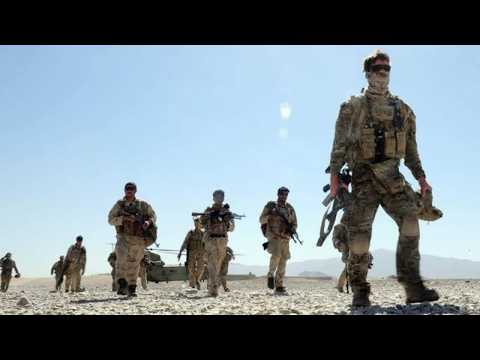
Tarin Kowt, Uruzgan Province, Afghanistan. An American operator stands at the edge of the flight line, watching a four-man Australian patrol prepare to walk out the wire. He cannot quite believe what he is seeing. No plate carriers stuffed to bursting. Half the ammunition his own men would carry. No racks of gadgets, no forest of antennas, packs that look half empty. He turns to the man beside him and says it loud enough to carry across the gravel. “Look at their gear. These blokes are going to get killed out there.”
Six weeks later, he stood in the same spot and watched those same four men walk back in from ground his own squadron could not reach on foot. And he had stopped laughing. Why did the most equipped soldiers on Earth bet against the men who carried the least? And why did Uruzgan prove them wrong?
The American was not stupid. By the logic he had been raised in, he was right. Everything in his world said the same word. More. More armor. More ammunition. More optics. More batteries. More radios. More redundancy for the redundancy. His country had spent two decades and a fortune that runs into the hundreds of billions turning the individual rifleman into a walking weapons platform.
Night vision on the helmet. A laser for the rifle. A second laser for the dark. Plates front, back, and side that could stop a rifle round. Grenades, smoke, a sidearm, a tourniquet for every limb and two spare. It was the most advanced fighting load ever carried by a human being into battle. And it was magnificent. On paper.
Here is the number nobody on that flight line wanted to say out loud. The fighting load that American operator carried before he picked up a drop of water or a single ration sat somewhere around 45 kg. For a patrol of any length, it climbed past 55. The United States Army’s own load studies, going back across the wars in Iraq and Afghanistan, kept reaching the same uncomfortable finding. Their soldiers were carrying nearly twice what their own doctrine said a man could fight under. Doctrine said a third of body weight. Reality was closer to two-thirds.
And every kilogram of it had been added by someone who loved the soldier and wanted him to come home. That is the trap. Nobody ever stands up in a planning room and argues for less protection, less ammunition, less capability. Every item on that man was justified. Every single one. The grenade is justified by the day you need a grenade. The third radio is justified by the day the first two fail. The extra plates are justified by the round that would have gone through. Each argument is sound on its own. The problem is that the justifications never stop and the man underneath them does.
You cannot point to the single item that broke him because no single item did. The weight did. The sum of a hundred reasonable decisions. Every one made by someone who cared. You can watch it happen in slow motion on any hillside in that country. A section of heavily laden infantry starts a climb fresh and sharp. An hour in, the spacing has collapsed. Men are stopping to breathe. The machine gunner is being half carried by his own load. The point man, the soldier who needs to be the most alert man alive, is instead the most exhausted because he has been breaking trail under the heaviest burden. By the time they reach the ground they came to fight over, the fight has already shaped itself around their slowness. The enemy chose the timing because the enemy had been watching them crawl. None of it was a failure of courage. All of it was a failure of weight.
Now look at the Australians. A bush hat instead of a helmet as often as not. Body armor worn light or stripped right back when the ground demanded it. Ammunition counted out by the job, not by the fear. Water prioritized over almost everything because in Uruzgan in summer water is not a comfort, it is the whole argument. Their packs were not half empty because they had forgotten something. They were that way because somebody had gone through the contents the night before and taken things out. Deliberately, ruthlessly, asking of every object one cold question. Does this help me move or does this help me feel safe? Because in the regiment those two things were not the same and they had learned the difference the hard way. In another war, a long time before Afghanistan.
That is what the American was actually laughing at. Not a kit list. A century of argument he had never been forced to have. Uruzgan does not forgive the wrong answer to that argument. It is a province of hard brown mountains and narrow green valleys. The Mirabad, the Baluchi, the Kora. Ribbons of irrigated farmland strung between ridgelines that climb past 2,000 m. The valleys are a maze of mud compounds and grape rows and irrigation ditches. The kind of close country where a heavily laden man is a slow, loud target. The high ground is worse. To own the high ground in Uruzgan, you have to climb to it in the heat carrying everything you brought. And the heat in the fighting season sits up near 50° with no shade and no mercy.
The Taliban who lived there carried a rifle, a chest rig, a blanket, and a bag of almonds. They moved like water through that terrain because they were not fighting their own equipment to do it. They had grown up on those slopes. The ground was theirs and they knew exactly how slow a foreign soldier became under 60 kg by the second hour of a climb. And that was the question the whole province kept asking of everyone who deployed into it. Not whose gear was best. Whose gear let them get to the fight and still have something left when they arrived.
For most of the 20th century, the answer the big armies gave was simple. Carry more and accept the cost. If a man is slower, send a vehicle. If he is exhausted, that is what discipline is for. The soldier’s load was treated as a fixed problem to be solved with horsepower and willpower. Never as the thing that decided the battle before it began. One man spent his life arguing the opposite. In 1950, an American Brigadier General named S.L.A. Marshall published a small book with a long title. The soldier’s load and the mobility of a nation. He had walked the beaches of Normandy and the hills of Korea and watched what overloading did to men. His argument was brutal in its simplicity. A soldier is not a pack animal. The moment you load him past the point where he can move and think and fight, you have not made him stronger. You have taken him out of the battle and replaced him with a tired man carrying a museum of equipment.
Fear, Marshall wrote, “is what makes commanders pile weight onto soldiers. And the weight is what gets those soldiers killed.” The American Army read Marshall. They quoted him. They put him on reading lists. And then they did the opposite every war because the pull toward more is almost impossible to resist when the cost of less is one dead man you can name. And the cost of more is only a thousand slow ones you cannot.
The Australians did something stranger. They believed him. That belief did not come from a book. It came from a jungle. In the jungles of Phuoc Tuy Province in South Vietnam between 1966 and 1971 the Australian Special Air Service Regiment built the reputation that still defines it. They did not fight the way the Americans next door fought. They went out in patrols of five and sometimes fewer deep into ground the enemy considered his own. And they did something the modern soldier finds almost unimaginable. They disappeared. A patrol could spend a week in country a few hundred meters from a North Vietnamese base and never be seen. They moved at a pace measured in meters per hour. They did not cook. They buried their waste. They froze for an hour at a time when a single careless sound would have ended them. They spoke in hand signals and touches. And they carried only what let them do that. Everything else, every comfort, every extra magazine that whispered “Carry me just in case,” was a liability that made noise, made weight, made a man slower to freeze and quicker to be found.
The enemy gave them a name. They called them the phantoms of the jungle. The ghosts. Across years of operations in Vietnam, by the regiment’s own accounting and the records of the campaign, SAS patrols inflicted a wildly lopsided toll on the enemy while losing almost no one to enemy fire. They achieved that not by carrying more than the enemy, by carrying less and turning the difference into something close to invisibility.
That is the inheritance the men in Uruzgan were issued long before they were ever issued a rifle. Not a kit list, a conviction. The conviction that on the kind of ground special forces actually operate on, the decisive quality is not firepower and it is not protection. It is mobility. The ability to reach a place the enemy thought was safe, arrive with something left in the tank, and leave before the weight of the response can land on you. Everything in the Australian loadout is bent toward protecting that one quality. And everything they leave behind, they leave behind to protect it, too.
This is the part most people get completely wrong about elite soldiers and their equipment. The popular picture is the operator as a Christmas tree, hung with every gadget money can buy. The more kit, the more elite. The truth inside the best units runs the other way. The most experienced operators are very often the ones carrying the least because experience teaches you what you will actually use and stops fear from making your packing decisions for you.
A young soldier packs for every nightmare he can imagine. A veteran packs for the mission in front of him and trusts his training for the rest. The empty space in an Australian patrol pack was not a gap in capability. It was a signature of it. It was the look of a man who had been doing this long enough to know the difference between what saves your life and what only feels like it does.
To earn that signature, you go through one of the hardest selection courses in the world. Selection for the regiment runs men into the ground over weeks across the punishing Australian bush and the pass rate is famously low. Often only a small fraction of those who begin. It is not, at its heart, a test of strength. It is a test of judgment under load and exhaustion. The course is built to find the man who can keep thinking clearly when his body is screaming. The man who can make the right call about what to carry and what to drop with no sleep and no relief. The man who understands in his bones that suffering for its own sake is not the point and moving smart is.
There is a particular kind of soldier it is designed to break and it is the one who confuses carrying more with being tougher. The course teaches him, in the most direct way the body understands, that the strong man who cannot move is just a target who has not been shot yet.
So, look at what they actually carried and why. Water first, always, because the rest is academic if you cannot reach the fight. Ammunition scaled to the task and the distance to support, not piled on to soothe the imagination. Body armor treated as a tool with a weight cost, worn when the threat justified it, and lightened or stripped when the mission was mobility through hard ground. That last one is a trade no soldier makes lightly and every honest one understands. Comfort items close to zero. And in the space all of that saved, the things that actually keep a small patrol alive a long way from help. Water. Batteries for the one radio that matters. More water. The reserve of strength to go further and stay longer than anyone expected, because they were not spending that strength fighting their own load.
There is hard science under the conviction, not just tradition. Human performance researchers have measured what every infantryman already knows in his legs. Past a certain load, roughly a third of body weight, a soldier’s speed, his agility, his marksmanship, and his ability to think all fall off a cliff. And his risk of injury climbs just as fast. Push him toward two-thirds of his body weight, the load the American studies kept finding in the field, and you have a soldier who is slower to cover, slower to climb, slower to react, and physically wrecked by the time he makes contact. The enemy does not have to be better than that soldier. He only has to be fresher. In a foot race up a Uruzgan ridge in 50° heat, the man carrying 20 kg less is not slightly ahead. He is in a different fight entirely.
Strip it all down and the philosophy is almost insultingly simple. A soldier you can see is a soldier you can kill. A soldier who is exhausted when he arrives has already lost. So buy invisibility and endurance with everything you have and pay for them by giving up the comfort of carrying more.
So look again at the gear. Look at the bush hat and the light armor and the counted rounds and the space where the gadgets should be. An American operator looked at exactly that and saw men who were going to die. He was looking at a hundred years of hard-won argument. At the ghosts of a jungle war. At a discipline that bought invisibility and endurance with everything it gave up. He just could not read it yet. Uruzgan taught him. It taught him the same thing it teaches everyone who watches these men work long enough. That the soldier carrying the least is very often the one who is understood the most. That weight is not strength. And that sometimes the most dangerous man on the entire battlefield is the one who looked to the untrained eye like he had forgotten half his kit.
He had not forgotten anything. Look at their gear.
So here is the question that outlasts every war: when the next piece of equipment promises to save a life, who in that room will be brave enough to ask what it will cost in speed?
Report this article
Select a reason for reporting:






