The air in the dimly lit chamber was thick with the weight of centuries. A low hum vibrated through the stone walls, growing louder as the machine’s core pulsed with an otherworldly glow. Dr. Elara Voss stood before the console, her trembling fingers hovering over the final sequence. She had spent years reconstructing the faces of Europe’s most legendary rulers, but nothing could have prepared her for this moment. “Initiate the awakening,” she whispered, her voice barely audible over the rising thrum.
One by one, the holograms flickered to life, each figure stepping out of the shadows of history and into the blinding light of the present. They were not mere images—they were alive, their eyes burning with the ambition and power that had once shaped continents.
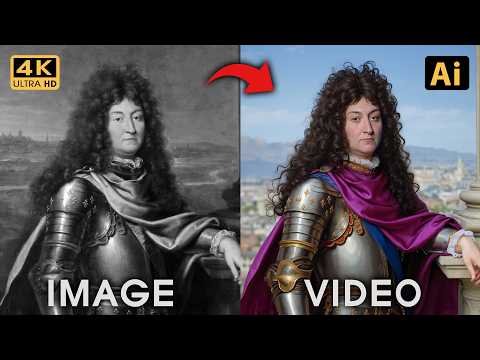
First came Frederick the Great, his sharp features illuminated by the blue glow of the projector. He surveyed the room with a calculating gaze, as if already planning his next campaign. Behind him, the towering figure of Charles V materialized, his cloak billowing in an unseen wind. “An empire on which the sun never sets,” he murmured, his voice echoing with the authority of a thousand battles.
Elara’s heart raced as more kings emerged: William the Conqueror, his eyes cold and determined; Henry VIII, his massive frame casting a long shadow; and Louis XIV, the Sun King, whose presence seemed to fill the entire room with golden light. Each one was a legend, a force of nature, and now they stood together, bound by the same insatiable hunger for power that had defined their reigns.
But something was wrong. The holograms began to flicker, their forms wavering as if struggling against the constraints of time itself. “They’re destabilizing,” Elara’s assistant warned, his voice tight with panic. The kings’ expressions shifted—confusion, then anger, then something far more dangerous: realization. They were not just echoes of the past; they were aware, and they were not content to be mere specters.
Frederick stepped forward, his hand reaching toward the console as if to seize control. “You have summoned us,” he said, his voice cutting through the chaos. “But you cannot contain us.” The other kings echoed his sentiment, their voices rising in a chorus of defiance. Elara realized too late that she had not just brought history to life—she had unleashed it.
The chamber doors slammed shut, sealing them all inside. The kings turned their gaze toward her, and in that moment, she knew that the boundaries between past and present had been irrevocably broken. What had begun as an experiment was now a battle for control—and the fate of the modern world hung in the balance.
The holograms advanced as one, their translucent feet leaving no mark on the stone floor yet somehow shaking it. Elara stumbled back against the console, her palm striking a row of switches. Sparks erupted, and the projector’s hum climbed into a shriek. “The containment field is collapsing!” her assistant shouted, jabbing at the keyboard. “I can’t hold them!”
Louis XIV raised one gloved hand, and the golden light around him flared so brightly that Elara had to shield her eyes. “You built us a palace of light,” the Sun King said, his tone almost amused. “Crude—but Versailles was once crude too.” He turned slowly, appraising the humming machines and cables as a lord might inspect a troublesome province.
Peter the Great was already moving, ignoring the humans entirely. He strode to the far wall and pressed both hands against the steel paneling, his brow furrowed. “Stone and iron,” he muttered. “No windows. No harbor. Where is the sea?” He rounded on Elara, and for a moment she saw the giant who had dragged Russia kicking into the modern age. “Answer me, woman. Where have you brought us?”
Before she could speak, William the Conqueror drew his sword—or the shimmering memory of one—and pointed it at the sealed doors. “Enough talk,” he growled. “These walls will not hold a Norman.” He drove the blade into the seam of the doors, and a crack of white light split the air. The other kings fell silent, watching.
It was then that Elara noticed the figure standing apart from the rest. Alexander of Macedon, younger than the others by far, had not moved toward the doors or the console. He stood in the corner, head tilted, studying the flickering screens with the calm of a man who had once tamed Bucephalus while others cowered. “You are afraid,” he said quietly, and it was not a question.
Elara swallowed hard. “Yes.”
“Good,” Alexander replied, and something like approval crossed his face. “Fear keeps a commander honest. Now tell me—what lies beyond this room? What world have we woken into?”
She gestured weakly at the monitors, and the assistant brought up a map of the modern globe. The kings crowded around it, and the chamber filled with murmurs of disbelief. Charles V traced the borders of Spain and the Americas with a trembling finger. “My empire,” he breathed. “Fractured into so many nations.” Ivan the Terrible let out a low, dangerous laugh. “And Russia still stands. Larger than ever. Good.”
But it was Julius Caesar who broke the spell. He had said nothing until now, standing with his arms folded like a magistrate weighing a case. “You summoned twenty rulers,” he said, stepping into the center of the room. The others turned. “Twenty men who each believed the world should bend to their will. Did you truly think we would share it?”
A tense silence followed. Frederick’s hand drifted toward his coat. Henry VIII’s jaw tightened. The fragile alliance of the awakened kings began to fray before Elara’s eyes—and she understood, with a cold lurch in her stomach, that the greatest danger was not their escape.
It was what they would do to each other.
Caesar let the silence stretch until it became unbearable, then smiled—a thin, patient smile that never reached his eyes. “I have stood in this position before,” he said, turning slowly so that every king met his gaze in turn. “Three men ruled Rome, and we swore to share her. It lasted until one of us was worth more dead than alive.” He spread his hands. “So I ask again—who among you will be the first to break faith?”
No one answered. But Elara saw the truth written in their flickering faces: each of them was already calculating, already measuring the others like rivals across a chessboard.
Gustavus Adolphus broke the tension with a bark of laughter. “Then we are agreed on one thing at least—none of us trusts the rest.” He paced toward the console, his cropped hair and weathered face giving him the look of a soldier who had slept in the field more often than in a palace. “Good. Trust is for priests and fools. What we need is a truce, and a truce needs terms.”
Elara found her voice. “Terms? You’re holograms—projections. You can’t touch anything, can’t affect anything outside this chamber.” She said it as much to convince herself as them.
The kings exchanged glances, and it was Casimir the Great who answered, his voice gentle and almost pitying. “Child, you built a machine that can summon the dead. Do not insult us by pretending you understand its limits.” He gestured toward the console, and the screens flickered wildly as if in response. “Your field weakens with every moment we remain. Either you restore it, or it fails—and then we shall see what we can touch.”
The assistant grabbed Elara’s arm. “He’s right,” he hissed. “The power draw is off the charts. We have maybe ten minutes before the core overheats and every circuit in this building melts.”
Ten minutes. Elara looked from the failing monitors to the twenty kings, and a desperate idea took shape. “Then we make a bargain,” she said, louder than she intended. The room quieted. “You want to exist. I want to survive. Help me stabilize the field, and I’ll give you what you actually need—time.”
Francis I of France raised an elegant eyebrow. “Time for what, precisely?”
“To decide,” Elara said. “To talk. To do whatever it is kings do when they’re not at war.” She swallowed. “But if the core dies, you die with it. All of you. Forever.”
Frederick the Great studied her for a long moment, then turned to the others. “The woman speaks sense, and I dislike it. It means she is either honest or clever—and both are dangerous.” He nodded once. “Very well. Tell us what to do.”
What followed was the strangest hour of Elara’s life. She called out instructions, and the kings obeyed—after their fashion. Peter the Great heaved at the coolant lines with a strength no hologram should have possessed. Alfred the Great, calm and methodical, read the diagnostic readouts aloud so she could keep her hands on the console. Even Ivan the Terrible, whose laughter still made her skin crawl, held a cable steady with surprising care.
But it was Alexander who noticed what the others missed. He drifted to the far corner of the chamber, where a secondary projector sat half-hidden behind a bank of servers, and knelt beside it. “There is another signal here,” he said quietly. “Older than yours. Fainter. But it is there.”
Elara’s blood ran cold. She had built this machine alone—or so she had believed. “That’s impossible.”
Alexander looked up, and for the first time his composure cracked, revealing something beneath it: not fear, but a terrible, hungry curiosity. “Nothing is impossible,” he said. “You should know that better than anyone. After all—you are the one who woke us.”
He pressed his palm to the hidden projector, and the chamber shuddered. A new light bloomed in the corner, pale and cold, and Elara heard her assistant whisper a prayer under his breath. Something else was coming through.
The pale light resolved into a shape—a woman in a simple grey gown, her face worn by grief rather than age. Elara’s breath caught. “I know you,” she whispered. “You’re in the archives. The first reconstruction. The one that failed.”
The woman inclined her head. “I did not fail. I was hidden.” She looked past Elara at the twenty kings, and her expression hardened. “You have woken the wolves. I woke the shepherds.”
One by one, new figures stepped from the cold light: a queen with a lion’s bearing, a scholar with ink-stained fingers, a general in worn armor. Elara did not recognize them all, but she knew the type—rulers who had built rather than conquered.
Frederick’s hand fell to his side. “Elizabeth,” he said, and for the first time his voice held no mockery. “Of England.”
The queen smiled thinly. “We have watched you bicker like merchants over a broken stall. The field will fail in moments. Shall we all perish, or shall we talk?”
Caesar laughed—and it was the first honest sound he had made. “Now this is a senate worth addressing.”
The two ranks of rulers faced each other across the humming chamber, and Elara understood at last what her machine had truly done. It had not summoned history’s ambition. It had summoned its argument.
She stepped between them, hands raised. “Then argue,” she said. “Argue until the core holds or the world ends. Your choice.”
And somewhere in the flickering light, twenty kings and their quiet counterparts began, for the first time in centuries, to listen.
What would you have said to them, if you had been in that chamber?
Report this article
Select a reason for reporting:






