February 1944, somewhere over central Germany at just over 25,000 feet. A silver Boeing B-17G holds its position in a combat formation. Outside, the temperature is minus 40 degrees. Frost lines the windows. Ten men breathe through rubber masks, each listening to the same sound: the deep, uneven roar of four nine-cylinder radial engines pulling them toward a factory they are supposed to destroy. Those four engines are the only barrier between that crew and a very long fall. If one quits, the plane can barely limp home. If two quit over Germany, the odds turn grim. So the men inside think about those engines constantly, the way you think about your heartbeat when you’re afraid.
Every one of those engines is a Wright Cyclone. Every one carries the military designation R-1820-97. The name “Wright” is carved into the story of American aviation like no other name in the language. The company that put its Cyclones on airliners, Navy dive bombers, and record-setting flights throughout the 1930s. But if a mechanic had climbed onto that wing before takeoff, opened the cowling, and wiped the grime off the small metal data plate, he would very likely have read a different name. Not Wright. Not Patterson. The plate would have said Studebaker Corporation, Aviation Division, South Bend, Indiana.
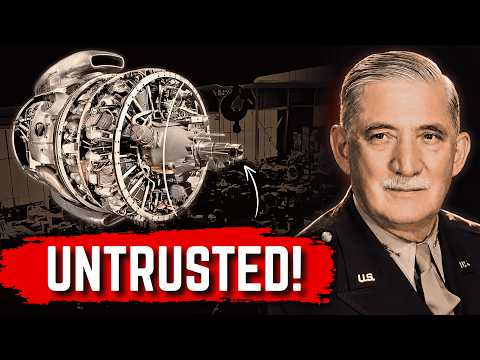
Studebaker. The wagon company. The institution that built farm wagons for pioneers heading west, and by 1940 was famous for selling a small, economical family car called the Champion. A company that had never built a single aircraft engine in its entire history on the day the war began in Europe. So this is the question this story answers: How did the most famous American bomber of World War II end up flying its crucial years on engines built by a car company from Indiana? Why was the task given to Studebaker and not to the company whose name the engine bore? And what was South Bend’s actual share of the B-17 fleet’s operation? The answer comes in numbers, and the numbers aren’t close.
Of all the -97 Cyclones ever built—the model that powered the B-17F and B-17G—about 94 out of every 100 engines came out of Studebaker plants. And from early 1944 until the last Flying Fortress left the factories, new bombers rolling out of Seattle, Long Beach, and Burbank were fitted with Studebaker engines and Studebaker engines only. To understand how a wagon maker reached that position, you have to go back to a moment when the United States had almost no air force, and its president asked for something every aviation expert in the country considered impossible. But first, you need to know who Studebaker really was, because the company that got this contract was not a giant. It was a survivor.
In 1852, two brothers, Henry and Clement Studebaker, opened a blacksmith and wagon shop in South Bend, Indiana. Their gamble for survival was a small car. In 1939, Studebaker introduced the Champion, a light, economical six-cylinder sedan designed to be cheap to buy and run. It was exactly what families battered by the Depression wanted. The Champion pulled the company back from the brink. In 1938, Studebaker lost about $1.76 million. By 1941, it was earning roughly $2.5 million thanks to sales that had more than doubled.
So imagine Studebaker in early 1940: a medium-sized car company, recently rescued, proud, cash-conscious, with a loyal workforce in South Bend and a successful product it desperately wanted to keep selling. It made cars and trucks. It made nothing that flew, and no one expected it to. Then, in the spring of 1940, the shape of the world changed in about six weeks. On May 10, 1940, German forces swept through the Low Countries and France. Within days, the defenses everyone had trusted collapsed. It was clear that air power was deciding battles, and the United States had almost none. The Army Air Corps had a few thousand aircraft, many of them obsolete.
On May 16, President Franklin Roosevelt stood before Congress and asked for something that sounded like fantasy. He said the nation should prepare to produce at least 50,000 aircraft a year. At that moment, the entire American aircraft industry was producing only a few thousand military planes annually. Fifty thousand was not a normal goal. It was an entirely different universe. And here’s the part of that speech almost no one thinks about. An airplane is just a structure wrapped around its engines. A single-engine fighter needs one engine. A four-engine bomber needs four. Every plane also needs spare engines in depots, because engines wear out, get damaged, and require replacement. If you want 50,000 aircraft a year, you need more than 100,000 aircraft engines a year, and America did not have the factories to build anything close to that number.
In 1940, the country’s large military aircraft engines came almost entirely from three companies: Pratt & Whitney in East Hartford, Connecticut; Allison, a General Motors division in Indianapolis that built liquid-cooled engines; and Wright Aeronautical, the engine arm of Curtiss-Wright, headquartered in Paterson, New Jersey. Three companies were being asked to power an air force that did not yet exist. The man Roosevelt chose to solve that problem was not a pilot. He was a car man. Born in Denmark, William Knudsen came to America with almost nothing, worked his way through the bicycle and automobile trades to become president of General Motors—then the largest manufacturing company on earth. Knudsen was famous for one thing above all: mass production.
On October 15, 1940, Knudsen sat down in New York with the directors of the Automobile Manufacturers Association. Around that table sat the most powerful figures in the American car industry: Edsel Ford, Alfred Sloan, Charles Wilson of GM, Alvan Macauley of Packard, and beside them Paul Hoffman of Studebaker. At that meeting, the industry agreed to prioritize defense over annual model changes and to engage heavily in producing parts for military aircraft. Within weeks, the industry created the so-called Automotive Committee for Air Defense. In Detroit, actual bomber parts were displayed on tables—pieces of the Consolidated B-24 and Martin B-26—so automotive engineers could walk the rows, pick up a component, and ask themselves one question: Can we manufacture this?
Aviation men had real doubts. Aircraft engines are not car engines. They were built in small numbers with tolerances down to ten-thousandths of an inch, by skilled workers who often hand-fitted and adjusted parts. A car engine could be a little less precise. An aircraft engine at 25,000 feet could not. But the numbers left no one a choice. And the crisis was nowhere more acute than at Wright Aeronautical. To understand why Studebaker got the job, you have to see what Wright was enduring in 1940. Wright wasn’t building one engine. It was trying to build three at once, each a national priority.
The first was the R-1820 Cyclone, a nine-cylinder single-row radial. It was a mature, proven engine in huge demand. It powered the B-17, the Navy’s dive bombers, and many transports. The second was the R-2600, known as the Twin Cyclone, a 14-cylinder two-row engine of about 1,600 horsepower. It powered the North American B-25 Mitchell, the Grumman Avenger, and other new designs in development. The third was the giant, the R-3350 Duplex Cyclone, an 18-cylinder monster intended for the next generation of very heavy bombers. In 1940, it was still troubled, unproven, and suddenly urgent because the Army began demanding a bomber with enormous range. That requirement would become the Boeing B-29 Superfortress, and the B-29 was designed around the R-3350. Three engines, one company. Wright’s main plant in Paterson would eventually employ about 24,000 people working three shifts a day, and still could not meet everything asked of it.
Behind that pressure lay an old wound in Wright’s own history—one that shaped the entire American engine industry. In the mid-1920s, Wright’s president was a man named Frederick Rentschler. He clashed with the board, left the company, and took with him many of Wright’s best engineering and production talents. With that team, he founded a new company in Connecticut. He called it Pratt & Whitney. Within a few years, its Wasp engines were beating Wright’s designs in competition after competition. So when the war broke out, the engines for the B-24—the B-17’s partner in the bombing campaign—came from a company founded by Wright’s own former president. America’s two great radial engine makers were rivals born from a single boardroom quarrel.
That rivalry shaped the engines, too. Wright bet on the big single-row nine-cylinder Cyclone. Pratt & Whitney bet on the two-row, 14-cylinder Twin Wasp. Each defended its philosophy. The Cyclone was lighter and simpler, with fewer parts to fail. The Twin Wasp ran smoother and had a smaller diameter, so it fit in a slimmer cowling. Both were excellent engines, and the B-17 and B-24 ended up as flying advertisements for the two philosophies, flying side by side over Europe. And Wright had a habit that made everything harder. Unlike Pratt & Whitney, which licensed its designs to outside manufacturers relatively freely, Wright was reluctant to let anyone else build its engines. It kept its designs secret and granted licenses only when the government pressured it. In 1940, the government began to pressure.
So the question became which car company would take on which Wright engine. And Studebaker’s first answer was not the Cyclone at all. In December 1940, the Army Air Corps awarded Studebaker a contract to build 6,500 Wright R-2600 Twin Cyclones for the B-25 Mitchell. The Defense Plant Corporation, the government body created to fund new war factories, allocated $50 million for a brand-new engine plant on Chippewa Avenue at the far south end of South Bend. Ground was broken in January 1941. This was no modest workshop. The final plant would cover more than 1.5 million square feet on hundreds of acres. It was government-owned and Studebaker-operated, a common arrangement for war plants at the time, and it would not stand alone.
In Fort Wayne, Indiana, a second government plant of nearly half a million square feet was built to manufacture engine components and subassemblies. The plant was designed without windows, partly to operate overnight under blackout conditions, and partly because precision manufacturing demanded a controlled indoor climate. In Chicago, at the intersection of Archer and Cicero, across from what was then the city’s municipal airport, a third plant of about 850,000 square feet would produce more components. Three new factories in three cities, all feeding one assembly building in South Bend, all for an engine Studebaker had never built.
And then, while the tooling for the Twin Cyclone was being designed and built, the Army changed its mind. During 1941, the Army Air Corps decided that what it urgently needed from Studebaker was not the 14-cylinder Twin Cyclone for the medium bomber, but the nine-cylinder Cyclone for the heavy bomber. The B-17 had become the backbone of American strategic bombing plans, and the Air Corps wanted a massive second source for its engines. The R-2600 order was cancelled before a single engine was built. Much of the special tooling already made for it was scrapped, and Studebaker started over tooling for the R-1820.
Think about what that meant for a moment. A company that had never built an aircraft engine had to plan a complex engine, buy and build tooling for it, then throw much of that work away and start again on a different engine, while its new factory was still being built around it. And here comes the irony that makes the decision look even sharper in retrospect. The Twin Cyclone, the engine Studebaker was originally supposed to build, was never licensed to anyone else. Every R-2600 ever produced—more than 85,000 of them—came from Wright’s own plants in Paterson and the Cincinnati area. That engine stayed with Wright.
The nine-cylinder Cyclone, the engine that powered the most famous American bomber of the war, is the one that went to South Bend. Why did things work out that way? Because the R-1820 was the simpler, more mature design. It had one row of cylinders instead of two, an engine whose major problems had been solved during the 1930s. If you are going to hand an engine to a company that has never built one, you give it your most stable design, and you keep the newer, more complex engine in your own plants with the people who understand it best. And by moving the B-17’s engine to Indiana, you freed Wright’s workers and floor space for the engines no one else could handle yet. So Studebaker now had its engine. What it did not have was anyone who knew how to build it.
Here is the scale of the challenge in one comparison. A Studebaker car engine of that era was made of a few hundred parts. The Wright R-1820 Cyclone contained more than 8,000 separate parts. Forged steel crankcase sections. A two-piece crankshaft with pendulum-type counterweights to control vibration. Nine cylinders with steel barrels and aluminum heads covered in deep, thin cooling fins. Sodium-cooled exhaust valves. A supercharger impeller spinning at enormous speed. A reduction gear to slow the propeller. Every part had to be made to drawings that allowed almost no margin for error, from materials that had to be traced and certified, because a hidden flaw in a single valve or bearing could bring down an airplane and kill its crew.
Some of those parts carried hard-learned lessons from a previous decade. In 1934, geared Cyclones fitted with new, heavier controllable-pitch propellers began breaking their crankshafts. Engineers traced the problem to vibration. The heavier propellers had shifted the crankshaft’s torsional vibrations right into the engine’s normal operating speed range. So the engine would shake itself apart. The Cyclone G series, the family the -97 belongs to, brought bigger changes. It had a forged steel crankcase and more cooling fin area on each cylinder. And it was the first Wright engine to use an in-house-designed supercharger. By the end of production, those superchargers were operating at over 75 percent efficiency. That was the engine Studebaker inherited—the product of 15 years of failures, fixes, and meticulous refinement. And now it would be handed to people who had been building car engines only months before.
And this engine, in its -97 version, was asked to do extremely hard work. With a General Electric turbocharger feeding it compressed air and 100-octane fuel in its tanks, it produced about 1,200 horsepower for takeoff at 2,500 rpm. That came from an engine weighing about 1,300 pounds, with a displacement of 1,823 cubic inches, running for hours at high power in thin, freezing air. The workers who took on building it came mostly from the automotive world. Machinists who had made parts for the Champion, assemblers who had fitted truck axles, people from South Bend and from farms and small towns across northern Indiana, Chicago, and Fort Wayne.
As in war plants across the country, women entered the shops in large numbers, running machines and inspecting parts that only a few years earlier had been seen as men’s work. At peak production, Studebaker’s aviation plants employed about 9,400 people. Every one of them had to learn a new way of thinking about precision. In a car plant, a part with a slight deviation might still be usable in a vehicle and work fine for years. In an aircraft engine plant, any part with a slight deviation went into the scrap bin—or worse, got installed in an engine and failed at altitude. Workers had to learn new measurements, new inspection procedures, new materials, new rules of documentation. Every critical part needed paperwork that traveled with it through the plant.
Here two different industrial cultures collided. Wright, like most aircraft engine makers in the 1930s, had grown up building engines in relatively small numbers. Its methods relied heavily on skilled workers who knew the engine intimately, felt how parts fit, and made small hand adjustments to bring components into harmony. That approach worked brilliantly when you were building hundreds or a few thousand engines a year. But the automobile industry thought differently. Its entire philosophy rested on the idea that no part should ever need hand fitting or adjustment. Every part should be made so precisely and consistently that any piston could go into any cylinder, any valve into any head, without a skilled man to adjust it. Do that, and you no longer need thousands of master craftsmen. You need good machines, accurate gauges, vigilant inspectors, and a workforce trained to follow process exactly.
That same collision was happening at the same time in other car plants across America. The first engines began to appear in the spring of 1942, even before the Chippewa Avenue building was formally completed in June of that year. At first, Studebaker built the Dash 65, the version used in the B-17E and early B-17F. More than 3,500 of that model came out of the South Bend plant. Then, starting in October 1942, the plant shifted to the Dash 97, the developed Cyclone that became the standard engine for later Flying Fortresses. From that moment, South Bend entered the B-17 business for the rest of the war.
Now, if you were standing in South Bend in 1942, you might have thought this was a unique story. One car company making a heroic leap into aviation. It was not. Studebaker was one of several car companies that entered engine work at the same time, and seeing the others side by side explains why Studebaker’s role was so distinctive. The B-24, the B-17’s partner in the bomber offensive, also flew mostly on engines built by car companies. Then there was Chrysler. In February 1942, the War Production Board gave Chrysler a contract to build the troubled Wright R-3350 for the B-29. Chrysler created a separate division called the Dodge Chicago Plant and built a factory on the south side of Chicago so large it was described as the largest aircraft engine plant in the world. About 6.3 million square feet across 19 buildings.
The engine underwent nearly 48,500 engineering changes during production. Yet between January 1944 and September 1945, Dodge Chicago delivered about 18,400 R-3350s—four and a half thousand more than Wright itself built in the same program. That was roughly five engines for every B-29 ever built, and a car company out-produced the company whose name the engine carried. Look at the big picture. Packard, Ford, Buick, and Chevrolet were building Pratt & Whitney or British engines. Only two car companies built Wright engines during the war. In total, original engine companies and their automotive partners built nearly 808,000 aircraft engines for the U.S. Army Air Forces during the war. The auto industry was not a secondary contributor to that number. It was the reason that number was possible.
Now, back to Wright, because the decisive moment in this story is not something Studebaker did. It is something Wright stopped doing. By late 1942 and into 1943, Wright Aeronautical was being pulled in several directions at once, and every direction was a crisis. The first was the R-3350 and the B-29. The Superfortress was the most expensive weapons program of the war, and it depended entirely on an engine that ran hot and had a frightening tendency to catch fire. In February 1943, a B-29 prototype crashed in Seattle after an engine fire, killing Boeing’s chief test pilot Eddie Allen and his crew. Getting that engine right and into mass production was one of the most urgent tasks in American aviation. Wright built a new plant in Wood-Ridge, New Jersey for the R-3350 and sent its best engineering talent there.
The second crisis was the Twin Cyclone. Wright was still the sole source of the R-2600, and demand kept rising. In Lockland, Ohio, near Cincinnati, Wright ran a huge plant building that engine. And in 1943, the Lockland plant became a national scandal. In January 1943, Army inspectors at Lockland began bringing complaints to the Senate investigating committee chaired by Harry Truman. They claimed they had been pressured to approve defective materials and even complete engines that did not meet Army specifications. The committee held hearings in Cincinnati that spring. Its report, issued in the summer of 1943, concluded that defective and non-conforming engines had been accepted through improper inspection practices, and that some Army inspectors had been far too lenient with the company. Several officers were later court-martialed and convicted of dereliction of duty. The War Department imposed changes at the plant, and later reviews found that quality and management at Lockland had reached a satisfactory level.
Keep that picture in mind. The famous aviation company, the airplane maker, the name on the engine, was embroiled in a quality scandal over engines built in its own plant. At that exact same time, the car company Wright had been reluctant to license was running every one of its engines for four hours, then disassembling and inspecting it before shipping. Studebaker’s South Bend and Fort Wayne aviation plants each won the Army-Navy “E” Award for production excellence four times. The Chicago aviation plant won it three times.
The third pressure on Wright was the Navy. The R-1820 was still needed for Navy aircraft, and those aircraft used different versions of the engine. One example tells the story. When General Motors’ Eastern Aircraft Division began building the FM-2 Wildcat for small escort carriers, the plane used a different Cyclone model, the Dash 56. The Wright-Patterson plant built about 2,186 of that model between October 1942 and May 1944. Wright’s Cyclone production capacity was being pulled toward the models only it was making. Add those three pressures together and you know what happened. Wright had every reason to leave responsibility for the B-17’s engine to someone else, and that someone else was ready.
Here are the numbers that prove it. Over the entire history of the nine-cylinder Cyclone, a total of 64,093 Dash 97 engines were built. That makes it the most-produced version of the R-1820 ever. Of those 64,093 engines, Studebaker built 60,285. Only about 3,897 were left for Wright itself. In other words, about 94 of every 100 -97 Cyclones came from the South Bend plant. Now widen the lens to include the older Dash 65, the engine of the B-17E and early B-17F. Between February 1940 and August 1942, about 8,422 Dash 65s were built by Wright and its licensees together. Add them to the -97s, and you get about 72,500 engines of the two types that powered combat B-17s in the war. Studebaker built 63,789 of them. That is roughly nine out of every ten.
And here comes the date that gives the title its meaning. According to the production history of Studebaker’s aviation program, from January 1944 onward, every new B-17 coming off the assembly lines was fitted with Studebaker-built engines. From that moment until the end of Flying Fortress production in 1945, South Bend was the sole source of new engines for the bomber. So it was not one dramatic delivery day. It was a gradual slope. In 1942, Studebaker was a newcomer building its first engines. During 1943, it became the dominant source, and by early 1944, it was the only source for new production. The name Wright stayed on the design, on the military designation, and in the minds of the crews, but the metal itself came from Indiana.
Now let’s follow those engines out of the test cells, because their journey ends very far from South Bend. After final testing, Studebaker packed the engines and shipped them west to its Pacific plant in Vernon, California, near Los Angeles. From there, they were distributed to the three companies building the Flying Fortress: Boeing at its Plant 2 in Seattle, Douglas in Long Beach, and Lockheed’s Vega in Burbank. The three companies worked as one group building the same bomber, trading drawings so that a part or engine from one could be used in another. Between them, they built 12,731 B-17s of all versions, including 3,405 B-17Fs and 8,680 B-17Gs.
On the wings of those bombers, the Studebaker engine became part of a larger system, and two pieces of supporting equipment deserve mention because they made the engine what it was. The first was the General Electric turbocharger. Each of the B-17’s four engines had its own turbo, mounted under the wing behind the engine. It used hot exhaust gas to spin a turbine, which drove a compressor that pumped dense air into the engine. That is how the Cyclone kept its rated power at altitude, where the Eighth Air Force flew. Without the turbo, the Studebaker engine would have lost its breath long before the bombers reached operating altitude. The second was the propeller. Each engine turned a three-bladed Hamilton Standard Hydromatic propeller, up to 11 feet 7 inches in diameter, with constant-speed control and full feathering. The feathering feature mattered most to a crew in trouble. If an engine was hit and lost its oil, the pilot could turn the blades edge-on to the wind, so the dead engine stopped turning and dragging the plane down, and the bomber could fly on three engines.
And here is a small echo of the Studebaker story. Some of those Hamilton Standard propellers were built under license from Frigidaire, a General Motors division famous for making refrigerators. The heavy bomber was powered by an engine from a wagon maker and driven by a propeller from a home appliance company. So when the Eighth Air Force entered its worst year, these were the engines sent to replace what it lost. August 17, 1943, marked exactly one year since the first American heavy bomber raid from England. On that anniversary, the Eighth launched its most ambitious mission yet, a double strike deep into Germany. One force headed for the Messerschmitt aircraft factory at Regensburg. The other headed for the ball bearing plants at Schweinfurt. 376 B-17s were sent. 60 were shot down—about one in six. 24 of those were lost from the Regensburg force alone. Many others came back so badly damaged they would never fly again.
There was a quiet irony in that target. The ball bearings were chosen because nearly every machine of war depended on them, and the Cyclone was no exception. Its two-piece crankshaft rested on massive cylindrical bearings, and its master connecting rod ran on a steel-backed bearing of lead, indium, and silver. The bombers were flying deep into Germany to cripple the kind of precision parts that kept their own engines alive, while in Indiana, workers who had never seen an aircraft engine before the war were learning to make exactly that kind of part. Two months later, on October 14, the Eighth returned to Schweinfurt. 291 B-17s set out. 60 were shot down, and more were written off after returning. That day became known as Black Thursday. The losses were so severe that the Eighth Air Force largely suspended deep penetration raids into Germany until it could provide fighter escort along the whole route.
Now look at those losses from the engine plant’s point of view. Every B-17 shot down took four engines with it. Every bomber that limped home with shrapnel in a cylinder, a torn oil line, or a wrecked supercharger needed its engines changed. Every replacement bomber sent to England needed four new engines plus spares stocked in depots. The Eighth Air Force in 1943 was consuming not just crews and airplanes, but Cyclones by the thousands. And here is where timing mattered for Studebaker. By the second half of 1943, the Dash 97s flowing out of South Bend were the main source of new B-17 engines. The replacement bombers arriving in England to fill the gaps after Schweinfurt and Regensburg were increasingly powered by Indiana. Without that steady supply, the Eighth Air Force could not have rebuilt itself after the fall of 1943. And it did rebuild itself. Through the winter, new bombers arrived, new crews arrived, and most importantly, new long-range escort fighters arrived.
Then came Big Week. Between February 20 and 25, 1944, the Americans launched Operation Argument, an intensive assault on the German aircraft industry. The Eighth Air Force from England flew more than 3,000 heavy bomber sorties in six days, while the Fifteenth Air Force from Italy added hundreds more. On the first day alone, the Eighth sent more than 1,000 bombers. Two days later, on the 22nd, the weather turned against them. Of 799 bombers launched, only about 255 were considered to have completed successful sorties. 41 Eighth Air Force bombers were shot down—more than 17 percent of the force that actually reached the battle area. Formations came back with gaps in them, surviving bombers limping home on three engines, propellers stopped, waiting for depots to hang new Cyclones on their wings. The fighting was savage, and the Eighth lost more than a hundred heavy bombers that week.
Studebaker was not shy about this. Car makers had nothing to sell civilians during the war, so they kept their company names before the public through advertisements about their war contributions. Studebaker even ran an ad in October 1944 that mentioned production numbers, a surprising thing to publish in wartime. By that point, the ad said, Studebaker had built about 45,000 engines for the Flying Fortress. The company understood perfectly that the families who saw its name on bombers might one day walk into a Studebaker showroom.
While the aviation plants were doing all this, Studebaker’s main South Bend plants were building two products that make the engine story look even stranger by comparison. The first was the US6 truck, a 1½-ton truck with six-wheel drive and 6×4 versions. Studebaker built nearly 200,000 of them during the war. Most went to the Soviet Union through Lend-Lease, where they became so common and respected that the word “Studebaker” entered the Russian language as a synonym for a tough military truck. These were simple, durable machines, built to take rough roads, abuse, and bad fuel. The second was the M29 Weasel, a small, lightly built tracked vehicle designed to carry soldiers and cargo through snow, mud, and sand. It traced back to a plan for operations in snow-covered Norway and ended up serving everywhere from the Italian mountains to the beaches of Iwo Jima. Studebaker designed it and was the only company that built it.
Cyclone production continued until June 1945. When the last engine came out of the test cells, the final count was 63,789 Wright R-1820 Cyclones built by Studebaker. 60,285 of them were Dash 97s. The rest were older Dash 65s. To understand how large that number is, compare it to the engine’s entire history. The nine-cylinder Cyclone was built in the United States for more than 30 years, from 1930 into the 1960s, by Wright and later by licensees including Lycoming and Pratt & Whitney Canada. Counting the earlier R-1750, American factories produced a total of about 119,975 nine-cylinder Cyclones. Studebaker, in a little over three years, produced more than half that number. A company that had never built an aircraft engine produced more Cyclones than the company that designed the engine had produced in its entire history.
That is the clear answer to the first part of the title. But there is a harder question behind it. Were they as good? Here, honesty matters. Studebaker built its engines to Wright drawings and under Wright license, with the same military designations, subject to Army inspection, and installed interchangeably on aircraft. A Dash 97 from South Bend and a Dash 97 from Paterson were the same engine in design and specification. Depots overhauled them the same way. Units swapped them as needed. The Army did not treat South Bend engines as a separate, weaker category.
There are stories, of course. Among warbird enthusiasts, a tale is still told that the crew of the famous Memphis Belle preferred original Wright-built engines, and that the crew chief was always trying to find them. Whether that is true or not, no one has documented it conclusively. And if there were any preferences in hangars, there is an irony waiting for us at the end. The Memphis Belle, preserved today at the National Museum of the U.S. Air Force in Dayton, has been photographed carrying Studebaker data plates on several of its engines.
Now begins the strangest part of the story, because the company that out-produced the aviation giant did not survive what came next. On August 9, 1945, the South Bend engine plant was announced for sale. The government owned the building, and the war was nearly over. The Chippewa Avenue plant was far larger than Studebaker needed for car production, and the company did not continue building aircraft engines. In fact, its aviation work had been more ambitious than most people realize. During the war, Studebaker was also tasked with developing a huge, fuel-efficient engine for very long-range bombers—a project meant for a nightmare scenario in which Britain fell and America had to strike Europe directly from its own soil. The resulting design, the XH-9350, was intended to produce more than 5,000 horsepower and would have been the largest American piston aircraft engine ever designed. It was never completed. The jet age overtook it.
Studebaker returned to aviation again during the Korean War, manufacturing components for General Electric’s J47 jet engine, the engine used in the F-86 Sabre and the B-47 bomber. Once again, the Chicago plant on Archer Street was reactivated for the company. On the car side, Studebaker came out of the war strong. It was among the first American companies to launch completely new postwar cars with a bold, modern design people still recognize today. For a few years, things looked bright. But the postwar market was brutal for an independent manufacturer. Ford and General Motors fought a vicious price war in the early 1950s, and a company the size of Studebaker could not match their costs.
The two men who had saved the company during the Depression went on to distinguished public careers. In 1956, Studebaker-Packard was in deep financial trouble, losing tens of millions of dollars and shedding dealers every month. The company began looking for a savior. The savior it found was Curtiss-Wright, the parent company of Wright Aeronautical. Under its president Roy Hurley, Curtiss-Wright agreed to provide money and management under a contract, taking operational control of Studebaker-Packard’s business. As part of that deal, Studebaker-Packard’s defense business was transferred to a new Curtiss-Wright operation called Utica Bend. Curtiss-Wright management even arranged for Studebaker dealers to sell Mercedes-Benz cars in the United States.
Stop and think about that. Fifteen years earlier, Wright had been reluctant to license its Cyclone engine to a car company from South Bend. That car company went on to build more Cyclones than Wright itself. Then, when the car company was on the verge of collapse, the parent company of Wright Aeronautical stepped in to manage it. That deal did not save Studebaker either. Curtiss-Wright withdrew within a few years, and the last real Packards were built in 1958. Studebaker carried on with compact cars and elegant coupes, but the decline continued. On December 20, 1963, the South Bend plant built its last car, and about 7,000 people lost their jobs just before Christmas. Studebaker moved its last car production to its plant in Hamilton, Ontario. On March 17, 1966, that plant stopped too. After 114 years of making wagons, trucks, and cars, Studebaker vanished from the vehicle business.
Yet the building where the B-17’s engines were born did not go quiet. After the war, Studebaker bought the Chippewa Avenue plant and began building military trucks there during the Korean War. When Studebaker collapsed, the truck business passed to Kaiser Jeep and then to the military branch of American Motors, which took the name AM General. Military trucks kept rolling out of the old Cyclone plant until 1989. The windowless Fort Wayne building, where Cyclone parts were made during blackout nights, found a second life within International Harvester’s truck operations in that city until Harvester’s complex there closed in 1983. Today, the South Bend building is a business center, and the long rows of concrete test cells still stand silent on its north side, where 63,000 engines roared for four hours each before being handed to aircrews. Workers changed company names on their paychecks several times, but many of them stayed on the same production line in the same building for decades.
So here is the complete answer to the question we started with. Why did the job go to Studebaker? Because in 1940, Wright Aeronautical could not build three vital engines at once, because the government needed a massive second source for the B-17, and because a recently rescued car company with disciplined managers was ready to take on a task it had never done before. Studebaker was first assigned the Twin Cyclone. The Army changed its mind. The tooling was scrapped, and the simpler, proven nine-cylinder Cyclone went to South Bend, freeing Wright to concentrate on the engines only Wright could handle.
How was the work scaled up? Through three new government-funded plants in South Bend, Fort Wayne, and Chicago, and through thousands of auto workers retrained for aviation precision, and a test regime that ran every engine hard, then tore it down, inspected it, and ran it again. From the first engines in the spring of 1942 to the last in June 1945, the plants produced 63,789 Cyclones. And how much of the B-17 fleet did those engines power? About 94 of every 100 Dash 97s that powered the B-17F and B-17G. Nearly nine of every ten combat engines the Flying Fortress ever used. And from January 1944 to the end of production, every new B-17 leaving Seattle, Long Beach, and Burbank carried them. Those bombers, by the most commonly cited figures, dropped about 40 percent of the total bomb tonnage the United States dropped in the entire war. And a large part of that effort rested, literally, on engines from Indiana.
Let’s return now to that silver B-17G over Germany in February 1944. Ten men listening to four engines in bitter cold darkness. They believed they were flying Wright Cyclones. And in one sense, they were right. The design was Wright’s. The name was Wright’s. But the metal that turned those propellers was made in Fort Wayne and Chicago, assembled in South Bend, run for hours in a concrete cell, then torn down, inspected, and rebuilt, and shipped across the continent by a company that began its life building wagons. Those men never saw the people who made those engines. And those people never saw them. Yet for every hour that bomber stayed in the air, Indiana was flying with it.
Now I’d like to hear from you. Studebaker was only one of several car companies that built engines for the war. Which one should we cover next? Packard and the Merlin that carried the Mustang to Berlin? Tell me in the comments which car company’s wartime engine story you want next. And tell me where you’re watching from. If you have a family connection to South Bend, Fort Wayne, or any of these plants, I’d love to hear that story too. And if this piece was worth your time, hit like and subscribe so the next forgotten engine story finds you.
So here is the question I’ll leave you with: when a wagon maker from Indiana out-built the company whose name was stamped on the engine, what does that tell us about who really wins a war—the famous names, or the forgotten factories that quietly keep the planes in the air?
Report this article
Select a reason for reporting:






