Long before the golden arches dotted the highway and drive-thrus became a way of life, a handful of visionary entrepreneurs were already flipping burgers, pouring root beer, and serving up the meals that would define how America eats on the go. These pioneers didn’t just build restaurants—they built an industry. From the salty air of Coney Island to the dusty roads of Kentucky, their stories are filled with risk, rivalry, and the kind of innovation that only comes when you’re hungry for success.
But how did a simple hot dog stand become a century-old legend? What drove a gas station owner to perfect fried chicken? And why did a small burger joint in California become the blueprint for a global empire? The answers lie in the stories of the 20 oldest fast food chains in America—each one a piece of a larger puzzle that changed the way we live, work, and eat.
Our journey begins in 1916, on the bustling boardwalk of Coney Island, New York. There, a Polish immigrant named Nathan Handwerker opened a hot dog stand that would eventually become Nathan’s Famous. But it wasn’t just about the hot dogs—it was about outsmarting the competition. Nathan’s former boss, Charles Feltman, was already a successful hot dog vendor, and Nathan decided to undercut him by selling his dogs for just a nickel. The move raised eyebrows and questions about quality, so Nathan got creative. He hired actors to dress in fine clothes and eat his hot dogs, and he even hosted a hot dog eating contest on the Fourth of July. The gamble paid off, and by the 1950s, Nathan’s Famous had become a chain. Today, that same contest is a beloved tradition, and Nathan’s name is synonymous with the American hot dog.
Just three years later, in 1919, a man named Roy W. Allen set up a root beer stand in Lodi, California, to celebrate the return of World War I veterans. That humble stand would soon become A&W, a name that would revolutionize the industry. Allen teamed up with Frank Wright in 1922, and together they pioneered the franchise model, eventually expanding internationally. By the 1970s, A&W had more locations than McDonald’s, and their frosty mugs of root beer became an icon. But A&W wasn’t just about drinks—they introduced the Papa Burger line in the 1960s, creating a family-friendly brand that still thrives today.
Meanwhile, in Wichita, Kansas, a different kind of revolution was brewing. In 1921, Billy Ingram and Walter Anderson opened the first White Castle, introducing the world to the slider—a small, square hamburger that could be made quickly and consistently. But White Castle was about more than just food. After Upton Sinclair’s The Jungle exposed the horrors of the meatpacking industry, Americans were wary of ground beef. White Castle responded by building sparkling white restaurants with open kitchens and uniformed workers, projecting cleanliness and trust. They also pioneered the assembly line kitchen, shaping the future of fast food. Their square patties with five holes cooked faster, and at just a nickel each, they became a staple for working families.
The success of White Castle didn’t go unnoticed. In 1923, QP Hamburgers opened in Flint, Michigan, becoming the second oldest hamburger chain in the country. QP was among the first to offer curbside service, an early version of the drive-thru. A few years later, in 1926, White Tower opened in Milwaukee, Wisconsin, blatantly copying the White Castle model down to the white fortress-like buildings. At its peak in the 1950s, White Tower had over 230 locations. While neither QP nor White Tower survive today, their influence on the industry is undeniable.
As the 1930s dawned, the Great Depression gripped the nation, but it also gave rise to some of the most enduring brands. In Corbin, Kentucky, a man named Harland Sanders was running a Shell gas station with a small dining area in the back. His southern-style meals, especially his fried chicken made with a secret blend of 11 herbs and spices, became a hit with travelers. Sanders wasn’t satisfied with just good chicken—he wanted it fast, so he invented a pressure-cooking method that cut down frying time without sacrificing flavor. By the mid-1930s, he was known as Colonel Sanders, and his chicken was legendary. When a new highway threatened his business, Sanders hit the road, selling his recipe to restaurants across America. By the 1960s, Kentucky Fried Chicken had become a global phenomenon.
That same year, 1932, saw the birth of two more chains: De’s Drive-In in Salt Lake City, Utah, and Crystal in Chattanooga, Tennessee. De’s was known for its car hops and clown mascot, while Crystal offered small square burgers with a focus on cleanliness and affordability. Both chains reflected the growing demand for quick, economical meals during tough times.
As the decades progressed, the pace of innovation only accelerated. In 1940, Dairy Queen brought soft-serve ice cream to the masses, and the McDonald brothers opened their first drive-in in San Bernardino, California. Little did they know that their streamlined menu and assembly-line service would catch the eye of Ray Kroc, a milkshake machine salesman who would turn their small operation into a global empire. Meanwhile, Carl’s Jr. started as a hot dog cart in Los Angeles, and Chick-fil-A began as the Dwarf Grill in Hapeville, Georgia, where Truett Cathy would eventually invent the boneless chicken sandwich.
Each of these chains, from In-N-Out Burger’s two-way intercom system to Whataburger’s made-to-order philosophy, contributed a piece to the fast food puzzle. They were risk-takers, innovators, and sometimes rivals, but together they built an industry that would shape American culture for generations. And this is just the beginning of their story.
The postwar boom of the 1950s and 60s turned these early experiments into a full-blown revolution. Returning soldiers, newly built suburbs, and the rise of the family car created a perfect storm for chains that could deliver speed, consistency, and a taste of something familiar. Drive-ins sprouted along main streets and highways, and the car hop became a cultural icon.
In 1948, Harry and Esther Snyder opened the first In-N-Out Burger in Baldwin Park, California, and with it came a quiet but profound invention. Harry rigged a two-way intercom so customers could order without leaving their cars—the first true drive-thru in the hamburger world. The menu was tiny, the ingredients were fresh, and the brand never wavered from that formula. That stubborn consistency built a fan base so loyal that people plan road trips around it.
Down in Texas, Harmon Dobson took a different approach. When he opened Whataburger in Corpus Christi in 1950, he wanted a burger so big it required two hands. But his real gamble was refusing to cut corners on customization. Every burger was made to order—a slow, deliberate choice in an era obsessed with speed. It worked. By the 1960s, those orange A-frame roofs were landmarks across the South, and the chain’s 24-hour service made it a haven for night owls and early risers alike.
Meanwhile, in San Diego, a former Navy man named Robert Peterson was tinkering with something bold. He had run a drive-in called Oscar’s, but in 1951 he rebranded it Jack in the Box and introduced a two-way radio system that let customers talk to a clown-headed speaker box. It was one of the first chains to fully embrace the drive-thru intercom, and it set the template for an industry standard.
Not every innovator came from California or Texas. In 1953, Troy Smith opened a root beer stand in Shawnee, Oklahoma, and called it Top Hat. When the name was already taken, he renamed it Sonic and doubled down on the drive-in experience. Car hops on roller skates delivered food right to your window, and the menu leaned hard into drinks—a staggering number of drink combinations that still boggles the mind. Sonic proved that a chain could thrive by selling an experience as much as a meal.
Then came 1954, and with it, a challenger that would go toe-to-toe with McDonald’s for decades. Burger King started as Insta-Burger King in Jacksonville, Florida, but it was the 1957 debut of the Whopper that changed everything. Flame-grilled, big, and messy, it was priced higher than the competition but offered something they didn’t: the promise that you could have it your way. That slogan became a philosophy, and Burger King never stopped experimenting—from the plant-based Impossible Whopper to daring ad campaigns that poked fun at its rivals.
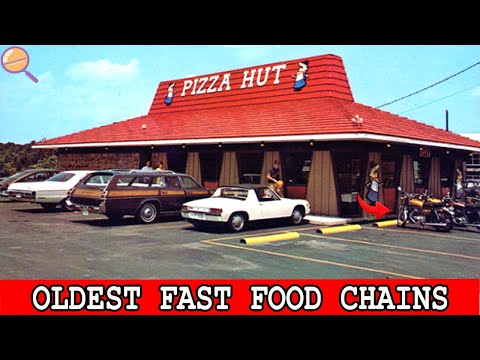
Out west, the pizza revolution was quietly gathering steam. In 1958, Frank and Dan Carney opened a tiny 25-seat pizza shop in Wichita, Kansas. The sign only had room for nine letters, so they called it Pizza Hut. It was the first pizza chain in America, and it capitalized on a postwar craving for Italian food that soldiers had discovered overseas. Within a decade, Pizza Hut had gone global, and the red roof became as recognizable as any burger stand.
That same year, a different kind of chain was born in the Midwest. In 1958, a former minor league baseball player named Mike Ilitch and his wife Marian opened a pizza shop in Garden City, Michigan. They called it Little Caesars, and from the start, they did things differently. They focused on takeout only, skipping the dining room entirely. It was a bet that families wanted convenience over atmosphere, and it paid off. By the 1970s, Little Caesars was expanding rapidly, and its later Hot-N-Ready model would make it a powerhouse.
As the 1960s rolled in, the industry began to mature. Chains that had started as single stands were now franchising, and the competition was fierce. In Columbus, Ohio, a man named Dave Thomas opened his first Wendy’s in 1969, naming it after his daughter. He was late to the game, but he had a strategy. Square burgers that hung over the bun sent a message: no corners cut. Fresh, never-frozen beef was a promise he made on day one, and it still stands. Wendy’s also pioneered the two-window drive-thru, a small innovation that became an industry standard.
But the road to success was never smooth. For every chain that thrived, another stumbled. The stories of the 1970s and 80s are filled with cautionary tales—brands that expanded too fast, lost their identity, or simply couldn’t keep up with changing tastes. And the ones that survived learned a hard lesson: in fast food, nostalgia is powerful, but consistency is everything.
Take Burger Chef, for example. Founded in 1954, it grew into the second-largest chain in the country by the 1970s, with over 1,200 locations. It introduced the works bar, where customers could pile on their own toppings, and it was one of the first to offer combo meals. But after General Foods acquired it in 1968, quality slipped, marketing got confusing, and the brand lost its way. By 1982, Hardee’s bought what was left, and the name vanished.
Then there was Chi-Chi’s, the Tex-Mex pioneer that brought margaritas and sizzling fajitas to the suburbs. At its peak, it had over 200 locations and was the go-to spot for birthday dinners and Friday night celebrations. But as diners grew more sophisticated and authentic Mexican restaurants proliferated, Chi-Chi’s didn’t adapt. Then came the hepatitis A outbreak in 2003—a devastating blow that infected over 600 people and killed four. The lawsuits and the headlines destroyed the brand, and the party was over.
Arthur Treacher’s Fish and Chips tried to offer something different in a burger-dominated world. Founded in 1969 and named after a British actor, it exploded to over 800 locations by the mid-70s. Golden fried cod, thick-cut fries, and hush puppies drew crowds looking for a break from beef. But as health consciousness rose and supply issues forced the chain to swap cod for cheaper fish, customers noticed. Competitors added grilled options, and Arthur Treacher’s couldn’t keep up. By the 1980s, most locations had closed.
These stories aren’t just about failure—they’re about the razor-thin margin between triumph and oblivion in an industry that never stops moving. The chains that endured were the ones that stayed true to their core while still finding ways to evolve. And as the 20th century drew to a close, a new wave of competition was already reshaping the landscape.
As the new millennium dawned, the survivors proved that longevity wasn’t about staying the same—it was about knowing exactly what to keep. McDonald’s kept the fries, Wendy’s kept the square patty, and In-N-Out kept the two-way intercom. The formula was simple: change everything around the core, but never touch the core itself.
Those early pioneers left more than recipes behind. They left a blueprint—one that favored speed, consistency, and a little bit of showmanship. From Nathan’s nickel dogs to the Colonel’s white suit, every one of them understood that feeding people was also a form of theater.
Today, the drive-thru speaker crackles with the same promise it did a century ago: a quick meal, a familiar voice, a small comfort on a long road. The names have changed, the menus have grown, but the ritual endures.
So the next time you pull up to that glowing menu board, remember—you’re not just buying lunch. You’re taking part in a century-old story.
Which of these legendary chains holds your fondest memory—and what do you think today’s fast food giants could learn from the originals? Share your thoughts below.
Report this article
Select a reason for reporting:






