In the mid-1960s, Phuoc Tuy Province was a microcosm of the Vietnam War’s agonizing complexity. Nestled southeast of Saigon, the region boasted stunning beauty—from the lush rubber plantations of Long Khanh to the rugged jungles of the Long Hai hills. Yet behind this picturesque facade lurked a brutal reality. Phuoc Tuy was a wasteland, a place where ordinary people were crushed between two opposing forces.
Villagers lived in a terrifying duality: government rule by day, insurgent control by night. Collaborate with one side, and you invited the other’s deadly wrath. Every decision meant life or death. The arrival of foreign troops only thickened the atmosphere of suspicion and fear.
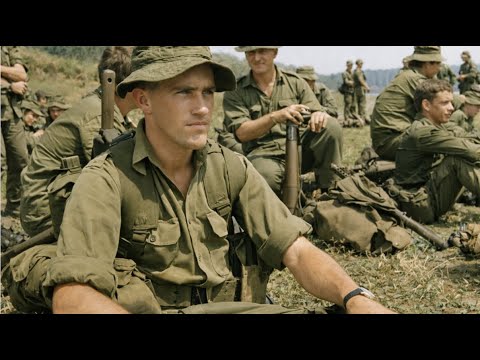
Early in the conflict, the prevailing military doctrine of ‘Search and Destroy’ carved deep scars into the province. Large-scale allied operations often unleashed heavy artillery and airstrikes to flush out hidden enemy forces. Tactically sound, perhaps—but socially catastrophic. Villages were shattered by shellfire, livestock killed, ancestral homes reduced to ashes.
To the people of Phuoc Tuy, foreign soldiers became synonymous with destruction—a powerful, irregular force arriving in clouds of dust and diesel smoke, searching homes, and leaving only ruin behind. A deep wall of silence rose between them. Villagers perfected the art of the blank stare, a shield to hide information and emotion. They saw the war as a storm to be endured until the foreigners went home.
In 1966, the Australian Task Force stepped into this uncertain environment. They inherited not just a tactical sector but the burden of broken trust. They understood that traditional metrics of military success—body counts, hill seizures, ammunition expended—were utterly meaningless in Phuoc Tuy. To succeed, they had to solve a problem beyond the power of bombs.
They had to break the cycle of fear and prove they were not just an army of destruction but a force that had come to build. The battle for the hills mattered, but the battle for the villages became the true definition of the Australian mission.
By 1967, as conflict intensified, the Australian government realized that military dominance alone could never bring lasting peace. To address the root causes of insurgency, they formed a unit revolutionary for its time: the First Australian Civil Affairs Unit (1 ACAU). While other allied nations paid lip service to winning hearts and minds, the Australians made it the cornerstone of their strategy.
1 ACAU was no ordinary soldier detail that occasionally did charity work. It was a dedicated organization of specialists whose primary weapon was development, not destruction. Instead of just infantrymen, the unit was a multi-disciplinary team of intellectuals: engineers, doctors, dentists, agricultural scientists, and education experts. These were people who traded rifles for stethoscopes, survey equipment, and bags of improved rice seed.
They were integrated directly into the military structure, elevating civil action to the same importance as combat operations. It was a profound shift in military philosophy. Australian high command grasped a fundamental truth others ignored: winning hearts and minds was not a slogan—it was a strategic necessity.
They operated on the principle that a villager whose family had a clean water well, a school for their children, and a doctor to cure illness was far less likely to support the insurgency. But the Australians went a step further than their American allies. While the U.S. often used massive economic aid packages, trying to buy loyalty with money and goods, the Australians believed in their own labor and participation.
The philosophy of 1 ACAU was built on the difference between merely giving and working shoulder-to-shoulder. They avoided the mistake of handing out aid from the back of a truck, which often bred dependency or resentment. Instead, they emphasized working with villagers. If a bridge needed building, Australian engineers provided technical skill and materials, but local people provided the labor. Together they mixed concrete, laid bricks, and shared the pride of a finished job.
This civil action was designed to prove that Australia’s presence was an investment in the future of the Vietnamese people. By working side by side, 1 ACAU shattered the barrier of an occupying force. They were not just soldiers in green uniforms; they were builders, healers, and teachers willing to get their boots muddy alongside farmers.
In the eyes of the people of Phuoc Tuy, this was the greatest difference. The Australians were not just winning battles—they were building a society, one brick and one smile at a time.
Trust on the battlefield is not won over years. It is won or lost in the first 24 hours. The Australians understood that upon entering any new village in Phuoc Tuy, every movement was being observed from behind half-open windows. To the villagers, the arrival of foreign soldiers usually meant a Search and Destroy mission—a chaotic event of kicking down doors and shouting orders.
To break this cycle of fear, the Australians followed a strict protocol of cultural etiquette, designed to convey one thing: respect. In those critical first 24 hours, their posture was deliberately humble. Unlike other forces that roared into villages on M113 armored personnel carriers, the Australians entered on foot. This display of physical vulnerability was a conscious decision. By walking in at eye level with the villagers, they erased the mechanical, monstrous image of an occupying force.
But the real magic lay in the inviolable social rules every Australian soldier was ordered to follow. These rules were built on deep practices of Vietnamese tradition. The first was protecting the sanctity of the family home. An Australian soldier would never cross the threshold of a house without an invitation or the permission of a local elder. In a war where homes were often treated as mere search targets, this simple act of waiting outside the door was a profound expression of humility. It signaled that the Australians recognized the villagers as owners of their own domain.
The second part of the rule concerned physical conduct. Soldiers were strictly forbidden from patting children on the head. While Westerners might see this as a gesture of affection, in Vietnamese culture the head is considered the most sacred part of the body, the seat of the soul. Touching it was deeply offensive. Furthermore, soldiers were trained not to look women directly in the eye for prolonged periods, which could be perceived as aggressive or disrespectful. By lowering their eyes and maintaining a polite distance, the Australians proved they were gentle warriors, no threat to the village’s social fabric.
Finally, there was the rule of patience over haste. Instead of demanding information about the enemy, the Australians spent their first day in conversation at the tea table. They sought out village elders, sat on low wooden stools, and accepted tea served with two hands in respect for hospitality. They listened more than they spoke.
Before the first 24 hours had passed, the atmosphere in the village began to shift. The blank stares of the locals softened. This cultural awareness was the key. By understanding local customs, the Australians avoided the resentment that foreign soldiers usually inspired. They were not just ordinary soldiers in Vietnam. They were guests who honored their hosts. This 24-hour investment in dignity laid the foundation of trust, allowing doctors and engineers to enter the next day not as intruders, but as welcomed partners.
While the strategic silence of Australian patrols protected the village perimeter, it was the sound of stethoscopes and the hiss of autoclaves that truly won the hearts of the people of Phuoc Tuy. Under the shade of sprawling rubber trees, the Medical Civil Action Program—or MEDCAP—did what locals called a modern-day miracle. These were not state-of-the-art air-conditioned hospitals of the Western world. They were simple mobile clinics, where Australian army doctors and medics worked in blistering heat to transform the picture of public health.
The scale of this medical effort was astonishing. Verified records show Australian medical teams treated over a hundred thousand people each year. In a province where many villagers had never seen a trained doctor in their lives, the arrival of an Australian physician was a life-changing event. They did not just treat the horrific wounds of war, shrapnel injuries, or gunshot wounds. They tackled the silent, chronic killers that had been gnawing at rural poor communities for generations.
In this quiet war against disease, antibiotics were the primary weapon. To a mother whose child was suffering from severe respiratory distress, or a farmer crippled by tropical ulcers, the magic medicines and injections provided by the Australians seemed like gifts from another world. Within days, infections that had previously meant a slow and agonizing death began to heal. But the Australians knew a single dose was not enough. They emphasized holistic care. They treated chronic skin conditions like scabies, provided dental care for those suffering long-term pain, and launched widespread vaccination programs.
One of the most enduring contributions of the MEDCAP teams was their polio vaccination campaign. At the height of the conflict, when neighboring provinces were battling outbreaks of paralytic disease, the number of cases in Australian-controlled areas dropped dramatically. By delivering vaccines directly to the most remote villages—often carrying boxes of medicine on foot through contested areas—they ensured that a generation of children in Phuoc Tuy would grow up normally, not confined to wheelchairs or crutches.
The impact of this medical care was profoundly psychological. In the eyes of the villagers, the Australians were no longer just armed men. They were the people who saved my child. It created a moral debt that no insurgent propaganda could erase. When a doctor spent his afternoon cleaning the festering wounds of an elderly grandmother, or a dentist spent months pulling painful teeth, a bond was formed that transcended politics. The Australians healed not just bodies; they healed the social fabric. Through consistent, compassionate, and high-quality service, they proved that their presence meant life, not death. The clinics under the rubber trees became neutral zones of humanity, where the only ideology was the Hippocratic Oath.
This medical marvel became the ultimate armor for the Australian forces. It was hard to convince a village to plant mines against the people who were saving their children’s lives. The real achievement of the Australian mission in Phuoc Tuy was the mentality of choosing the hard labor of the worker over the arrogance of the conqueror. Other military forces might focus on nation-building from the safety of fortified bases, but the Australians understood that the path to the human heart often goes through their fields.
It gave rise to a unique phenomenon, where soldiers from the Queensland outback or Victorian farms stood bare-chested in knee-deep mud of Vietnamese rice paddies, working alongside local farmers—a scene better known as an agricultural revolution than a military operation. The core of this effort was the transformation from merely giving to working together. The Australians brought not just goodwill. They brought expertise. They introduced high-yield IR8 rice varieties, often called magic rice, and taught scientific animal husbandry methods to increase livestock survival rates.
But the Australians did not just advise from the sidelines. In a powerful display of solidarity, soldiers joined villagers in clearing irrigation canals, harvesting crops, and threshing rice. This physical labor shattered the traditional image of the Western soldier. By sharing the physical burden of the harvest, the Australians became neighbors instead of occupiers.
The commitment to long-term prosperity was best embodied by two landmark projects: the Baria market and support for the Le Loi Hospital in Vung Tau. The Australians didn’t just fund the market—they rebuilt its stalls and improved sanitation, creating a vibrant hub where farmers could sell their magic rice. At Le Loi Hospital, Australian medics didn’t just visit; they embedded themselves, establishing surgical wards and providing training and equipment that would outlast their departure.
Even today, elderly residents remember the Australians not for the roar of guns, but for the laying of hospital bricks and the keeping of the market alive. This agricultural and civil revolution turned Phuoc Tuy into a model of stability, proving that a hoe can be as effective as a rifle in securing a nation’s future.
By 1968, over 500 schools had been built or repaired, and clean water projects—pump stations, windmills, and wells—transformed daily life. Villagers helped dig foundations and lay tiles, so these buildings were their own. It was harder to convince a village to destroy a water station they had built with their own hands.
The intelligence windfall was immediate. Villagers warned Australian patrols of mines and ambushes, not for money, but because they didn’t want the doctor who saved their child to die. In the battle for hearts and minds, trust was the only intelligence that never lied.
When the Australians withdrew in the early 1970s, it was a dignified departure, leaving behind a legacy of concrete, medicine, and memory. Today, Phuoc Tuy stands as a global model for peacekeeping, teaching that the most enduring victories are won without firing a shot. The kindness of those gentle warriors remains a timeless message: a nation’s strength lies not in its power to destroy, but in its power to rebuild.
What do you think—can kindness ever truly be a weapon of war?
Report this article
Select a reason for reporting:






