August 1966, Phuoc Tuy Province, South Vietnam. The province the US Army had already written off as uncontrollable. The province that was about to prove, in just six weeks, that every American assumption about counterinsurgency was catastrophically wrong.
Six weeks. That’s how long it took for one Australian battalion—outnumbered more than 20 to 1 at the moment of contact—to make senior US commanders quietly stop calling their ‘search and destroy’ doctrine the gold standard of Vietnam strategy. Six weeks that forced the world’s most powerful army to do something it almost never did in that conflict: admit that an ally with a fraction of its budget, manpower, and firepower had figured out something they had completely missed.
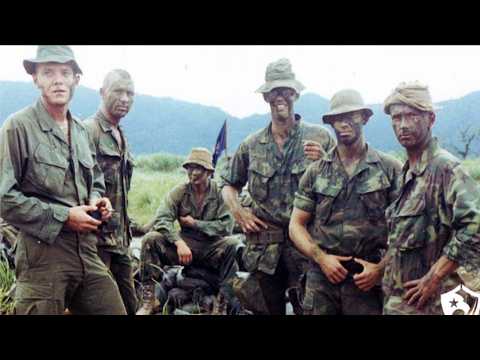
The Australians arrived with a fighting doctrine forged in a completely different place. While US units moved through the countryside in massive formations designed to locate and crush the enemy with concentrated force, Australian platoons split into patrols small enough to move without alerting every farmer, fisherman, or sympathizer within five miles.
Where American doctrine treated the village as a tactical target to be searched, cleared, and if necessary evacuated, the Australian approach treated that same village as a source of intelligence—one that could only be extracted through patience, repeated contact, and slowly building trust. No amount of firepower could replace that.
The US Army rotated its soldiers on 12-month tours counted by the day, replacing exhausted troops with fresh ones on a predictable administrative schedule. The Australian approach in Phuoc Tuy created a continuity unmatched by the Americans—an institutional memory that lived not in filing cabinets in Saigon, but in the minds of men who had walked the same ground for months, and in some cases, years.
One American colonel who observed early Australian operations in the province—known in surviving correspondence only by his initials—wrote a memo complaining that the Australian approach was, in his words, too slow to produce results Washington would accept. He wasn’t entirely wrong about the politics. But he was catastrophically wrong about the war.
His staff had been trained to think in terms of engagement ratios and body counts—numbers that could be charted and presented to congressmen as proof of progress. The Australians didn’t care about engagement ratios because they didn’t want to engage in the first place, unless it was entirely on their terms.
That distinction, more than any single weapon or tactic, was the fault line on which the friction between American and Australian forces in Vietnam rested. Two allies fighting the same enemy in the same war, using theories of victory that were fundamentally incompatible with each other.
The patrol discipline the Australian infantry brought to Phuoc Tuy was hard-won. The US Army had almost no direct experience in the two decades of counterinsurgency against the Malayan Communist Party in the Malayan jungle. Before that, there were harsh lessons from New Guinea in World War II, where Australian soldiers learned that firepower alone meant nothing against an enemy who used terrain and patience as weapons in their own right.
In Malaya, small Australian and British patrols spent years learning that a platoon moving noisily through jungle would see nothing, achieve nothing, and eventually lose its men to an enemy who heard them coming from half a mile away and simply stepped aside to let them pass. The lesson that emerged from that campaign was never written in any American field manual, because the US Army didn’t participate in that campaign.
Move quietly enough, patiently enough, observantly enough, and the enemy will reveal himself. Move loudly and aggressively enough, and the enemy will disappear until the moment he chooses to reappear on his own terms—usually in a pre-prepared ambush.
That philosophical gap was never more visible—or more embarrassing to American observers—than during the joint operations that put US Army units in direct contact with Australian patrolling methods inside Phuoc Tuy. Liaison arrangements placed a handful of American officers alongside Australian platoons for observation purposes, ostensibly to study allied tactics for potential adoption elsewhere in the country.
What those officers witnessed instead produced a collection of after-action reports that read, even now, like a series of confessions. One report describes an Australian platoon spending four hours covering less than a kilometer of ground because the patrol commander detected fresh signs of movement and refused to advance until his forward scouts confirmed what had caused them.
The accompanying American officer, according to the same report, initially assumed the delay reflected caution bordering on cowardice. He revised that assessment within the hour when the patrol’s scouts located a Viet Cong squad resting in ambush position less than 200 meters ahead—a position any American force advancing at the customary pace of patrols would have walked straight into.
The American liaison officers’ reactions to what they saw in Phuoc Tuy followed a predictable arc, one repeated in nearly every surviving account from that period of combined operations. Initial skepticism gave way to grudging curiosity, which in turn gave way—in a striking number of documented cases—to a complete conversion of convictions.
Men who had spent entire careers inside a doctrine built on speed, aggression, and overwhelming firepower found themselves watching a smaller, less resourced ally consistently generate better intelligence, suffer fewer casualties, and hold contested ground more durably using an approach that looked, on its face, passive by American standards.
It wasn’t passive. It was patient in a way the American military culture had no institutional vocabulary for, because patience didn’t translate into the metrics Washington demanded. And the metrics were how careers were built inside the US Army during that period of the war.
The village pacification work conducted by Australian civil affairs teams alongside the infantry patrols in Phuoc Tuy represented perhaps the sharpest contrast of all. It’s the part of the story American official histories treat with the least detail, perhaps because it reflects unfavorably on the parallel American approach being applied in neighboring provinces at the same time—where US pacification efforts in many parts of South Vietnam relied heavily on large-scale resettlement programs, relocating entire village populations into fortified hamlets under direct military control.
The Australian approach in Phuoc Tuy, by contrast, generally kept populations in place, working instead to slowly separate them from Viet Cong influence through a combination of security, medical assistance, and repeated, sustained contact between the same soldiers and the same villagers over long periods.
The theory, borrowed once again directly from the Malayan experience, held that uprooting populations destroyed the relationships of trust that ultimately produced actionable intelligence—and that a population that trusted the soldiers protecting them would begin, given enough time, to identify the neighbors who were reporting to the other side.
This was not gentle work, and any narrative presenting it as purely benevolent is a distortion of the historical record. Australian forces conducted their own share of coercive operations, detentions, and population control measures that would invite severe scrutiny under modern standards. What distinguished the approach from its American counterpart wasn’t moral superiority. It was a calibrated patience rooted in a specific, hard-earned understanding of what actually produced durable security in a contested rural province.
An understanding paid for in Malaya over the better part of a decade, and now being applied with real success in a fraction of that time in Phuoc Tuy.
American observers who studied the results found something that didn’t sit comfortably with their own doctrine. Villages under sustained Australian influence produced measurably more intelligence over time, not less. Even with the overall military footprint in those villages remaining smaller than in comparable American-controlled areas—smaller footprint, better intelligence.
That single, consistently repeated outcome undermined an entire theory of how counterinsurgency worked. A theory the US Army had built enormous institutional investment around.
The moment that finally forced explicit acknowledgment—even if that acknowledgment never fully reached official American doctrine during the war itself—came during a period of intensified Viet Cong activity in Phuoc Tuy in mid-1969. When a significantly reinforced enemy force attempted to retake control of villages that Australian patrols had spent nearly three years slowly separating from Viet Cong influence.
Pre-operation US intelligence assessments expected the widely dispersed Australian forces to be forced to abandon significant ground before reinforcements could restore the situation. It was the kind of prediction that seemed entirely logical within American doctrinal assumptions about force ratios and area coverage. It also turned out to be completely, comprehensively wrong.
The Australian companies, operating on the small-unit patrolling system that had defined their approach since 1966, absorbed the initial contact. Denied the enemy the large-scale engagement it needed to regain a foothold, and within weeks, pushed Viet Cong influence back to a level lower than it had been before the operation began. No large-scale clearing operations on the American model. No mass evacuation of contested villages. Just the same patient small-unit approach that had been quietly outperforming American doctrine for three years.
They did exactly what they had always done, at exactly the scale they had always operated at.
What makes this story genuinely uncomfortable for American military history—rather than a mere interesting footnote about allied cooperation—is what happened when senior US commanders were asked, years later, why ‘search and destroy’ failed to produce lasting results across most of South Vietnam while a far smaller ally, operating on a fundamentally different doctrine in a single province, achieved measurably better and more durable outcomes with a fraction of the resources.
The answers, where they exist in the historical record, tend toward a familiar defensiveness. Phuoc Tuy was a smaller, more manageable area of operations. The comparison wasn’t between like and like. Australian forces enjoyed terrain or population-density advantages not present elsewhere in the country.
Some of these explanations contain a measure of truth. None of them fully accounts for the consistency of the results—or for the fact that American liaison officers who spent extended time observing Australian methods in Phuoc Tuy came back, repeatedly, describing what they saw as closer to a revelation than a mere tactical variation.
Soldiers don’t usually describe minor doctrinal adjustments in the language of conversion. They use that language here because that is what it genuinely felt like to men trained inside one theory of war, who then spent months watching a smaller, quieter, more patient theory consistently outperform it.
There is one particular story that appears in multiple unit histories and veteran accounts from that period, told with slight variations depending on the source, that captures the cultural gap between the two doctrines more effectively than any official report. An American officer newly attached to observe Australian operations reportedly asked an Australian company commander during a briefing why his men weren’t moving to reinforce a position with greater force, given the numbers the Viet Cong were believed to have massed nearby.
The Australian officer’s reply, recorded with minor differences in various tellings but consistent in its essence, was simple and direct. We don’t fight that way. It wasn’t an insult, and it wasn’t delivered as one. It was a statement of fact from a soldier operating under a doctrine built on an entirely different theory of how wars were actually won in this kind of terrain, against this kind of enemy.
According to the same accounts, the American officer initially took the response as evasion, or even insubordination—a soldier failing to grasp the tactical necessity of the moment. He understood it very differently after observing the outcome of the engagement that followed. An engagement the Australians won not through aggressive reinforcement, but through patient positioning that let the enemy walk into a fight he didn’t know he was already losing.
The broader pattern that emerges from the full historical record of Phuoc Tuy is not one of Australian tactical genius operating in isolation from American failure—any narrative presenting it that way oversimplifies a genuinely complex allied relationship. US forces achieved real successes elsewhere in Vietnam using their own doctrine. Australian forces in Phuoc Tuy benefited enormously from American logistics, airpower, and medical evacuation capabilities that a force the size of the Australian task force could never have provided on its own.
This wasn’t a story of one ally succeeding while the other failed. It was a story of two allies operating on fundamentally different theories of counterinsurgency in the same war—with one of those theories consistently producing more durable results under the specific conditions of populated, contested rural terrain, while the institutional leadership of the stronger ally was slow to absorb what that difference actually meant.
The US Army eventually incorporated elements of small-unit patrolling doctrine more broadly into its own thinking, particularly in the final years of the war and in the decades of doctrinal reform that followed the American withdrawal. But that acknowledgment came slowly, quietly, and largely without direct credit to the ally whose province had demonstrated the model years earlier in real time.
While American commanders were still presenting ‘search and destroy’ as a formula for victory, the human cost of the Australian approach deserves honest treatment here too—because the story is sometimes told in a way that makes patient, small-unit counterinsurgency seem almost bloodless compared to American methods. That is not an accurate picture of what soldiers in Phuoc Tuy actually lived through.
Moving in small patrols through contested jungle terrain for months and years exposed Australian soldiers to a specific and grueling kind of psychological strain that differed from—but was not less than—the strain endured by American units operating with heavier firepower and faster rotation schedules. Extended patrols meant longer exposure to ambush risk without close supporting units nearby. It meant carrying the accumulated tension of moving through terrain where every mark, every sound, every disturbance in the vegetation carried potential life-or-death significance—for weeks on end, without the psychological relief that a faster, more aggressive operational tempo sometimes provided simply by taking the fight forward rather than waiting for it to arrive.
Veterans of that force, speaking about this period in later years, describe a state of exhaustion less tied to physical exertion—though that was real too—than to the cumulative weight of constant vigilance. The particular tax of a doctrine built entirely on patience, in an environment that offered soldiers very little natural relief from the tension that patience demanded of them.
What ultimately happened to this history is a story about institutional memory and institutional pride as much as about military doctrine. The US Army, in the years after the withdrawal from Vietnam, underwent a substantive doctrinal review—and much of what emerged from that review, particularly around small-unit operations, population-centric security, and the limits of firepower as a substitute for patience and local knowledge, echoes almost precisely the lessons already proven years earlier in Phuoc Tuy province. By a far smaller ally operating on a fraction of the resources.
Official credit in these doctrinal shifts tends to point toward internal American reassessment, toward a broader theory of counterinsurgency developed across multiple conflicts, and toward lessons drawn from the war as a whole rather than from any single allied example. The Australian contribution, where it appears in these narratives at all, tends to appear as a minor footnote rather than what the surviving operational records suggest it more closely resembled: a working model, implemented in real time and under real combat conditions, of an approach the US Army would spend years relearning independently and at considerable additional cost.
None of this means the Australian doctrine was a universal solution the US Army was simply too arrogant to adopt wholesale. Every approach has its trade-offs, and the patient small-unit model that worked so consistently in Phuoc Tuy required a level of sustained force presence, extended unit continuity, and political patience that would have been extraordinarily difficult to apply at larger scale across the vastly bigger American commitment spread over a much larger expanse of South Vietnam. The Australian task force had the advantage of operating inside one defined province for consecutive years, allowing the kind of institutional memory and local relationships that the 12-month individual rotation doctrine, applied across a larger and more diverse American area of operations, could not have replicated without an entirely different approach to force deployment—one that would have required political decisions far beyond any field commander’s authority.
That is the honest, complicated version of the story—not the version where one ally had the answer all along while the other refused to listen. It is a story about how doctrine, resources, political constraints, and institutional pride interact in ways that determine which lessons get absorbed quickly, which take years to absorb, and which end up buried in operational reports most people never read.
What remains beyond dispute across every serious historical account of this period is that American officers who spent extended time observing Australian operations in Phuoc Tuy came away changed in ways that went beyond professional curiosity. They came away having watched a smaller, quieter, more patient ally consistently outperform American doctrine on the specific metrics that actually mattered in counterinsurgency: control of contested populations, sustainability of security gains over time, and the human cost in casualties relative to ground held.
They came away having heard directly from their Australian counterparts a simple explanation that carried more weight than any doctrinal manual could: We don’t fight that way. Four words that summarized an entire philosophy of war built on decades of hard-won experience in Malaya and Borneo, applied with discipline and patience in a province the US Army had already written off as a lost cause.
And it ended up, by the time Australian forces withdrew from Vietnam, becoming one of the quietest and most proven arguments of the entire war—the idea that more firepower and more aggression are not, in themselves, a theory of victory. Sometimes the ally with the smaller budget and the smaller footprint had simply learned, through harsher experience, a lesson the larger power had not yet been forced to learn. And for six years in a province of South Vietnam nobody expected much from, that lesson was written on the ground, one patient patrol at a time—whether Washington was ready to read it or not.
So here’s the question that lingers long after the last patrol came home: if a smaller ally with a fraction of the resources could see what the world’s most powerful army could not—how many other ‘lost causes’ are we still walking straight into, simply because we refuse to move quietly enough to hear the answer?
Report this article
Select a reason for reporting:






