The icy waters of the North Sea stretched endlessly in every direction, a merciless expanse that offered no mercy to the four men now floating in a tiny life raft. Their Bristol Beaufort torpedo bomber had ditched after both engines failed, leaving them stranded over 100 miles from shore. With no radio, no hope of rescue, and the freezing night closing in, their fate seemed sealed. But little did they know, their salvation would come from an unlikely hero: a homing pigeon named Winky.
Just hours earlier, the crew had taken off from RAF Sumbra in the Shetland Islands, tasked with an anti-shipping mission off the Norwegian coast. The pilot, Squadron Leader Cliff, and his crew—Weapons Operator Pilot Officer Tessier, Navigator Flying Officer McDonald, and Air Gunner Sergeant Then—had scanned the waters for enemy vessels but found only friendly ships. As they turned back toward their base at RAF Leuchars in Scotland, the Beaufort’s engines began to sputter. “Mayday! Mayday! We’re going down!” Cliff’s voice crackled over the radio, but the signal was lost. The engines died completely, and Cliff had no choice but to ditch the aircraft into the churning sea.
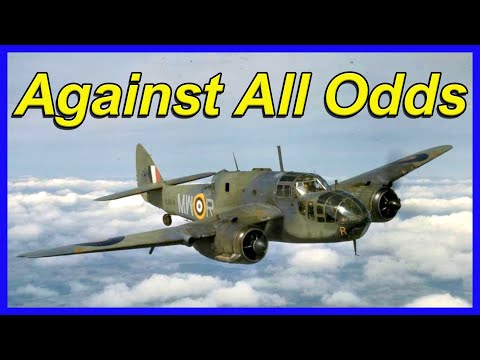
The impact was brutal, but the crew managed to scramble onto a life raft, grabbing their emergency supplies and Winky, a homing pigeon they carried for just such an emergency. As the aircraft sank beneath the waves, they released Winky with a message attached to her leg, but in the chaos, the coordinates were never recorded. “Fly, Winky! Fly!” they urged, watching her disappear into the darkening sky. With nothing left to do but wait, they huddled together, the cold seeping into their bones.
Meanwhile, 120 miles away in the Dundee suburb of Broughty Ferry, George Ross, an experienced pigeon handler, was stunned to find Winky early the next morning, exhausted and covered in oil. He immediately contacted RAF Leuchars, and though they hadn’t received a distress call, they knew one of their aircraft was missing. “Winky’s returned! But she’s in a bad way,” Ross reported. His expertise told him she had flown between 100 and 150 miles, and the oil on her feathers suggested she had rested on an oil tanker in the Firth of Forth. Using that clue, the RAF calculated a search area, and soon five Lockheed Hudsons, Bristol Blenheims, and a Catalina flying boat were dispatched.
The search seemed hopeless, but at 10:47 AM, a Hudson crew spotted a tiny dinghy bobbing in the waves. “We’ve found them! Four men on board!” the pilot radioed. They dropped a survival pack, and a high-speed launch raced to the scene, reaching the crew by 2:15 PM. The men were bruised and frostbitten but alive. As they were pulled aboard, Cliff whispered, “Thank God for that pigeon.”
Winky became an instant hero. She was guest of honor at a squadron dinner, where she was toasted by the officers and later awarded the Dickin Medal, the highest honor for animal bravery in wartime. “For gallantry and devotion to duty,” the citation read. But Winky’s story was far from over—her legacy would inspire generations, and her preserved body would find a home in a museum, a silent testament to the day a pigeon saved four men from the brink of death.
Yet for all the celebration, the ordeal had left its mark on the crew. Squadron Leader Cliff spent weeks recovering from frostbite that had nearly claimed two of his toes, while Sergeant Then quietly admitted to a doctor that he hadn’t slept properly since the ditching. “Every time I close my eyes, I hear those engines coughing out,” he confessed. The RAF, recognizing the psychological toll of such ordeals, offered the men extended leave, but Cliff refused anything more than a fortnight. “The squadron needs us,” he insisted, and by April the four were back in the air.
What none of them could have anticipated was how Winky’s fame would spread. Newspapers across Britain picked up the tale of the pigeon who flew through the night, oil-slicked and exhausted, to bring word of a doomed crew. The Daily Mirror ran the headline “THE BIRD THAT BROUGHT THEM HOME,” and letters began arriving at RAF Leuchars addressed simply to “Winky, Hero Pigeon, Scotland.” George Ross, amused and a little overwhelmed, kept a shoebox of them in his loft.
The attention brought complications too. A rival pigeon fancier in Dundee publicly questioned whether Winky could truly have flown such a distance in her condition, suggesting the crew’s position had been guessed rather than deduced. Ross was furious. “I’ve kept birds for thirty years,” he wrote to the local paper. “I know exhaustion when I see it, and I know what oil on a bird’s breast means. Winky did what was asked of her, and I’ll not have her name dragged through the mud.” The controversy faded quickly, but it left Ross protective of his bird.
It was in the summer of 1943 that the letter from the People’s Dispensary for Sick Animals arrived. Maria Dickin herself had read of Winky’s feat and wanted to honor her. Ross remembered the day vividly—the small bronze medallion, the words For Gallantry and We Also Serve engraved upon it, and the peculiar solemnity of pinning it to a pigeon’s leg while photographers jostled for position. Winky, for her part, seemed utterly indifferent, more interested in the handful of grain Ross had brought along as a bribe.
But the war went on, and the men who owed their lives to her had scattered. Tessier was posted to the Mediterranean, where he flew anti-submarine patrols and rarely spoke of the North Sea. McDonald transferred to a training unit, teaching young navigators the very skills that had kept him alive in that raft. Cliff, promoted to Wing Commander, found himself behind a desk more often than in a cockpit, and he hated it. “I’d rather be freezing in a dinghy than shuffling paper,” he grumbled to a colleague.
It was Cliff who, in the autumn of 1943, received the news that Winky had died. He wrote to Ross immediately, a short, awkward letter from a man unaccustomed to expressing sentiment. “She was a better soldier than most of us,” he wrote. “If there’s anything I can do—anything at all—you must tell me.” Ross, grieving in his own quiet way, decided that Winky’s story should not end in a shoebox of memories. He contacted the Dundee Art Galleries and Museums with an unusual offer.
The taxidermist did his work with care, and when Winky was returned to Ross, she looked almost as she had in life—alert, poised, a small bronze medal glinting at her breast. Ross held her for a long moment before placing her in the presentation case. “You did your bit,” he murmured. “Now it’s time for others to remember it.” The donation was formalized in early 1944, and Winky went on display in Dundee, where schoolchildren and veterans alike would stop to stare at the little bird who had carried hope across a hundred miles of black water.
The war ended, and the men who had floated in that dinghy went their separate ways. Tessier returned to civilian life in Yorkshire, where he ran a small hardware business and rarely mentioned the North Sea. McDonald emigrated to Canada, became a surveyor, and taught his grandchildren to read a compass by the same methods he had once used over open water. Then, the gunner, settled in Aberdeen and worked the docks, his nightmares fading slowly into ordinary dreams.
Cliff, however, could not let go. In 1949 he drove to Broughty Ferry and knocked on George Ross’s door without warning. The two men had exchanged letters for years but had met only once, briefly, in the chaos of the rescue. Ross opened the door to find a lean, grey-templed man holding a bottle of whisky and looking faintly embarrassed. “I was passing through,” Cliff lied. “Thought I’d pay my respects to the bird.”
They sat in Ross’s cramped loft among the cooing of a dozen pigeons, and for the first time Cliff spoke plainly about that night. He described the silence after the engines died, the way the sea had looked like hammered pewter, the sound of his own voice ordering the crew to abandon the aircraft. “I keep thinking about what would have happened if you hadn’t known your birds,” he said. “If you’d looked at Winky and seen just a tired pigeon.” Ross nodded slowly. “Aye. But I did know. That’s the whole of it.”
What neither man knew was that Winky’s medal was about to become the centre of a quiet controversy. In 1950 a retired naval officer wrote to a national newspaper claiming that the Dickin Medal had been intended for dogs and horses, and that awarding it to a pigeon—and later to other birds—diminished its prestige. The letter drew angry replies from pigeon fanciers across the country, and Ross, now in his sixties, found himself reluctantly drafted into the argument.
He wrote to the PDSA asking whether Winky’s award might be formally defended. The charity replied with a measured statement affirming that the medal honoured any animal that had served alongside British forces, and that Winky’s case had been reviewed and approved by Maria Dickin herself. “That settled it for me,” Ross later told a reporter. “If the founder of the medal says my bird earned it, then my bird earned it.”
The controversy did have one lasting effect: it prompted the PDSA to compile a fuller record of each recipient’s story, ensuring that the circumstances behind every medal were documented before memories faded. Winky’s file grew thick with letters, newspaper clippings, and a handwritten account from Cliff himself, which Ross suspected had cost the man considerable pride to write.
By the mid-1950s, Winky had become a fixture of Dundee’s museum, and a strange sort of pilgrimage site. Veterans brought their children to see her. School classes filed past the case, and more than one teacher was asked, in perfect seriousness, whether the pigeon had really flown all that way by herself. “She did,” the guides would say. “And she did it in the dark, with oil on her wings, because she knew where home was.”
Ross visited the museum every few months, always alone, always early in the morning before the crowds arrived. He would stand before the case and say nothing for a long while. Then he would straighten his coat and walk out into the grey Dundee daylight, satisfied that his bird was being looked after.
Cliff never forgot. Each February, on the anniversary of the ditching, he sent Ross a short note—never more than three lines—and each year Ross replied in kind. “The bird’s still on her perch,” Ross wrote in 1958. “And so are we.”
Ross died in 1961, and his pigeons were dispersed among fellow fanciers. Cliff attended the funeral, standing at the back in a dark coat, and afterward drove to the museum. He stood before Winky’s case for nearly an hour. “You’d have liked him,” he told the pigeon. “He was the stubborn one who kept you honest.”
Cliff himself passed away in 1972, and the last of the four airmen, Sergeant Then, followed in 1989. With them went the voices that could still say what it had felt like to watch that small bird vanish into the dark. What remained were the letters, the medal, and the bird herself.
Today Winky stands in a glass case in Dundee, her bronze medallion still gleaming, while visitors pause to read the words We Also Serve. Children ask if the story is true. It is. And somewhere in the quiet of the museum, a question lingers: how many other small, overlooked heroes carried hope across impossible distances—and how many are we still waiting to remember?
Report this article
Select a reason for reporting:






