The court of Henry VIII was a place where innocence was a luxury no one could afford. Every step echoed with conspiracy, every glance carried the weight of betrayal. In this world, power was paid in blood, and a single whisper could send a head to the scaffold.
Now, 20 of the Tudor era’s most powerful figures return—vivid, ominous, and dangerously alive. From the king who broke with Rome to the wives who paid the ultimate price, from scheming ministers to doomed nobles, their stories are resurrected with chilling clarity. Who was the most dangerous in Henry VIII’s court? The answer lies in the shadows of history, waiting to be uncovered.
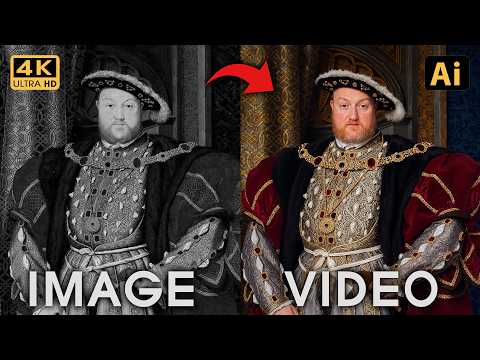
Henry VIII, the second monarch of the Tudor dynasty, ascended the throne at just 17 and ruled for nearly four decades. In his youth, he was celebrated for his education and fluency in languages, but his private life grew notorious—especially his six marriages. His break with the Pope to create the Church of England secured absolute authority and reshaped history. When he died in 1547, he left a kingdom transformed by his iron rule.
His first wife, Catherine of Aragon, came from Spain’s united royal dynasty and was renowned for her learning, dignity, and deep Catholic faith. She spent over 20 years as queen, but her failure to bear a son led to her removal and the break with the Catholic Church. Catherine died in 1536, remembered as a symbol of steadfast courage.
Anne Boleyn, the second wife, was educated in Holland and France and embraced Renaissance culture. She attracted Henry but refused to be his mistress, prompting him to seek a divorce and trigger England’s religious transformation. Married in 1533, she failed to bear a son and was later accused of treason. Anne was executed in 1536, remembered as a driving force behind a defining turning point in England’s history.
Jane Seymour, the third and most beloved wife, was known for her gentle, tactful nature. She married Henry soon after Anne’s execution and gave birth to Prince Edward in 1537, but died from postnatal complications. Henry buried her at Windsor and regarded her as his one true wife.
Anne of Cleves, the fourth wife, is remembered for the king’s shortest marriage—only six months. Chosen through a flattering portrait, she disappointed Henry when they met in person, and the marriage was annulled as unconsummated. She wisely accepted the separation, was named the king’s sister, and lived in comfort, outliving all of Henry’s wives.
Katherine Howard, the fifth wife and cousin of Anne Boleyn, captivated the king with her youth and charm. Married in 1540, she was adored by Henry but soon accused of adultery. After admitting relationships before and during her marriage, she was condemned. Catherine was executed in 1542, remembered as one of the most tragic figures of the Tudor age.
Katherine Parr, the sixth and only surviving wife, had been widowed twice before marrying the king in 1543. Learned, calm, and devout, she cared for Henry during his final years and helped reconcile his family. A supporter of the Reformation, she became the first woman to publish a book in English under her own name. After Henry’s death, she remarried but died in 1548 from postnatal complications.
Beyond the wives, the court teemed with ambitious men whose fates were equally precarious. Thomas Wolsey, the powerful minister who governed the kingdom, collapsed when he failed to secure Henry’s divorce. Thomas More, the learned humanist, refused to acknowledge the king as supreme head of the Church and was executed for treason. Thomas Cromwell, the architect of the English Reformation, advanced the king’s break from Rome but fell after the failed marriage to Anne of Cleves.
And then there were the heirs—Mary I, who sought to restore Catholicism with uncompromising zeal, earning the name Bloody Mary; Elizabeth I, who ruled for 44 years and ushered in a golden age; and Edward VI, the boy king who died at 15, leaving a succession crisis. Each played a part in the drama that was the Tudor court.
As we delve deeper into the lives of these 20 figures, the question remains: who was the most dangerous? Was it the king himself, whose whims could elevate or destroy? Or one of the many schemers who navigated the treacherous waters of power? The answers are as complex as the people themselves, and the shadows of the Tudor court still have much to reveal.
Consider Thomas Cromwell, the blacksmith’s son who rose to become the most feared man in England. He did not wield a sword; he wielded paperwork. Through the Act of Supremacy, he made the king a pope, and through the dissolution of the monasteries, he turned sacred stone into royal gold. His intelligence network stretched across Europe, and his spies whispered into his ear from every corner of the realm.
Yet Cromwell’s fall was as spectacular as his rise. The failed marriage to Anne of Cleves gave his enemies the opening they needed. On the day of his arrest, he reportedly threw his cap to the ground in despair. He was executed in 1540 without trial, and his head boiled on London Bridge beside the very men he had condemned.
Then there was Thomas Howard, the third Duke of Norfolk, the great survivor of the old nobility. As uncle to both Anne Boleyn and Katherine Howard, he climbed to the height of influence, only to watch both nieces go to the block. His ambition was matched only by his ruthlessness in battle and in court politics.
Norfolk was arrested for treason in the final days of Henry’s reign and nearly followed his nieces to the scaffold. He was spared only because the king died before the execution could be carried out. Released under Mary, he ended a long and turbulent political life—but not before learning that in the Tudor court, family ties were no shield against the axe.
And what of Thomas Cranmer, the quiet archbishop who shaped the very soul of the Reformation? He declared Henry’s first marriage invalid and affirmed the king’s supremacy over the Church. He authored the Book of Common Prayer, a text that would echo through centuries of Anglican worship.
But Cranmer’s fate was sealed when Mary I took the throne. Condemned for heresy, he was forced to watch his old allies burn before his own turn came. Before being burned in 1556, he withdrew his earlier submission and thrust his right hand into the flames first—the hand that had signed the recantation. It was a final act of defiance that made him one of the most prominent martyrs of the Tudor era.
Stephen Gardiner, Bishop of Winchester, stood as Cranmer’s great rival—the conservative statesman who supported the break from Rome yet remained loyal to Catholicism. He clashed with Cromwell and Cranmer alike, and under Edward VI he was stripped of authority and imprisoned for resisting Protestant reforms. When Mary ascended, Gardiner was restored, became Lord Chancellor, and led the Catholic revival. He died in 1555, his career marked by conflict and power.
Nicholas Carew, one of Henry’s finest horsemen and most trusted courtiers, learned how quickly loyalty could curdle. A childhood companion of the king, he was renowned for his athletic skill and commanding presence. But shifting political loyalties and alleged ties to the Pole family conspiracy made him a target for Cromwell. Carew was accused of treason and executed in 1539, ending a career marked by danger and turbulence.
And then there was William Paget, the great survivor. Serving four monarchs—Henry VIII, Edward VI, Mary I, and Elizabeth I—he navigated every religious and political upheaval with remarkable skill. Lord Treasurer and Lord President of the Privy Council, Paget died peacefully in 1572 at nearly 90 years old, ending a career that lasted almost half a century. He understood what so many others did not: that survival was its own kind of power.
The Tudor court was a chessboard where the pieces were living souls. Each of these figures—the king, the wives, the ministers, the nobles—played their part in a deadly game. But as the shadows deepen, one question still lingers: who moved the pieces, and who was merely played?
The answer, perhaps, lies not in any single figure but in the machinery of the court itself—a machine that demanded blood as the price of ambition. Consider Charles Brandon, Duke of Suffolk, the king’s closest friend and most loyal companion. He rose from modest origins through talent and charisma, and even dared to secretly marry Mary Tudor, the king’s own sister. That act of passion could have cost him his head, yet Brandon’s charm and Henry’s affection won him forgiveness. He fought in major campaigns, sat on the Privy Council, and died in 1545—one of the few who loved Henry and lived to tell of it.
But even friendship had its limits. The court watched every gesture, every whispered confidence, searching for the crack that would bring a man down. And no one understood this better than the king himself.
Henry VIII was not merely a participant in the danger—he was its source. His moods shifted like weather, and a single displeasure could undo decades of service. Thomas More had been his friend, his chancellor, his intellectual companion. Yet when More refused to bend on the matter of the Church, Henry did not hesitate. The axe fell in 1535, and Europe recoiled.
What made Henry truly dangerous was not cruelty for its own sake, but the terrifying sincerity of his convictions. He believed utterly in his own authority—as king, as head of the Church, as a man whose will was law. Those who crossed him were not merely disobedient; they were heretics, traitors, enemies of God and England alike.
And yet, for all his power, Henry was also the most manipulated man in his own court. Cromwell fed him arguments, Anne Boleyn fed him ambition, Norfolk fed him flattery. The king who terrorized a nation was himself surrounded by whispers, each one shaping the next execution.
Perhaps that is the darkest truth of the Tudor court: the most dangerous figure was never one person, but the system they all served. A system where loyalty was currency, where love was leverage, and where the scaffold waited patiently for anyone who forgot the rules.
As the years passed and the great players fell one by one, the court grew quieter—but no safer. The old nobles gave way to new men, the monasteries crumbled into ruin, and the religious fault lines deepened into chasms that would split England for generations.
When Henry finally died in 1547, his kingdom was transformed beyond recognition. He left behind a church remade in his image, a treasury swollen with seized lands, and a court still trembling from the memory of his wrath. But he also left three children—each destined to rule, each destined to fight over the soul of England.
The game was far from over. In fact, it was only just beginning.
Edward VI, the boy king, inherited a court already poisoned by ambition. His regents—Somerset and Northumberland—fought over the throne while the young king wasted from tuberculosis. He died at 15, leaving a succession crisis that would tear England apart.
Mary I took the crown next, determined to drag the kingdom back to Rome. Her fires burned hundreds of Protestants, and the smoke of Smithfield earned her the name Bloody Mary. Yet her childless death in 1558 left the future uncertain.
Then came Elizabeth—Anne Boleyn’s daughter, the last of Henry’s children. She refused marriage, called herself the Virgin Queen, and turned a fractured island into a rising power. When the Spanish Armada fell in 1588, her golden age was sealed.
But the shadows never truly lifted. Every queen, every minister, every noble who survived knew the same truth: the Tudor court was a machine that ground souls into history.
So tell us—who do you think was the most dangerous of them all? The king, the wives, or the men who whispered in the dark? Leave a comment below.
Report this article
Select a reason for reporting:






