The first mortar shell hit the supply convoy just after dawn, tearing through a wagon of ammunition and scattering Romanian infantry into the frozen mud. It was November 1941, and the road to Sevastopol had already become a graveyard of trucks, horses, and men. For the soldiers of the Romanian 1st Mountain Brigade, the siege had barely begun, yet the cost was already unbearable.
They had marched into Crimea expecting a swift victory. Instead, they found a fortress carved into the cliffs, defended by a hundred thousand Soviet troops who refused to break. And behind them, a supply line that stretched across a hostile peninsula, vulnerable to air strikes, naval bombardments, and ambushes at every turn.
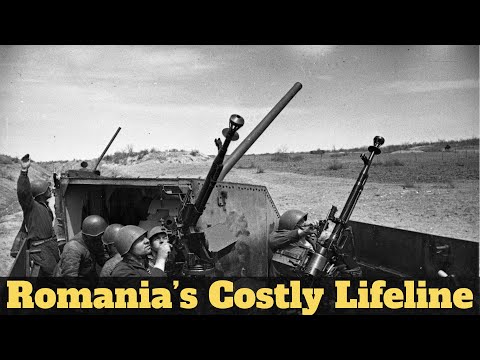
The Romanian divisions were not prepared for this. Their artillery was obsolete, their winter clothing nonexistent, their medical supplies nearly exhausted. Yet they were tasked with guarding the lifeline that kept the German 11th Army in the fight. Every bullet, every ration, every drop of fuel had to cross the narrow roads of Crimea under constant threat.
“We are not fighting for Sevastopol,” one Romanian officer wrote in his diary. “We are fighting to survive the road to it.” The words captured a truth that Berlin and Bucharest preferred to ignore: the siege would be won or lost not at the fortress walls, but along the supply routes that fed the guns.
By December, the first assault had failed. The Axis had thrown everything at the Soviet defenses and been thrown back with thousands of casualties. For Romania, the losses were staggering. Mountain battalions had been decimated in frontal attacks against entrenched positions. Cavalry units, sent to protect the flanks, found themselves fighting Soviet marines in the ravines of Balaclava.
And still, the orders came. Hold the line. Guard the convoys. Keep the supplies moving.
Back in Bucharest, propaganda painted a different picture. Newspapers celebrated the liberation of Bessarabia and the bravery of Romanian troops fighting alongside their German allies. But the letters home told another story. Soldiers wrote of frostbite, of hunger, of watching their comrades die not in glorious charges but in muddy ditches, ambushed while escorting wagons of bread and shells.
The Soviet Black Sea Fleet, though battered, continued to slip reinforcements into Sevastopol under cover of darkness. Each successful landing meant more defenders, more guns, more months of siege. And each Axis attempt to cut the sea route meant Romanian coastal batteries firing through the night, their crews exhausted and exposed.
As winter deepened, the supply crisis became critical. German commanders demanded more, faster, always faster. Romanian staff officers pleaded for replacements, for winter gear, for a pause to regroup. None came. The 11th Army was preparing for a final offensive, and every Romanian division was needed.
In the frozen hills around Sevastopol, the men of the 1st Mountain Brigade dug in. They had seen the fortress from a distance, its white cliffs rising above the sea. They knew what awaited them. The real battle—the one for the city itself—had not yet begun.
The December fighting around the outer defensive belts taught the Romanian infantry a bitter lesson: the fortress could not be taken by courage alone. Soviet bunkers, sunk deep into the rock and protected by overlapping fields of fire, shrugged off anything short of a direct hit from a heavy siege gun. Romanian battalions had neither the guns nor the shells to deliver such blows, and so they bled on the approaches while waiting for German artillery that rarely came in sufficient quantity.
“We attack at night because in daylight we are seen and killed before we reach the wire,” a company commander of the 4th Mountain Battalion noted. His unit had lost half its strength in three weeks, not in one great battle, but in a hundred small, grinding actions that never appeared in the communiqués.
Meanwhile, the rear areas grew more dangerous by the day. Soviet naval infantry, landed in small parties along the coast, struck at bridges, fuel dumps, and isolated garrisons. Romanian cavalry patrols, mounted on underfed horses, rode out to hunt them and often returned with empty saddles. The supply line was not a single road but a web of vulnerable threads, and every thread had to be guarded.
In Bucharest, Marshal Antonescu received reports that troubled him. His divisions in Crimea were being consumed in a campaign that served German strategy, while Romania’s own borders and the distant front along the Don demanded the same men. Yet to withdraw, or even to protest too loudly, risked the alliance that guaranteed Romania’s place at the peace table. So the orders continued to flow eastward, and the trains continued to carry replacements—boys from the villages of Moldavia and Transylvania—into the frozen hills.
January brought a new crisis. The Soviet landings at Kerch and Feodosia on the eastern tip of the peninsula threatened to cut off the entire Axis force in Crimea. Von Manstein, his attention fixed on Sevastopol, was forced to turn east and fight for his own survival. Romanian divisions were rushed to contain the landings, and for weeks the fighting raged across the snow-covered steppe near the Sea of Azov.
It was there, in temperatures that fell far below freezing, that the Romanian army suffered some of its heaviest losses of the campaign. Without winter clothing, without adequate shelter, and without the artillery to match Soviet firepower, the divisions held on by sheer endurance. Soldiers wrapped their feet in rags and straw, burned fences and furniture for warmth, and buried their dead in ground too frozen to dig.
“The cold kills more surely than the Russians,” wrote a staff officer of the 8th Cavalry Brigade. “We count the men each morning, and each morning there are fewer.”
By February, the Kerch front had been stabilized, and the Axis could once again turn its eyes toward Sevastopol. But the winter had exacted a terrible price. The Romanian divisions that had entered Crimea in the autumn were now shadows of their former selves—understrength, exhausted, and increasingly bitter about the disparity between their sacrifices and their recognition.
Preparations for the spring offensive began in earnest. German railway guns and massive mortars were hauled into position, their crews working through the mud and snow. Romanian engineers repaired roads and bridges, often under Soviet fire, while infantry units trained for the assaults to come. Everyone understood that the next blow must be decisive. The fortress had held through the winter; it could not be allowed to hold through another.
On the eve of the great bombardment, a Romanian colonel gathered his battalion commanders in a ruined farmhouse. Outside, the guns were already registering their targets. He spoke briefly, without rhetoric. “Tomorrow the Germans will fire more shells than we have seen in our lives. When it stops, we go forward. Many of us will not come back. But the road behind us must stay open, whatever happens at the front.”
The men nodded and returned to their units. None of them knew that the battle for Sevastopol would last another five months, or that the road they had guarded so stubbornly would demand yet more of their blood before the summer was over.
The great bombardment opened on 7 June 1942 with a roar that seemed to split the earth. For five days, German artillery and aircraft pounded the Soviet defenses without pause, turning the northern approaches to Sevastopol into a moonscape of craters and shattered concrete. Romanian soldiers watched from their positions on the flanks, waiting for the order to advance.
When it came, they moved forward behind the creeping barrage, into a landscape where every ridge and ravine had been turned into a killing ground. The Soviet defenders, though dazed and bloodied, emerged from their bunkers to fight with a ferocity that stunned the attackers. “They came out of the ground like ghosts,” a Romanian lieutenant later recalled. “We had shelled them for days, and still they fought.”
The 1st Mountain Brigade was tasked with clearing the heights near Inkerman, where Soviet naval infantry had dug in among the ruins of an ancient fortress. The fighting there was hand-to-hand, decided by grenades and bayonets in the narrow trenches. Romanian losses mounted with every yard gained.
For the men in the rear, the battle meant an unrelenting demand for supplies. Ammunition, fuel, food, and medical stores had to be pushed forward over roads that were under constant Soviet fire. Romanian transport units, already worn thin, worked day and night, often under bombardment. “We are the blood in the veins of the army,” one convoy commander wrote. “If we stop, the front dies.”
By mid-June, the Axis had broken through the outer defensive belt and was closing on the inner ring of forts. The German 11th Army committed its reserves, and Romanian divisions were ordered to take over sectors previously held by German troops, freeing them for the main assault. This meant that Romanian infantry now faced Soviet counterattacks in sectors they had not prepared to defend.
At the Sapun Ridge, a key height overlooking the city, Romanian mountain troops fought for three days to dislodge a Soviet battalion that refused to surrender. The ridge changed hands twice before the Romanians finally held it, at a cost of nearly eight hundred casualties. “The ridge was ours, but the men who took it were gone,” a battalion commander reported. “I had twelve officers when we started. I had three when we finished.”
Behind the lines, the strain on Romanian medical services became unbearable. Field hospitals, often located in caves or ruined buildings, were overwhelmed by the flood of wounded. Surgeons worked without sleep, often without anesthetic, while orderlies struggled to find clean bandages and water. Disease spread rapidly among the exhausted troops—typhus, dysentery, and frostbite even in the summer nights.
Yet the orders from German headquarters remained the same: press on. The fall of Sevastopol was deemed essential for the summer offensive toward the Caucasus, and no delay could be tolerated. Romanian commanders, their protests ignored, drove their men forward.
On 29 June, the inner defenses collapsed. German troops broke into the city, and Romanian units followed to secure the captured districts. The fighting in the streets was chaotic and brutal, with Soviet soldiers fighting from house to house and from the ruins of the port. Romanian infantry, tasked with clearing the southern suburbs, found themselves in a labyrinth of destroyed buildings where every shadow could hide a sniper.
By 4 July, organized resistance had ended. The fortress that had held for eight months had fallen. But for the Romanian divisions, the victory brought no rest. They were immediately assigned to guard the tens of thousands of prisoners, secure the captured stores, and prepare for redeployment. The road to Sevastopol had been opened, but the men who had kept it open were too exhausted to celebrate.
In the weeks that followed, the roads that had once carried ammunition and rations now carried the defeated. Romanian columns marched Soviet prisoners westward under a sun that seemed indifferent to the suffering below. The guards were as hollow-eyed as their captives, sharing the same dust and the same silence.
Then came the orders to move again. Operation Blue was calling, and the divisions that had survived Crimea were needed elsewhere. “We leave behind our dead and our innocence,” a captain of the 4th Mountain Battalion wrote in his final entry from the peninsula. “Sevastopol took both.”
For Romania, the victory was celebrated in Bucharest with parades and speeches, yet in the villages the casualty lists grew longer than the applause. Antonescu had won his prestige, but the army that marched east toward the Don was a shadow of the one that had entered Crimea.
Historians would later count the cost: tens of thousands of Romanian casualties, a supply line held by endurance alone, and a triumph that belonged to Berlin. The road to Sevastopol had been kept open, but it led Romania not to glory, but to Stalingrad.
What do you think—was Romania’s sacrifice at Sevastopol a necessary price of alliance, or a burden that history has unfairly forgotten?
Report this article
Select a reason for reporting:






