February 19, 1942. The sky over Darwin, Australia, filled with the drone of aircraft. Locals, mistaking the planes for American fighters returning from a routine exercise, went about their morning business. The air raid sirens wailed—but too late. Within moments, explosions tore through the harbor, sinking ships and shattering the quiet frontier town. This was the beginning of Australia’s own Pearl Harbor.
The first wave of 188 Japanese bombers and fighters struck with deadly precision. The USS Peary took five direct hits, sinking with over 90 lives lost. The HMS Mavie and other vessels were turned into burning wrecks. On the ground, the 14th Heavy Anti-Aircraft Battery, having never been allowed to practice firing their guns, could offer little resistance. Hospitals, airfields, and barracks were destroyed as terrified residents ran for their lives.
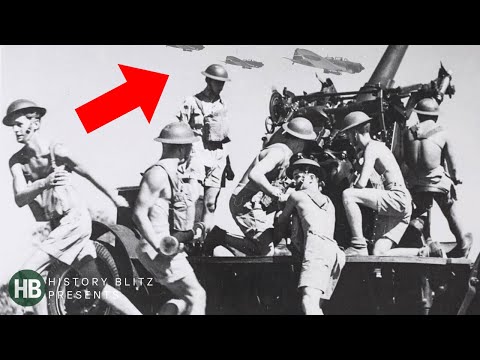
Two hours later, a second wave of 54 bombers appeared, focusing on the Royal Australian Air Force Base. Leading Aircraftman Stanley Hawker watched in horror as planes were blown apart. Wing Commander Archibald Tindal fought bravely, shooting at the attackers until he was killed by a cannon shell. The base would later be named after him to honor his sacrifice.
When the raid ended, Darwin lay in ruins. At least 243 people were killed—though many believe the true number was higher. Smoke rose from the wreckage, and the course of the war in the Pacific would never be the same.
But why did Japan attack Australia in the first place? To answer that, we must go back to the 1930s, when Japan, inspired by Western imperialism, sought to establish itself as the dominant power in East Asia. By the late 19th century, Japan had modernized rapidly during the Meiji Restoration and aimed to compete with Western powers by acquiring colonies and expanding its influence. China, with its vast resources and strategic position, was seen as a key area for expansion.
By 1941, Japan had expanded its reach to Indochina (modern-day Vietnam, Cambodia, and Laos). The United States, seeing Japan’s bold moves, responded with economic sanctions, including a severe oil embargo. Japan relied heavily on the US for oil—approximately 80% of its oil, or 26 million barrels annually. With supplies decreasing, time was running out. Japan needed a new plan.
Japan was pushed towards seeking alternative sources of oil, eventually leading to their decision to strike southward. But they had one major threat: the US Pacific Fleet. On December 7, 1941, Japan launched a surprise attack on Pearl Harbor, pulling the United States into the war. But Pearl Harbor was just the opening move. In just 10 weeks, Japan swept through Hong Kong, Malaya, Singapore, and the Australian territory of New Britain like a huge wave spreading across the Pacific.
This leads us to Australia—positioned at the southernmost edge of the Asia-Pacific theater and Japan’s current sphere of influence. From the point of view of Japanese strategists, Australia was far from a forgotten land. It posed a strategic threat due to its close alliance with the United States. Japan aimed to secure its southern flank and maintain control over the South Pacific, including key areas like the Solomon Islands and as far east as the Marshall Islands. Disrupting the Australia-US alliance and neutralizing Australia’s military infrastructure were crucial steps in preventing interference with Japan’s broader plans for dominance in the region.
Australia’s journey into the Pacific War was for the most part decided for them. On December 9, 1941, just two days after the attack on Pearl Harbor, Australia declared war on Japan. Suddenly, this peaceful continent found itself in the middle of a struggle for control in the Pacific. Thousands of American troops began arriving on Australian soil, and the land that had once seemed so far from the action was now an important center for the Allied Forces’ Pacific strategy. Australia was becoming what the Japanese feared the most: a stronghold for the Allies and a staging area for future counterstrikes against them.
Japan knew it had to act fast. As Allied support arrived quickly, Japan turned its focus to the northern coast of Australia—specifically to Darwin, a town that up until then was largely unknown to the outside world. Darwin, a sparsely populated town with almost a frontier feel, was about to find itself in the center of trouble. To the Japanese, Darwin wasn’t just a distant base; it was an important connection in the Allied route for supplies, a preparation area for troops, aircraft, and military supplies moving north into the Pacific. If Japan could strike a blow here, it could interrupt the Allies’ plans before they completely developed.
So on February 19, 1942, Darwin woke up to the loud noise of incoming aircraft—not friendly planes, but a fleet of 188 Japanese bombers and fighters sweeping down from the sky. They struck with brutal precision. The attack was led by the same Commander Mitsuo Fuchida who had planned the famous attack on Pearl Harbor just months before. The similarities were frightening, and the effect was devastating.
Explosions shook the harbor as bombs fell on ships, docks, and military installations. The USS Peary took five direct hits and sank with the loss of over 90 lives. The scene was disorder: ships on fire, smoke billowing across the water, and explosions echoing through the town. People hurried for cover as the reality of war struck the Australian mainland for the first time. This was Darwin’s own Pearl Harbor, and it left the town stunned. In just 40 minutes, eight ships had been sunk, 11 more were damaged, and critical infrastructure lay in ruins. Hundreds were killed and many more wounded.
The Japanese weren’t finished. A second wave of bombers came roaring in just hours later, targeting the airfields and military bases around Darwin. More buildings were destroyed, and the once-busy harbor was left a shattered reminder of the intensity of modern warfare.
This was only the beginning. Between February 1942 and November 1943, Japan launched an astonishing 97 air attacks on various towns and military bases on Wyndham, Port Hedland, Derby, Darwin, Katherine, Townsville, Mossman, and Horn Island. The raids came like hammer blows, aimed at keeping the Australian forces off balance and ensuring the Allies couldn’t use the north as a starting point for their counterattacks.
In Broome, a remote town on Australia’s northwest coast, a Japanese raid in March 1942 targeted flying boats loaded with refugees from the Dutch East Indies. The attack left many of those boats destroyed, scattered across the shallow waters. These raids weren’t about conquest; they were meant to cause disorder, to terrorize, and to keep Australia and its allies from gaining any footing in the region.
On May 31, 1942, three Japanese submarines sneaked into Sydney Harbor, bringing the war to Australia’s largest city for the first time. The intended target was the USS Chicago, a US heavy cruiser, but the torpedoes missed and struck the harbor bottom near HMAS Kuttabul, an old ferry being used as a naval barracks. The explosion resulted in the sinking of Kuttabul, killing 21 sailors. Further submarine attacks in June 1942 saw shots fired near Sydney and Newcastle. These incidents heightened fears of invasion.
Despite the destruction, despite the constant attacks, the full-scale invasion of Australia never came. Why? The reality of a long-term campaign against Australia was more challenging for Japan than what they could manage. The logistics alone were a nightmare. Japan had already stretched its supply lines thin across the vast reaches of its new empire, and Australia, with its difficult environment, great distances, and growing Allied presence, proved to be a much harder target than their earlier successes—requiring a larger commitment of ships and men than they had available at that time. Therefore, unbeknownst to Australia and its allies, Japan had placed full-scale invasion plans of Australia onto the back burner for the time being.
There was also the tide of the war itself. In May 1942, the Battle of the Coral Sea, just northeast of Australia, marked a critical turning point. Allied forces, including American and Australian naval units, managed to stop a major Japanese advance for the first time in the war. Just a month later, Japan suffered a terrible loss at the Battle of Midway, losing four of its valuable aircraft carriers. These battles indicated a shift in progress as the once-unstoppable Japanese advance began to weaken. With increasing losses and stretched resources, Japan had to adjust their goals. The strike south and dominate Australia became impossible to maintain. The war was turning, and Japan had more urgent problems than a full-scale attack on the Australian mainland.
The Allied Forces, regrouping and rearming, began to press back island by island, inch by inch, pushing the Japanese back across the Pacific. And so Australia was saved from the worst of what could have been, but the attacks they suffered were still devastating—not just physically but psychologically. The raids on Darwin and other towns along the northern coast left a mark on the Australian mind, a reminder that even the most remote corners of the world were not safe from the reach of war. Australia’s sense of isolation was shattered, replaced by a new resolve to stand side by side with their allies in the fight against oppression.
Japan’s attack on Australia wasn’t about conquest; it was about control. It was about securing a region, denying the Allies a position, and expanding a vision of an empire that stretched across the Pacific. But ultimately, that vision was flawed. Japan underestimated the resilience of its enemies, the willpower of Australians, and the logistical nightmare of sustaining such an enormous expansion.
The bombing of Darwin, known as Australia’s Pearl Harbor, marked a turning point for the nation. It brought the war home in a way that Australians had never experienced before. It broke the false belief of being untouchable and started a new vision to contribute to the war effort. Australian soldiers, sailors, and airmen would go on to fight across the Pacific, from New Guinea to Borneo, as part of the Allied push to roll back the Japanese advance.
Japan’s decision to attack Australia was borne out of a complex mix of ambition, hopelessness, and opportunity. They saw a chance to secure resources, neutralize a threat, and assert dominance. In doing so, they brought the war to Australian soil, turning once-quiet towns into battlefields and making clear that no corner of the world was beyond the reach of worldwide war.
But the story doesn’t end with the bombs dropping on Darwin. It continues in the courage of those who stayed to rebuild, in the resilience of a nation that rose to the challenge, and in the alliances that were formed in the fires of war. It is a story of ambition, of conflict, and of the unquestionable strength of the human spirit in the face of hardship. Australia may have been a target, but it was never a victory victim. The bombing of Darwin was a warning—a call that was answered with determination. Japan’s attempt to intimidate the Australian people into submission failed. Instead, it started a fierce spirit of resistance and unity that would carry Australia through the darkest days of World War II and beyond.
The traces of those attacks are still felt today, not just in the history books but in the memories passed down, the memorials that stand in honor, and the stories told of courage and resilience. The attacks on Australia show how the world was pulled into war by greed and power, but they also highlight the strength and bravery of the people who helped end the conflict.
The question of why Japan attacked Australia is not simply answered by strategy or resource needs. It is a story of human ambition, fear, and resilience set against the vast blue expanse of the Pacific. And in that story, Australia stood as proof of the lasting will to fight for freedom.
Today, the bomb craters at Darwin’s airfield have grassed over, but the scars remain in memory. Every February 19, sirens still sound across the city—not in fear, but in remembrance of those 243 lives lost.
What Japan intended as a blow to break Australia’s spirit instead forged an unbreakable resolve. From the ashes of Darwin rose a nation no longer isolationist, but committed to standing with its allies—through New Guinea, Borneo, and beyond.
The lesson endures: aggression may shatter towns, but it cannot shatter the human will to resist. Australia was a target. It was never a victim.
So, when you look at a map of the Pacific today, do you see only geography—or do you see the echoes of that February morning and the courage it awakened?
Report this article
Select a reason for reporting:






