The desert stretched endlessly, a sea of sand and heat that offered no mercy. For Mike Sadler, every step was a battle against thirst, exhaustion, and the constant fear of discovery. It was 1943, and the world was at war. Captured behind enemy lines, Sadler faced a choice: surrender to the Germans or risk everything on a daring escape across one of the most unforgiving landscapes on Earth.
Just days earlier, he had been part of an elite unit led by the legendary David Stirling, the founder of the SAS. Their mission: to cross German lines in Tunisia and disrupt enemy operations. But the desert is a cruel mistress, and their patrol was ambushed. Stirling was taken prisoner, and Sadler, along with two others, was left with nothing but their wits and a burning desire to survive.
“We had no food, almost no water, and over a hundred miles of open desert between us and safety,” Sadler later recalled. “But we knew that if we stayed, we would die. So we walked.”
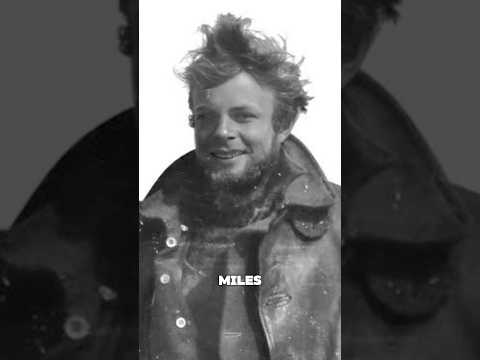
With only the stars to guide them, Sadler, Johnny Cooper, and French soldier Freddie Taxis set out on a journey that would test the limits of human endurance. The sun beat down relentlessly during the day, and the cold nights offered little respite. Their lips cracked, their skin blistered, and their minds teetered on the edge of despair. Yet they pressed on, driven by a stubborn hope that they might reach Allied lines near Tozeur.
After days of walking, their bodies emaciated and their spirits nearly broken, they finally spotted the distant shapes of Allied troops. But their relief quickly turned to dread when they were surrounded by suspicious soldiers. “They thought we were German infiltrators,” Sadler said. “We looked like walking skeletons, and we had come from enemy territory. It took hours to convince them we were on their side.”
For Sadler, the ordeal was far from over. The desert had tested him in ways he never imagined, but it had also forged a resilience that would define the rest of his life. As he and his companions were finally led to safety, they knew that their escape was nothing short of a miracle—a testament to the indomitable spirit of those who refuse to give up, even when the odds are insurmountable.
But this was only the beginning of Sadler’s extraordinary journey. In the months and years that followed, he would go on to become one of the most decorated and respected members of the SAS, his name etched in the annals of military history. Yet the desert escape would remain a defining moment—a story of courage, camaraderie, and the unyielding will to survive.
The hours that followed their identification were a blur of exhaustion and relief. A medic pressed a canteen into Sadler’s hands and warned him to drink slowly, but the water tasted like nothing he had ever known—sweet, cold, impossibly alive. Cooper slumped against a truck wheel, his sunburnt face split by a grin that seemed to cost him effort. Freddie Taxis, the Frenchman, simply closed his eyes and whispered something in his own language that none of them needed translated.
They were fed, questioned again, and then questioned once more by officers who could scarcely believe the distance the three men had covered. Maps were produced. Fingers traced the route across the empty wastes south of the German lines, and the officers exchanged glances that carried a quiet, unspoken respect.
“A hundred and ten miles,” one of them said at last, shaking his head. “On foot. With no water. You men are either liars or lunatics.”
Sadler managed a dry laugh. “Perhaps a bit of both,” he replied.
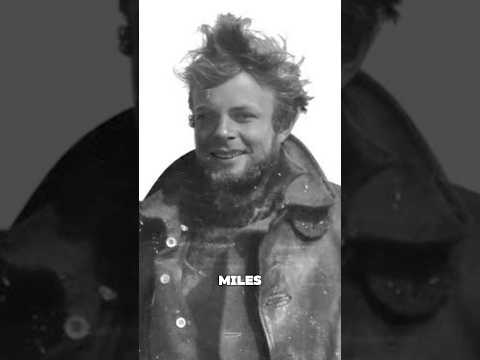
Yet even as they rested, the war pressed in around them. Word arrived that Stirling remained in enemy hands, and the thought of their commander sitting in a German prison camp gnawed at Sadler more than any hunger. The desert had not broken them, but it had scattered their unit, and the men who had walked out of the sand were not the same men who had walked into it.
Within days, Sadler was on the move again. There was no ceremony, no parade—only a fresh uniform, a new assignment, and the quiet understanding that the fight was far from finished. He would return to the desert, to the raids and the midnight drives and the sudden violence of ambush, because that was what he knew, and because the alternative was to let the enemy have the last word.
But something had shifted inside him. The escape had taught him a lesson that no training could: that the line between life and death was thinner than a blade of desert grass, and that the will to keep walking was sometimes the only weapon a man had left.
He carried that lesson into every mission that followed, and it kept him alive more than once. When the jeeps broke down in the middle of nowhere, when the navigation failed and the compass spun uselessly, Sadler remembered the stars above the empty sands and found his way again. The men who served beside him noticed the change—how he moved with a calm that seemed almost unnatural, how he never wasted a drop of water or a moment of darkness.
“He’d been to the edge and come back,” Cooper would say years later. “After that, nothing frightened him the way it frightened the rest of us.”
But the desert had not finished with him. In the months that followed, Sadler found himself drawn back into the same vast emptiness, this time as a navigator for the long-range patrols that slipped through enemy lines under cover of night. The work was dangerous, the margins razor-thin, and every mission carried the same terrible arithmetic: fuel, water, distance, and the merciless clock of dawn.
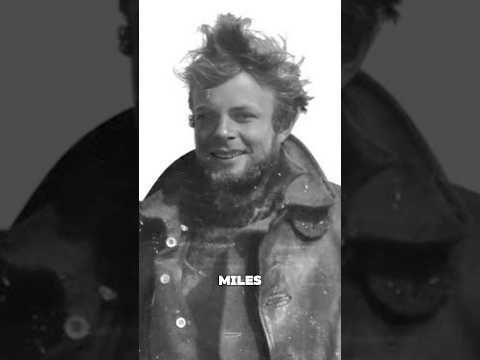
It was on one such patrol that he first heard the whisper of a plan that would change everything. A raid was being prepared—something bigger than the hit-and-run strikes they had grown used to. The target was a German airfield deep in the desert, and the men who would carry it out needed a navigator who could find a pinprick of light in a thousand miles of darkness.
Sadler volunteered without hesitation. “If I can walk a hundred miles out of that sand,” he told the officer who briefed him, “I can drive you anywhere you want to go.”
The officer studied him for a long moment, then nodded slowly. “That’s exactly what I hoped you’d say.”
What neither of them knew, as the jeeps were loaded and the final checks made, was just how close to the edge this new mission would take them—and how much Sadler’s hard-won instinct for survival would be tested once more.
The airfield raid was a success, but the journey back was a nightmare. German patrols scoured the desert, and the jeeps were running on fumes. Sadler navigated by starlight, his mind as sharp as the desert night. “We drove for two days without stopping,” he remembered. “The enemy was everywhere, but we slipped through like ghosts.”
When they finally reached base, the men were exhausted but elated. The raid had destroyed dozens of enemy aircraft, and Sadler’s navigation had been flawless. For his actions, he was awarded the Military Cross—a recognition that humbled him deeply. “I was just doing my job,” he said. “The real heroes are the ones who didn’t come back.”
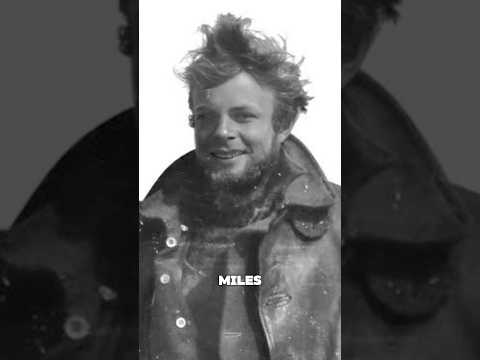
As the war in North Africa drew to a close, Sadler’s reputation grew. He was transferred to Italy, where he continued to serve with distinction. But the desert never left him. “I still dream about it,” he admitted years later. “The heat, the silence, the endless sand. It changes you.”
After the war, Sadler returned to civilian life, but the lessons of the desert stayed with him. He became a successful businessman, but he never forgot the men he had served with. “We were a band of brothers,” he said. “That bond never breaks.”
In his later years, Sadler often spoke to young soldiers about his experiences. He told them about the importance of teamwork, of never giving up, and of the thin line between life and death. “The desert teaches you what you’re made of,” he would say. “And it teaches you that nothing is impossible if you’re willing to fight for it.”
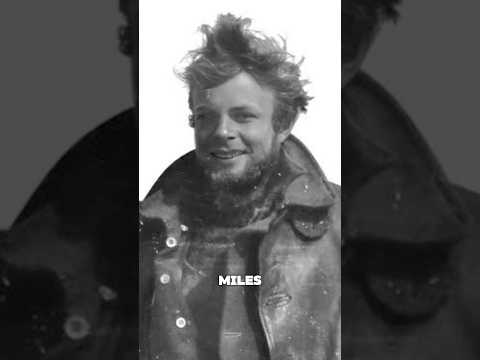
Mike Sadler passed away in 2021 at the age of 100, but his legacy lives on. His story is a testament to the courage and resilience of the human spirit—a reminder that even in the darkest of times, hope can guide us home.
So, what would you have done if you were in Sadler’s shoes? Would you have had the strength to walk those 110 miles? Share your thoughts in the comments below.
Report this article
Select a reason for reporting:






