The morning sky split open with a scream—a sound like tearing metal—and then the explosion. Limestone dust erupted from the harbor as another Stuka dive bomber pulled out of its attack run, the siren’s wail echoing off ancient fortress walls. For three days straight, more than 200 bombing runs a day had turned this Mediterranean port into a landscape of craters and twisted steel. And inside the perimeter, 14,000 Australian soldiers waited, completely surrounded by Rommel’s Africa Corps.
They were outnumbered three to one, outgunned worse than that, and written off by every military expert in Cairo. The textbooks said Tobruk was indefensible. The radio messages said evacuate. But Major General Leslie Morshead, a former school teacher who had survived Gallipoli, saw something the manuals never mentioned. He saw broken ground that punished attackers. He saw sheep farmers and dock workers who thought for themselves. And he saw a chance to turn hunters into the hunted.
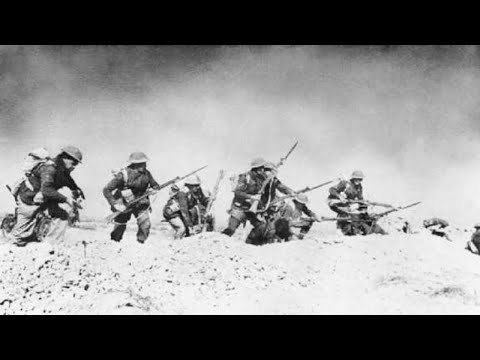
“You don’t hunt the tanks,” Morshead told his officers. “You hunt the men inside them. You hunt the supply trucks. You hunt anything that moves after dark and make them afraid to leave their lines.” It was the opposite of everything the manuals taught—defense as a passive thing, a matter of building walls and hoping they hold. What Morshead proposed was aggressive defense, raiding as doctrine, turning trapped soldiers into nocturnal predators.
The British staff officers were skeptical. How do you hunt tanks with infantry? How do you leave the safety of trenches when thousands of enemy soldiers wait in the dark? But Morshead had fought at Gallipoli, and he remembered what killed soldiers in siege warfare. It wasn’t the attacks. It was the waiting—men sitting in trenches day after day, watching friends die, feeling trapped until their spirits broke before their lines did.
So on April 10th, just three nights into the siege, he sent out nine men from the 2nd Battalion. Their orders were simple and strange: move 800 yards beyond the wire, find German positions, bring back prisoners if possible, information if not. Do not engage unless you have surprise. Do not make noise. Do not get caught. The men looked at each other like they had been given a mission from a different war.
The patrol leader was a corporal from Queensland who had hunted wild pigs in the bush before the war. He understood stalking. He understood moving through hostile terrain without being seen. So every step had to be silent, every shadow had to hide you. The nine men wrapped cloth around their boots, blackened their faces with burnt cork, and left behind anything that rattled or reflected light.
They crawled through a wadi that cut northeast toward German lines, stopping every few minutes to listen. Somewhere ahead, voices spoke in German. Cigarette smoke drifted on the breeze—sentries who felt safe enough to smoke. The corporal held up a fist and the patrol froze. Two guards walked within 20 feet and never saw them.
After midnight, they found what they were looking for: a forward machine gun post with four Germans manning an MG 34. The gun covered the main approach to the eastern sector, well placed and well built. It was also isolated, positioned 300 yards ahead of the main German line. That isolation made it vulnerable. The corporal counted to three, and the patrol rushed from three sides at once. The Germans never got off a shot. Within 30 seconds, it was over: three prisoners, one dead German, and one captured machine gun wrecked with a grenade before the Australians pulled back with their captives.
The interrogation at dawn revealed something interesting. The German troops around Tobruk were tired—not exhausted, but tired in the way that comes from weeks of fighting without rest. The Afrika Korps had driven hundreds of miles across Libya, and now they sat outside a fortress everyone said would fall in days. But days were passing and the fortress wasn’t falling.
Morshead read the report and saw an opening. Tired troops made mistakes. Tired troops got sloppy. Tired troops could be made more tired. He increased the patrols to 20 men per night, then 40, then 60. Every night, Australian soldiers crawled into the dark and found German positions. Sometimes they grabbed prisoners. Sometimes they destroyed equipment. Sometimes they just watched and reported.
The Germans responded by increasing their own patrols, which meant more soldiers awake at night, more resources spent on security, more energy wasted watching for threats instead of preparing attacks. The Australians adapted faster than anyone expected. They learned that German sentries changed every two hours, making the first and last 15 minutes of each shift the most dangerous. They learned that Italian units smoked more and talked louder, making them easier to avoid or raid. They learned which wadis carried sound farther and which created dead zones.
Within two weeks, the Australians were moving through German lines like ghosts, appearing where they shouldn’t be, striking where least expected, vanishing before reinforcements could respond. The engineers got creative, reducing the pressure triggers on captured German mines so that a running soldier could set them off. They packed Italian hand grenades into thermos bottles with scrap metal, creating homemade bombs that turned footpaths into death traps.
The digging never stopped. Australian infantry excavated more than 500 fighting positions connected by communication trenches exactly four feet deep—the perfect height for a man to move while staying below ground. Every position had overhead cover against Stuka bombs, multiple firing angles to create crossfire zones, and escape routes in case of being overrun. From the air, Tobruk looked like a military base. From the ground, it was an underground city where 14,000 men lived like moles and emerged at night to hunt.
British officers visiting from Cairo walked the trenches and couldn’t believe what they were seeing. This wasn’t textbook defense. This was something improvised and brutal and strangely effective. One British colonel watched an Australian patrol prepare for a night raid and asked the lieutenant where he learned these tactics. The lieutenant, a former sheep farmer from New South Wales, said he learned them hunting dingoes that attacked his flock at night. “Same principle applied to Germans,” he said. “Just bigger dingoes with better guns.”
Not everyone believed it would work. Some British staff officers argued that raids were wasting resources and risking men for marginal gains. But then the reports started coming in from German prisoners. They talked about low morale, about fear of night operations, about losing men to invisible attackers who struck and vanished. One captured officer mentioned that his company had been rotated to Tobruk for what should have been easy garrison duty. After two weeks of Australian raids, they were being pulled back to rest and refit. They had taken more casualties from night raids than in the previous month of conventional fighting.
The turning point came in late April when Australian patrols hit three different Italian positions in one night and brought back 800 prisoners with minimal losses. 800 men captured in one operation by raiders who weren’t supposed to exist according to standard defense doctrine. The news reached Churchill in London, and suddenly Tobruk wasn’t just another siege. It was a story of defiance, a symbol that Germany could be stopped.
Churchill started calling them the Rats of Tobruk in speeches, turning Rommel’s own propaganda insult into a badge of honor. Rommel had called them rats because they hid in holes and came out at night. Churchill made it sound like the highest praise. Rommel himself noticed. His diary entries from May show frustration with what he called “extremely active enemy reconnaissance.” He started pulling veteran units back from Tobruk for rest, not because they had taken heavy casualties in failed attacks, but because the constant night raids and psychological pressure were wearing them down faster than combat normally did.
German soldiers started requiring two to three weeks of rest after rotation through Tobruk positions, compared to days or a week after other combat operations. The siege was costing Rommel more than tanks and ammunition. It was costing him time and morale—the two things Blitzkrieg depended on to maintain momentum and shock.
By June, the Luftwaffe had reduced sorties from 200 per day to 40. German bombers were being pulled back to support operations in Russia, but they also weren’t achieving results in Tobruk that justified the losses. Australian anti-aircraft gunners had learned to wait until dive bombers committed to their attack runs before opening fire, which meant Stukas couldn’t pull up without flying through a wall of exploding shells. The bombs still fell and men still died, but the harbor kept working and the supplies kept coming in on fast ships that raced across the Mediterranean at night.
Tobruk wasn’t falling. More importantly, Tobruk was fighting back in ways that didn’t fit any German playbook for how besieged fortresses were supposed to behave. The siege would last 242 days, from April to December of 1941. During those eight months, Australian patrols conducted more than 140 major raids beyond the perimeter wire. They captured 3,000 prisoners. They killed or wounded more than 8,000 German and Italian soldiers. Their own casualties were 3,100 men killed, wounded, or missing.
The numbers told a story that military historians would study for decades. A surrounded garrison outnumbered three to one had inflicted nearly three times as many casualties as it suffered while holding ground everyone said was indefensible. The math didn’t make sense unless you understood that the Australians had rewritten the rules about what defense meant.
German units rotated through Tobruk and came out changed. Letters captured from prisoners described sleepless nights waiting for attacks that might not come, or might come from any direction, or might be a feint to cover a real attack somewhere else. One German corporal wrote home that fighting in Tobruk was worse than fighting in France because in France you knew where the enemy was and what they were trying to do. In Tobruk, the enemy was everywhere and nowhere. And every night you went to sleep wondering if you would wake up to grenades and gunfire and Australians who appeared like demons from the dark.
Another letter described how his platoon had stopped patrolling at night entirely because three patrols in a row had been ambushed and wiped out. Better to stay in the trenches and let the Australians own the night than lose more men trying to fight on ground they controlled.
Rommel tried everything. He concentrated artillery fire on suspected patrol routes. He sent out larger German patrols with better training and night-fighting equipment. He even tried his own raids against Australian positions, hoping to catch them off guard the way they caught his troops off guard. Nothing worked consistently. The Australians knew the ground too well. They had spent months turning the wadis and limestone outcrops into a three-dimensional maze they could navigate by feel while German troops were still learning the terrain. Every failed German raid cost men and equipment. Every successful Australian raid brought back intelligence that made the next raid easier.
The fortress itself had become something new. The trenches were so deep and well connected that men could move supplies across miles of front line without ever appearing above ground. Observation posts hidden in collapsed buildings gave perfect fields of fire across approaches that looked empty to German scouts. Australian snipers learned the daily routines of German positions and took shots timed to cause maximum disruption—killing officers during morning briefings or destroying water supplies during the hottest part of the day.
The psychological impact was worse than the physical casualties. German soldiers started to feel like they were being watched all the time, that every movement was observed and noted, that the Australians knew where they were and what they were doing even when they couldn’t see them.
The heat made everything worse. Summer in North Africa turned the desert into an oven that cooked metal until you couldn’t touch it without gloves. Temperatures inside tanks reached 140 degrees. Water became worth more than ammunition. German supply lines stretched hundreds of miles across empty desert, vulnerable to British air attacks and mechanical breakdowns. Tobruk’s garrison received supplies by ship—dangerous runs across water patrolled by German submarines and aircraft, but the sea route was shorter and more reliable than the overland routes Rommel depended on. The siege became a race to see who would run out of resources first. And the Australians had figured out how to make their enemies burn through supplies faster by forcing them to maintain constant readiness against raids that might happen anywhere at any time.
September brought American observers. The United States wasn’t officially in the war yet, but everyone knew it was coming. Army officers arrived to study desert warfare and learn from British and Australian experience. They watched the raids, they read the intelligence reports, they interviewed the diggers and asked questions about tactics and training. The Americans were impressed, but also skeptical. These methods worked for Australians, sure, but Australians were different. They had grown up in harsh country. They were comfortable operating with minimal supervision. Could American troops, raised on very different terrain and trained in very different military traditions, learn to fight the same way?
The Australian officers said maybe, but probably not without spending months under siege learning the hard way like they had. You couldn’t teach this in training camp. You learned it by doing it, by making mistakes and watching friends die and figuring out what worked through trial and error under fire. The American observers left in October with notebooks full of information and a healthy respect for the Rats of Tobruk. They reported back that desert warfare required different tactics than European warfare. That mobility mattered more than firepower. That night operations were essential against a mobile enemy. That water discipline and vehicle maintenance were as important as marksmanship.
The reports were filed and studied. Training programs were adjusted. American troops headed to North Africa received extra instruction in desert operations based on lessons learned at Tobruk. Everyone thought they were prepared.
Then came February 1943 at Kasserine Pass. American forces met Rommel’s Africa Corps in their first major engagement, and in six days they lost 6,500 men killed, wounded, or captured against fewer than a thousand German casualties. Panzer crews outmaneuvered superior American tanks, radio discipline collapsed, and units that had memorized desert doctrine broke under the reality of an enemy that never fought by the book.
An Australian veteran visiting the shattered American positions said the words that would echo through the rest of the war: “The Americans fought by the book we learned to burn.” The Rats of Tobruk had expected to die and decided to make their deaths expensive—which turned into refusing to die at all. The Americans had expected a fair fight and met an enemy that had never fought fair.
Morshead went home to teach at a boys’ school in Sydney, rarely speaking of the desert. But his lesson outlived him: wars are not decided by spreadsheets and staff meetings, but by ordinary people who adapt faster than their enemies can respond.
So here is the question that still matters today—when the experts have done the math and declared defeat inevitable, do you trust the manual, or do you trust what you learned in the dark?
Report this article
Select a reason for reporting:






