Imagine waking up in complete darkness, not because dawn hasn’t broken, but because sunrise is still three hours away. The temperature outside is 50 degrees below zero. Your breath freezes the instant it leaves your lips, forming tiny ice crystals that fall like snow. The wool blanket covering you is stiff with frost from your own exhalations during the night. In thirty minutes, you’ll be outside swinging a 10-pound ax into the trunk of a white pine that has stood since before your grandfather was born.
This was January in the North Woods. This was the life of the American lumberjack, and for six months of every year, from the first hard freeze until spring breakup, hundreds of thousands of men lived in conditions that would seem impossible by modern standards. No roads, no hospitals, no communication with the outside world. Just endless miles of frozen forest, brutal physical labor, and the constant threat of death from cold, from falling timber, or from injuries that couldn’t be treated until the snow melted.
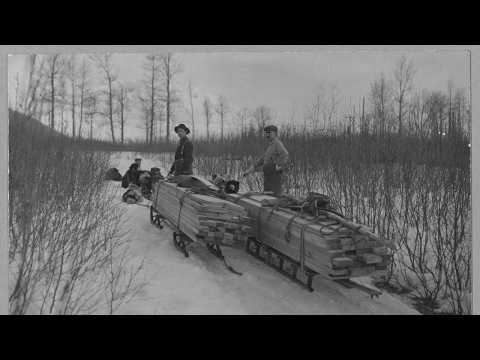
The logging industry that built America’s cities, laid its railroad ties, and framed its homes was powered by men who volunteered for a kind of isolation and hardship that most of us cannot comprehend. They walked into the wilderness in October and didn’t walk out until April. They worked 16-hour days in temperatures that could kill an exposed man in under an hour. They slept 60 to a room, ate the same meals day after day, and watched friends die from accidents that no one could have prevented and injuries that no one could treat.
This is the story of how they survived, not just physically, but mentally. How they endured six months of frozen darkness in some of the most hostile terrain on the North American continent. And why, despite everything, many of them went back year after year until their bodies gave out.
To understand the logging camps of the late 1800s and early 1900s, you first have to understand the geography that created them. The Great North Woods stretched from Maine across the upper reaches of New York, through Pennsylvania, Michigan, Wisconsin, Minnesota, and into the Pacific Northwest. These were forests of white pine, Norway pine, hemlock, and spruce. Trees that had been growing for 200, 300, sometimes 400 years. Trees so large that a single trunk could yield enough lumber to build an entire house.
But these forests existed in regions with some of the harshest winters in the continental United States. Northern Minnesota saw average January temperatures of 15 below zero, with cold snaps that pushed the mercury down to 40, 50, even 60 below. Wisconsin’s northern counties weren’t much better. And Maine’s interior forests sat at elevations where winter storms could dump four feet of snow in a single night.
The logging companies faced a paradox. They needed to harvest timber in these regions because that’s where the best trees were. But they could only transport that timber during winter, when the frozen ground could support the weight of massive log sleds and the frozen rivers could serve as highways for the spring log drives. Summer logging was impossible. The swampy ground would swallow horses and equipment. The rivers were too low to float logs. The insects would drive men and animals to madness.
So winter became logging season. And men who wanted work, many of them farmers whose fields lay dormant under snow, made the journey north to the camps.
The journey itself was the first test of survival. Most logging camps sat 40, 50, sometimes 100 miles from the nearest town with a railroad connection. In the 1880s and 1890s, before the internal combustion engine, getting to these camps meant walking. Or if you were lucky, riding in a horse-drawn sleigh along crude tote roads that had been cut through the forest.
The men arrived in October, before the deep freeze but after the first hard frost had killed off the mosquitoes and black flies that made summer travel unbearable. They came in groups, often from the same towns or the same families—brothers, cousins, neighbors. They carried their possessions in canvas packs or wooden boxes: a change of clothes, personal items, maybe a photograph of a wife or sweetheart they wouldn’t see for half a year.
The tote roads were rough. Tree stumps hadn’t been fully removed. Rocks jutted from the mud. In wet weather, horses sank to their bellies and wagons had to be unloaded and pushed by hand. The men walked beside the wagons to lighten the load, their boots growing heavy with mud. And as they moved deeper into the forest, the signs of civilization disappeared. First the farms vanished. Then the cleared land. Then even the logging roads from previous years grew faint, overgrown with brush and young saplings.
By the time they reached the campsite, usually a full day’s journey or more from the nearest town, they had entered a different world. The forest here was primeval. Massive pines blocked the sunlight, creating a permanent twilight beneath their canopy. Fallen trees, some of them rotting for decades, crisscrossed the forest floor. The air smelled of pine resin and decaying leaves. And the silence was absolute. No church bells, no train whistles, no human voices except their own.
The first order of business was building the camp itself. Logging companies sent advanced crews in September to begin construction, but the bulk of the work fell to the regular crews who arrived in October. They were building a small city in the wilderness, a city that would house and feed 100 men or more through the most brutal months of the year.
The central structure was the bunkhouse. In early logging camps, this was a single massive building, sometimes 60 feet long and 30 feet wide, built from the same logs the men would be harvesting. The construction was crude but effective. Logs were notched at the corners and stacked to form walls. Gaps between the logs were chinked with moss, clay, and wood chips. The roof was made of overlapping boards or split logs covered with tar paper. Windows were rare and small, designed to let in minimal light while keeping out maximum cold.
Inside the bunkhouse, bunks lined both walls in tiers of two or three. These weren’t beds in any modern sense. They were wooden platforms covered with boughs from balsam fir or hemlock, which provided some cushioning and released a pleasant forest scent. The men slept on these boughs with their own blankets, and often two or three men shared a bunk space designed for one. Personal space was a luxury that didn’t exist.
At the center of the bunkhouse stood the heating stove. In larger camps, this was a massive cast-iron barrel stove, fed constantly with wood scraps from the day’s cutting. The stove was the heart of the camp, both literally and figuratively. Men gathered around it in the evenings. They dried their wet clothing near it. They warmed their frozen hands over it between shifts. The temperature inside the bunkhouse could reach 80 or 90 degrees near the stove, while the far corners remained cold enough to freeze water. Men learned to position their bunks carefully—close enough to the stove for warmth, but not so close that they couldn’t sleep.
The cookhouse was the second most important building in camp. It was where the men ate their meals, and in the logging camps, meals were taken with a seriousness that bordered on religious observance. A well-fed crew worked harder and complained less. A poorly fed crew could mutiny, walking out of camp and leaving the company with thousands of dollars in lost production.
The camp cook was therefore one of the most important figures in the hierarchy. He was often the highest-paid man in camp besides the foreman. He arrived before dawn to start the fires, and he worked until well after dark preparing the next day’s bread and beans. The cook had authority that even the foreman respected. His kitchen was his domain, and men entered it at their own risk.
Meals in the logging camps followed a rigid pattern. Breakfast came before dawn, usually around 4:00 or 4:30 in the morning. The men ate in silence. This wasn’t a social convention, but a practical rule enforced by the cook and the foreman. Talking slowed down eating, and eating had to be fast because work started at first light. The men had perhaps 30 minutes to consume a meal that would fuel them through four or five hours of brutal physical labor.
Breakfast typically consisted of pancakes, salt pork, baked beans, fried potatoes, bread, and gallons of strong black coffee. The quantities were enormous. A single man might eat a stack of pancakes 12 inches high, half a pound of salt pork, and four or five cups of coffee. The calories were necessary. Swinging an ax in sub-zero temperatures burns energy at a rate that modern nutritionists can barely calculate. Some estimates suggest that lumberjacks needed 8,000 to 10,000 calories per day just to maintain their body weight.
Dinner came at noon, brought to the cutting sites by a cookie—the cook’s assistant—on a horse-drawn sleigh. The men ate quickly, standing in the snow or sitting on fallen logs, spooning beans and stew from tin plates with fingers too numb to grip a fork properly. The food was often cold by the time it arrived, despite being wrapped in blankets and packed in insulated boxes. The men ate it anyway. Complaining about food was pointless. What mattered was fuel.
Supper came after dark, when the crews returned to camp. This was the largest meal of the day and the only one where conversation was tolerated. The men ate until they couldn’t eat anymore, then ate some more. Meat pies, roasted potatoes, more beans, more bread, dried apple pie, rice pudding. The cook had spent the afternoon preparing this meal, and the men showed their appreciation by consuming every scrap.
But food was only one component of survival. Clothing was equally critical. In temperatures of 30, 40, 50 below zero, exposed skin freezes in minutes. The men who worked these camps developed systems of layering and protection that were passed down through generations.
The base layer was wool. Long underwear made from heavy wool worn against the skin. Wool has a property that no other natural fiber can match: it retains heat even when wet. And the men were constantly wet. Sweat from physical exertion soaked their underclothes within the first hour of work. In cotton or linen, this moisture would have frozen against their bodies, causing hypothermia. In wool, the moisture was wicked away and the fiber continued to provide warmth.
Over the wool underwear went wool trousers and a wool shirt. Heavy, scratchy, uncomfortable by modern standards, but effective. The trousers were often double thick at the knees, where men spent time kneeling on frozen ground. The shirts were cut large to allow freedom of movement and to accommodate multiple layers beneath.
The outer layer was the mackinaw, a heavy wool jacket that became the universal symbol of the lumberjack. The mackinaw was typically red and black plaid, cut loose with large pockets for carrying small tools and personal items. The collar could be turned up to protect the neck, and the wool was so tightly woven that it shed light snow and resisted wind.
On their feet, the men wore leather boots with thick wool socks. But standard boots were inadequate for the extreme cold. The solution was the rubber—a rubber overshoe that fit over the leather boot and provided an additional layer of insulation. Some men stuffed straw or newspaper between the boot and the rubber for extra warmth. Others wore felt liners. Everyone changed their socks at least once during the day, hanging the wet pair near the bunkhouse stove to dry overnight.
Hands were protected by heavy wool mittens, not gloves. Mittens keep fingers together, sharing warmth. Gloves separate the fingers, allowing each one to freeze independently. The mittens were often soaked by mid-morning from handling snow-covered tools, so the men carried spare pairs. A frozen hand meant inability to work, and inability to work meant no pay.
The head was covered by a wool cap that could be pulled down to cover the ears, or in extreme cold by a balaclava that left only the eyes exposed. Some men grew their beards long during the winter, believing the facial hair provided additional protection. Others shaved regularly, arguing that ice formed in beards and actually drew heat away from the face. The debate was never settled.
Even with all this protection, frostbite was common. The symptoms were familiar to every man in camp. First a burning sensation, then numbness, then—if not treated—the tissue died. Toes and fingers were most vulnerable, followed by ears and noses. The treatment was crude but effective. The frozen part was thawed in lukewarm water, not hot, and massaged gently to restore circulation. If caught early, frostbite left no permanent damage. If caught late, gangrene set in and amputation was the only option.
But frostbite wasn’t what killed men in the logging camps. The cold itself rarely killed, because the men knew how to protect themselves. What killed was the work.
The workday began at first light, which in December might not come until 8:00 in the morning. The men ate their breakfast in darkness, then walked to the cutting site by the light of lanterns or the faint glow of the snow. The cutting site might be a mile from camp, or it might be five miles. Either way, the men walked, saving the horses for hauling logs.
The actual felling of a tree was performed by a two-man team. One man stood on either side of the trunk, each holding one end of a crosscut saw. The saw was eight, ten, sometimes twelve feet long, with teeth designed to cut through frozen wood. The men worked in rhythm, pulling the saw back and forth, back and forth, each stroke biting an inch deeper into the trunk.
But before the saw could be used, the tree had to be notched. This was the work of the axman. Using a double-bit ax, he cut a notch on the side of the tree facing the direction he wanted it to fall. The notch was V-shaped, roughly a third of the way through the trunk. The precision of this cut determined the precision of the fall. A poorly cut notch could send the tree in an unexpected direction, killing anyone in its path.
Once the notch was cut, the sawyers began their work on the opposite side of the trunk, cutting straight across until they met the back of the notch. The tree would stand for a moment, creaking, popping, seemingly reluctant to fall. Then it would begin to lean. The men stepped back, watching the crown move against the sky. Someone would shout “Timber!” and the tree would fall. Slowly at first, then with increasing speed, crashing to the ground with a sound like thunder, sending up a cloud of snow and broken branches.
And then the real work began. The fallen tree had to be limbed—stripped of its branches so that only the trunk remained. This was done with axes, the men working quickly along the length of the trunk, chopping off branches with single strokes. The branches were left where they fell, creating a carpet of debris that made footing treacherous.
The limbed trunk was then bucked—cut into lengths that could be transported. A standard log was twelve to sixteen feet long, depending on the requirements of the sawmill that would eventually process it. The bucking was done with crosscut saws, the same two-man teams working their way along the trunk, cutting it into sections.
Finally, the logs had to be moved. In the early days, this was done by men alone, using cant hooks and peaveys to roll the massive logs onto sleds. Later, horses and oxen did the heavy pulling. But even with animal power, the men still had to position the logs, chain them to the sleds, and guide the animals along the ice roads to the riverbank, where the logs would wait for spring.
Every step of this process was dangerous. The axes were sharp enough to sever a limb with a single stroke. The saws were heavy and unwieldy. The logs themselves were weapons—unpredictable and massive. A rolling log could crush a man against a stump before he had time to react. A falling tree could strike another tree, kicking it sideways in what loggers called a widowmaker, because the sideways-flying tree was almost impossible to predict and almost always fatal to anyone in its path.
The statistics tell the story. In the late 1800s, logging was the most dangerous profession in America. More dangerous than mining. More dangerous than railroad work. More dangerous than steel making. The death rate in logging camps was estimated at one death per million board feet of timber harvested. In a large camp producing ten million board feet per season, that meant ten dead men every season, every year.
And those were just the deaths. The injuries were uncountable. Broken bones were common. Crushed fingers and toes were expected. Cuts and gashes from axes and saws were so routine that the camps didn’t bother tracking them. A man who couldn’t work wasn’t paid, so men worked through injuries that would hospitalize someone today.
The camp had no doctor. There was often no one with medical training of any kind. Injuries were treated by the foreman, the cook, or whoever had the steadiest hands. Cuts were bandaged with clean cloth if it was available, dirty cloth if it wasn’t. Broken bones were splinted with boards and wrapped with rope. Amputations, when necessary, were performed with the same axes used to fell trees, by men who had never seen the inside of a medical school.
If you were seriously injured in a logging camp, your survival depended on two factors. The first was the nature of the injury itself. A clean break might heal. A compound fracture, with the bone protruding through the skin, almost certainly meant infection—and infection meant death. The second factor was the time of year. An injury in October, before the deep snow fell, could be treated by transporting the man out to civilization. An injury in January, with four feet of snow on the ground and temperatures of forty below, meant the man stayed in camp and took his chances.
The stories of these injuries have been preserved in camp records and newspaper accounts. There was John Nelligan, a legendary logger in Wisconsin, who lost three fingers to a misaligned saw and went back to work the next day. There was Pete Olson, crushed between two logs in a Minnesota camp, who survived but never walked again. There was the unnamed sawyer in a Maine camp who fell through thin ice while crossing a river and froze to death before his partner could pull him out.
These men knew the risks. They accepted them—or at least tolerated them—because the alternatives were few. Logging paid well by the standards of the time. A skilled sawyer could earn three or four dollars a day, plus room and board. In an era when farmhands earned fifty cents a day and factory workers earned perhaps a dollar, this was real money. Enough to buy land when the season ended. Enough to marry and start a family. Enough to build a future.
But the money came at a cost that went beyond the physical dangers. The psychological toll of six months in isolation is difficult to measure, but impossible to ignore. These men were cut off from everything and everyone they knew. They had no communication with the outside world. Letters could sometimes be delivered via the tote roads, but only when the roads were passable—which meant only in October and again in late March. For the four months in between, the men existed in a bubble. They worked sixteen hours a day, slept in a room with sixty other men, ate in silence, and had no entertainment beyond what they could create themselves.
The evenings in the bunkhouse were the only respite. After supper, the men had perhaps two hours before exhaustion drove them to their bunks. They used this time for maintenance and socializing. Clothing was repaired, axes were sharpened, socks were mended, and stories were told.
Storytelling was the primary entertainment in the logging camps. The men gathered around the stove—those massive barrel stoves that glowed red with heat—and they talked. They told tales of legendary loggers, men who had felled a hundred trees in a single day or walked fifty miles through a blizzard without losing a toe. They told jokes, many of them profane, and many of them unprintable even by the standards of the time. They told ghost stories, tales of men who had died in the woods and whose spirits still wandered the frozen forests.
Some camps had fiddlers or harmonica players. Music was rare, but treasured. A man who could play an instrument was excused from certain duties, given a bunk near the stove, and treated with a respect that rivaled the cook. The songs they played were work songs, drinking songs, ballads about love and loss and the hard life of the working man.
But underneath the camaraderie was a constant tension. These men were strangers, thrown together by economic necessity. They came from different backgrounds, different countries, different traditions. Scandinavian immigrants worked alongside Irish immigrants, French Canadians alongside native-born Americans. They spoke different languages, practiced different religions, held different values. Conflicts were inevitable.
The camp foreman was judge, jury, and executioner in all disputes. His authority was absolute. Fighting was punished by immediate expulsion from camp, which in January meant being cast out into the wilderness with no supplies and little hope of survival. So the men learned to control their tempers. They learned to walk away from insults. They learned to save their rage for the trees that absorbed it, blow by blow.
Some men couldn’t handle the isolation. They walked out of camp in the middle of the season, forfeiting their pay, preferring poverty to another day in the frozen forest. Others broke down mentally, becoming violent or catatonic. These men were restrained when necessary and expelled when possible. The camp had no room for anyone who couldn’t carry their weight.
But most men endured. They found ways to cope with the isolation, the cold, the danger, the endless repetition of work and sleep and work again. They developed rituals and superstitions. They formed friendships that lasted a lifetime. They discovered reserves of strength and endurance that they never knew they possessed.
And then, sometime in late March or early April, the world began to change. The first sign was the light. Days grew longer, pushing back the darkness that had defined their existence for four months. Sunrise came earlier. Sunset came later. The men found themselves with extra minutes in the morning, extra minutes in the evening—small gifts of time that felt like extravagant luxuries.
Then came the warmth. Not warmth by any normal standard, but warmth by the standards of a northern winter. Temperatures rose from twenty below to zero, from zero to twenty above. The snow began to settle, compacting under its own weight. Icicles formed on the bunkhouse roof, dripping during the day and refreezing at night.
And then came the breakup. Breakup was the moment the rivers began to flow again. For months, the rivers had been frozen solid, serving as highways for the horse-drawn sleds that transported logs from the cutting sites to the riverbanks. Millions of logs had been stacked along these riverbanks, waiting for this moment. When the ice broke and the water began to rise, the logs would be rolled into the river and floated downstream to the sawmills.
This was the log drive, and it was the most dangerous phase of the entire logging operation. The men who had spent the winter felling trees now became river drivers. They walked on the floating logs, using their peaveys and pike poles to keep the logs moving downstream. They worked in water that was barely above freezing, jumping from log to log, sometimes falling in and pulling themselves out before the cold could kill them.
A log jam could form in seconds—thousands of logs piling up against a rock or a bend in the river—and the men had to break the jam before it became permanent, often by crawling into the mass of logs and cutting the key log free. Deaths during the log drive were common. Drowning was the most frequent cause. A man who fell into the water and couldn’t grab a log was swept downstream and under the mass of timber before anyone could reach him. His body might not be found for days, if it was found at all. Other men were crushed when log jams broke suddenly, releasing thousands of tons of timber in a single violent surge.
The drive lasted anywhere from two weeks to two months, depending on the distance to the mill and the cooperation of the river. When it was over, the men collected their pay and scattered. Some returned to farms that had been waiting for them since October. Others headed to the towns, spending their earnings in saloons and brothels and general stores. A few stayed on with the logging companies, working as maintenance crews through the summer, preparing for the next season.
And that’s what strikes me most about these men. They knew what awaited them. They had lived through one winter, or five, or ten. They had watched friends die. They had felt their own fingers go numb, their own bodies pushed to the point of collapse. And yet, when October came around again, many of them walked back into the forest.
Why? Part of it was economic. These men had few options. They were immigrants, many of them, or the sons of immigrants. They had no education, no trade skills beyond what they had learned in the woods. Logging was one of the few jobs that paid well and asked no questions about your background.
But I think there was more to it than economics. There was a community in those camps, rough and violent and uncomfortable as it was. The men who survived a winter together formed bonds that couldn’t be replicated in civilian life. They had shared something that no one else could understand. The cold, the work, the fear, the brief moments of beauty when the northern lights danced across the sky, or a bull moose crashed through the clearing, or the setting sun turned the snow to gold.
There was pride in the work itself. These men were building America. The lumber they cut became the houses that sheltered families in Chicago and Minneapolis and New York. The railroads that opened the West were laid on ties they had hewn. The newspapers that informed the nation were printed on paper made from pulp they had produced. This was meaningful work, visible and tangible in a way that few modern jobs can match.
And there was something else, something harder to name. Call it the frontier spirit. Call it the human need to test oneself against the impossible. These men went into the wilderness and came out again. And they proved that they could survive where survival seemed impossible. That knowledge stayed with them forever.
The era of the great logging camps lasted roughly fifty years, from the 1870s to the 1920s. By the time it ended, the virgin forests of the Great Lakes region were largely gone, cut down to stumps and slash. The logging companies moved west to Oregon and Washington, where new forests awaited. The men followed, or they didn’t. Some settled down, became farmers or shopkeepers or factory workers. Others kept moving, chasing the timber wherever it led.
Today, the forests have returned. Second-growth timber covers much of the land that was stripped bare a century ago. The old logging roads have faded into trails. The bunkhouses have rotted back into the earth. Only the oldest residents remember the camps, and most of them are gone now, too.
But the legacy remains. The lumber that built America is still standing in Victorian houses and brownstone apartments and farmhouses across the Midwest. The techniques developed in those frozen forests are still used—modified and mechanized, but fundamentally the same. And the spirit of those men, their willingness to endure the unendurable in pursuit of a better life, is woven into the fabric of who we are as a nation.
We owe them a debt we can never repay. We can only remember. We can only tell their stories. We can only acknowledge that the comfortable world we inhabit was built, log by frozen log, by men who knew they might not survive the building. They went into the forest in October. They came out in April. And they left behind a country transformed.
If you stayed until the end of this one, it means something. These aren’t stories that get told much anymore, and that’s a shame. If you want more like this, you know what to do. I’ll see you in the next one.
But before you go—think about this: what would it take for you to walk into the frozen dark for half a year, knowing the forest might not let you leave? Would you have gone back the next October? Let me know in the comments.
Report this article
Select a reason for reporting:






