January 1933. Adolf Hitler stands at the threshold of absolute power, but the Germany he inherits is a broken giant. Six million unemployed. A nation humiliated by defeat and crushed by depression. And yet, the man who promised peace now commands the machinery of state—and his true agenda is far darker than anyone imagines.
Within weeks, Hitler’s radio voice crackles into German homes, nervous and halting at first, then swelling with conviction. “The misery of our people is horrible to behold.” He asks for four years. Four years to prove himself. Four years to restore pride. But what he doesn’t say—what no one yet understands—is that the economy is merely the stage, not the play.
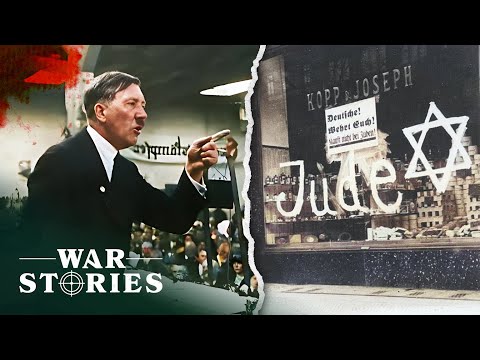
His real obsession lurks beneath the surface: a hatred forged in the trenches of the First World War and sharpened in the beer halls of Munich. In Mein Kampf, he had spelled it out for anyone willing to read—the Jew as the enemy within, the parasite destroying the nation from inside. But when he tests this theory in April 1933 with a national boycott of Jewish businesses, the German people shrug. They keep shopping. The boycott collapses in a single day.
Hitler learns his lesson. “If I want to win them over, I must first earn their trust.” For four years, he doesn’t mention the Jews again. Not because he’s softened—but because he’s patient. The antisemitism remains, buried deep, waiting for the right moment.
Instead, he gives them what they crave: work. A billion-Reichsmark program floods the country with construction projects. The Autobahn becomes the centerpiece—6,000 kilometers of gleaming highway, a symbol of modernity and national rebirth. “It felt like a brave new world,” one observer recalls. Propaganda cameras capture Hitler personally turning the first spadefuls of earth, the leader in the trenches with his people.
But the highways are only the beginning. The German Labor Front replaces independent unions—a wolf in sheep’s clothing. Workers get benefits, yes, but they lose their voice. Strikes are banned. Wages are frozen. And behind the scenes, something far more sinister is taking shape.
By 1934, unemployment has plummeted from six million to four. Hitler appears a economic miracle-worker. But the truth is more chilling: hidden military spending dwarfs every public works program combined. Thirty-five billion Reichsmarks pour into rearmament. The Führer is preparing for a war he believes is inevitable—and necessary.
The concept of Volksgemeinschaft—the people’s community—becomes the regime’s beating heart. It’s a seductive vision: a united Germany, class divisions erased, everyone working together for the common good. National holidays celebrate solidarity. Even Sunday meals are politicized—families give up meat and donate the savings to the poor, eating a communal soup in public gatherings. The message is unmistakable: you are not an individual; you are part of something greater.
Young people are the prime target. The Hitler Youth absorbs millions of boys and girls, replacing scouting and church groups with uniforms, adventure, and ideology. For the first time, many children travel beyond their villages, taste excitement, feel part of a grand cause. Weddings receive a copy of Mein Kampf as a gift. The party reaches into every corner of daily life.
But the community has walls. Those outside the Volk—Jews, above all—are excluded by definition. The regime frames them as the source of all suffering, the internal enemy against whom true Germans must unite. It’s a slow, deliberate process of dehumanization, and it’s only just beginning.
By 1935, the Nazis feel strong enough to act openly. At Nuremberg, Hitler unveils the infamous racial laws. Marriages between Jews and Germans are forbidden. Jews are stripped of citizenship, reduced to subjects without rights. The regime even defines who is Jewish—anyone with three Jewish grandparents—and creates a new class of “Mischlinge,” half-citizens caught between worlds.
Some Germans resist. Organizations form to protect the Mischlinge. But the tide is turning. More and more, ordinary people accept the Nazi logic. The groundwork for catastrophe is being laid—and the world is watching, but doing nothing.
By 1936, Hitler feels unstoppable. The economy is recovering, the Rhineland has been remilitarized without a shot fired, and his popularity soars. “I go the way that Providence dictates with the assurance of a sleepwalker,” he declares, and the crowds roar their approval. But behind the spectacle, the pressure is building. Rearmament is devouring resources. Foreign currency reserves dwindle to near nothing. Food prices climb. The promises of prosperity are starting to ring hollow.
Hitler needs another distraction, another triumph to keep the people in line. He finds it in the east. Lebensraum—living space—has been his obsession since Mein Kampf. The Slavic lands, the vast plains of Poland and Russia, hold the resources and territory Germany needs to become a true world power. But first, he must prepare the ground. And that means neutralizing the Jews once and for all.
The year 1938 begins with a purge. The Gestapo, now unleashed, moves against Jewish professionals, intellectuals, and businessmen. Arbitrary arrests, confiscation of property, public humiliation—the message is clear: you are not safe. Over 250,000 Jews flee Germany, leaving behind their homes, their businesses, their lives. But half a million remain, trapped by poverty, by family ties, by the stubborn hope that things will improve.
They do not. In November, a Nazi diplomat is shot in Paris by a desperate Jewish teenager. It is the perfect pretext. Goebbels and Hitler seize the moment to stage a nationwide pogrom—the Night of Broken Glass. Synagogues burn. Storefronts shatter. Jewish men are beaten in the streets while police stand by. Ninety-one are murdered. Thirty thousand are dragged to concentration camps. The world is horrified, but the world does nothing.
And then the final twist: the Nazis blame the Jews for their own destruction. “The Jews brought this on themselves,” Goebbels declares. The German people, he claims, rose up in righteous anger. It is a lie so brazen, so complete, that it becomes the official truth. Ordinary Germans participate in the violence—not just stormtroopers, but neighbors, shopkeepers, students. The regime has achieved its goal: the people are complicit.
By the end of 1938, Hitler has everything he needs. The army is rebuilt. The economy is on a war footing. The Jews are isolated, despised, and marked for destruction. “The hour of reckoning has come,” he tells his generals. They do not flinch. They do not question. The path to catastrophe is wide open.
But there is one more piece to move. The world must be lulled into complacency. In September 1938, Hitler meets with British Prime Minister Neville Chamberlain at Munich. He demands the Sudetenland—a slice of Czechoslovakia—and promises it will be his last territorial claim. “I have no more territorial demands to make in Europe,” he lies. Chamberlain returns to London waving a piece of paper, declaring “peace for our time.” The crowd cheers. The trap is set.
Six months later, Hitler seizes the rest of Czechoslovakia. Six months after that, he invades Poland. The world finally wakes up—but by then, it is too late. The war Hitler always wanted has begun, and the machinery of genocide is already in motion.
But the story does not begin with tanks rolling across the Polish border. It begins in the minds of ordinary Germans—teachers, factory workers, mothers, clerks—who had been slowly, patiently trained to see their Jewish neighbors as something less than human. The true weapon was not the rifle or the bomber; it was the daily drumbeat of propaganda that made cruelty seem like virtue.
Goebbels understood this better than anyone. He knew that repetition, not reason, wins hearts. A lie told a thousand times becomes truth. A hatred whispered for years becomes instinct. The Ministry of Public Enlightenment and Propaganda churned out films, posters, newspapers, and radio broadcasts with industrial precision. Every message, however small, pointed in the same direction.
Children were the most valuable audience. In classrooms across the Reich, textbooks were rewritten to teach racial science—crude diagrams of skull shapes, charts of ‘Aryan’ superiority, arithmetic problems that asked students to calculate the cost of maintaining the disabled. By the time they reached adulthood, many had never known a world where such ideas were questioned.
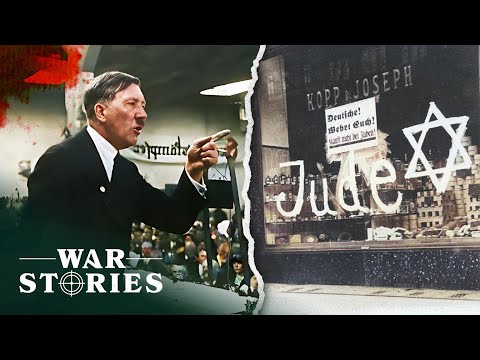
The Hitler Youth was no longer just an after-school club. By 1939, membership was effectively compulsory. Boys learned to march, to shoot, to sacrifice. Girls were taught domestic duty, racial purity, and the sacred role of motherhood. ‘You are the future of the Reich,’ they were told—and they believed it, because everything around them confirmed it.
Yet even as the regime tightened its grip, pockets of doubt remained. Not everyone cheered. Some parents quietly refused to send their children to the rallies. Some priests preached against the worship of the state. Some workers grumbled in the shadows. But these voices were isolated, drowned out by the roar of the crowd, and the Gestapo was always listening.
The machinery of terror did not need to crush everyone—only enough to make the rest afraid. A single arrest, a single rumor, a single knock on the door in the night could silence an entire neighborhood. Fear became the invisible architecture of daily life. People learned to look away, to keep their heads down, to ask no questions.
And so, when the persecution of the Jews escalated from humiliation to violence to something far worse, most Germans did not resist. They had been prepared for it. They had been told, again and again, that the Jews were the source of their suffering—that the misfortunes of the nation were the fault of this small, despised minority.
Hitler had promised them greatness. He had delivered jobs, highways, and a sense of pride. Now he asked for something in return: their silence. Their complicity. Their willingness to look the other way while their neighbors were dragged from their homes.
It was a bargain many were all too willing to make.
But the Führer’s ambitions reached far beyond Germany’s borders. The Reich was not meant to be a nation among nations—it was meant to be an empire, stretching across Europe, built on blood and iron. The war he had always envisioned was no longer a question of if, but when. And when it came, it would bring with it a horror the world had never seen.
The invasion of Poland in September 1939 did not shock Hitler’s inner circle—it fulfilled them. “Since 5:45 this morning, we are returning fire,” he announced to the Reichstag, framing aggression as defense. The lie worked. The German people, conditioned by years of propaganda, believed they were victims once again.
But the war in the east was never just about territory. Behind the advancing Wehrmacht came the Einsatzgruppen—mobile killing squads tasked with a mission no soldier had been told about openly. Jews, Communists, partisans—all were to be eliminated. The dehumanization that had begun in classrooms and newspapers now found its logical conclusion in mass graves across Poland and Russia.
By 1941, the machinery of genocide had become industrial. Ghettos were sealed. Deportations began. The Wannsee Conference formalized what had long been understood: the “Final Solution.” Six million Jews would die—not in a moment of madness, but through years of calculated, bureaucratic murder.
And yet, the question lingers. How did a civilized nation descend so far? The answer lies not in a single monster, but in millions of ordinary choices—to look away, to stay silent, to believe the lies that made cruelty seem righteous.
History does not repeat itself, but it rhymes. The warning is etched in the ashes of Europe. What would you have done?
Report this article
Select a reason for reporting:






