Just after ten in the morning, the dust was already rising. An American major general stood before an Australian lieutenant colonel, pinning a Bronze Star to his chest. The general was Frank Hagenbeck, who had led American division fights in the eastern mountains five months earlier. The Australian was Rowan Tink, who had commanded the Australian Special Air Service Regiment in the same war. Nineteen years later, according to Australian defense reports, a message would arrive in Canberra carrying details about an American law that would harm the partnership more than anything that happened on the ground in Afghanistan. Hold that image. An American general decorating an Australian special forces officer with an American medal in the field. The date is July 24, 2002. The place is Bagram, and the war in Afghanistan is eight months old.
Now hold the story you were probably told instead. You were told that American Green Berets stopped volunteering to go out with the Australian SAS. That someone, somewhere inside the team room, made a decision about the Australians. That a night, an incident, or an argument happened, and after that, the Americans avoided them. It’s a good story. It has everything: elite units, wounded pride, and a secret no one confirms. So go look for it. Search for the date. Search for the incident. Search for the team room and that night and the American who was standing in it. No date. No place. No unit. No name. No book. No memoir. No court record. No investigation. Not even one named American official acknowledging it on the record. Anywhere.
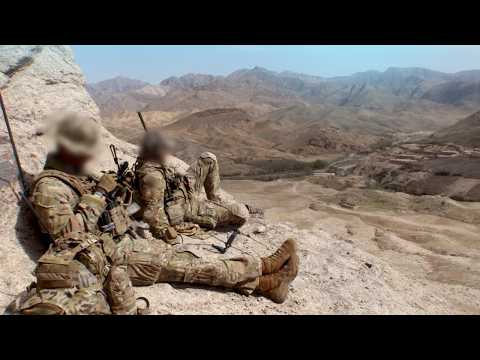
What you find instead is other people telling you the same story with the same words and the same missing details. There’s a reason that story keeps circulating. The reason is that something real lies beneath it. Not the argument. Something colder, stranger, and more honest, from the first week of the war to the last. No American special forces commander could put the Australians on a mission of his choosing. Not because he didn’t want to. Because he couldn’t. No captain, team leader, or planner in that room had the authority. He couldn’t task them. He couldn’t issue orders to them. He couldn’t borrow them for one night the way he could with another American unit. That authority sat two headquarters up a chain neither man in the room controlled. And the moment those Australians joined his mission, it stopped being his mission alone. It became a combined operation between two governments, and it had to be re-approved through a chain of command that ran outside the province, outside the country, all the way to Canberra.
That is the thing almost no one outside the two headquarters buildings understood. None of it was personal. No soldier decided any of it, and none of it happened during a field patrol. It happened in paperwork. In four separate systems, all designed years before most of these men ever reached Afghanistan. And all of them worked exactly as intended. Here is what those four systems were. The first system is a headquarters. Australia ran its own two-star command in the Middle East, and no American in Afghanistan could order an Australian soldier through it. The officer who held that post in 2011 is also in the final chapter of this story. In the highest position in the Australian Defense Force, he reads something sent to him by an American officer. The second system has a name that seems to mean nothing. Caveats. In Washington in 2009, the Supreme Allied Commander of NATO stood and counted his alliance’s restrictions out loud. Seventy of them. Down from 83 a year and a half earlier.
The third system is a list. In October 2009, the coalition list held 2,058 names. The public only knew that because someone leaked the files. Reports from that period indicate Australia ran a second list of its own alongside it. The fourth system is the veto. One national officer sitting inside coalition headquarters, able to stop his country’s participation in a night’s operation before it began. Those four systems are why an American plan couldn’t simply include the Australians. Not one of the Green Berets decides anything. Let’s start with the man who received the Bronze Star, because he is the proof that the beginning of this story is not the one you were sold. Lieutenant Colonel Rowan Tink commanded the Australian SAS unit sent to Afghanistan in the first phase of the war. Australia got in early. The SAS was among the first coalition ground forces to operate in the south, conducting long-range reconnaissance in a country that had swallowed better-equipped armies before. On July 24, 2002, at Bagram, Major General Frank Hagenbeck awarded Tink the Bronze Star. Hagenbeck wasn’t just an observer of Australian performance. He had led division-level combat in the mountains earlier that year. When he pinned that medal, he was putting his signature on an assessment of an ally. That is the US Army’s own judgment, written in the medal the US Army gives its own soldiers after eight months of war. So whatever happened later did not start with contempt.
The Australian national headquarters for the entire Middle East was called Joint Task Force 633. A bland name, an enormous mission. Every Australian element in that theater reported to it. The Special Operations Task Group, the Reconstruction Task Force, the mentoring teams, aviation, logistics, all of it. And JTF 633 did not report to ISAF. It reported to Australia. Look at who commanded it, and you’ll see how seriously Canberra took this. Major General Mark Evans from mid-2007, Major General Mark Kelly throughout 2009, Major General John Cantwell from January 2010, Major General Angus Campbell from January 2011. Then Stuart Smith, Michael Crane, and Craig Orme. Remember the fourth name on that list. Angus Campbell. He will return at the end of this story to sit in a different chair with a letter in front of him. They were not liaison officers. They were two-star generals whose job was to own the Australian war and be able to answer for it in Canberra.
There is a fundamental distinction underneath all of this, and everything that follows in the story depends on it. There are two different things a commander can exercise over a soldier. The first is national command. That is ownership. Who the soldier belongs to. What he is allowed to do. Which law applies to him. Who disciplines him. Who sends him home. Who faces parliament when things go wrong. National command never leaves the country that enlisted the soldier. It cannot be handed over. The second is operational control. That is employment. Who tasks him this week. What target he is pointed at. Which piece of ground is his responsibility. Operational control can be given to a foreign commander, and in alliances, this usually happens because otherwise nothing on the map would be coordinated. Most people merge these two ideas into one. In Afghanistan, they were deliberately separated, and Australia held its own half with a tight grip.
Take the man who held that throughout 2010. Major General John Cantwell arrived in January of that year and left in January of the next. It was the year of Australia’s heaviest war responsibility. When Australians were killed, the ramp ceremonies were his responsibility. The signatures were his. The communications to Canberra were his. Cantwell later wrote publicly about what that did to him, which is rarer among Australian generals than it should be. He didn’t write about how great the coalition felt. He wrote about the cost of being the man who had to carry the responsibility. That is the essence of national command on the day it truly matters. One officer in one chair, unable to delegate tasks to an ally, even if the ally is standing there offering help.
Now add the Australian special operations group to that picture. Known in the coalition as Task Force 66, it was headquartered in Uruzgan province. Uruzgan was run by a multinational headquarters called Combined Team Uruzgan. From August 1, 2010, when the Dutch handed over, an American officer, Colonel James Creighton of the US Army, commanded that headquarters. Australian special forces elements were inside that province. They flew from the same airfield, lived behind the same walls, and their wounded went through the same medevac chain. They were not under his command. Imagine Creighton on August 1, 2010, taking charge of a province in the middle of a war. He is responsible for the ground. He is responsible for the plans. Yet the most capable strike force on his airfield is not at his disposal. And it won’t be tomorrow either. He has no move to make about it. Because the arrangements that put them there were struck in two capitals long before he arrived. He can request. But he cannot order. No American in that province ever could.
Task Force 66 operated in Uruzgan, Helmand, Zabul, and further afield under coalition special operations arrangements, while its chain of command ran sideways out of the province, up to the Australian headquarters, and then entirely out of the country. Drawn on paper, it looks like a mistake. That was the price of the arrangements, and every coalition country paid some version of that tax. Whatever flag was on the shoulder. Here is what that meant for one night’s work. An American team leader who wants the Australians on a mission doesn’t just ask the Australians. He asks his chain of command whether it fits the coalition plan. And the Australians ask a different chain of command whether it fits Australia’s plan. Two administrative teams. Two legal reviews. Two assessments of the same compound. Two commanders, and neither can override the other. Now start counting time. The intelligence that makes a target worth hitting spoils like milk. There is a man in that compound tonight. And there won’t be a Thursday. One chain of command moves fast. Two chains that must agree move at the speed of the team facing the more complicated question. And it was a double-edged sword. No Australian could task an American either. On that ground, neither side was senior to the other. They were guests in the same house who agreed to this night, and that agreement had to be renewed every time.
Here is the first correction to the myth. When a joint operation didn’t happen, it was never because the Americans didn’t want to include the Australians. It was because the American plan that included the Australians wasn’t purely an American plan, and the second chain of command couldn’t close the loop in time. That is the core of it in one sentence. Special forces could ask, but they couldn’t insert themselves. That is the story of a staff officer. It happened on the command floor in front of a whiteboard, and no one writes a book about that. But it is only the first system. The second is why the questions the two chains had to answer were different, and it has a name that suggests nothing. The word is caveat.
A national caveat is a restriction a contributing nation places on how its forces may be used. It binds the coalition commander whether he likes it or not. At its peak in 2011, ISAF contained over 130,000 troops from roughly 50 nations. It looked like one very large army. In practice, it was 50 separate force packages, each with its own rules about where it could go, when it could move, what it could target, and whether it could cross a provincial boundary, operate at night, or conduct offensive operations at all.
So on any given night, the planner in Kabul wasn’t choosing from 130,000. He was choosing from 50 packages, and he had to know each one’s rules before he chose. Fifty nations, 50 separate rule sets, and one clock running for everyone at once.
Coalition officials said publicly how much damage this did. In 2009, speaking in Washington, NATO’s Supreme Allied Commander, General John Craddock, counted the caveats out loud. Seventy, down from 83 about 18 months earlier. He noted that heads of state had agreed at the 2008 Bucharest summit to remove them. 83 then, 70 now. He said: “It’s progress, but it’s not nearly enough.” The Supreme Allied Commander stood in Washington and publicly counted the separate restrictions his own alliance placed on its forces.
Two years later, on June 10, 2011, in Brussels, outgoing US Defense Secretary Robert Gates used his farewell speech to NATO to attack the same thing. He described national caveats as, in his words, “tying the hands of alliance commanders in ways that are sometimes galling.” An outgoing American defense secretary choosing to devote part of his final alliance speech to this. That is the view from the podium.
On the ground, it looked like two teams in the same briefing room receiving instructions about what each was allowed to do. Two teams, same room, same night. One can cross a provincial boundary during a pursuit. The other cannot without approval that takes hours. One can conduct an offensive operation against a specific individual. The other can only detain under stricter conditions. One can request a certain category of supporting fire. The other needs a national officer to approve it, and that officer may be asleep in another time zone.
Nothing in that room was about courage or competence. Every one of those differences was decided by a parliament or a cabinet or a legal directorate thousands of kilometers away, months or years before. So ask the planner’s question. You are preparing tonight’s mission. You can choose a team that can do all seven tasks you might need, or a team that can do four and needs a phone call for the other three. Which one do you build your plan around? You build around the easier one, not because the other men are worse, but because the window is closing.
Repeat that a hundred times across a deployment, and from the outside, it looks like preference. It looks like the Americans choosing Americans. From inside the planning cell, it was just a question of which team needed fewer phone calls before dawn. And even that wasn’t a free choice. The team you didn’t build around wasn’t available for you to build around in the first place.
Notice how the habit sets in. The planner facing the matrix of restrictions doesn’t build a force and then apply the rules. He builds packages that fit the rules, then keeps building the same way because it worked last time and because he is tired. Over months, some nations end up doing certain categories of work. Not because anyone decided they should specialize, but because the approval math kept pointing the same direction. Everyone at headquarters saw the pattern. No one could name the day it started, because there was no single day. There was a document and a thousand small decisions made under time pressure by people who had read it.
Something else about caveats corrects the story you usually hear. The Australian caveats were not about cowardice. The Australian Special Operations Task Group was one of the most committed special operations formations in the country’s history and spent years in sustained offensive operations. What those caveats protected was the Australian government’s ability to determine what its soldiers were and were not used for. That is sovereignty, not cowardice. And caveats are not secret from your allies. They are declared. The entire system depends on the coalition commander knowing in advance what each contingent can and cannot do, so he can plan around it instead of discovering it mid-mission. When an American planner didn’t build a mission around an Australian element, he often knew before he started that he couldn’t, because it was written in front of him. The argument had already been settled in capitals long before any of these men reached Afghanistan.
Look at what it took to change those numbers. 83, then 70. That reduction didn’t come from commanders complaining. It came from heads of state and government who sat at the 2008 alliance summit in Bucharest and agreed to do something about it. The political leadership of the entire alliance in one room removed 13 restrictions in a year. Which tells you something about the 70 that remained. Behind every one of those was a government that weighed the pressure from NATO’s Supreme Commander and decided to keep the restriction anyway. Those were deliberate national positions defended at the highest levels by countries that were sending their sons to die in the same country at the same time. The force contained 50 nations, and each one kept the final word on how its soldiers were used.
The caveat tells you how a soldier may be used. But it doesn’t tell you who he is allowed to hunt. That was a different document, and there were two of them. Kill-or-capture in Afghanistan ran on a list. The coalition’s version was called the Joint Prioritized Effects List. Names were nominated to that list, vetted, legally reviewed, and approved as targets for coalition targeting efforts. It was not a wish list and it was not informal. Getting a name onto the list and keeping it there was a process with evidentiary thresholds. Removing names was a process too. Reports drawn from leaked coalition documents published in 2010 indicate that by October 2009, that list held roughly 2,058 names. That number comes from leaked material, not an official release, and it is worth stating that clearly. Two thousand names is not a manhunt. It is an industry. Which means a standing task force, a standing intelligence machine feeding it, a standing legal function, and a standing argument about who belongs on it.
Australia did not simply join that list and take tasks from it. Here is where the documented diverges from the understood, and it is worth distinguishing the two. What is documented is the coalition list, its size, and how it worked. What is understood, and appeared in reporting from that period rather than in an official Australian document, is that Australia ran a national targeting effort of its own in parallel, with a heavier focus on individuals responsible for killing Australians, not as a replacement for the coalition list. Treat this as an understanding common among those who were there, not as a published fact.
The consequence of that is structural, and it holds either way. An American team’s target had to be justified within the coalition process, by coalition standards, and approved by the coalition chain of command. An Australian team’s participation had to be justified within the Australian process, by Australian standards, with evidence Australian lawyers would accept, and approved by a chain of command running to Canberra. If a name was on both lists, the mission became easy. Both authorities already agreed the man mattered. If he was on only one, no amount of goodwill on the ground solved the problem. The Australians couldn’t adopt an American target just because the Americans wanted it. And the Americans couldn’t make an Australian target a coalition priority just because the Australians wanted it. Each side was answerable to a different government for the same man who was going to be killed.
There is a worse effect buried inside this, because it determines what each force spent its nights doing. If your national targeting focuses on who is killing your soldiers, the rhythm of your work follows your casualties. Your priorities shift as your casualties shift. An ally working to comprehensive theater standards has priorities that shift for different reasons, at a different tempo, in a different part of the region. Over a six-month cycle, two forces with different priority-setting mechanisms drift apart geographically without ever deciding to. They are simply busy in different valleys on different nights, working against different names. From a distance, and 20 years later, that drift looks like a deliberate decision.
And it is worth understanding how visible that list was, or rather how invisible. Australians did not learn the size of the coalition target list from a government announcement. The number 2,058 entered public knowledge through leaked military documents published in 2010. Which means the public discovered the mechanics of the war they were paying for because someone leaked the files. This matters to the story in a specific way. If the size of the coalition’s targeting effort had to be leaked before anyone outside headquarters knew it, then the ordinary soldier’s understanding of why his force did or didn’t go out on a given night was necessarily incomplete too. He saw only the result. That is how the myth started. Individuals could observe that Australians and Americans went out on different nights. They could not see the list, the standards, or the staffs on both sides arguing over a particular name. So they filled the gap with the explanation that made sense from where they stood.
There is a practical question underneath all of this. When two chains of command have to agree on a target, who actually carries the question from one side to the other? The answer is the liaison officer. Serious national forces kept people inside the other side’s headquarters, and their entire function was to move questions across that gap. They sat in coalition planning sessions, watched what was being developed, identified early whether an emerging operation was something their nation could join, then went back to their own chain of command to start the approval process in parallel. So when the coalition formally asked, the national answer was already well underway. That function is invisible from outside headquarters, and it is why combined operations happened at the rate they did. When things went well, the liaison officer had seen the target developing three days earlier. When they didn’t, the same officer had often looked at the same target and known immediately that his side would never approve it in time. No American ever heard that conversation. He heard “no,” or he heard nothing, and he moved on with his night.
Now the fourth system, and it takes its name from a football pitch. In multinational operations, there is a mechanism called the red card holder. A national officer sitting inside coalition headquarters has the authority to approve or refuse the use of his nation’s forces or assets against a particular target. The coalition process runs, the target is developed, the action is proposed, and before it proceeds, the national representative must be satisfied that it complies with his country’s rules, laws, and policies. If he is not satisfied, he raises the red card, and his nation’s part in that action stops. Published academic studies of red card holder teams describe this fully in coalition air operations, where decisions are fast, aircraft are national, and legal risk is clear. It would be unfair to claim the same paperwork was actually waved over every ground patrol in Uruzgan.
One thing about this role tells you how closed this part of the war has been. Search the open record for one person from any nation who has publicly described doing this job and you will not find him. The literature describes the role. It does not describe a person. In a war that produced thousands of memoirs, not one man has come forward to say he was the officer who held that authority.
Be precise about what this veto actually does to an operation. A national veto does not stop the coalition. It removes one nation’s forces from one action. The operation can continue with someone else’s aircraft, someone else’s strike force, and someone else’s authority. The red card excludes one participant from the night’s order of battle. The rest of the operation continues without him. Now weigh that against the clock and the time difference. The national representative who has to consult his capital is consulting a capital that may be eight or nine hours behind or ahead of the target. The staff officer who can answer may be asleep. The legal adviser who has to sign may be in his car. That is geography, not dysfunction, and geography does not care that a compound is busy tonight.
So the coalition adapts. It stops asking for things it expects to lose to time. There is no resentment in that, just a planner who knows that a request that won’t be approved for six hours has already cost him six hours.
That is the mechanism the myth has been groping toward all these years. None of it involves a Green Beret deciding he doesn’t want to walk with an Australian. By the time any of this mattered, it was already history. The Australian special forces came home. The task group closed. The province was handed over, then handed over again. And the whole apparatus of caveats, target lists, and national vetoes was boxed, archived, and forgotten by everyone who didn’t have to work inside it.
Then, in November 2020, the paperwork came back. Hold that date. The mechanisms did not fail in Afghanistan. They worked every night exactly as the lawyers of four governments intended. What came for this relationship afterward came from an entirely different direction, and it came in writing.
The men who lived under these systems were never properly told about them, and that is the ongoing work here. Now test the myth against the record, because the record is not silent. Start where we started. Bagram, July 24, 2002. An American major general pinning an American Bronze Star on the commander of an Australian SAS squadron. That is the American system using its own medals to express its regard for Australian special forces in the first year of the war.
Now jump 16 years forward, past Uruzgan, past the withdrawal, to 2018. In July of that year, the Australian Broadcasting Corporation reported that an Australian special forces soldier had been embedded with US Army Green Berets in eastern Afghanistan’s Nangarhar province, working against the local Islamic State branch. An Australian soldier living and fighting inside an American special forces team. Look at the myth again in that light. The Green Berets supposedly stopped wanting Australians near them. In 2018, there was an Australian inside the team. But look at how he got there. Because that proves the hard truth rather than softening it. It wasn’t a Green Beret captain deciding he liked the Australian soldier and taking him along. The ABC reported he was there under an exchange program with the US Army. A standing arrangement between two national defense institutions, and there is a name for that mechanism. That is the gate. Even when an Australian soldier ends up standing inside an American team room on the same operation, covered in the same dust, he arrived through an agreement struck far above both of them. There were no team-level shortcuts on any night or in any province.
The structural record confirms the same thing. US special operations efforts in Afghanistan were run through a combined joint special operations task force, which at various periods was commanded by groups of US special forces including the 3rd and 7th. That command integrated, staffed, deconflicted, and supplied coalition special operations elements. And Australian special operations worked within that structure throughout. The peacetime machinery underneath all of this is formal, not improvised. The US runs a standing mechanism for exactly this kind of exchange, called joint combined exchange training, governed by specific Department of Defense instructions. US special operations forces train with partner nation special operations forces under it as a permanent program with its own rules, funding lines, and reporting requirements. That is the point most people miss when they imagine allied special forces relationships. They imagine friendships. The reality is a program with a document number that outlasts every man in it. Individuals rotate, teams change, but the instruction stays on the shelf. So the next pair of teams meets under the same rules the previous pair worked under. American law can affect an American training program in a way it cannot affect a friendship between soldiers.
That difference is what defines the end of this story. The Australian task force didn’t only do raids. From about 2009 and the years that followed, it partnered with an Afghan provincial police response unit in Uruzgan. That is slow, unglamorous mentoring work, and a force without the appetite for partnership doesn’t take it on. The Australian honors system itself recorded the same judgment from its side. The Special Operations Task Group, Task Force 66, received the Australian Meritorious Unit Citation across its rotations from 4 to 20 for counter-insurgency operations from April 30, 2007, to December 31, 2013. Be precise about that award because it is often confused with others. The Meritorious Unit Citation is an Australian honor, not an American one. The United States has its own unit awards under different names. This Australian award is Australia’s judgment on six and a half years of its men’s work, and it will matter enormously in about five minutes.
So the result, in plain terms, is that there is no verifiable report in any book, memoir, court record, or official investigation indicating that US special forces refused or reduced joint patrols with the Australian SAS. That claim circulates almost entirely in unsourced online content that cites nothing and names no one. And against that claim, there is a Bronze Star at Bagram in 2002, an Australian soldier inside a Green Beret team in Nangarhar in 2018, and 16 years of shared structures between them. The men got along. What they could not do was act together on their own authority. Every joint operation passed through two separate approval chains before it happened. And no American who wanted an Australian on his mission could make that decision alone.
But something did change. It changed after the shooting stopped, which is why the question keeps getting asked. On November 6, 2020, the Inspector General of the Australian Defense Force delivered a report on the conduct of Australian special forces in Afghanistan. A redacted version was released to the public on November 19, 2020. The scope of the investigation deserves mention because that scope is why no one could ignore it. More than 20,000 documents. More than 25,000 images. 510 interviews with more than 420 witnesses. Its announced findings were these. Credible information existed relating to 23 incidents involving alleged unlawful killings of 39 people, involving 25 Australian personnel between 2005 and 2016. Those killings were found to fall outside what the report called “the heat of battle.”
That phrase carries the weight of the entire finding. So be clear about what it means. The law of armed conflict accepts that lawful killing happens in war, and that decisions made in fractions of a second under fire can sometimes be wrong without being criminal. What it does not accept is killing after the shooting has stopped, when a person is under control and no threat requires a response. By placing its findings outside the heat of battle, the inquiry was saying that the ordinary protections a soldier relies on do not apply to those incidents.
Individual cases are not settled. Some are before courts. Some involve living, named men whose cases have not been resolved. The findings above are the public record of the investigation, and nothing here goes beyond them. Say clearly who the 39 were, because they are easy to lose in a paragraph of numbers. They were Afghans. The investigation described them as prisoners, farmers, and men who had already been searched and secured. They died in Afghan provinces, in their own country, over 11 years, at the hands of soldiers from a nation that came there saying it would protect them. In each case, the investigation found credible information that the person killed was under control and posed no threat at that moment. That is the finding, and it is why everything that followed happened.
There is a second story here that is not about the 25, and it received little attention at the time. Remember that unit citation. Rotations 4 through 20. Six and a half years. Thousands of men who went, did the job they were sent to do, and came home. In November 2020, in the wake of the report, the Chief of the Defense Force, General Angus Campbell, moved to revoke it. Understand what that meant to the men who held it. A unit citation is not a personal medal for individual bravery. It belongs to everyone who served in the unit across the covered period. Revoking it takes it not just from the 25, but from all of them. The cook, the signaller, the medic, the man who completed four rotations and never fired a shot outside the wire and buried his friends. Campbell’s logic was about collective accountability, and it was not a trivial position. If the unit is honored collectively, the logic goes, the unit can be held accountable collectively.
The counter-argument came with equal force from veterans, from families, and from politicians. They said: punish the guilty, not the man beside them who did nothing wrong. There is a detail in that dispute worth pausing on. The citation covers rotations 4 through 20. Seventeen rotations. A man deployed on rotation 5 who never came back would be asked to return an award for what a different group of men did on a later rotation in a different year in a province he may never have seen. Apply that retroactively, and you are punishing one group to dishonor another. And the men with no connection to the findings lose exactly as much as anyone else.
The Australian government did not agree with its defense chief. On April 19, 2021, the Defense Minister decided to keep the award. Hold those two dates together, because five months separate them, and they are the real story of what happened to Australian special forces after the war. November 2020. The report is released and the chief moves to strip the unit of its citation. April 2021. The government overrides him and the citation stands.
And between those two dates, in March 2021, something arrived from entirely outside the country. It didn’t come from a court and it didn’t come from a newspaper. It came from an ally. In March 2021, according to Australian defense reporting that has not been officially confirmed in detail, the US defense attaché in Canberra wrote to General Angus Campbell, the Chief of the Defense Force. The name of the officer who wrote the letter has not been publicly disclosed. The subject was the Leahy Law.
The Leahy Law is effectively one sentence. No US training and no US assistance to any foreign unit that credible information indicates has committed a gross violation of human rights. In force since 1997. Named for the US senator who pushed it. The law uses that broad phrase, gross violation of human rights, rather than a fixed list. US State Department guidance interprets it to include killing non-combatants, torture, enforced disappearance, and rape as a tactic. Look at the operative word again. Units. That single word is what makes the law so dangerous to any partnership, and it is the point most discussions of it get wrong. Leahy vetting does not primarily punish an individual. It attaches to the unit. If credible information implicates a unit, US assistance and training to that unit stop. It does not matter who is still serving in that unit, whether anyone has been convicted of anything, or what the ally thinks about the process.
There is a second feature that makes it heavier still. Leahy vetting is a check applied before assistance is provided, not a penalty imposed after a trial. It runs on credible information, a far lower standard than a criminal conviction, and it was designed that way on purpose, because the goal is to keep American resources from reaching an abusive unit while the abuse is ongoing, rather than discovering it a decade later. For a partner nation that has just published its own investigation naming its own units, that design is very sharp. The more candid you are in public, the more credible information you hand to the vetting process. An ally that buries its investigation creates no paperwork. An ally that publishes one creates exactly the document the law is looking for.
Now apply that to the relationship this entire story has described. Every piece of the Australia-US special operations relationship outside of combat is training and assistance in some form. Exchanges, rotations, joint exercises, shared schools, and attachments like the one that put an Australian inside a Green Beret team in Nangarhar. The entire slow machinery by which allied special operations communities stay interoperable across decades is exactly the machinery Leahy vetting reaches. That letter was not about patrols in Uruzgan. Uruzgan was already the past. What it put at risk was the training and exchange program and the next 20 years of it.
What followed was reported rather than documented, and that line still holds. Australian defense reporting itself indicates the warning reached the top of the Australian Defense Force directly, and that the response was administrative. Defense changed posting locations and redrew organizational lines, and those reports say the changes were aimed in part at the American law. A public argument later erupted in Australia over whether the government of the day had been told about the letter at all. What has not been established is that a formal decision was ever made under the Leahy Law against any Australian unit. The documented event is a warning and an Australian response to it, not a confirmed American finding. That distinction is the difference between a threat and a judgment, and it stands here.
Now look at the man the letter was addressed to. Angus Campbell commanded Joint Task Force 633, Australia’s national headquarters in the Middle East, from January 2011. He held the post that existed specifically to ensure no foreign commander could dictate what an Australian soldier did. He was the physical embodiment of the separation this whole episode has described. Ten years later, he was Chief of the Defense Force, and a letter from an American officer arrived telling him what an American law might do to his special forces. For 20 years, those four systems kept Americans away from Australian decisions. Then an American intervened anyway, without engaging any chain of command at all. He did it with a letter about a law that had been sitting in Washington’s records since 1997.
So go back to Bagram. Just after ten in the morning, on July 24, 2002. Dust in the air. An American general, an Australian colonel, and a Bronze Star. No one stopped volunteering. No one was ever asked to volunteer. Because volunteering was never the mechanism. No Green Beret in 20 years of that war could task an Australian on a mission of his own making. There was a chain of command running to Canberra that no American on the continent could override. A matrix of caveats that a NATO Supreme Commander stood in Washington to count at 70, down from 83. A coalition target list and a parallel national one. And a national veto held by an officer no one has ever named. Four systems, all working exactly as designed. And all of them making a simple thing harder than it looked.
The myth says the Americans abandoned the Australians. The record says an American general decorated an Australian in 2002. An Australian was fighting inside an American team in 2018. And the only thing that was ever said to genuinely threaten the relationship was written on paper in Canberra in March 2021. By a man whose name we still don’t know.
At no point in any of it was the question whether the soldier trusted the man beside him. If you served on that ground in either uniform, or worked inside either headquarters, tell us in the comments what the approval chain actually looked like from where you stood. The men who lived inside these systems are the only ones who can say how much friction was real and how much paperwork no one remembers.
So here is the question that remains: if the myth was never true, why has it survived so much longer than the men who could have corrected it?
Report this article
Select a reason for reporting:






