For centuries, Japan’s true power did not sit on the Chrysanthemum Throne. It lurked in the shadows, wielded by military dictators known as shoguns—men who commanded armies, controlled emperors, and shaped a nation through steel and strategy. Their stories are not just of battles won, but of betrayals, assassinations, and the heavy cost of absolute authority. From the first to claim the title to the last who surrendered it, these 20 figures defined an era.
But behind the grandeur and the gold leaf, a darker truth emerges: the shogunate was a throne built on blood—often the blood of family. Brothers turned on brothers, fathers sacrificed sons, and even the most powerful rulers met ends as brutal as the lives they led. Their legacies, etched in wooden statues and golden pavilions, whisper of ambition, paranoia, and the ultimate futility of power.
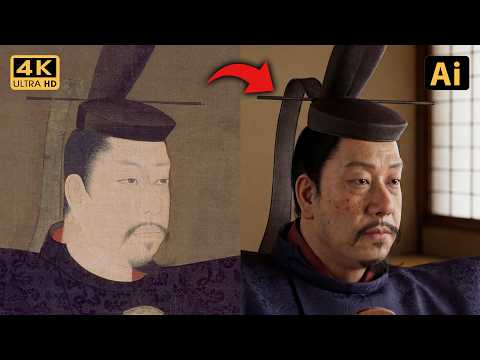
Minamoto no Yoritomo, the founder of the Kamakura shogunate, understood this better than anyone. He did not rise to power on the blood of his enemies alone—he built his foundation on the loyalty of his brothers, only to hunt them down when their ambition threatened his own. “He rewarded ambition with execution,” and in doing so, ensured no rival could breathe. Yet, even he could not escape fate. In 1199, the untouchable ruler mysteriously fell from his horse, dying at 52. Rumors of assassination swirled, but the outcome remained the same: a fragile dynasty that his in-laws would immediately steal.
His son, Minamoto no Yoriie, fared no better. Barely a year into his reign, the throne was already slipping from his grasp. Unlike his terrifying father, Yoriie commanded neither fear nor loyalty. Stripped of his title and exiled to the quiet hot springs of Shuzenji, he was left defenseless. In 1204, the fatal blow came not from a rival clan, but from assassins sent by his own grandfather. Cornered in his bathhouse with no army to call upon, he was murdered at just 22, marking his lineage for erasure.
The pattern repeated with sickening regularity. Minamoto no Sanetomo, a poet placed on a throne he never wanted at just 11 years old, preferred delicate verses over brutal politics. He surrendered Kamakura to his ambitious mother’s clan, but in a paranoid military state, ignoring the sword offered no true protection. On a snowy evening in 1219, as he descended the stone steps of the Tsurugaoka Hachimangu Shrine, his own nephew lunged from the dense shadow of an ancient ginkgo tree. A single stroke of steel severed his head at 27. With his blood pooling on the white snow, the mighty Minamoto bloodline was erased forever.
With the Minamoto line dead, the Hojo clan seized absolute control, needing only a living prop to legitimize their military dictatorship. Kujo Yoritsune, taken as an infant, was raised strictly to nod and stamp official scrolls. For 18 years, he sat on the throne, signing papers he didn’t write. He never commanded an army or waged a single war. Once he outlived his usefulness in 1244, his masters simply forced his abdication, tossing him into exile like a broken ink brush. When illness finally claimed him at 38, he died exactly as he had lived: a silent prisoner to a title he never truly held.
Even poetry could be treason. In 1266, Prince Munetaka nominally held the shogun’s throne, but his only real crime was occupying a seat the ambitious Hojo clan suddenly wanted empty. Instead of fabricating a bloody military rebellion, they used a few delicate verses of brushed calligraphy to strip his power, shoving him into a sealed wooden palanquin back to Kyoto. Fading into deep obscurity, he breathed his last at 32. He was the ultimate puppet, erased by a metaphor.
Then came Ashikaga Takauji, who built a dynasty but paid for it with loyalty. Overthrowing the Kamakura shogunate, he then turned his sword against the emperor to secure his own rule. Yet, if you look at his quiet ink portraits preserved today, the violence of his era is completely hidden. In 1358, while actively campaigning, he wasn’t struck down by a rival’s blade. A severe ulcer simply stopped him. Confined to a field tent, the supreme military leader spent his final days issuing orders against his own brother. He died at 53, having won the realm but leaving behind a fractured court and a divided family.
His son, Ashikaga Yoshiakira, didn’t inherit an empire—he inherited his father’s civil war. Taking the shogunate at 28, he spent his entire nine-year reign living in muddy military camps, trying to stitch a fractured Japan back together. Yet, after surviving nearly a decade of constant combat, he wasn’t struck down on the battlefield. In 1367, a sudden illness quietly overwhelmed the exhausted commander. Dying at 37, he was forced to hand the unresolved war over to his 10-year-old son. He spent his life trying to fix his father’s mess, only to leave an even bigger one behind.
By 1397, Ashikaga Yoshimitsu officially retired, yet he held tighter to power than ever. To display this authority, he built the Golden Pavilion, covering its walls in gold leaf that cast a brilliant reflection over a quiet pond. Sitting inside, he received foreign envoys who addressed him as the king of Japan, elevating himself above the emperor. Yet, overstepping traditional boundaries often breeds quiet enemies. In 1408, a sudden illness permanently stopped his ambitions. Dying at 50, historians suspect a poisoned cup of tea. His Golden Pavilion remains intact today, beautifully outlasting the man who tried to outgrow his own title.
The son, Ashikaga Yoshimochi, spent 29 years systematically dismantling his father’s magnificent legacy. While the previous shogun built golden pavilions to outshine emperors, Yoshimochi quietly severed diplomatic ties and isolated the realm. Rejecting the grandiose titles his father cherished, he governed with a quiet, calculating pragmatism. Yet, his most destructive act came inside a silent deathbed chamber in 1428. Dying of illness at 42, the military leader deliberately refused to name an heir, leaving the court in chaos. He forced his officials to draw simple wooden lots at a local shrine to pick the next ruler. He despised his dynasty so deeply that he surrendered its future to pure chance.
Chance, it turned out, had a cruel sense of humor. The wooden lots selected Ashikaga Yoshinori, a man whose reign would be remembered not for the lottery that elevated him, but for the terror that followed. Having spent 12 years executing anyone who slightly displeased him, Yoshinori earned the quiet hatred of his vassals. Yet, on his 47th birthday, he still accepted a rare invitation to a celebratory banquet.
As actors performed a slow, elegant Noh drama on the cedar stage, the host’s samurai quietly surrounded the room. Mid-performance on a summer evening in 1441, armed assassins suddenly rushed the guest of honor, decapitating him with a single sword strike. He built a regime on fear, only to lose his head while watching a dance.
What followed was not peace, but collapse. The Ōnin War tore Kyoto apart in 1467, and the shogun of the hour, Ashikaga Yoshimasa, simply walked away. At 31, while his capital burned to the ground, he retreated to his unfinished silver pavilion and decided to study tea. Instead of leading armies, he spent decades examining rustic ceramic bowls and perfecting the quiet geometry of tatami rooms. Generals slaughtered each other in the dirt outside. He didn’t intervene. Aesthetic harmony mattered more than human lives. Dying of illness at 54, his political legacy was a shattered nation—yet his refined culture survived the ashes. He failed as a military dictator, accidentally designing the aesthetic soul of modern Japan.
Some shoguns, however, refused to go quietly. In his final moments, Ashikaga Yoshiteru didn’t call for guards. He drew his own steel. When rebel soldiers stormed the Nijō Palace in 1565 to execute him, he knew no reinforcements were coming. Refusing a quiet ritual suicide, he gathered his family’s priceless heirloom katanas and drove the blades straight into the wooden floorboards around him. As attackers flooded the room, he met them head-on, simply pulling a fresh blade from the floor whenever one chipped on enemy armor. He fought single-handedly until sheer numbers overwhelmed him at 29. His political dynasty shattered that day, but the legend of the swordsman didn’t.
His successor, Ashikaga Yoshiaki, refused to let his dying dynasty fade with dignity. Five years as shogun, then 24 years begging for the job back. When Oda Nobunaga captured Kyoto in 1573, he didn’t even bother executing the defeated ruler—he simply kicked him out to wander muddy provincial roads. As new empires swallowed Japan, the homeless exile shaved his head, pleading for an army that never came. Outliving Nobunaga by a decade, he died of illness at 60, a forgotten monk clutching a title that no longer existed.
Then came the man who waited exactly 60 years to rule Japan. The price of that supreme patience was his own blood. While Tokugawa Ieyasu founded a dynasty lasting over two centuries, the brutal cycle of familial bloodshed spared no one. Facing sudden demands from a paranoid warlord ally in 1579, the future shogun issued a single quiet command. He ordered his first wife executed without hesitation, forcing his eldest son, Nobuyasu, to commit ritual suicide. Even the ultimate winner pays the family tax. Dying of gastric cancer at 73, he left behind an era of unprecedented peace—yet that legendary golden age was purchased with his own child’s life.
His son, Tokugawa Hidetada, learned the lesson well. At 36, he destroyed his own daughter’s world because his father told him to. While he inherited a unified Japan, keeping it meant extinguishing the final political threat. During the 1615 siege of Osaka, the shogun aimed cannons directly at the castle where his daughter lived. He executed his retired father’s orders, watching the wooden fortress burn before forcing his son-in-law to commit suicide. Dying of illness at 52, he secured the family’s supremacy—a political machine built over the ashes of his own son-in-law.
Tokugawa Iemitsu turned that paranoia into national law. He closed Japan’s borders, isolating the island to protect his grip on power—yet locking out the world never cured his suspicion. Fixating on his younger brother, Tadanaga, he sent a courier to his quiet estate in 1633 carrying a plain wooden box. Inside sat a short, brushed scroll and a steel blade, offering no formal charges or chance for defense. The paper simply commanded his own sibling to kneel and commit ritual suicide. Dying of illness at 47, Iemitsu left behind a silenced court, his personal terror transformed into foreign policy for the next two centuries.
Then came Tokugawa Tsunayoshi, whose longest battle was fought against his own grief. Convinced his infant son’s death was karmic punishment, he turned sorrow into national law, issuing strict edicts protecting all living creatures—particularly street dogs. Thousands of strays roamed Edo, feeding on expensive white rice inside state-funded kennels, while citizens faced execution for merely throwing a stone at a barking hound. Dying of measles at 62, he left behind a starving, silenced populace. He tried to mandate universal compassion, only to engineer an era of absolute cruelty.
Tokugawa Yoshimune fought a quieter war—against financial collapse. Bypassing corrupt advisers in the 1720s, the pragmatic leader installed a simple wooden complaint box outside the castle gates, keeping the only key to personally read the grievances of farmers and merchants. When a fatal stroke claimed him at 67, he left behind neither a glittering pavilion nor a legacy of familial bloodshed. The oppressive system he tried to save eventually crumbled, but the stabilized nation he rebuilt did not.
At 15, Tokugawa Ienari inherited a stable nation—and spent the next half century quietly rotting it from within. Isolated behind heavy castle doors, he expanded his private harem to over 900 women, fathered 55 children, and funded endless banquets on borrowed wealth while crop failures starved the commoners outside. Dying of natural causes at 67, he left behind the illusion of peace—a hollowed-out regime, a beautifully fragile shell handed to his successors.
He was the 15th of his line, and the last. In 1867, as rival armies prepared to drag Japan into civil war, Tokugawa Yoshinobu made a quiet, unthinkable decision. Sitting inside the halls of Nijō Castle, he formally surrendered his authority back to the emperor, ending 265 years of his family’s military rule. He simply walked away to prevent a national slaughter. Decades later, citizens of a modernized Tokyo would spot the retired ruler casually riding a bicycle or practicing photography. Dying of natural causes at 76, he peacefully outlived his own empire. After seven centuries of bloodshed, he proved that the only way to survive the throne was to surrender it.
So which shogun’s fate struck you the most—the poet cut down on snowy steps, the swordsman who fought alone until the end, or the last ruler wise enough to walk away? Share your thoughts below.
Report this article
Select a reason for reporting:






