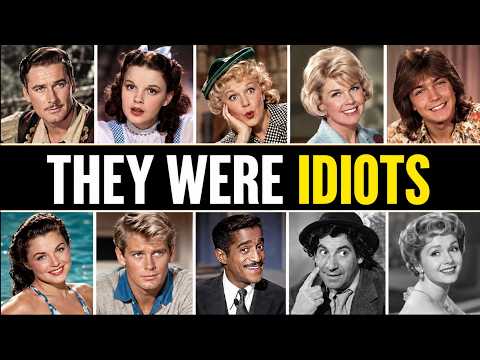
You’d think earning millions would set you up for life. But for these twelve classic TV stars, the money vanished faster than a canceled sitcom. Some gambled it away, some trusted the wrong people, and some just watched it slip through their fingers. What’s left behind? Bankruptcy filings, tax liens, and memoirs full of regret. These are the stories of the dumbest financial decisions ever made by people who should have known better.
Take Burt Reynolds. At his peak, he was the number one box office star in America five years running. He had the cars, the ranch, the dinner theater. And then it all crumbled. Chapter 11 bankruptcy in 1996 with over $10 million in debt. He even auctioned off his Golden Globe to pay bills. But Reynolds is just the tip of the iceberg.
Peter Tork of The Monkees was the first to leave the band—and the first to go broke. He bought a mansion, turned it into a free-for-all for musicians and hangers-on, and watched his fortune evaporate. By 1970, he was a singing waiter. He walked away from the most lucrative job he’d ever have. And he wasn’t alone.
Debbie Reynolds went broke twice. Both times, she trusted a husband with her money. Harry Karl gambled it away. Richard Hamlett sank it into a Las Vegas hotel that never turned a profit. She sold Marilyn Monroe’s iconic white dress for $4.6 million just to dig out of debt. A lifetime of Hollywood history, auctioned off piece by piece.
Chico Marx was a compulsive gambler who lost millions at the tables. His brothers kept making movies—not because they wanted to, but because Chico needed the money. He worked clubs into his 70s because stopping was never an option. Sammy Davis Jr. spent like a king, handed out expensive gifts, and never checked if his taxes were paid. When he died, he owed the IRS over $5 million.
Troy Donahue partied his way from teen idol to sleeping in Central Park. Esther Williams handed her finances to her husband and ended up owing $750,000 in back taxes. David Cassidy sold out arenas but saw almost none of the merchandising money—he filed for bankruptcy at 64.
Doris Day’s husband and lawyer lost her entire $20 million fortune behind her back. Betty Hutton walked out on her Paramount contract over a fight about who would direct her next picture—and never made a major studio film again. Judy Garland worked herself to death to pay off tax debts, with liens on her earnings until the day she died.
And then there’s Errol Flynn. The swashbuckling star of The Adventures of Robin Hood spent his fortune on yachts, estates, and a failed film project. By the mid-1950s, he was broke, living on his boat, taking any role he could get. He died at 50 with almost nothing left.
These stars had it all—and lost it. But how exactly did it happen? The details are even more shocking than you think. Stick around, because the stories behind these downfalls are wilder than any script they ever performed.
Start with Reynolds. The man who passed on Han Solo and watched Jack Nicholson win an Oscar for a part he turned down. He spent his peak years pouring money into businesses he knew nothing about. A USFL football team that folded. A restaurant chain that went bankrupt. By 2011, the bank was moving to foreclose on his Florida estate.
Peter Tork’s story is almost harder to watch. He wasn’t reckless in the flashy way—he was generous to a fault. He housed and fed anyone who showed up at his door. He started a band called Release that never got a record deal. Within two years of leaving The Monkees, the fortune was gone.
Then there’s Chico Marx, the family’s dealmaker who couldn’t stop betting. He negotiated the contract that got the Marx Brothers to MGM, then lost his share at the card table. Groucho and Harpo came out of retirement to make A Night in Casablanca and Love Happy mostly to cover Chico’s debts. He was still working clubs at 74.
Sammy Davis Jr. is the one that stings. The Candy Man himself, a man who had been performing since he was three years old. He picked up every check, bought every round, handed out jewelry like party favors. When he died in 1990, the IRS was owed more than $5 million. His widow spent years negotiating a bill she never ran up.
Troy Donahue went from Warner Brothers’ golden boy to sleeping in Central Park. He said people who had screamed his name a decade earlier walked right past him. Francis Ford Coppola gave him a small role in The Godfather Part II—as a character named Merle Johnson, which was Donahue’s real birth name. A cruel little wink from fate.
Esther Williams trusted her husband Ben Gage with everything. He drank, gambled on a restaurant called The Trails, and didn’t pay the taxes. She discovered she owed the IRS $750,000—and she never even looked at her own accounts. She paid it off with water shows and a swimming pool licensing deal.
David Cassidy’s story might be the most infuriating. The Partridge Family merchandise was everywhere—lunchboxes, board games, posters. His fan club was reportedly bigger than Elvis and The Beatles combined. But the contracts he signed at barely 20 paid him a modest salary, and most of that merchandising money never reached him.
Doris Day signed whatever her husband and lawyer put in front of her. When Martin Melcher died in 1968, she learned her $20 million fortune was gone—and she was half a million in debt. He had also signed her up for a CBS show without telling her. She did five seasons of The Doris Day Show just to dig out.
Betty Hutton was on top of the world in 1952—Annie Get Your Gun, The Greatest Show on Earth. Then she demanded Paramount let her new husband direct her next picture. The studio said no, and she walked out. She never made another major studio film. By 1967, she was filing for bankruptcy and later working as a housekeeper at a Catholic rectory.
Judy Garland owed the IRS so much by the early ’60s that she took The Judy Garland Show mostly to pay it down. CBS scheduled it against Bonanza and canceled it after one season. The liens stayed on her earnings for the rest of her life. She died at 47 with debts in the millions.
And Errol Flynn—the man who played Robin Hood—put his own money into a William Tell film that collapsed mid-production. He lost everything, and by the mid-1950s he was living on his yacht, taking any role he could get. He wrote in his memoir that he had wasted a fortune. He died at 50, broke.
The pattern is almost identical across all twelve. They trusted the wrong people. They spent without looking. They assumed the money would never stop. And when it did stop, they had nothing left but the stories.
But the details behind those numbers are where it gets truly wild. Take Reynolds again. He didn’t just lose money—he lost it in ways that still baffle financial advisors. The dinner theater in Jupiter, Florida, was supposed to be a steady income stream. Instead, it became a money pit he kept pouring cash into long after it stopped making sense.
And then there was the divorce from Loni Anderson. It wasn’t just expensive—it was a tabloid circus that dragged on for years. Legal fees alone reportedly ran into the millions. By the time the dust settled, Reynolds was filing for Chapter 11 and selling off pieces of his own history.
Peter Tork’s downfall had a different flavor. He wasn’t flashy about his spending—he was just pathologically generous. Friends described him as a man who genuinely couldn’t say no. If someone needed a place to stay, he had a room. If a musician needed equipment, he bought it. The house in the hills became a revolving door of people who took and rarely gave back.
What makes Tork’s story sting even more is the timing. He left The Monkees at the end of 1968, right when the money was still flowing. He paid his own way out of the contract—a buyout that came straight from his pocket. Within two years, he was broke. The man who had been on millions of lunchboxes was teaching music classes just to cover rent.
Chico Marx’s gambling wasn’t just a habit—it was a compulsion that shaped his family’s entire career. Groucho and Harpo didn’t come out of retirement for the art. They came back because their brother owed money to people who didn’t forget. The later Marx Brothers films exist largely because Chico couldn’t stop betting on cards and horses.
And Sammy Davis Jr.? His generosity was legendary, but so was his blindness to his own finances. He reportedly never knew how much he owed until the IRS came knocking. Friends said he treated money like it was water—something that flowed and would always flow again.
By the time he died, the jewelry, the cars, the tailored suits—it was all gone. His widow Altovise spent years trying to negotiate with the IRS over a bill she had no part in creating. She ended up selling his possessions just to settle what he owed.
Troy Donahue’s fall was faster and crueler. He went from magazine covers to Central Park benches in less than a decade. Warner Brothers dropped him in the mid-’60s, and the phone simply stopped ringing. He kept spending like it hadn’t. By the early ’70s, he was living rough in New York, unrecognizable to the fans who had once screamed his name.
Esther Williams at least had a skill to fall back on—literally. When the money ran out, she built a business licensing her name to swimming pool manufacturers. It was the one financial decision she made entirely on her own, and it actually worked. But it took years of water shows and smaller film parts to get there.
David Cassidy’s story has a darker edge. He spent his later years fighting legal trouble and a very public battle with drinking. His third divorce, from songwriter Sue Shifrin, came during his most difficult years. By the time he filed for bankruptcy in 2015, the teen idol who had sold out arenas was selling his Fort Lauderdale home just to stay afloat.
Doris Day fought back the only way she knew how. She sued her lawyer, Jerome Rosenthal, and in 1974 a court awarded her more than $22 million—one of the largest civil judgments of its era. But collecting it was another matter entirely. After years of appeals, she ended up with only a fraction of that figure.
Betty Hutton rebuilt her life in the quietest way possible. She earned a master’s degree, taught at Emerson College, and lived out her years far from the klieg lights. The woman who once lit up Paramount screens spent her final decades in near-anonymity. She died in 2007, remembered more for the walkout than the work.
Judy Garland never got the chance to recover. She died in London at 47, with tax liens still attached to everything she earned. The girl who sang “Over the Rainbow” left behind millions in debt and a legacy that still sells tickets today.
And Errol Flynn, the swashbuckler who robbed from the rich on screen, admitted in his memoir that he had robbed himself. He died at 50, living on his yacht, broke and mostly forgotten by the industry that had once paid him a fortune.
Twelve stars. Twelve fortunes. Twelve cautionary tales about what happens when you assume the money will never stop. Which of these downfalls shocked you the most—and which one do you think was the most avoidable? Sound off in the comments below.
Report this article
Select a reason for reporting:






