The roar of the Merlin engine was unmistakable—a deep, guttural growl that sent shivers down the spines of Allied pilots and German foes alike. But the story of how this engine, and the legendary P-51 Mustang it powered, came to dominate the skies of World War II is a tale of genius, rivalry, and a race against time that nearly ended in disaster.
In the early years of the war, the Allies were losing the air war. German fighters like the Focke-Wulf 190 outclassed everything the British and Americans had. The tide would turn, but only through a marriage of two incredible machines that almost never happened.
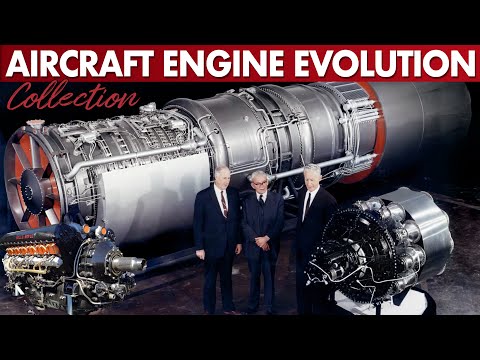
The story begins not in the skies over Europe, but in the workshops of Dayton, Ohio, where two brothers, Orville and Wilbur Wright, made history on December 17, 1903. Their Wright Flyer, powered by a crude 12-horsepower engine, lifted off the sands of Kitty Hawk, proving that human flight was possible. That first engine, though primitive, laid the foundation for a century of innovation.
As war engulfed Europe in 1914, the need for more powerful and reliable aircraft engines became urgent. The French rotary engine, with its spinning cylinders, offered an early advantage, but it was far from perfect. Pilots endured a shower of oil and fumes as castor oil mixed with fuel, leaving them sick and dizzy. The rotary’s gyroscopic effect made turns treacherous—a hard right turn at low speed could kill.
Between the wars, the radial engine emerged as the workhorse of American aviation. Reliable and air-cooled, it powered iconic aircraft like the Ford Trimotor and the Lockheed Electra. But in Europe, a different philosophy took hold: speed was paramount, and inline engines like the Rolls-Royce Merlin and Daimler-Benz DB 601, with their streamlined profiles, gave fighters like the Spitfire and Bf 109 a decisive edge.
By 1940, the Battle of Britain raged. The Spitfire and Hurricane, both powered by the Merlin, fought desperately against the Luftwaffe. The Merlin’s two-stage supercharger, developed in secret, would soon give the RAF a crucial advantage. But across the Atlantic, the United States had only one inline engine in development: the Allison V-1710, which lacked a turbocharger and struggled at high altitude.
Meanwhile, in Germany, a new fighter was taking shape. The Focke-Wulf 190, designed by Kurt Tank, was a radical departure—a fighter built around a radial engine. When it first appeared over France in 1941, it shocked British pilots, who mistook it for an American aircraft. The Fw 190 was faster, more maneuverable, and better armed than the Spitfire Mk V. The RAF had lost air superiority.
Desperate for a solution, the British turned to Rolls-Royce. The Merlin was already a superb engine, but engineer Ronald Harker proposed a radical idea: mate the new two-stage Merlin 61 with the American P-51 Mustang, an aircraft originally designed for low-altitude ground attack. The results were astonishing. The Mustang, with its new engine, could outrun any German fighter and had the range to escort bombers all the way to Berlin.
But the path to this marriage was fraught with obstacles. National pride, bureaucratic delays, and production challenges nearly derailed the project. It would take the combined efforts of British and American engineers, and a legendary test pilot named Eric Brown, to prove that the Mustang-Merlin combination was the war-winning weapon the Allies so desperately needed.
As the Mustang entered service, it began to turn the tide. German pilots, once confident, now faced a relentless foe. The P-51 became the scourge of the Luftwaffe, and its long-range escort missions spelled the end of German air superiority. But the story of aircraft engines was far from over. Even as the Mustang dominated the skies, a new technology was emerging—one that would make the piston engine obsolete and usher in the jet age.
In the workshops of the Royal Aircraft Establishment at Farnborough, a young RAF officer named Frank Whittle was already thinking about the future. The idea came to him not in a flash of inspiration, but after eighteen months of relentless pursuit—a single moving part spinning at incredible speed. Instead of pistons pumping up and down, he envisioned a compressor drawing air in, mixing it with fuel, and igniting it to produce a continuous, powerful thrust.
When Whittle filed his patent in 1930, the Air Ministry dismissed it. Experts argued that the materials of the day could not withstand the temperatures required, and without a propeller, how could an aircraft even take off? The patent was allowed to lapse—and soon found its way into German hands.
In Germany, a young physicist named Hans von Ohain had reached the same conclusion independently. His design caught the attention of Ernst Heinkel, the legendary aircraft manufacturer. On August 27, 1939, the Heinkel He 178 became the first jet-powered aircraft to fly—days before the outbreak of World War II. The German Air Ministry was unimpressed, but the seed had been planted.
Back in Britain, Whittle’s small team at Power Jets struggled with chronic underfunding. By 1939, Britain had spent just £7,000 on his engine—a pittance compared to the millions poured into conventional aircraft. Yet on May 15, 1941, the Gloster E.28/39 lifted off from Cranwell, powered by Whittle’s W.1 engine. The jet age had arrived in Britain.
The news reached Winston Churchill, who immediately ordered a thousand jet engines. But bureaucratic infighting and corporate rivalries slowed progress. When the Gloster Meteor finally entered service in 1944, it was two years later than it should have been. Meanwhile, the Germans had fielded the Messerschmitt Me 262, a swept-wing jet fighter that terrified Allied bomber crews.
But the Me 262 came too late and in too few numbers. Its Jumo 004 engines had a service life of only 25 hours, and Hitler’s obsession with using it as a bomber wasted its potential. By the time the war in Europe ended, the jet had changed everything—but the propeller-driven Mustang had already done its job.
In the Pacific, the P-51 continued to fight, and a new variant, the twin-boom F-82 Twin Mustang, was developed for ultra-long-range escort missions. Powered by two Packard-built Merlins, the F-82 had a range of over 2,000 miles—but by the time it was ready, Japan had surrendered.
After the war, the Mustang soldiered on. In Korea, it returned to its roots as a ground-attack aircraft, proving that even in the jet age, there was still a place for a well-designed piston fighter. The F-82 even scored the first air-to-air kill of the Korean War.
Frank Whittle, meanwhile, watched as his invention transformed the world—but he was pushed aside by the very industry he had helped create. When the British government nationalized Power Jets and handed its technology to established manufacturers, Whittle resigned, exhausted and disillusioned. He received a knighthood and a modest financial reward, but the man who had ushered in the jet age was largely forgotten.
In America, the story was different. General Electric had taken Whittle’s engine and improved it, producing the J31 and later the J33, which powered the Lockheed P-80 Shooting Star—America’s first operational jet fighter. The J33’s axial compressor, developed with NACA research, represented a leap beyond Whittle’s centrifugal design. Soon, engines like the J35 and J47 would power a new generation of aircraft, including the North American F-86 Sabre, which dueled Soviet MiG-15s over Korea.
And in Britain, Rolls-Royce—the same company that had built the Merlin—became a world leader in jet engines. The Rolls-Royce Dart turboprop, derived from Whittle’s concepts, powered the Vickers Viscount, one of the most successful airliners of the 1950s. The Armstrong Siddeley Mamba, a compact turboprop, found new life as the Adder and Viper turbojets, powering trainers and light attack aircraft for decades.
But the most audacious project was yet to come. In the 1950s, as the Cold War heated up, Britain and France embarked on a joint venture to build a supersonic airliner—the Concorde. It would be powered by four Olympus engines, descendants of the Bristol engine that had once powered the TSR-2. The Concorde would fly at twice the speed of sound, crossing the Atlantic in under three and a half hours.
The Americans, stung by the European challenge, launched their own supersonic transport program. But the Boeing 2707, with its variable-sweep wings, proved too heavy and too expensive, and Congress cancelled it in 1971. The Soviet Union’s Tu-144, rushed into production, suffered a catastrophic crash at the 1973 Paris Air Show, effectively ending its career.
Concorde, meanwhile, became a symbol of national pride. When it first flew in 1969, it was a technological marvel—a delta-winged beauty that seemed to belong to the future. But the economics were brutal. It carried only 100 passengers, burned fuel at a staggering rate, and was banned from many airports due to its deafening sonic boom.
Only British Airways and Air France, under pressure from their governments, ordered the aircraft. For decades, Concorde flew as a loss-making prestige project, beloved by the rich and famous but never profitable. Then, on July 25, 2000, Air France Flight 4590 crashed on takeoff from Paris, killing all 113 people on board. The age of supersonic travel was over.
In the end, the jet engine had come full circle. From Whittle’s crude prototype to the mighty Olympus, from the Merlin’s growl to the Concorde’s roar, the story of aviation was a story of visionaries who dared to defy the impossible. And as the last Concorde retired to a museum, a new generation of engineers was already dreaming of electric aircraft and hypersonic flight.
Frank Whittle’s story reminds us that genius is rarely rewarded in its own time. He died in 1996, knighted and honored, but the industry he birthed had long since moved beyond him. His son, Ian, would pilot Boeing 747s for Cathay Pacific, a fitting legacy for a man who shrank the world.
Today, the roar of jet engines is so common we barely notice it. Nearly 1.5 billion passengers fly each year, trusting in technology that Whittle pioneered against all odds. Yet how many of them know his name?
From the Wright brothers’ 12-horsepower engine to the Merlin’s two-stage supercharger, from Whittle’s single-minded vision to the Concorde’s beautiful, doomed defiance—the story of aviation is one of relentless progress, bitter disappointment, and occasional triumph.
And as engineers now race toward electric propulsion, hydrogen fuel cells, and hypersonic travel, one question remains: Will the next Frank Whittle be remembered, or will we again forget the dreamers who gave us wings?
What do you think—does history owe more to the visionaries or to the industries that commercialize their dreams? Share your thoughts below.
Report this article
Select a reason for reporting:






