The morning of July 13, 1591, dawned thick with tension on the southern approaches to Moscow. A vast Tatar army under Khan Ğazı II Giray surged toward the Russian capital, their horses thundering across the open steppe. They expected to sweep aside the Tsardom’s defenders with ease—but what they encountered was no ordinary army. Before them stretched a wall of wood and iron: a double palisade of oak panels, chained together, bristling with arquebuses and artillery. This was the guliai-gorod—the ‘wandering town’—and it was about to change the course of battle.
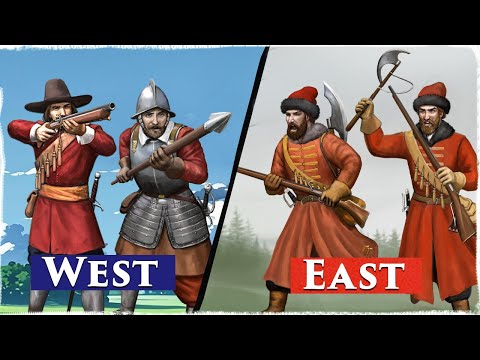
For decades, Russian commanders had faced a brutal dilemma. In the vast, treeless steppe, there was no cover from the lightning raids of Tatar cavalry. Western Europe had solved a similar problem with pike and shot—pikemen shielding musketeers. But Russia had no such tradition. Instead, they perfected a different solution: mobile field fortifications that could be assembled anywhere, turning open ground into a fortress in hours.
The Tatar charge broke against the wooden walls like waves against a cliff. Arquebusiers fired from behind the panels, while field guns tore gaps in the horsemen’s ranks. “That bringeth no ordinance nor other weapon into the field save his sword, bow, and arrows,” the English diplomat Giles Fletcher later observed, marveling at how the Tatars were helpless against such defenses. Again and again, the Khan’s riders surged forward, only to be met with a hail of lead. By nightfall, the Tatar host retreated, leaving the field—and Moscow—to the Russians.
But the large, double-walled guliai-gorod used that day was only one variant of a remarkably flexible system. Russian armies deployed everything from massive prefabricated walls to simple wagon forts, adapting to the terrain and the enemy. In the forests, infantry carried wooden bastions on their backs; in the open steppe, thousands of wagons chained together formed a moving fortress that could stretch for kilometers.
The true genius of the guliai-gorod lay in its versatility. When Boris Godunov faced the Tatars in 1591, he ordered a 4-kilometer wall built south of Moscow, its panels transported on wagons and linked with chains. “A double wall approximately 3 meters apart, made of wooden panels and embrasures,” Fletcher described, noting how it left gaps for cavalry to sally out. This was no desperate improvisation—it was a sophisticated tactical system, refined over decades of steppe warfare.
Yet the wandering town had its limits. It slowed armies to a crawl, and if caught off-guard, a convoy could be overwhelmed before the fort could form. But when properly deployed, it was a devastating equalizer. As the 17th century dawned, Russian commanders would push this concept to its limits—and face new enemies who would test the wandering town as never before.
When the second False Dmitry marched on Moscow in 1609, his Polish-Lithuanian allies expected an easy victory. Instead, they found the Russians entrenched behind a different kind of guliai-gorod—smaller, wagon-mounted panels of oak, each manned by ten soldiers and chained into a bristling line of fire. The Polish hussars charged, only to be driven back by concentrated volleys. “Table-sized oak planks mounted on wagons, firmly connected with chains to form a kind of fort,” the soldier Mikołaj Marchocki recalled, grudgingly impressed.
This lighter variant could move with the army, hauled by draft animals and assembled in minutes. It was the steppe’s answer to the pike-and-shot formations of the West—a fortress that marched. But even this was not the most common form. In the deep grasslands, where timber was scarce and speed was life, Russian commanders turned to the humblest of materials: the wagon.
The wagon fort—or tabor—was not a Russian invention. The Hussites of Bohemia had perfected it a century earlier, chaining reinforced wagons into circles bristling with crossbows and early guns. The Ottomans had adapted it at Kosovo in 1448, their tabur cengi shredding a Hungarian crusade. But it was in the Tsardom of Russia that the wagon fort found its true home, because nowhere else did armies march through such vast, hostile, coverless expanses.
Here, the wagon was both transport and shield. A Russian army on campaign was a moving city: supply carts, ammunition wagons, baggage, and artillery, all crawling across the steppe. When Tatar scouts appeared on the horizon, the order went out. Drivers lashed the wagons together, soldiers heaved the panels into place, and within an hour an open field became a fortress. Inside, arquebusiers took position while cossacks and noble cavalry waited by the gaps, ready to sally.
The scale could be staggering. When Prince Vasily Golitsyn marched against the Crimean Tatars in 1687, his army of ninety thousand men and fifty thousand cossacks formed a single wagon fortress—nearly 1.5 kilometers wide and 5 kilometers long. It crawled forward at barely ten kilometers a day, but it was practically impervious. Tatar riders circled it like wolves, probing for weakness, finding none.
Yet the wagon fort was not invincible. Its fatal flaw was time. If an enemy struck before the wagons could close, the result was slaughter. And against a determined, well-equipped foe with artillery of their own, the wooden walls could become a trap. The Russians would learn this lesson in blood during the long, brutal war with Poland—and one commander, Vasily Sheremetev, would push the wandering town to its absolute limit.
The campaign of 1660 began with confidence. Vasily Sheremetev, one of the Tsar’s most seasoned commanders, led nearly twenty thousand men and three thousand wagons toward the Polish-held fortress of Mohyliv. His plan was simple: force a decisive battle and crush the Polish-Lithuanian army in the field. But the Poles had other ideas. Stanisław Potocki and Jerzy Sebastian Lubomirski, reinforced by Tatar allies, shadowed his every move, waiting for the right moment to strike.
That moment came near the village of Liubar. Polish cavalry smashed into Sheremetev’s vanguard before the wagons could fully close, scattering his forward units. The Russian commander reacted instantly, ordering the rest of his army to dig in at the edge of a forest and form a wagon fort. Panels swung into place, chains rattled tight, and the wandering town rose from the mud—but this time, the enemy did not break against it.
For twelve days, Potocki and Lubomirski hammered the Russian position. Polish artillery pounded the wagons; Tatar riders cut off foraging parties; supplies ran dangerously low. Sheremetev’s men held, but they were trapped. Then, under cover of darkness, the Russian commander did something audacious: he ordered his men to cut a path straight through the forest. Axes rang out through the night as trees fell and a rough track was hacked through the undergrowth.
By dawn, Sheremetev had slipped away—though not without losses. Wagons were abandoned in the mud, stragglers captured, and the Polish cavalry was soon back on his heels. When they caught up with him on a hillside, they seized most of his remaining artillery. Yet again, the wagon fort held long enough for the bulk of his army to escape.
His destination was Chudniv, a town in present-day Ukraine, where he hoped to link up with reinforcements. Instead, he found himself cornered once more. This time, Sheremetev did not simply form a wagon fort—he transformed it into a proper fortress, ringed with earthworks and bastions. Potocki and Lubomirski arrived and began a methodical siege, their guns pounding the improvised walls for nearly two weeks.
Then came the breakout. With a picked force and a handful of wagons, Sheremetev burst through the Polish lines in a desperate night attack. He got away—only to be halted by torrential rain that turned the ground to porridge. His troops could barely move, and the Poles closed in once more. This time, there was no escape. Surrounded, starving, and with no hope of relief, Sheremetev surrendered his army.
The lesson was brutal but clear: the wagon fort could buy time, absorb punishment, and turn an open field into a killing ground—but it could not save an army that was outmaneuvered. Mobility was its strength and its weakness, and against a patient, well-supplied enemy, the wandering town could become a wandering prison.
Yet the Russians did not abandon the guliai-gorod. Instead, they adapted. As the 17th century wore on, lighter field guns began rolling out of European foundries—weapons that could be hauled by fewer horses and deployed faster than ever before. Wooden walls offered little protection against such firepower, and the Tsardom’s borders were creeping ever closer to the Black Sea, where new fortresses and supply depots rose from the steppe.
The age of the great wagon trains was ending. But the idea behind them—that firepower and protection must march together—would endure, shaping Russian warfare for centuries to come.
By the dawn of the 18th century, the guliai-gorod had become a shadow of its former self. Peter the Great, hungry for Western-style armies and modern artillery, saw the old wagon forts as relics of a slower age. His new regiments drilled in linear formations, their muskets and bayonets replacing chains and oak panels. “The wandering town,” one chronicler noted, “had found its final resting place in the archives.”
Yet the steppe never forgot. When Russian armies pushed toward the Black Sea, they still hauled supply wagons in long defensive trains, and Cossack hosts still knew the old art of chaining carts into a fighting ring. The tactics had changed, but the instinct remained: in open country, protection must travel with the gun.
Historians today credit the guliai-gorod with more than battlefield victories. It allowed Muscovy to survive the Tatar storm, to push its borders south and east, and to buy the time needed for a modern army to rise. In that sense, the wandering town did not disappear—it simply evolved into the fortified lines, the mobile supply columns, and the entrenched firebases of later centuries.
And so the story ends where it began: with a line of wooden panels, a chain, and a gun. From the steppe’s edge to the gates of Moscow, the guliai-gorod proved that a fortress need not be built of stone—only of necessity and nerve.
What do you think—could a modern army learn anything from the wandering town, or is it truly a relic of the past? Share your thoughts in the comments below.
Report this article
Select a reason for reporting:






