The drone came out of nowhere—a silent, folded-cardboard ghost that cost less than a smartphone. Yet it carried enough explosives to destroy a tank. In Ukraine, these disposable Australian-made UAVs are changing the rules of war, and they’re just the beginning.
As conflicts in Ukraine, Gaza, and the Red Sea erupt, the West is waking up to a new battlefield where cheap drones swarm by the thousands and hypersonic missiles fly at seven times the speed of sound. Ukraine is losing 10,000 UAVs every month—a staggering attrition rate that underscores the urgency. But it’s not just about numbers; it’s about intelligence. Autonomous systems that think for themselves are becoming harder to shoot down, and the nations that master this technology will dominate the next era of warfare.
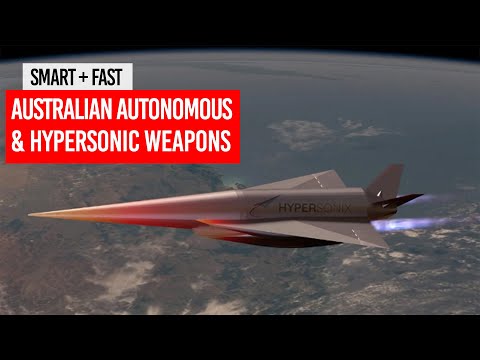
Australia, often overlooked on the global stage, is quietly positioning itself at the forefront of this revolution. With vast open spaces for testing and a thriving defense industry, the country is developing some of the world’s most advanced autonomous systems and hypersonic weapons. Trusted autonomy is one of the Australian Defense Force’s six key priorities, and the recent establishment of the Australian Strategic Capabilities Accelerator (ASCA) signals a new push to turn local innovation into battlefield-ready technology.
In early 2024, Defense selected 11 Australian uncrewed aerial system manufacturers for a trial and demonstration program. Among them are companies like Melbourne-based SYPAQ, whose Corvo Precision Payload Delivery System—a disposable UAV made from folded cardboard—has already been delivered to Ukraine in numbers exceeding 500. It’s a remarkable example of cheap, effective technology that can be produced at scale. Other contenders include DefendTex, with its family of grenade-launched UAVs, and Skyborn Technologies, whose tactical assault drones pack a five-round 40mm grenade launcher.
The spectrum of autonomy is broad, from remotely piloted drones to fully autonomous systems that require no human intervention. The greater the autonomy, the more complex and expensive the platform, but the payoff is immense. Australia’s Loyal Wingman program, the MQ-28A Ghost Bat, developed by Boeing in partnership with BAE Systems Australia, is a semi-stealthy aircraft with fighter-like performance and a range of 2,000 nautical miles. It uses artificial intelligence and machine learning to operate autonomously, augmenting crewed aircraft in ISR and strike missions.
BAE Systems Australia has leveraged its expertise to develop the STRIX, a vertical takeoff and landing UAV capable of carrying a 160 kg payload over 800 km, potentially in service by 2026. Meanwhile, Perth-based Innovaero is pushing boundaries with the One-Way Loitering (OWL) munition and the Fox tactical UAS, and has partnered with Boeing subsidiary Insitu on a joint Integrator/OWL capability.
On the counter-UAV side, Australian companies are also making waves. Sydney-based DroneShield builds jammers that disrupt electronic control signals, and its technology is already active in Ukraine. Electro-optic systems in Canberra have developed the Slinger, which uses a 30mm gun to destroy drones, and the Titanis system, which employs a high-energy laser to disable UAVs up to 4 km away. In early 2024, Defense selected its first laser-based counter-drone system—the Fractl 2 Directed Energy System from Melbourne-based Aim Defense.
But Australia’s ambitions don’t stop at autonomy. It is also a global leader in hypersonics. The University of Queensland launched the world’s first hypersonic air vehicle in 2002, and today, the Defense Science and Technology Group operates a hypersonics research facility at Eagle Farm. Much of Australia’s work on the bilateral US-Australia Southern Cross Integrated Flight Research Experiment (SCIFiRE) program is conducted there, leading to the development of the Mach 5+ Hypersonic Attack Cruise Missile, set to be built in the US by a Raytheon-Northrop Grumman consortium.
In January 2024, Defense confirmed it would acquire the Lockheed Martin Precision Strike Missile, a hypersonic weapon with a 500 km range, with an increment 4 due by 2030 that will exceed 1,000 km. Sydney-based Hypersonix Launch Systems is also making strides, 3D-printing the Dart AE hypersonic vehicle and its Spartan scramjet. The company beat over 60 rivals to secure a sale to the Pentagon’s Defense Innovation Unit for its Hypersonic and High-Cadence Airborne Testing program. The Dart AE can fly at Mach 5 to Mach 7 for up to 1,000 km in less than seven minutes.
As these technologies proliferate, Defense is in the early stages of considering how to counter them—requiring detection, tracking, positive classification, and an appropriate defeat mechanism. Australia’s wide open spaces provide ideal testing grounds, and its international research and industry relationships mean its programs are highly valued, generating overseas funding and a strong export market.
For the first time in decades, Australia’s aerospace community is interacting on equal terms with its overseas counterparts. The quiet revolution is underway, and the world is starting to notice.
The implications of this shift are only beginning to be understood. Cheap, disposable drones are changing the economics of war—a $5,000 cardboard UAV can destroy a $5 million tank, and the defender’s interceptor missile often costs more than the attacker’s weapon. This asymmetry forces militaries to rethink everything from procurement to tactics.
“The cost of shooting down a drone can be disproportionate,” one defense analyst noted, “but it is unavoidable because of the immense physical and moral damage such a cheap weapon can inflict.” That paradox is now driving investment in directed-energy weapons, jammers, and AI-enabled targeting systems that can neutralize swarms without bankrupting the defense budget.
At the Trusted Autonomous Systems Defense Cooperative Research Center in Brisbane, researchers have been wrestling with these questions since 2018—not just the technology, but the ethics. Compliance with the laws of armed conflict and rules of engagement is baked into the design process, ensuring that autonomous systems can distinguish between combatants and civilians before releasing weapons.
Their flagship achievement, Athena AI, is an autonomous detection and classification capability for ground, air, and maritime vehicles. Developed with Skyborn Technologies, Cyborg Dynamics Engineering, and the University of Queensland, it has already been selected by three undisclosed American companies supplying UAVs, unmanned ground vehicles, and battlefield management systems to the Pentagon.
The research center also played an early role in the MQ-28A Ghost Bat program, helping Boeing master multiplatform teaming—enabling autonomous aircraft to detect and classify ground targets while cooperating with crewed fighters. This is the future of air combat: a human pilot surrounded by a swarm of intelligent, semi-autonomous wingmen.
But the proliferation of these technologies cuts both ways. Potential adversaries are developing their own autonomous systems and hypersonic weapons, and the window of Western technological superiority is narrowing. The same cheap drones that empower Ukrainian forces can be turned against Australian or allied troops.
That’s why the ADF is investing heavily in counter-UAV training and technology. Troops need to know how to operate drones and how to defeat them—a dual skillset that is becoming as fundamental as marksmanship. DroneShield’s jammers, already active in Ukraine, are part of this effort, but electronic warfare is a constant cat-and-mouse game as adversaries develop counter-countermeasures.
The hypersonic race is equally urgent. Australia’s collaboration with the United States on the SCIFiRE program has produced the Mach 5+ Hypersonic Attack Cruise Missile, designed to be launched from F/A-18 Super Hornets, EA-18G Growlers, F-35A Lightning IIs, and P-8A Poseidon aircraft. With a range exceeding 1,000 km and speeds that make interception nearly impossible, these weapons are poised to redefine strategic deterrence.
Hypersonix Launch Systems, meanwhile, is proving that Australian startups can compete on the world stage. Its Dart AE vehicle, 3D-printed and powered by a hydrogen-fueled scramjet, beat more than 60 rivals to secure a Pentagon contract. Flying at Mach 5 to Mach 7, it can cover 1,000 km in less than seven minutes—a capability that opens new possibilities for rapid response and high-cadence testing.
Yet for all the progress, Defense is still in the early stages of figuring out how to counter these threats. Detecting and tracking a hypersonic missile is one thing; positively classifying it as hostile and deploying an effective defeat mechanism is another matter entirely. The same goes for autonomous drone swarms that can adapt and coordinate in real time.
What’s clear is that Australia’s wide open spaces, skilled workforce, and strong international partnerships have positioned it as a critical player in this new era. For the first time in decades, Australian aerospace is interacting on equal terms with its overseas counterparts—not as a buyer of last resort, but as an innovator and exporter of cutting-edge technology.
The quiet revolution is no longer quiet. It’s flying at Mach 7, it’s folded from cardboard, and it’s about to change everything.
As the sun set over the Woomera test range, a lone cardboard drone lifted into the desert sky, its cheap sensors scanning for targets. It was a $5,000 weapon that could kill a $5 million tank, and it was built in a Melbourne factory by workers who had never worn a uniform. The future of war had arrived, and it looked nothing like the jet fighters and aircraft carriers of the past.
Back in Canberra, the Defense Strategic Review sat on a minister’s desk, its pages filled with the same urgent warnings. Trusted autonomy, hypersonics, and counter-drone systems were no longer optional—they were the price of admission to great-power competition. The 11 Australian UAV manufacturers selected for trial had done their part, but the real test was yet to come: turning prototypes into doctrine, and doctrine into deterrence.
On the other side of the world, Ukrainian operators were already writing that doctrine in blood and cardboard. Every downed drone taught a lesson; every successful strike proved a concept. Australian engineers watched the footage, took notes, and went back to their workshops. The feedback loop between battlefield and factory floor had never been tighter.
The hypersonic race, meanwhile, showed no signs of slowing. The Mach 5+ cruise missile promised to reach targets before defenders could even blink, and the Dart AE proved that a Sydney startup could beat Pentagon giants at their own game. Speed was the new stealth, and Australia was learning to run with the fastest.
But the quiet revolution also brought quiet risks. Autonomous systems that could decide when to kill raised ethical questions that no algorithm could fully answer. The Trusted Autonomous Systems CRC had baked compliance into its code, but the line between lawful targeting and lethal error was thinner than a circuit board. Troops on the ground would have to trust the machine—and live with the consequences.
As the last light faded, the cardboard drone sent back a single image: a target, a decision, a moment frozen in time. The operator in the loop pressed a button, and the future became the present. Australia had spent decades buying its weapons from others; now it was selling them to the world. The question was no longer whether this revolution would change war, but whether the world was ready for what came next.
What do you think—should autonomous weapons ever be allowed to make the final call, or must a human always pull the trigger? Share your thoughts below.
Report this article
Select a reason for reporting:






