The 1960s weren’t just a decade—they were a feeling. A time when the world seemed to spin a little faster, when the future was something you could almost touch, and when the smallest moments etched themselves into your memory forever. If you grew up in the 1960s, you remember.
You remember the hiss of foil TV dinners, the thrill of Saturday morning cartoons, and the chill of nuclear drills. You remember the Beatles on Ed Sullivan, the first moon landing, and the taste of Tang. These weren’t just events—they were the fabric of childhood.
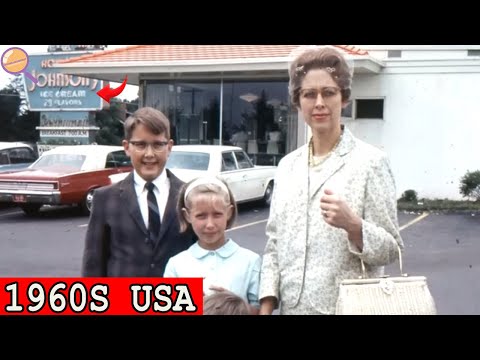
Let’s step back into that decade, where convenience met wonder, and where every ordinary day held a little magic.
Swanson TV Dinners were more than a meal—they were a revolution. The ritual of peeling back the foil, the aroma of fried chicken and brownies mingling in the living room, the novelty of eating off a compartmentalized tray while watching The Flintstones. It was the first time families could gather around the TV without sacrificing dinner. And somehow, it made a Tuesday night feel special.
Then there was Batman. Every Saturday night, kids in school socks would sprint to the TV to catch that iconic theme song. Adam West’s deadpan delivery, the cartoonish “POW!” and “BAM!”—it was pure camp, pure color, pure joy. It wasn’t just a show; it was a shared ritual, a collective escape into a world where good always triumphed, and every episode ended with a laugh.
But the 1960s also carried a shadow. The Cold War loomed large. Duck and Cover drills were as routine as recess. You’d crouch under your wooden desk, hands over your head, heart pounding, wondering if plywood could really save you. Your dad might stock the basement with canned peas and bottled water after Kennedy’s televised warning. Yet, oddly, there was a thrill in pretending to be a secret agent hiding from danger—a strange excitement in the midst of fear.
And then there was the space race. Summer nights lying on the lawn, staring at the stars, imagining yourself as an astronaut. Teachers wheeled in bulky TVs so you could watch Mercury, Gemini, and Apollo launches. When Neil Armstrong took that first step in ’69, even quiet neighborhoods erupted in cheers. For a moment, the impossible became real, and every child believed they too could reach the stars.
Music was the heartbeat of the decade. Beatlemania hit America like a hurricane. The screams at JFK airport, the mop-top haircuts, the collarless suits—it was a cultural tidal wave. Sitting cross-legged on the carpet, watching Ed Sullivan, you felt the future strumming a guitar. And then there was American Bandstand, where Dick Clark introduced the latest dances—the Twist, the Mashed Potato. Every Saturday afternoon, the living room became a dance floor, and the whole country moved to the same beat.
Sunday nights were for Walt Disney’s Wonderful World of Color. The rainbow intro, the gentle voice of Walt, the stories that transported you to magical worlds—it was pure enchantment. Families gathered, still in church clothes, while Dad adjusted the antenna for a clearer picture. For one hour, the world was full of wonder.
And who could forget Star Trek? It wasn’t just sci-fi—it was a vision of a better future. A diverse crew, a peaceful mission, and a captain who showed that reason and unity could overcome any conflict. In a time of Vietnam headlines, it was a beacon of hope.
Childhood itself was simpler. Banana bikes, hose water, and endless summers. You’d ride down hills with no hands, race to the corner and back, and only come home when the streetlights flickered on. There was no sunscreen, no helmets—just freedom. The neighborhood was your kingdom, and every day was an adventure.
Toys were iconic. Rock ‘Em Sock ‘Em Robots—those plastic boxers that popped each other’s heads off—provided hours of delight. Major Matt Mason, the astronaut action figure, let you dream of space. And Easy-Bake Ovens gave kids the magic of baking with a lightbulb. These weren’t just toys; they were portals to imagination.
The decade was also a time of shared experiences. Twister turned parties into giggling tangles of limbs. Hot Wheels fueled a need for speed. Barbie and G.I. Joe inspired endless role-play. And who could forget Sea-Monkeys? The ads promised a kingdom of tiny creatures; what you got was a science experiment, but it was mesmerizing nonetheless.
Road trips meant Howard Johnson’s—the orange roof a beacon of comfort. Twenty-eight flavors of ice cream, smiling waitresses, and the promise of a good day if you got dessert. And Schwinn Sting-Rays—with their banana seats and high handlebars—were the ultimate symbol of freedom. Riding one felt like flying.
As the decade drew to a close, the world was changing. Walter Cronkite’s honest reporting on Vietnam shook the nation’s trust. The Tet Offensive and his declaration that the war was unwinnable marked a turning point. It was the moment the evening news became more than information—it became a mirror reflecting the country’s conscience.
But through it all, the 1960s were a time of wonder. A time when the future was bright, and the present was full of small joys. A time that shaped a generation and still whispers to us today.
And the small joys kept coming. Jiffy Pop on the stove—the foil dome swelling like a balloon, the rattle of kernels, the anticipation. It was theater in the kitchen. Tang and Space Food Sticks made us feel like astronauts, even if the sticks tasted like peanut butter erasers. Jell-O molds wobbled on dinner tables, suspending carrots and marshmallows in gelatin—a centerpiece that was half art, half dare.
Reading meant Boy’s Life magazine, tucked in a back pocket, filled with adventure tips and ads for pocket knives. Good Luck Trolls with their neon hair promised fortune if you rubbed their tufts. And The Jetsons showed us a future of flying cars and robot maids—a vision that felt both impossible and inevitable.
Saturday mornings had their own rhythm: cartoons, cereal, and a trip to the pharmacy with Dad to test TV tubes. DIY repairs were a family affair, and a new tube meant a clear picture for Sunday night movies.
Baseball fever gripped the nation in ’61 as Roger Maris and Mickey Mantle chased Babe Ruth’s home run record. Trading cards were currency, and bubble gum was gold. Fashion-wise, go-go boots empowered a generation—white, mid-calf, and zipped up like a rebellion. Cap guns turned backyards into the Wild West, and The Andy Griffith Show offered a slice of small-town warmth.
Sci-fi took us to The Twilight Zone and The Outer Limits, leaving us haunted and thoughtful. Sea-Monkeys were a mail-order miracle—tiny brine shrimp that came to life in a glass bowl. Surf music brought California dreams to transistor radios, and jacks and Super Balls provided hours of simple, physical fun.
Hair went big with the beehive, a crown of tease and spray. And then there were the things we lost: computer labs, TV static, VCRs, photo counters, dot matrix printers, slide projectors, paper maps, busy signals, cursive writing, blind dates, floppy disks, Dewey Decimal System, pagers, fax machines, Polaroids, landlines, cassette tapes, pocket calculators, magazine ads, and printed newspapers.
Each one a relic of a slower, more tactile world. But the 1960s gave us more than nostalgia—they gave us a foundation. A belief that the future was ours to shape, and that even the smallest moments could become lifelong memories.
And that foundation was built on more than just fun and games—it was built on shared rituals that bound us together. Sunday drives in the family station wagon, windows down, no destination in mind. Just the hum of the engine and the promise of an ice cream cone at the end. Drive-in movies where you’d pile into the back seat in pajamas, the speaker hanging on the window, the screen a giant canvas of dreams under the stars.
Then there was the neighborhood block party—tables laden with Jell-O salads and deviled eggs, kids running wild until the streetlights came on. It was a time when everyone knew your name and your parents’ names, and the whole street felt like an extended family.
And speaking of family, who could forget the family dinner? Not the TV dinner kind, but the real ones—around a Formica table, with mismatched chairs and conversations that meandered from school to politics to what was on TV that night. It wasn’t always perfect, but it was ours.
But perhaps the most enduring memory is the sense of possibility. The 1960s were a time when the world was changing fast—civil rights, women’s rights, the space race—and even as a child, you felt part of something bigger. You believed you could make a difference, that the future was a blank page waiting for your story.
And that’s the thing about nostalgia—it’s not just about the past. It’s about what the past taught us. It taught us to appreciate the small things, to find joy in the ordinary, and to hold onto hope even when the world seemed uncertain.
So as we look back on the 1960s, we’re not just remembering a decade—we’re remembering who we were and who we still are. The 1960s shaped a generation, and that generation shaped the world.
And now, as we stand in the present, looking back, we can’t help but wonder: what will the next generation remember? What small moments will they hold onto? Perhaps the answer lies in the lessons of the past—to cherish the simple things, to embrace the wonder, and to never stop dreaming.
But nostalgia isn’t just about looking back—it’s about carrying forward. The 1960s taught us that wonder can be found in a foil tray, a theme song, or a starry night. Those lessons still whisper to us today.
So the next time you hear a dial tone, or see a rotary phone in a thrift shop, or catch a rerun of Batman, let it take you back. Not to escape the present, but to remember what made us who we are.
Because the 1960s weren’t just a decade—they were a feeling. And that feeling lives on in every memory, every shared story, every flicker of a black-and-white screen.
Now it’s your turn. What’s the one 1960s memory that still makes you smile—and what do you wish today’s kids could experience just once?
Report this article
Select a reason for reporting:






