Staff Sergeant Reed had seen American military might deployed across three continents. He believed—with the certainty of a man who had trained soldiers from 31 countries—that the best-resourced force would always win. Then he read the after-action report from Uruzgan province and asked his intelligence officer if there had been a translation error.
There had not been. Four Australian SASR operators had located a Taliban commander in 47 hours using equipment that cost less than a single American night-vision device. Four American Green Berets, with drone coverage and a budget exceeding the entire Australian contingent’s monthly spend, had failed to find the same man in 11 days.
The numbers didn’t make sense. Australian patrols between 2005 and 2012 achieved a 76% jackpot rate. The American average hovered at 43%. The Australians operated on roughly one-eighth the budget per operator. Reed’s first hypothesis—that they were getting easier targets—collapsed when he reviewed the mission tasking records. The opposite was true.
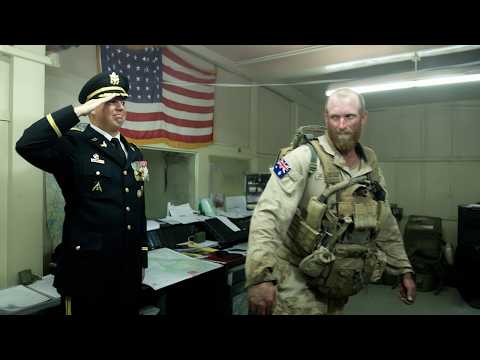
He watched them move through Tarin Kowt base. They didn’t walk like operators. They walked like men conserving energy for something that hadn’t begun. Their uniforms were faded. Their boots had been resoled more than once. The American compound had a weight room with machines that cost more than some Australian patrol vehicles. The Australians used sandbags and ammunition crates.
“Maybe they can’t afford better,” his team sergeant shrugged. That assessment would prove catastrophically wrong.
Reed observed his first Australian planning session three weeks after arriving. The mission: confirm a Taliban facilitator in a village called Kora. American intelligence placed him there with 62% confidence. Reed expected the Australians to request drone coverage, satellite tasking, at least one Predator on station.
They requested nothing.
The patrol commander—a sergeant whose name Reed never learned—spent four hours studying paper maps and hand-drawn sketches. He asked about goat paths, water sources, the timing of village prayers. He wanted to know when the local dogs were fed. Reed thought this was inefficient. He would later call it the most thorough tactical preparation he had ever witnessed.
What Reed couldn’t yet see was that this sergeant had survived a selection process eliminating 87% of candidates before the final assessment phase. That he had completed the Bindoon training area three times—once as a candidate, twice as an instructor. That he had learned to think while exhausted, navigate while disoriented, and plan while his body demanded sleep.
The Kora patrol lasted nine days. Four men covered 63 kilometers on foot, identified the target’s exact location, documented his movement patterns, and withdrew undetected. They carried their own waste in sealed bags. Slept in shifts of 40 minutes. Ate cold rations because heating food creates a thermal signature.
Their report contained more actionable intelligence than anything American signals platforms had produced in the previous month. Reed’s skepticism began to fracture—but the real rupture was still coming. It would arrive with a call sign he didn’t recognize, coordinates that made no tactical sense, and four words from an Australian sergeant major that would haunt him for the rest of his career.
“You’re thinking too loud.”
Reed didn’t understand what the sergeant major meant. No one in the room did. He wrote it off as cryptic nonsense, the kind special operations veterans deploy to maintain mystique. The courier was a tactical problem. Tactical problems required tactical solutions—more assets, better coordination, refined timing. The equation was simple.
Then he watched the Australians plan the operation. Four operators. No satellite uplinks. No drone support. They declined a dedicated quick reaction force. The patrol commander submitted a mission plan that fit on a single page. Reed read it twice, convinced he was missing an annex.
There were no contingencies for enemy contact, no extraction points, no communications windows. Only an insertion location, a general direction of movement, and an expected duration of 8 to 12 days. For a courier whose location could only be confirmed within a 6 km radius.
Reed raised objections through channels. The plan failed minimum coalition safety standards. Without regular comms, the patrol would be unreachable. The lack of QRF posture created unacceptable risk. The Australian troop commander listened with patient expression, then explained why each objection represented exactly the thinking that had allowed the courier to evade capture for 11 weeks.
Satellite uplinks required batteries. Batteries required weight. Weight meant slower movement. Slower movement meant more exposure. Drone support required coordination with Kandahar. Coordination required communications. Communications created electronic signatures. A QRF on standby required running engines, fuel consumption, resupply flights—observable patterns. Each element Reed considered essential was, in the Australian assessment, a signature increasing the probability of compromise.
The previous three attempts had failed not because they lacked resources, but because they possessed too many. The courier hadn’t evaded American capture through superior training. He had simply waited until the noise of each approaching operation became audible, then moved.
The Australians proposed to make no noise at all.
Reed watched them prepare. Four operators conducted their final equipment check in under 20 minutes. No pre-mission briefings to command staff. No ceremonial distribution of lucky charms. They walked to the vehicle, climbed inside, and disappeared into the darkness.
For eight days, Reed received no communications. None. He checked signals intercept logs every morning. Monitored drone feeds for any sign of movement. Found nothing. It was as if four men had walked into the desert and ceased to exist.
On the fourth day, he began composing a memorandum recommending search protocols. Standard procedure required acknowledgement signals at 48-hour intervals. The patrol was approaching 100 hours without contact. The Australian liaison officer intercepted the memorandum before it reached communication staff.
“Do you understand what the word covert means?” he asked, with what seemed like genuine curiosity. Reed did not appreciate the question. He also did not send the memorandum.
On the seventh day, skepticism curdled into anxiety. He had commanded men in combat. Sent soldiers on missions from which they did not return. Now four men were somewhere in enemy territory, and he had no way to reach them. No way even to confirm they were alive.
The liaison officer seemed unconcerned. He spent evenings playing cards with signals intelligence staff, mornings brewing coffee with a French press from Perth. When Reed asked directly whether he was worried, the liaison officer considered the question for several seconds.
“They’re the best in the world at what they do. Worrying about them would be like worrying about whether the sun will rise.”
Reed did not find this reassuring.
The courier was captured on the ninth day—not through any Australian transmission, but through an intercepted Taliban message expressing alarm about a senior operative who had simply vanished. No helicopters. No gunfire. The man and his two bodyguards had been swallowed by the earth itself.
Twenty-six hours later, the patrol walked into an extraction point seven kilometers from the Pakistani border. One detainee. Intelligence material that would take fourteen hours to catalog.
Reed requested a debrief. Denied. Requested the after-action report. None would be produced. Finally, he asked to speak informally with the patrol commander. Granted.
The sergeant was younger than Reed expected, mid-thirties, weathered. He carried no notes, brought no visual aids. Reed asked how they had found the courier without external intelligence.
“We asked people.”
Reed pointed out that any direct inquiry would have been reported immediately. The sergeant nodded. “That’s correct. We didn’t ask about the courier. We asked about water. Grazing routes. Which villages had good wells. After four days, we knew which families were receiving outside money. After eight, we knew exactly where he was staying—he was the only explanation for why one family had stopped complaining about their neighbors.”
Then the sergeant said something Reed would carry for the rest of his career.
“Your colonels think rank means something out here. A colonel sits seventy kilometers away looking at screens. By the time his approval reaches the team, the moment is gone. I’m a sergeant. I don’t need authorization. I need judgment.”
Reed’s report ran 147 pages. Forty-three remained classified. One sentence, filed in Canberra in 2012, was never declassified: “They didn’t build better soldiers. They built something else.”
What do we become when we optimize human beings for precise, patient, emotionally disengaged violence—and was it worth it?
Report this article
Select a reason for reporting:






