High in the mountains of southern Afghanistan, in the early summer of 2006, two Australian soldiers held a piece of ground they had no business holding. Below them, a militia force pressed up the slope, firing as they came, determined to overrun the small observation post. By any reasonable count, the Australians should have been killed or pushed off that hill. There were only two of them against a force with numbers, ground, and every reason to believe this would be quick. One of those two, a young Lance Corporal behind a sniper rifle, was about to spend the next 40 minutes making sure neither happened. His name was Ben Roberts-Smith.
Four years later, he would become the most famous soldier in Australia, the giant who charged a line of machine guns and won the Victoria Cross. Years after that, his name would become the most argued over in the nation for reasons we will come to honestly. But all of that was still in the future. On this hillside in 2006, he was not yet a legend, not yet a household name, not yet a problem the country would tie itself in knots over. He was a sniper holding a ridge with one other man, and what he did up there would earn him his first decoration for gallantry—an action almost nobody talks about today.
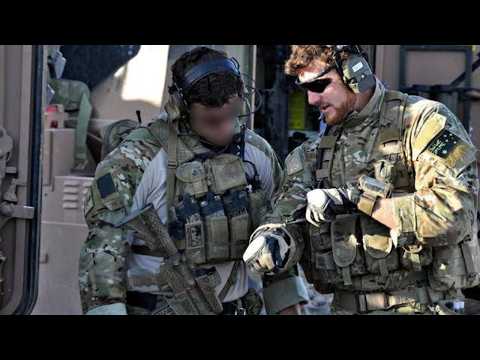
Everyone knows the charge that won him the Victoria Cross. Far fewer know about the hilltop that came before it. In some ways, the hilltop tells you more about the soldier than the famous charge ever could. So that is where we are going: up the hill, into the worst day of a very bad year, to watch a young Australian do the thing he would spend the rest of his career doing long before the world had ever heard his name.
To understand what happened on that ridge, you first have to understand where the Australians were and why 2006 was such a brutal year to be there. After the attacks on New York and Washington in 2001, Australia sent its special forces to Afghanistan as part of Operation Slipper. The first teams worked in the mountains and deserts, then for a while the government brought them home. But the war did not end, and in 2005 the Australians went back—this time into the south, into Uruzgan province, and this time they stayed.
Uruzgan is a hard place. Dry, mountainous, poor—a country of mud-walled compounds and narrow green river valleys hemmed in by bare brown ridgelines that turn the color of rust in the evening light. It had been a Taliban stronghold for as long as anyone could remember. The movement was born in this part of the country, and the fighters here were not visitors passing through. They had grown up in these valleys. They knew every goat track, every dry creek bed, every fold of dead ground where a man could move unseen.
The Australians built a base at Tarinkot and from there pushed out into some of the most dangerous country in that war. The force they sent was called the Special Operations Task Group, built around the Special Air Service Regiment—the SASR—together with commandos and other specialists. It was small, elite, and handed the sharpest jobs in the Australian effort. To support it, the army sent a pair of heavy-lift Chinook helicopters, machines that could carry men deep into the mountains and, when it went wrong, get them out again. It was a small force in a vast and hostile landscape, and it was about to find out exactly how hard the south of Afghanistan could fight back.
The work these men did had a name that captured how relentless it was: kill and capture. Night after night and sometimes by day, they went out to find specific people and take them out of the war—the bomb makers, the commanders, the men who moved weapons and money that kept the insurgency breathing. It was the most dangerous way to fight that conflict. There was no front line to hide behind. The threat did not sit out in the open where a man could see it coming. It sat behind the next wall they were about to climb. It sat buried under the dirt of the track they were about to cross. It sat behind the friendly face of a man who shook their hands in the afternoon and lined a rifle up on their backs that same night.
They lived inside that danger for months at a stretch, then flew home, then came back and did it again, rotation after rotation, year after year. And it cost them. Over the full span of Australia’s war in Afghanistan, 41 soldiers were killed and more than 260 wounded. For a force as small and tightly bound as this one, every loss landed close to home. These were not anonymous numbers. Everyone knew everyone. The man hit beside you was a man you had trained alongside for years, whose family you had met, whose children knew your name. That was the weight these soldiers carried out onto every hillside and into every compound.
It is worth holding in mind because it is the context for what one of them was about to do above the Kora Pass. He was not a character in a film. He was a young man in a very real war that was killing his friends, doing a job that asked more of him than most of us will ever be asked to give.
By the middle of 2006, one district in particular had caught fire. The district of Kora in Uruzgan became the scene of some of the most savage fighting the Australians saw in those early years. Over roughly nine days, Australian commandos fought a running battle through the Kora region that left well over 100 enemy fighters dead. This was not the quiet surgical war of the night raid that special forces are famous for. This was open, sustained, grinding combat in steep and broken terrain against an enemy who knew the ground intimately and who was not going anywhere. The fighters here did not melt away at the first contact. They stood and fought and came back the next day and did it again.
It is worth understanding who the Australians were actually fighting in that district because it explains why the watching job mattered so much. The enemy in Uruzgan was not a disorganized rabble. The fighters were local, hardened, and patient. They had been at war in one form or another for most of their lives. They understood their own ground better than any foreign soldier ever could, and they had learned over years how the coalition moved, when it was strong and when it was weak. They favored the ambush and the hidden bomb, the fight on their own terms, and they had the discipline to wait for the right moment rather than throw themselves away on the wrong one.
Against an enemy like that, information was everything. Knowing where they gathered, how they moved, and where their sanctuaries lay was the difference between hunting them and being hunted. And the only way to get that information in country far too dangerous to simply drive through was to put human eyes on it. To send a few men quietly into the high ground above the enemy and have them watch.
It was into this—into the high country around the Kora Pass in the middle of that brutal season—that a small Australian patrol was sent to do one of the most nerve-shredding jobs in all of soldiering. They were not sent to assault anything. They were not sent to clear a compound or hit a target. They were sent to do something that sounds simple and is, in truth, one of the hardest and loneliest tasks a soldier can be given. They were sent to watch.
To understand why that job fell to a man like Roberts-Smith, you have to understand the kind of soldier the regiment had made him and the particular trade he carried. The Special Air Service Regiment is based in Perth, on the far west coast of Australia—about as far from Afghanistan as an Australian can physically get. It is small on purpose and hard to get into on purpose. The selection course that feeds it is one of the most brutal in the world, designed not to find the strongest or the fastest but to find the men who keep thinking clearly and keep making good decisions long after their bodies have begged them to stop.
Most men who attempt it never get through. The ones who do are, almost to a man, not the loud swaggering soldiers of the films. They are usually quiet, watchful, unremarkable to look at—the kind of man you would walk straight past in the street and never glance at twice. That is not an accident. It is the entire point of them. Their whole trade is to not be noticed until it is already far too late to do anything about it.
Within that regiment, Roberts-Smith carried two specific roles, and both mattered enormously on that hillside. He was a patrol scout, which meant he was often the man out in front, the first set of eyes pushing into new and dangerous ground—the one whose judgment the rest of the patrol depended on to read what was ahead before it became a problem. And he was a sniper. That meant that when the shooting started, he was the man with the long rifle, the weapon built to reach out across distance and stop an enemy at a range where an ordinary soldier with an ordinary rifle simply cannot.
People have a cinematic idea of what a military sniper does. They picture a single, perfect, distant shot. A held breath, a target dropping in slow motion. The reality, in a moment like the one that was coming, is something far harder and far less glamorous. A sniper in a close defensive fight is not picking off lone targets at leisure. He is reaching into a moving, firing, advancing group of men and methodically making the cost of coming any closer too high for them to pay. He is the tool that turns a handful of defenders into something an attacking force has to respect. And he can only do that if he stays calm and stays still and keeps working while everything around him screams at him to stop and take cover.
It is worth understanding too that a sniper in a patrol like this almost never works truly alone. He is part of a small tight team, each man with a job, each depending utterly on the others. There is the man who helps him spot, who reads the wind and the range and the ground and helps turn what the sniper sees into where the sniper shoots. There are the men who provide security, who watch the angles the sniper cannot, who keep the position from being rushed while his eye is down the scope. A patrol like that is a single organism, and every part of it has to hold for any part of it to survive.
Which is part of what makes the next part of this story so remarkable. Because for a stretch of it, that organism was reduced to one. For 20 minutes, the man behind the rifle was, for all practical purposes, holding the whole position by himself—doing the shooting and carrying the weight of the defense at the same time while the fight raged around him. That is not how it is supposed to work. It is not how anyone would ever design it. It is simply how it happened.
By 2006, Roberts-Smith was a Lance Corporal—early in the career that would later make him famous, and already he was very good at this. He was a big man, unusually big for the trade, and yet he had the patience and the stillness the work demanded. He was, by every account, exactly the kind of soldier you would want lying beside you when the ground started to come apart. He was about to prove it.
On the 31st of May, 2006, the patrol moved into position to set up its observation post in extremely rugged terrain overlooking a known militia sanctuary. Think about what those few words actually mean for the men doing it. An observation post is not a fortress. It is a hidden position, often little more than a scrape in the rocks, chosen because it offers a view of the enemy and, with luck, a chance of staying unseen. You do not go there to fight. You go there to watch and to listen and to report, sometimes for days at a stretch. The whole game is to see the enemy without the enemy ever seeing you.
And to do that, you have to become part of the landscape. You lie still for hours that bleed into more hours. You do not move when you want to move. You endure the cold of the mountain nights and the hammering heat of the day, the cramp, the thirst, the boredom that is somehow exhausting all on its own. And underneath all of it, never leaving, is one cold piece of knowledge. You are a tiny handful of men a very long way from any help, perched directly above a sanctuary full of fighters who would want nothing more in the world than to find you.
The thing that keeps you alive is not your firepower, because you do not have much. It is the fact that they do not know you are there. Your safety is made entirely of not being seen. And the one thing you can never fully control is whether that holds.
Getting into a position like that is its own quiet ordeal. You do not simply walk up and sit down. You move in carefully, often in darkness, often over ground that would be punishing in daylight and is treacherous at night, carrying everything you will need on your back. Because there will be no resupply and no comfort once you are in. You choose your spot and you make yourself small and you settle in to become part of the rocks. And then the waiting begins. Every sound carries new weight. A barking dog in a compound below, a voice on the wind, a figure moving along a track who might or might not glance up at the wrong piece of hillside.
The patrol above the Kora Pass did all of that. They watched the sanctuary. They reported what they saw. They stayed invisible. The sanctuary below went about its business not knowing that Australian eyes were on it.
And then, on the 2nd of June, the thing every man in an observation post quietly dreads finally happened. The watching broke. The patrol came under attack.
Whether the militia worked out where the Australians were or simply stumbled onto them, the result was the same. The enemy came on hard up the slope toward the small position the patrol was holding. In that first chaotic stretch, the weight of holding the line fell squarely onto the man with the sniper rifle.
Roberts-Smith brought his weapon into the fight and began methodically to break the enemy’s advance apart. Every time the militia pushed up the slope, he was there reaching into them with the long rifle, slowing them, stopping them, driving them back down. He could not make them disappear—there were too many for that. What he could do was make the slope expensive.
And he was doing it under the worst possible conditions. While he was breaking up the assault to his front, a second group of fighters opened up on him from the flank with very accurate small arms fire. He was holding off an attack from the front while taking aimed fire from the side, from an angle the observation post was never built to protect against.
Every instinct a human body has would have been screaming at him to get his head down, to press himself into the rocks, to wait for it to pass. That is not cowardice. That is the sane response of a sane mind to a hopeless position. He did the opposite. He kept the rifle working. He kept reading the ground. And he held that position alone, under fire from two directions at once, without any support at all, for 20 minutes.
20 minutes. Say it quickly and it is nothing. But 20 minutes inside a firefight by yourself, holding a position that two separate groups of the enemy are actively trying to take, is something close to an eternity. It is 20 minutes in which any single round from the front or from the flank ends the story right there. Most men never face a single minute like that in their whole lives. He faced 20 of them in a row, and he did not break, and he did not run, and the line did not fall.
Try for a moment to see it from the other side of the slope. You are one of the militia coming up that hill. You have the numbers. You have a second group working the flank, putting accurate fire onto the Australian position from an angle that should make holding it impossible. By every measure you understand, this should already be over. And yet every time your men push up, the advance stalls and folds back, broken apart by a single rifle that you cannot seem to suppress, and cannot seem to silence.
You cannot rush a position that keeps cutting your people down before they reach it. You cannot mass for the final push when the cost of massing is more than you can pay. That is what one disciplined man with a long rifle can do to an attack, even an attack that holds every other advantage. He cannot beat you on his own, but he can refuse to lose for long enough—and in a fight like this one, refusing to lose for long enough is the whole game. Long enough for help to come. Long enough for one man to become two. Long enough for the balance in the end to tip.
Then his original team member fought his way back to him, and now there were two. It is hard to overstate what that moment would have meant. For 20 minutes, he had carried it alone. Every angle, every threat, every decision his and his only. Now there was a second rifle, a second pair of eyes, a second mind in the fight. The arithmetic of the defense changed in an instant. Now the flank could be watched while the front was held. Now a man could reload or shift his position or simply draw one full breath knowing someone else had the slope for a moment.
Two is not merely twice as strong as one in a fight like that. It is more than twice. Because the thing that grinds a lone defender down is not only the enemy in front of him. It is the relentless, unshared weight of being the only thing standing between the position and being overrun. That weight, for the first time in 20 minutes, was cut in half.
What those two men did next is the part that turns a desperate defense into something the country would decorate. Together, the pair of them held the line. They kept the militia advance broken for a further 20 minutes, working as a team now, trading fire, covering each other’s movement, refusing to give up a single foot of the ground they were standing on. Two men against a force that had every advantage simply would not be moved. And they held on long enough for the thing they had been praying for to finally arrive. Offensive air support came on station overhead, and with the weight of aircraft now in the fight, the balance at last began to tip.
40 minutes all told. 40 minutes of two men, and for half of that just one, holding a piece of high ground that by every rule of war should have been taken from them.
And here is the detail that tells you exactly what kind of soldier Roberts-Smith already was, four full years before the medal that made him a household name. He did not stop at holding. Plenty of soldiers, having survived something like that, would have been entirely justified in going to ground and waiting to be relieved. They had done more than enough. No one would have said a word if they had simply sat tight and let the aircraft and the rest of the force finish the job. That is not what happened.
Once the position was secure, Roberts-Smith was part of a two-man team handed a new task. Not to wait. To move out of the relative safety of the observation post. Go down into the ground where the militia were, find them and neutralize them, and take back the initiative the enemy had tried to seize. Two men. Leaving cover. Going forward on purpose into the very fighters who had just spent 40 minutes trying to kill them. And they did it. The task, in the dry words of the record, was successfully achieved.
Think about the nerve that takes. The entire logic of the position they had just held was that it gave them something—cover, height, an edge. Leaving it meant giving all of that up deliberately and walking down into ground the enemy still controlled, where the militia knew every rock and they did not, to hunt fighters who were armed and angry and waiting. It is one thing to defend a position when you have no other choice. It is a different thing entirely once you finally have the option to stop. To choose instead to go looking for the very men who have just spent 40 minutes trying to kill you. No order on earth can truly make a man do that well. It has to come from somewhere inside him. And whatever that thing is, Roberts-Smith had it on that day, years before a single camera was ever pointed at him.
That is the shape of the whole thing, and it is worth saying plainly because it is the exact same shape you find in everything that made him a legend later. Hold the impossible position. And then, at the precise moment most men would be grateful simply to have survived, stand up and go toward the enemy instead of away from them. That instinct to advance into the danger rather than retreat from it is the thread that runs through his entire career. It was already there, fully formed, on that ridge in 2006 when almost nobody knew his name.
For his actions on that hillside, Lance Corporal Ben Roberts-Smith was awarded the Medal for Gallantry. It is a serious decoration, sitting high in the order of things a soldier can be given for courage in action, and it is not handed out lightly. The citation that goes with it is written in the flat, dry, deliberately unemotional language these documents always use. It speaks of gallantry in action in hazardous circumstances as a patrol sniper in the Special Operations Task Group on Operation Slipper in the Afghan summer of 2006. It does not mention the fear. It does not mention the cold or the cramp or the long hours of watching before it all came apart. It does not try to put into words what 20 minutes alone under fire from two directions actually feels like, because no citation ever could. What it does is mark him early and officially as something out of the ordinary. A soldier who, when the ground started coming apart beneath him, became calmer and more dangerous, not less.
There is a particular quality that decoration was really recognizing, and it is worth naming because it is rarer than physical bravery and harder to teach. Plenty of people can be brave for a moment in a sudden burst, when the blood is up and there is no time to think. What that hillside demanded was something else. It demanded courage that lasted. Courage stretched out across 40 long minutes, sustained shot after shot and decision after decision, with no single rush of adrenaline to carry a man through. Just the cold, grinding repeated choice to stay and keep working when leaving would have been so much easier and so much safer. And then, at the very end of it, when survival was finally within reach, the deliberate choice to set survival aside and go forward into the enemy one more time. That is not the courage of a single wild instant. It is the deep, steady kind. The kind that holds when everything inside a person is telling them to fold.
The army reduces it to a single flat phrase—gallantry in action in hazardous circumstances—and behind those dry official words sits one of the hardest things a human being can actually make themselves do. At that point, he was not famous outside his own regiment. And the small circle of people who understood what that medal meant, almost no one in the country knew the name Ben Roberts-Smith. That was about to change in the most dramatic way imaginable.
Four years later, in 2010, in Kandahar province, at a village called Tizak, he would do the thing that put his face on the front page of every newspaper in the nation. He would charge a position bristling with machine guns almost entirely on his own, drawing their fire onto himself to save the men pinned down around him. And he would break that position and turn a battle that was teetering on disaster into a victory. For that, he would receive the Victoria Cross, the highest and rarest honor the country can give a soldier. Overnight, he became the most decorated living soldier Australia had, the public face of its courage in a long war, a hero the whole nation could see and shake by the hand.
And his story since then has become far more complicated and far harder than a single hilltop in the summer of 2006. We promised at the start that we would not look away from that, so here it is, told as plainly and as carefully as it can be, because a man’s name depends on getting it exactly right. After he left the army, Roberts-Smith was accused of serious wrongdoing during his time in Afghanistan. He has fought those accusations hard. He brought a civil defamation case to clear his name and he lost it, decided on the balance of probabilities, which is the standard that civil courts use, and which is not the same thing as a criminal conviction. And in 2026, the matter moved into the criminal courts and he was arrested and charged with war crimes, which he denies completely. He is presumed innocent, exactly as anyone in that position is, and the truth of those charges is now a question for a courtroom and for no one else. Nothing here is a finding of guilt and it is not ours or anyone else’s on the internet to give one.
But all of that came later. None of it had happened yet on that ridge above the Kora Pass. In the early summer of 2006, there was no Victoria Cross, no front pages, no defamation trial, no courtroom, no argument tearing across the country every time his name was spoken. There were just two Australian soldiers on a hill, a very long way from home, with the ground coming apart around them, and an enemy pushing up the slope. And a young sniper who held that line for 40 minutes against everything that was thrown at him. And who then, when he could simply have waited to be relieved, picked himself up and went forward into the fight.
Whatever else his story turns out to be, and that is for the courts and for history to settle long from now, that hilltop happened. It is written down in the plain, unarguable language of an official citation, and it cannot be unwritten by anything that came after it. Long before the world had formed a single opinion about Ben Roberts-Smith, before the medals and the fame and the headlines and the trials, two Australians held a ridge in Afghanistan that they had no business holding against a force that should have swept them off it. And the country was right to call that exactly what it was. Gallantry in action. In hazardous circumstances. The action before the famous one. The one almost nobody talks about. And maybe, of all the things his name is now attached to, it is the one most worth remembering.
So here is the question worth asking: when everything a man does afterward becomes contested, can we still honor the moment itself—or does the later shadow always reach back and darken the hill? What do you think?
Report this article
Select a reason for reporting:






