You’ve seen the film. You know the legend. But the story behind The Great Escape is more thrilling—and more dangerous—than anything on screen. Behind the barbed wire and daring stunts lies a web of ego, risk, and raw emotion that nearly destroyed the movie before it was finished.
Steve McQueen almost walked off the set, furious that his character was underwritten. The motorcycle jump that became iconic was nearly banned by insurance companies. And the real survivors of the escape? They hated Hollywood’s version.
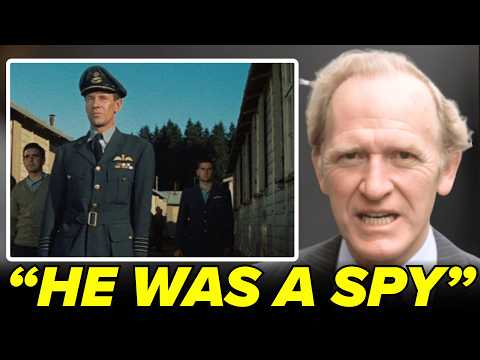
What you’re about to discover are 15 shocking secrets that fans never knew—secrets that reveal the chaos, the danger, and the haunting truth behind one of cinema’s most beloved classics. From Charles Bronson’s real-life claustrophobia to Donald Pleasence’s actual blindness, the line between performance and reality blurred in ways no one expected.
But it’s the final bonus fact that changes everything. So buckle up, because this is the untold story of The Great Escape.
Let’s dig in.
Number 15: Steve McQueen almost walked off the set. Midway through production, McQueen grew furious. He felt his character, Hilts the Cooler King, was a cardboard cutout in an ensemble bursting with vivid characters. He wanted substance—and a reason for audiences to care about his rebel soldier. Production stalled as McQueen refused to film until changes were made. Director John Sturges scrambled, rewriting the script under enormous pressure. The compromise gave Hilts the expanded escape arc and, most importantly, the motorcycle sequence that would become the movie’s beating heart. Without that confrontation, The Great Escape might have lost its biggest star. Instead, it gained its most iconic scenes. McQueen’s rebellion wasn’t just ego—it was the spark that transformed Hilts from background player into a cinematic legend.
Number 14: The motorcycle jump that was nearly banned. Insurance companies flatly refused to cover it, warning that if McQueen attempted the jump and failed, production would collapse with him in a hospital bed. McQueen wanted to do it anyway. Known for his obsession with motorbikes, he had the skill but not the clearance. The compromise? His close friend Bud Ekins, a professional stuntman, would make the leap while McQueen handled the lead-up riding. But here’s the twist: in chase scenes, McQueen disguised himself as German soldiers pursuing his own character, effectively chasing himself on screen. It’s a sly piece of movie trivia fans still debate today. Not boardroom approval, but sheer determination etched that moment into film history.
Number 13: Filming in Germany caused political outrage. Shooting in Bavaria in the early 1960s seemed logical—the landscape resembled wartime Germany. But for many locals, it was a raw wound. Less than 20 years after World War II ended, rebuilding prison fences and staging Nazi marches on familiar soil reopened scars. German veterans groups criticized the project, accusing it of glamorizing suffering. Some newspapers called it exploitation. Local authorities bristled at American filmmakers turning recent history into entertainment, especially since the real Stalag Luft III had been destroyed only years before. For the cast and crew, the weight was undeniable. Extras included locals who had lived through the war. Some wept at the sight of actors in German uniforms. Others refused to come near the set. It wasn’t just a filming location—it was contested memory.
Number 12: The real POWs hated Hollywood’s version. When survivors of the real Great Escape saw the film, many were outraged. Their biggest complaint? Accuracy. The actual escape had been largely organized by British, Canadian, and Polish officers. Yet the movie placed Americans front and center, especially McQueen’s Hilts, who had no real-world counterpart. To veterans, this was an erasure. They argued the film had distorted heroism, simplifying sacrifice into an Americanized fantasy. The motorcycle stunt was particularly offensive since it trivialized the deadly reality of being captured. For audiences, the film was thrilling. For the men who lived it, it felt like betrayal. “It was entertainment,” one veteran later remarked. “But it wasn’t our story.”
Number 11: Charles Bronson’s real-life claustrophobia. Bronson’s character, Danny, was the master tunneler. Ironically, the man behind the role was haunted by real claustrophobia. Raised in Pennsylvania, Bronson worked as a boy in coal mines, crawling through shafts that barely fit his body. Those experiences scarred him, leaving him panicked in tight spaces. On set, the recreated tunnels were narrow, hot, and suffocating. Bronson sometimes froze, gasping for air. Crew members considered widening the sets, but Bronson refused. Instead, he used his fear, channeling it directly into Danny’s performance. The result? His nervous tremors and wide-eyed glances weren’t acting—they were genuine panic. What audiences saw as brilliant method work was, in truth, a man battling his own demons underground.
Number 10: James Garner’s war wounds came back. Garner, who played the smooth-talking Scrounger, wasn’t just acting when he looked weary or stiff. Garner had been wounded in the Korean War, where he served in the US Army before his Hollywood career. Shrapnel injuries to his back and legs never fully healed, and during filming, those old pains flared up. Scenes requiring long hours in the cold German landscape or repetitive movements left Garner exhausted. Yet he rarely complained, pushing through with the professionalism of a veteran. Director John Sturges even altered some blocking to ease the strain. What audiences didn’t know: every smile Garner flashed carried the weight of real pain.
But the secrets don’t stop here. The next revelations involve stunts, breakdowns, and betrayals that could have ended the film altogether. Richard Attenborough nearly broke down on set, haunted by the real tragedy he was recreating. And the tunnels themselves were more dangerous than anyone imagined—actors fainted, and real panic filled the scenes. Stay with us as we uncover the truth behind the iconic motorcycle jump, the studio’s fight over the ending, and the shocking real-life blindness of one cast member.
Number 9: Richard Attenborough nearly broke down on set. Attenborough, who played Bartlett, bore the heaviest emotional weight in the movie. His character orchestrated the escape, inspired by the real Roger Bushell. But the pressure of carrying such responsibility nearly broke him. Attenborough was battling exhaustion during filming, overwhelmed by the demands of the role. He later confessed that the intensity of recreating a true tragedy, knowing many of the real escapees were executed, haunted him daily. At night, he had trouble sleeping, plagued by nightmares of tunnels, searchlights, and executions. Some days he arrived on set visibly shaken. The crew noticed, but Attenborough powered through. His quiet torment gave Bartlett an edge of intensity—a leader weighed down by decisions. Audiences saw resolve, but behind the camera was a man teetering on emotional collapse.
Number 8: The tunnels were more dangerous than you think. The film’s tunnels—Tom, Dick, and Harry—weren’t mere Hollywood props. They were painstaking recreations: narrow, wooden-framed, and claustrophobic. But here’s the secret: they were also dangerous. The production team dug actual earth tunnels on the German set, reinforcing them just enough to hold for filming. Cast and crew crawled inside with hot lights blazing. Oxygen quickly grew thin, making actors dizzy. Dust hung in the air, and safety officers warned of cave-ins. Charles Bronson wasn’t the only one struggling. Several extras fainted mid-scene. The filmmakers kept rolling, using real panic to intensify the footage. If you look closely, you can see sweat dripping, breath shortening, and eyes widening—not staged, but genuine reactions to suffocation. The tunnels were not Hollywood illusions. They were unstable, gritty, and alive with danger.
Number 7: Donald Pleasence’s blindness was real. Pleasence played Blythe, the gentle forger whose eyesight deteriorates. Here’s the shocker: that wasn’t just acting. Pleasence himself was partially blind in real life due to wounds from his service in the Royal Air Force during World War II. Captured and held in a German POW camp, he knew the terror of captivity firsthand. On set, his eyesight was so poor he often needed assistance navigating. The production leaned into this, weaving his real vulnerability into Blythe’s arc. Pleasence’s subtle fumbling with tools and uncertain gaze weren’t manufactured—they were real. At one point, he even consulted director John Sturges, advising him on how a real POW would behave under such strain. Pleasence’s authenticity elevated the film beyond fiction, grounding its story in lived memory. It wasn’t just performance—it was testimony.
Number 6: Studio executives wanted the ending changed. The Great Escape’s ending—with Hilts captured after the motorcycle leap and most escapees killed or returned to camp—was devastating, but it almost never reached audiences. Studio executives, fearing the movie was too bleak, pushed for a happier finale. They suggested rewriting Hilts’s story so he successfully escaped to Switzerland, riding triumphantly into freedom. Director John Sturges fought back. He argued the film’s power came from honesty, from showing that even daring escapes often ended in tragedy. The compromise was to keep Hilts alive but imprisoned again, symbolizing defiance instead of victory. That decision cemented the film’s legacy. Audiences left the theater haunted, not triumphant, and critics praised its refusal to sugarcoat war. It wasn’t just an ending—it was a battle between commerce and truth. And in this rare case, truth won.
Number 5: Steve McQueen’s ego caused on-set rifts. McQueen’s star power was undeniable, but it came with tension. Co-stars like James Garner and Richard Attenborough later admitted McQueen’s demands often disrupted the flow of production. He constantly pushed for rewrites, more screen time, and better stunts, which left some actors feeling overshadowed. During ensemble scenes, McQueen complained his character faded into the background. He openly argued with director John Sturges, who had to balance McQueen’s demands with keeping harmony among a massive cast. Sturges eventually conceded, giving McQueen the motorcycle centerpiece that secured his legacy. The others noticed. Garner reportedly joked that McQueen didn’t want to act—he wanted to race. Bronson, who came from a rough, working-class background, grew irritated at what he saw as McQueen’s Hollywood arrogance. What audiences didn’t know was that beneath the camaraderie on screen, rivalries simmered. McQueen wasn’t just Hilts the rebel—he was McQueen the negotiator, reshaping the movie around himself. And in doing so, he created both brilliance and resentment.
Number 4: The film faced censorship battles. When The Great Escape was released in 1963, not everyone embraced it. The film was banned outright in several countries, including parts of Eastern Europe, for its portrayal of German soldiers as both ruthless and incompetent. Censors argued it insulted national dignity and trivialized war. Even in the UK, cuts were considered. Some British officials worried the film dramatized a story that had ended with mass executions—a sensitive issue for families of the real men who died. In the end, it was released uncut, but controversies followed. Germany faced the biggest dilemma. Screening a movie with Nazi uniforms and POW camps so soon after the war risked reopening wounds. Some cinemas hesitated to show it, fearing backlash from audiences still grappling with trauma. What looked like a thrilling blockbuster was for many nations a political flashpoint. The Great Escape wasn’t just a war movie—it was a cultural grenade dropped into theaters still smoldering from the real conflict.
Number 3: The prison camp was built from scratch. Unlike many war films that repurposed existing military sites, The Great Escape’s camp wasn’t a found location. The entire Stalag Luft III replica was built from the ground up in rural Bavaria, meticulously designed to mirror the real POW facility. Wooden barracks, barbed wire fences, guard towers—everything was crafted with precision. But here’s the twist: it wasn’t just for authenticity. The set doubled as a functional playground for the story. Tunnels were dug, fences were scaled, and dirt was moved daily. The site became so convincing that locals whispered it looked too real. For the actors, living inside this constructed prison blurred lines. They ate in the mess hall, lounged in bunks, and rehearsed beneath the looming towers. More than one cast member admitted feeling like an actual prisoner during production. It wasn’t just a set—it was an immersive psychological experiment.
Number 2: The real-life executions shadowed every scene. In reality, 76 men tunneled out of Stalag Luft III, but only three made it home. The Gestapo executed 50 others in cold blood. This history haunted the cast. Richard Attenborough later admitted he thought constantly about those men as he delivered Bartlett’s speeches. Even Steve McQueen, who often clashed with the crew, reportedly grew somber when reminded the story was rooted in tragedy. Sturges insisted on honoring the truth with a devastating montage of captured escapees being executed. Studios balked, but he refused to soften it. That sequence remains one of the film’s most haunting.
Number 1: The cast bonded like real POWs. Despite conflicts and egos, something remarkable happened. Long days on the camp set, shared meals, and endless rehearsals forged friendships that felt authentic. Actors who played roommates spent their downtime together. Others staged card games and mock roll calls to pass the hours. James Garner later recalled how the set felt like barracks life, complete with inside jokes and small rebellions. When the cameras rolled, this chemistry was undeniable. The camaraderie you see on screen wasn’t manufactured—it was lived.
And the bonus fact that changes everything: the film’s legacy endures because it feels real. Not because of perfect accuracy, but because the struggle, danger, and memory were stitched into every frame. Behind the fences lay secrets of ego, risk, and truth that outlived the movie itself.
So here’s the question that lingers: If the real survivors felt betrayed by Hollywood’s version, can a film ever truly honor history—or does entertainment always demand a sacrifice? Tell us your thoughts in the comments below.
Report this article
Select a reason for reporting:






