In the winter of 1915, the Austro-Hungarian Empire sent 670,000 men into the Carpathian Mountains to relieve a besieged fortress. None of them got within sixty miles of it. They died in blizzards so thick that entire regiments lost their way and froze in the snow, their boots soled with cardboard, their rifles too cold to fire. It was a campaign of unimaginable suffering, orchestrated by a general who believed military glory would win him the woman he loved. This is the story of the 100 days that broke a 640-year-old empire—and the chain of events that made its collapse inevitable.
But to understand how it happened, you have to understand what Austria-Hungary was: a patchwork of fifteen languages and a dozen nationalities, held together by an 84-year-old emperor and an army that communicated in a made-up language called Army Slavic. It was an empire that had survived Napoleon and the Ottomans, but in 1914 it declared war on Serbia and set in motion its own destruction.
The man who commanded that army was Conrad von Hötzendorf. He had proposed preventive war against Serbia at least twenty-five times before 1914. His own foreign minister called him a man who sees war as a panacea for all ills. But from 1907 onward, Conrad saw war as something more personal. At a dinner party that year, he met Gina von Reininghaus, the 27-year-old wife of a wealthy industrialist. Conrad, then 55, fell instantly and totally in love. Over the next eight years, he wrote her more than 3,000 letters—some over sixty pages long—most of which he never sent. In them, he explicitly connected his military campaigns to his desire to win her. He believed that if he returned as a conquering hero, she would leave her husband and marry him. And there is evidence that this belief shaped his operational decisions.
The first catastrophe came in Galicia. In August 1914, Conrad launched an offensive against Russia with plans that required everything to go right simultaneously. Almost nothing did. The Austrian Third Army attacked without adequate intelligence, believing there were ten Russian divisions in front of them; there were nineteen. The army broke and ran, opening a seventy-mile gap in the line. The retreat that followed was not merely a military setback—it was a psychological collapse. One officer described columns of men moving without officers, without formation, horses pulling artillery pieces that had lost their gun crews, supply wagons abandoned at the roadside. In three weeks, Austria-Hungary suffered approximately 400,000 casualties.
But the specific quality of that loss determined everything that followed. Among those 400,000 were the majority of the empire’s pre-war professional officer corps—the men who had spent careers learning how to command and fight. By the end of 1914, roughly 60% of them were dead, wounded, or in Russian captivity. You cannot replace that in weeks or months. The army that fought the next campaign would be led by men who were improvising their way through situations their predecessors had spent careers preparing for.
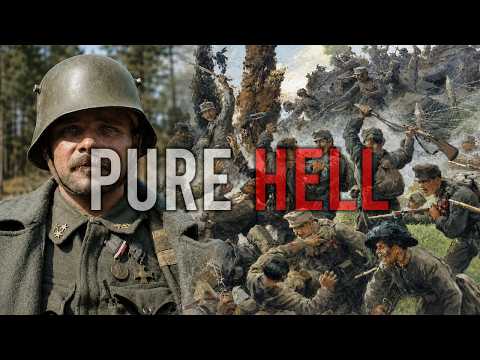
And that next campaign would be in the Carpathian Mountains, in January, in the middle of winter. Conrad was going to relieve the besieged fortress of Przemyśl, and he had told Emperor Franz Joseph it could be done. He planned three winter offensives. The men he sent into the passes wore boots with cardboard soles—literally cardboard—because the leather supply was exhausted. Many had no winter clothing adequate for temperatures that dropped below minus twenty degrees Celsius. The maps were inadequate; the Carpathians had never been mapped to military operational standards because nobody had seriously planned for fighting there in winter.
On January 23rd, 1915, the first offensive began. The assault units moved into the passes and immediately began to get lost. Colonel Géza Feith of the Third Army wrote in his diary: “Fog and heavy snowfalls. We have lost all sense of direction. Entire regiments are getting lost, resulting in catastrophic losses.” Not companies, not platoons—entire regiments of two to three thousand men, blundering through chest-deep snow, unable to navigate, unable to communicate, slowly dying. The wounded froze to death where they fell. Soldiers could hear them calling through the night until the cold took them and they stopped.
Archduke Joseph August, commanding 7th Corps, sent Conrad a report in February 1915. He listed his casualties with the precision of a man who understood exactly what those numbers meant: twelve officers and 1,121 men killed; forty-six officers and 2,121 men wounded; two officers and 685 men missing—which in the Carpathians in February meant they had stopped moving and the cold had finished what the enemy had started. Then he wrote the sentence that haunts every reader of this campaign: “And tomorrow, despite the casualties, we have to attack again.”
The first offensive failed by February 5th with approximately 89,000 casualties in thirteen days. Conrad launched the second. It failed by mid-March. The total losses in the two offensives exceeded 400,000 men. On March 22nd, while the third offensive was being organized, Fortress Przemyśl surrendered. The garrison had eaten the last of its 21,000 horses. 117,000 men walked out into Russian captivity. The fortress that all those men had died trying to reach had been gone for weeks before the final offensive began. Conrad launched it anyway.
It failed in April 1915. The total combined casualties for all three Carpathian offensives was approximately 670,000 Austro-Hungarian soldiers. The Russian casualties were comparable. The combined toll exceeded the combined casualties of Verdun and the Somme. It happened in a campaign that has no Wilfried Owen, no memorial on the western model, no cultural monument that a person outside the region is likely to have encountered. The soldiers died in the Carpathian snow and the world moved on.
But the Carpathian winter war did more than kill 670,000 men. It completed the destruction of the professional officer corps that had already been depleted in Galicia. The men who died in the Carpathians were the accumulated institutional intelligence of the Habsburg military—the junior officers and middle-grade commanders who carried in their experience the knowledge of how to fight, how to lead men, how to make decisions that the chaos of combat requires faster than any training can fully prepare for. When they were gone, they could not be replaced. The reserve officers who filled their positions were doing what Lieutenant Franz Lindner had described before his death in the Carpathians: making it up as they went along, hoping the men in front of them could not see.
And the men in front of them could see. That was the thing the Habsburg command could never quite bring itself to admit. The soldiers of the multinational army were not blind to the improvisation, the confusion, the orders that arrived too late or contradicted the ones before them. They wrote about it in their letters home, and the censors read those letters and filed them away, and the files grew thicker through 1915 and 1916 and 1917.
Consider what it meant to be a Czech soldier in the 28th Infantry Regiment, ordered to advance against a Russian position in the Carpathians. He was fighting a country that Panslavic propaganda described as his natural protector. He was led by officers who suspected him of disloyalty before he had done anything at all. He had watched his regiment lose most of its strength in Galicia. And now he was being asked to die in a snowstorm for an empire that communicated with him in a made-up language. Is it any wonder that in April 1915, elements of the 28th surrendered to the Russians without significant resistance?
The regiment was dissolved. Its colors were destroyed. The official explanation was treason. The more accurate explanation was that the command had created the conditions for surrender and then blamed the men for responding to them. This dynamic—the command blaming the soldiers for failures the command had produced—ran through the entire Austrian war experience and got worse as the war continued.
By 1916, the military censorship reports were documenting cases where soldiers were being court-martialed for expressing opinions about the quality of their leadership that the leadership found offensive. Men who had survived the Carpathians and were now in relatively stable positions on the Italian front were writing letters home that the censors characterized as defeatist—which often meant merely that the men were accurately describing what they had seen and what they thought about the men who had sent them there.
The empire’s mechanism for dealing with dissent—arrest, court-martial, execution—was being applied to men whose primary offense was honesty. The 1914–1918 online encyclopedia documents the execution of several thousand Serbian and Ukrainian-speaking civilians and soldiers near the front line on suspicion of espionage or collaboration. These were not isolated incidents. They were the expression of a command structure that was losing confidence in the loyalty of the men it commanded, in an army whose ethnic composition made the question of loyalty genuinely and structurally complicated.
And meanwhile, the empire itself was starving. The harvest had fallen from 3.1 million tons of grain in 1913 to 1.4 million tons by 1917. By January 1918, the civilian population of Austria was eating 160 grams of flour a day. Food prices in Vienna had been rising continuously since 1915. Strikes were breaking out in the factories. The women queuing for bread were not asking why—they were in a war, they understood that much. They were asking when it was going to stop.
Emperor Franz Joseph I died on November 21st, 1916, at eighty-six years old, having reigned for sixty-eight years. He had come to the throne in the revolutionary year of 1848 and had held the empire together through the loss of Italy, the humiliation at the hands of Prussia in 1866, the assassination of his wife, the suicide of his son. He had signed the declaration of war on Serbia without reading either the Serbian reply to the ultimatum or the text of the declaration itself. He died in a palace while his empire was consuming itself in a war he had authorized. His last words, reported by those present: “I have been spared nothing.”
His great-nephew Karl, twenty-nine years old, inherited what remained. Karl was not a fool. He was a young man of genuine compassion who understood, with a clarity his predecessors had lacked, that the war had to end before the empire dissolved. In early 1917, he attempted secret peace negotiations with the French through his brother-in-law, Prince Sixtus of Bourbon-Parma. Karl wrote personal letters outlining Austrian territorial concessions and expressing support for French claims to Alsace-Lorraine. He was proposing to give Germany’s most important war aim to France in exchange for a separate peace. If it had worked, the war might have ended two years early.
It did not work. The German government found out. Kaiser Wilhelm confronted Karl with the letters in May 1918. Karl denied everything, called the letters forgeries. The French foreign minister, Georges Clemenceau, published them. Karl’s credibility in Berlin was destroyed. Austria-Hungary was forced to accept German economic and military dominance formally through the Spa agreement in exchange for continued German support. The last independent act of Habsburg foreign policy had been an attempt to end the war secretly. When it was exposed, it accelerated the very dissolution it had been trying to prevent.
Conrad was dismissed as chief of staff in February 1917, given a nominal command in the Tyrol, and relieved of even that in July 1918. He retired to Innsbruck, wrote self-justifying memoirs, and died in 1925. The 3,000 letters were found after his death and read by Gina for the first time. She had not known, while he lived, that they existed.
By the last two weeks of October 1918, the end came with astonishing speed. On October 28th, Prague declared Czechoslovak independence. On October 31st, Hungary severed itself from Austria. On November 3rd, the armistice was signed at Villa Giusti. On November 11th, Karl signed his abdication statement, writing: “Filled with unalterable love for all my peoples, I do not wish to make my person a hindrance to their free development.” The 640-year dynasty ended with a young man alone in a room.
Karl died in exile on Madeira in 1922, aged thirty-four. The empire became a patchwork of successor states. The Carpathian passes are still there, and people walk them now without knowing what happened in the winter of a century ago.
Was Austria-Hungary’s collapse inevitable—or did one general’s ambition and one winter’s pride seal its fate?
Report this article
Select a reason for reporting:






