The afternoon of April 30th, 1945, began like any other in the bunker beneath Berlin. Rochus Misch sat at his switchboard, a few meters from the door that led to Adolf Hitler’s study. He had spent five years connecting calls for the most powerful man in Europe, and now the war was closing in, the shelling a constant drumbeat above the concrete. But that afternoon, the silence in the corridor was different—dead, uncanny, as if the walls themselves were holding their breath.
Misch did not hear a gunshot. What he remembered, decades later, was the stillness that followed. It unsettled him so badly that he began talking loudly into the telephone, any nonsense, just to fill the air with a human sound. Then a voice called down the corridor: “Linge, Linge, the time has come.” The study door opened, and Misch looked inside. He saw Hitler and Eva Braun, dead on the floor.
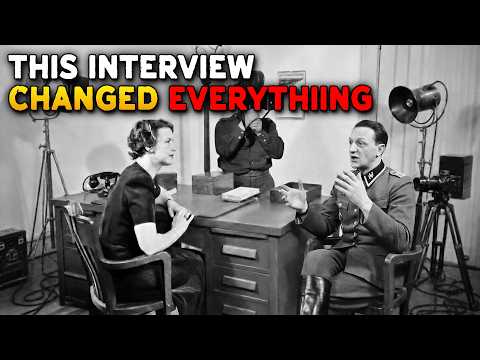
That image would define his life. But it was not what made headlines when he finally broke his silence. It was the three words he used to describe the man he had served: “a wonderful boss.” For sixty years, Rochus Misch insisted that Hitler was no monster, no brute, just a very normal man—and a wonderful employer. The discomfort of that phrase, spoken by a friendly old man, is the crack running through his entire story.
To understand why, you have to start with what the wonderful boss was running. While Misch plugged and unplugged telephone lines, a continent-sized machine was murdering six million Jews. Trains ran on schedules, ledgers were kept, and the destruction of an entire people was organized with bureaucratic calm. Misch stood at the dead center of that Reich, and for the rest of his life, he would claim he never really saw it.
He was not an architect of the horror. Orphaned young, he joined the SS in 1937 at twenty, pulled in less by ideology than by the current that swallowed so many directionless young men. A wound in Poland and a recommendation from an officer lifted him off the front line and into Hitler’s personal staff. By May 1940, he was one of two SS men assigned to the escort detail—bodyguard, courier, telephone operator. For five years, he carried messages, guarded doors, and worked the switchboard that connected Hitler to his generals and the war itself.
When the end came, that post ended up sealed underground beneath four meters of concrete. “We only went down in the bunker when air raid occurred,” Misch recalled. “The Führer, too. When the all clear was given, we left the bunker and went back into the Reich Chancellery.” The bunker was not a home; it was a shelter, a workplace, a coffin of concrete waiting to be sealed.
And here is the verdict that made him famous, landing hardest off that body count. Asked again and again what Hitler was really like, Misch never wavered. No brute, no monster, no superman. A very normal man—and, in the three words he refused to take back, a wonderful boss. Sit in the discomfort of that for a moment, because the discomfort is the entire point. The man who watched the machine from a few feet away walked out of it, convinced he’d worked for a decent employer.
There is a crack running through Misch’s story, and it is worth naming precisely. For years, the shorthand was that he claimed to know nothing at all. That is not quite what he said. He admitted plainly that he knew Dachau existed, that there were camps. What he denied was the scale. He had no idea, he insisted, how vast it all was. And he reached for the oldest excuse there is: “There was never a war when crimes weren’t committed.” Watch the move carefully—it is the quiet migration from I didn’t know to I didn’t know how much. It is a case study in how functionaries narrate their own innocence.
His charm is not exoneration. The telephone man is not a harmless character detail. It is exactly the defense the entire apparatus ran on, from the men who signed the orders down to the men who kept the lines open so those orders could travel. And yet, this is the strange, uncomfortable truth of Rochus Misch: his unreliability is also what makes him irreplaceable. Every reason to distrust his conscience is a separate question from whether he was in that bunker. And he was. When the door to that study opened on the afternoon of April 30th, his were among the last living eyes to look through it.
So follow him down into the concrete. The afternoon Hitler died was not a shock that swept through the bunker; it was a date the people underground had already circled. On April 22nd, 1945, Hitler reportedly said the war was lost and that everybody could go. From that moment, the circle closest to him understood exactly how this ended. The boss would not flee Berlin. He would not be captured. He would take his own life, and they would be the ones left to deal with whatever remained.
By then, the command structure was tearing apart. Days earlier, Hermann Fegelein, an SS general and Eva Braun’s own brother-in-law, had been hauled back to the bunker and shot for trying to slip out of the city. And here, Misch carried a secret to his grave. He claimed, decades later, that he knew who actually pulled the trigger on Fegelein, and he flatly refused to name the man. He even disputed the standard account, insisting Hitler never ordered the killing at all, only demoted him. Whether that is the truth or the tangled memory of an old man shielding someone, we will never know. Misch made certain of that.
Everyone in the bunker knew. It was clear to everyone from April 22nd that the boss would stay in Berlin and take his own life. But knowing the ending was coming did nothing to soften the afternoon it finally arrived. For all the years people have spent imagining that moment, the man closest to it heard almost nothing. On the afternoon of April 30th, Hitler and Eva Braun walked into the study and shut the door. Misch was at his switchboard a few meters down the corridor, doing the only job he had left. He did not hear a shot. What he remembered instead was the silence—a dead, uncanny stillness in the hallway that unsettled him so badly he started talking loudly into the telephone to anyone about nothing at all, just to fill the air with a human sound.
Then it broke. A voice came down the corridor calling for Hitler’s valet. “Linge, Linge, the time has come.” The study door opened, and Rochus Misch looked inside. There was a death to report, and Misch reported it the way he had reported a hundred things before. He ran to his commander, Franz Schädle, to pass the news up the chain, and the single most enormous event in that building’s history moved through the hierarchy like any other dispatch. “When did it happen?” I said. “Just now. At this very moment, they’re carrying him outside.”
But with the boss gone, only one question was left down in the concrete: who would turn out the lights? The Reich did not end with a broadcast or a signature. It ended with one man quietly disconnecting a telephone board. Joseph Goebbels, who would kill himself and his family within a day, came over to Misch and released him from his post with a line that has trailed after Misch ever since. “They had known how to live, and they would also know how to die. You can finish up now.”
So Misch reached down and pulled every plug on the switchboard, one after another. The man who had spent five years connecting Hitler to the world now physically severed the Reich’s last open line. “I never forget this number: 50. That was the number of Hitler’s apartment, same down for the bunker. Goebbels said, ‘You know, we have understood to live, and we also understand now to die. You can leave if you want.’ So I unplugged all cables—Telex, phones, all connections. I told Henschel that the ignition—now, nobody can reach us down there.” Then he was released by Goebbels, who went into the next room. Misch said goodbye to his neighbor Henschel, and the bunker went quiet in a way it never had before.
Almost everyone was dead or gone. For a short, eerie stretch, only two living men remained beneath the concrete: Misch and a machinist named Johannes Henschel, keeping the lights and the air moving over the corpse of a regime. “I left the bunker, too. Henschel was the last one to stay. So the both of us belong to the last remaining people of the bunker.” In the early hours of May 2nd, Rochus Misch climbed up out of what he would later call the coffin of concrete, through a cellar window into a Berlin that no longer existed. And that city was about to swallow him whole for nearly a decade.
Escaping the bunker was not the end of his war. It was the start of the longest chapter of his life. Misch was captured by the Red Army within days, and because of who he was and where he had stood, the Soviets did not let go. He was taken to the Lubyanka in Moscow. By his own account, Stalin refused to believe Hitler was truly dead, and Misch was interrogated hard for proof—pressed and broken so badly that at one point he begged Beria, the head of the secret police, to simply be shot. Nine years followed in Soviet prisons and labor camps before he was finally allowed home to Berlin in 1954.
And then, for a very long time, he said almost nothing. He rebuilt a quiet life, ran a small shop, and kept the bunker to himself. But time did something no interrogator could. One by one, the others who had been down there died—the valet, the adjutant, the officers—until, by the 2000s, Rochus Misch was effectively the last one standing. In 2008, he published his memoir, titled with total accuracy: The Last Witness. It became a best seller, and a plaque went up near Potsdamer Platz. He did not just survive the bunker; he became its official narrator.
But being the last voice in the room carries a hidden cost. When everyone who could contradict you is gone, your version stops being one account among many and quietly becomes the account. And that is exactly the problem this story has to close on. The interview was supposed to reveal Hitler’s final days, and it did. But it revealed something larger and far more uncomfortable about the man doing the telling. Here was a witness who could describe a suicide in forensic, unflinching detail—the slumped chair, the shoes past the sack—and describe the genocide his employer set in motion in almost no detail at all. He once complained that the film Downfall got it wrong by making Hitler too loud, too quick to shout. He corrected the movie’s version of his boss. He never once corrected his own conscience.
So hold both of these things at the same time, because both are true. Rochus Misch’s testimony is a real historical gift. Without men like him, the last hours in that bunker would be little more than guesswork. And Rochus Misch is a living demonstration of how ordinary, agreeable people talk their way out of enormous crimes—not by lying exactly, but by looking slightly to the left of the horror for sixty straight years. The first fact is valuable. The second is the one that should stay with you.
And it comes down to one last image. When Misch finally hauled himself out of what he called the bunker of death, up into the smoking ruins of Berlin at dawn on the 2nd of May, the thing he remembered—the detail that stayed with him across all those decades—was not the smell of burning or the crack of shellfire. It was two street musicians somewhere in the wreckage, playing Hawaiian guitar. That is the whole man in a single picture. He spent his life hearing the strange, incidental music at the edge of the greatest crime of the century. And somehow, right to the very end, never the screaming.
Misch died in 2013 at ninety-six, the last of the bunker’s living voices. His obituaries carried the same three words he never took back: “a wonderful boss.” And perhaps that is the quietest horror of all—not that he lied, but that he never felt the need to.
He heard the Hawaiian guitar in the rubble and called it memory. The screaming, he filed somewhere else. Not denial, exactly. Distance. The kind an ordinary man can keep for sixty years if no one ever forces him to turn his head.
So we are left holding the ledger he refused to read. The schedule, the calm, the polite goodnight. What does it say about us that the most damning testimony comes from a man who thought he was giving a defense?
Tell us in the comments: when the music plays over the wreckage, what are you choosing not to hear?
Report this article
Select a reason for reporting:






