May 5, 1945. The Austrian Alps. The war in Europe was supposed to be over. Hitler was dead. Berlin had fallen. But in a medieval castle perched on a hill, a small group of American soldiers, French VIPs, and—impossibly—a handful of German Wehrmacht troops were about to make a final, desperate stand against a fanatical SS battalion.
This is the story of the Battle of Castle Itter, the strangest battle of World War II, where enemies became allies and where the line between friend and foe blurred in the fog of war.
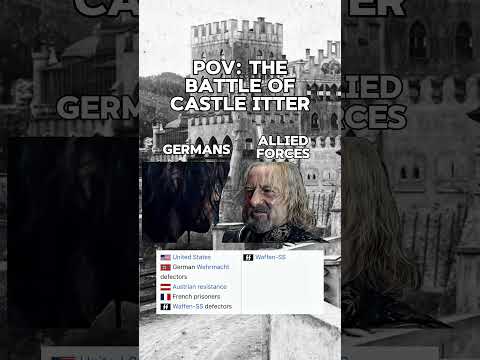
The castle, once a lavish retreat for Austrian nobility, had been converted by the Nazis into a prison for high-value French captives—including former prime ministers, generals, and even a tennis star. As the Third Reich crumbled, these VIPs became pawns in a deadly game. The SS, refusing to surrender, planned to execute them all.
But the prisoners had other ideas. They had smuggled in a radio and sent desperate pleas for help. The only unit close enough to respond was a ragtag group led by Captain John C. Lee of the US 23rd Tank Battalion—and a defecting German officer, Major Josef Sepp Gangl, who had grown disgusted with the SS.
Gangl knew the castle well. He also knew that the SS garrison nearby was preparing to attack. With no time to lose, he and Lee devised a plan: a small task force would race to the castle, reinforce the prisoners, and hold out until reinforcements arrived.
On the morning of May 5, they set out. Lee’s tank, the Besotten Jenny, rumbled up the winding road, with Gangl and his men riding alongside. Americans and Germans, once enemies, now fought side by side.
As they approached the castle, they could hear gunfire. The SS had already begun their assault. The castle’s defenders—a mix of French VIPs, a few Austrian resistance fighters, and a handful of American soldiers—were pinned down. The situation was dire.
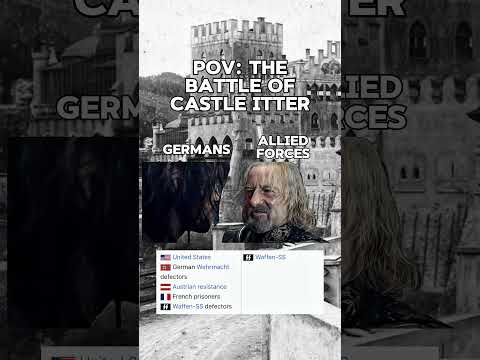
Lee’s tank crashed through the gate, its cannon blazing. The SS attackers fell back, stunned by the sudden counterattack. But the respite was brief. The SS regrouped and launched a ferocious assault, determined to take the castle before Allied reinforcements could arrive.
The battle raged for hours. The defenders fought with everything they had—rifles, grenades, even rocks. The Besotten Jenny was hit by a Panzerfaust and burst into flames, but its machine guns continued to fire until the very end.
As ammunition ran low and hope began to fade, a distant sound cut through the chaos: the rumble of engines. Reinforcements were coming—a relief force of American tanks and infantry. The SS, realizing they were outnumbered, fled into the forest.
The Battle of Castle Itter was over. It was a victory—a bizarre, improbable victory—that saved the lives of the French VIPs and proved that even in the darkest times, unlikely alliances can be forged. But the story doesn’t end here. The aftermath would reveal the true cost of the battle and the extraordinary courage of those who fought.
As the last SS soldiers disappeared into the treeline, a strange silence settled over the castle. The air was thick with smoke and the acrid smell of burning fuel. The Besotten Jenny was a blackened husk blocking the main gate, its armor glowing faintly with heat.
Captain Lee climbed down from his tank, his ears ringing. He found Major Gangl near the courtyard wall, slumped against the stone. The German officer had been hit in the chest by a sniper’s bullet during the final minutes of the fight. He was pale, his breathing shallow.
“We held them,” Gangl whispered, managing a weak smile. Lee knelt beside him, gripping his hand. The American captain had no words—only a nod. Gangl had turned his back on his own country’s darkest chapter, and now he was paying the ultimate price.
Nearby, the French VIPs emerged from the castle’s cellars, blinking in the sunlight. Former Prime Minister Édouard Daladier, who had survived the fall of France and years of captivity, surveyed the wreckage. “Never,” he said quietly, “have I been so proud to stand beside Germans.”
The relief force arrived within the hour—a column of American tanks from the 142nd Infantry. Their commander, stunned by the scene, asked Lee who had been in charge of the defense. Lee pointed to Gangl, still alive but fading fast.
“A German major,” Lee said. “He gave his life for this castle. For us.”
Gangl was rushed to an aid station, but his wounds were too severe. He died the following morning, May 6, 1945. He was forty-three years old. He never lived to see the war officially end, just two days later.
In the days that followed, the liberated prisoners were escorted to safety. The French tennis star, Jean Borotra, who had famously vaulted over the castle wall to fetch help during the battle, was hailed as a hero. But he deflected the praise. “The real heroes,” he insisted, “are the ones who did not walk away.”
Captain Lee stayed behind with the cleanup detail. He walked the castle grounds slowly, counting the dead and cataloguing the damage. Forty-two SS bodies lay in the meadow below the walls. On the defenders’ side, the cost was lighter—but every loss felt like a wound.
Inside the castle, he found a strange sight: French generals and American privates sharing a bottle of wine they had discovered in the cellar. Daladier was holding court by the fireplace, his voice hoarse but steady as he recounted the battle to anyone who would listen.
“We were prisoners,” he said, gesturing at the shattered windows. “Now we are soldiers who happened to survive.”
Lee accepted a glass. It was cheap Austrian wine, bitter and warm, but it tasted like victory.
The next morning brought reporters. They came up the winding road in jeeps, cameras slung over their shoulders, eager for a story that sounded too strange to be true. A battle where Americans and Germans fought together—against Germans.
One correspondent cornered Lee near the burned-out tank. “Captain, how do you explain it? Fighting alongside the enemy?”
Lee wiped his hands on his trousers. “He wasn’t the enemy,” he said. “Major Gangl was a German who loved his country enough to fight what it had become. That’s not an enemy. That’s a soldier.”
The reporter scribbled furiously. Lee walked away before he could ask anything else.
But the questions didn’t stop. Back at the aid station, officers from the 142nd wanted a full report. They listened in silence as Lee described the battle—the tank crashing through the gate, the Panzerfaust hit, Gangl falling in the final minutes.
“And the French?” one colonel asked. “They fought?”
“Borotra ran through SS lines to get word to us,” Lee said. “A tennis player. He could have hidden in the cellar. Instead he ran.”
The colonel shook his head slowly. “I’ll be damned.”
That evening, Lee visited the courtyard where Gangl had fallen. Someone had placed a helmet on the stones—a German helmet, but no one had touched it. It sat there like a marker, a small monument to a man who had chosen his side at the very end.
Lee stood over it for a long moment. He thought about the road ahead—the surrender of Germany, the trials at Nuremberg, the long work of rebuilding a continent. He thought about how history would remember this battle, if it remembered it at all.
Then he heard footsteps behind him. It was Borotra, still wearing the borrowed American uniform he’d been given after the fight.
“They’re sending us to Innsbruck tomorrow,” the Frenchman said. “The generals. The VIPs. All of us.”
“Good,” Lee said. “You’ve earned it.”
Borotra shook his head. “We didn’t earn anything. We survived. There’s a difference.”
He looked at the helmet on the stones. “What happens to him? To Gangl?”
“His men are taking him home,” Lee said. “Back to his family.”
Borotra nodded slowly. “Then I will write to them. I will tell them what he did.”
They stood together in the fading light, two men from different worlds, bound by a single day in a castle that history had almost forgotten.
The reporters left, and the castle grew quiet again. Lee walked the perimeter one last time, his boots crunching on broken glass. He found a piece of the Besotten Jenny‘s track, twisted and blackened, and pocketed it without thinking.
That night, the defenders gathered in the great hall. A fire crackled in the hearth, and someone had found a piano that still worked. The French generals sang old songs, their voices rough but defiant. The American soldiers listened, not understanding the words but feeling the weight of them.
Daladier raised his glass. “To Major Gangl,” he said. “A German who reminded us what honor means.” The room fell silent. Even the Americans, who had never met Gangl, bowed their heads.
In the morning, they parted ways. The French VIPs were driven to Innsbruck, where they would begin the long journey home. Borotra shook Lee’s hand. “I will never forget,” he said. “None of us will.”
Lee watched them go, then turned to his own men. They were exhausted, dirty, and ready to leave. But there was one more thing to do.
They drove to the small cemetery in the village below, where Gangl’s body had been laid to rest temporarily. A simple wooden cross marked the grave. Lee stood before it, the piece of tank track in his hand.
He didn’t know what to say. He wasn’t a religious man, wasn’t one for speeches. But he felt he owed this man something. “You were a good soldier,” he finally said. “And a better man than most.”
He placed the piece of track on the grave and walked away.
Weeks later, Lee received a letter. It was from Gangl’s widow, written in careful English. She thanked him for what he had done, for honoring her husband. She said she had heard the story from Borotra, and that it gave her comfort to know her husband had died fighting for something good.
Lee read the letter twice, then folded it and put it in his pocket. He would keep it for the rest of his life.
The Battle of Castle Itter faded from memory, overshadowed by larger battles and bigger names. But those who were there never forgot. They told their children, and their children told theirs. A story of enemies who became brothers, if only for a day.
And in the quiet of the Austrian Alps, a castle still stands, its walls holding secrets of a battle that should never have been fought—and a friendship that should never have been possible.
What would you have done, if you were there? Would you have fought beside your enemy to save strangers?
Report this article
Select a reason for reporting:






