Before dawn on December 11, 1941, Major James Devereux stood beside a field telephone on a tiny coral atoll in the middle of the Pacific, watching a line of Japanese warships emerge from the darkness. He had six old 5-inch guns salvaged from scrapped American warships. Coming at him were cruisers, destroyers, and a landing force whose officers had been told this place was already beaten. The ships closed to 8,000 yards, then 5,000. His gun crews were ready, fingers on the triggers, waiting for the order. The major said nothing. He let them come closer. What was he waiting for?
Wake Island is not one island. It’s three low scraps of coral sitting on the rim of a drowned volcano, arranged in a rough V around a shallow lagoon. The highest ground on the whole atoll stands about 21 feet above the sea. There is no high ground to hide behind and nowhere to fall back to. There is only the reef, the beach, and the water beyond it. And it sat more than 2,000 miles west of Pearl Harbor, which meant that whatever happened there would happen alone.
In 1941, the United States was building Wake into a forward base, an airfield and a seaplane anchorage on the long line that ran out toward Guam and the Philippines. To the Japanese, Wake sat on top of their Marshall Islands perimeter like a watchtower, and they wanted it gone. Defending it was a job that barely existed on paper. The ground force was about 450 Marines under Major Devereux. There was a Marine fighting squadron with 12 Grumman Wildcats that had flown in off the carrier Enterprise just a week before the shooting started. A few dozen sailors, a handful of Army radio men, and over all of it, a Navy commander named Winfield Scott Cunningham, who had arrived to run the island less than two weeks before the war reached it. Then, there were the civilians, more than 1,100 construction workers, men from a contracting firm hired to pour the runways and dredge the channel, living in a work camp with their tools and their bulldozers, and no reason on Earth to expect a battle.
Devereux did not have enough men to fight the island he was given. There was no radar, none. So the only warning of an air attack was a Marine on a water tower with a pair of eyes and the weather. The beaches ran for miles, and the guns were undermanned. Dozens of men had no rifle to carry. The historian who studied the garrison closest reckoned Devereux had about a third of the men the position actually needed. He found out how little that was at 11:58 in the morning on the 8th of December.
The news of Pearl Harbor had reached Wake a few hours earlier in a broken, uncoded radio message. Devereux was shaving when it came. He put down the razor, sounded call to arms, and sent his men to their positions. For hours, nothing happened. Then, out of a bank of rain cloud off the southern shore, a formation of twin-engine bombers came in low, about 2,000 feet, 36 of them by the Marine Corps count. They came in under the clouds where no one could see them until they were on top of the airfield. A civilian watching from the brush said it looked like the wheels were dropping off the airplanes. Those were the bombs. They walked straight across the parked Wildcats and the fuel farm and the men standing in the open.
In a few minutes, seven of the eight fighters on the ground were wrecked and the eighth was holed. The aviation gasoline went up in a tower of flame. Of the 50-odd men who serviced and flew those planes, more than half were dead or wounded by the time the bombers turned for home. One of the pilots, Lieutenant Robert Conderman, was running for his fighter when the blast caught him and pinned him under the burning wreck. Men came to pull him out. He waved them off and told them to go help the others first, the ones who might still be saved. They did. He died that night. In 12 minutes, half of Wake’s air force was gone and the real fight had not even started.
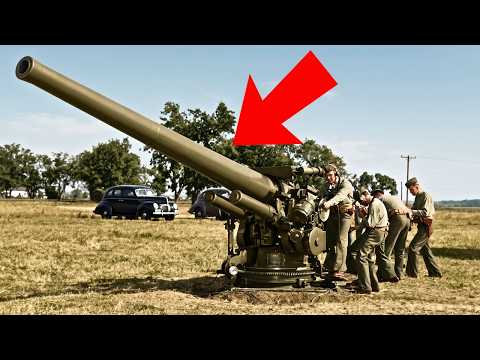
That was the morning the men on Wake stopped waiting for the war and understood that it had already arrived. So, what did they have left to fight with? Six guns. They were 5-inch naval guns, the secondary batteries off old American warships taken out of service years before and shipped to Wake to be set in concrete as coast defense. Each one threw a shell weighing about 50 pounds out to a range of roughly 17,000 yards, fast and flat. On the deck of a battleship, these had been the weapons that kept enemy destroyers at arm’s length. On Wake, they were the whole artillery park. They were split into three batteries of two guns each. One battery to each corner of the atoll so that between them they could cover every approach to the reef. Battery A sat on Peacock Point, the southern tip of Wake proper, under First Lieutenant Clarence Barringer, a man his friends called Barney. Battery B stood on Toki Point out on Peale under First Lieutenant Woodrow Kessler, and Battery L held Kuku Point on Wilkes, the southwest corner, under First Lieutenant John McAllister. Remember that last one. Kuku Point on Wilkes is where this story turns.
The guns were old and they showed it. They sat in the open on their concrete mounts, some of them without even a sandbag wall around the crew, nothing but netting and brush for cover. Their fire control, the instruments that measured the range to a moving ship, was worse. The rangefinders were First World War equipment, and by the time the fleet arrived, most of them were already broken. One had been smashed in an air raid. The rest were wrecked on the 10th when a bomb hit a civilian dynamite dump on Wilkes and set off more than 120 tons of explosive in a single blast that flattened Battery L’s instruments and very nearly flattened Battery L. So the gunners who were about to fight a fleet would be doing it the hard way, guessing the range and correcting by watching where the splashes fell.
Backing the 5-inch guns were a dozen 3-inch anti-aircraft guns, a scattering of machine guns, and a few searchlights, much of it short-handed. On one anti-aircraft gun, the entire crew was civilian volunteers, construction workers who had picked up a job they were never hired to do. Devereux had worked out his plan for the 5-inch guns, and it came down to a single hard decision. The enemy would arrive with more ships, bigger guns, and longer reach than anything he had. If he opened fire the moment he saw them at long range, he would announce exactly where his batteries were and achieve nothing. And then the warships would stand off beyond his reach and pound him to pieces at their leisure. Surprise was the only advantage he owned. He decided he would spend it all at once, up close, and not a second early.
He got his chance to practice patience over the next two days because the bombers kept coming. On the 9th, the island shot back for the first time, the 3-inch guns clawing at the formations overhead. On the 10th, a captain in the fighter squadron named Henry Elrod, a Georgian the men called Hammering Hank, climbed his battered Wildcat into a wave of bombers alone and was credited with knocking two of them down. Four fighters. That was what VMF-211 had left after three days. Four worn-out Wildcats held together by mechanics who were cannibalizing the wrecks for parts, with bomb racks improvised by hand because the planes had arrived without them. That was the island on the night of the 10th of December. Half its aircraft gone, its rangefinders smashed, its men three days without real sleep, waiting in the dark for an invasion everyone knew was coming.
And it was coming that night. Admiral Kajioka’s force came down from the Marshall Islands with the confidence of men collecting on a debt. Three light cruisers, his flagship Yubari in the lead with Tenryu and Tatsuta behind. Six destroyers, two old destroyers converted to carry troops with about 450 naval landing soldiers crammed aboard. The plan was simple. Shell the island at first light, run the landing boats in, take the airfield, and raise the flag by breakfast. The sea had other ideas first. It was running heavy, and as the Japanese tried to swing out their landing boats in the dark, the swells swamped them and tipped men into the water. Just after midnight, the United States submarine Triton, lurking off the atoll, fired four torpedoes at a shadow that was one of Kajioka’s picket destroyers. They were the first torpedoes any Pacific Fleet submarine fired in the war. They missed, but they were a sign that the water around Wake was not as empty as the admiral thought.
Around 3:00 in the morning, the Marines on the water tower and the gun positions began to see it. Lights low on the horizon, flickering and moving. Shapes resolving out of the dark. The fleet was here. So here was the question the whole island now turned on. The same one from before dawn. A major beside a telephone, his gunners ready, and a fleet closing in out of the dark. What was he waiting for?
At 5:00, the flagship Yubari closed to about 8,000 yards off Peacock Point and opened fire. And then began steaming back and forth along the shore, raking the island with her broadsides on each pass. The first salvos set the fuel tanks near the construction camp ablaze, and the glow lit the underside of the clouds. Shell after shell came in and marched across the atoll. And the guns on Wake stayed silent. This was the hardest part, and it is the part that decided the battle. Devereux held his fire. He held it while the flagship burned his fuel dumps. He held it while the cruiser steamed back and forth unopposed, as if the island were already a corpse. Down in the gun pits, Barringer and McAllister had their crews on the guns, loaded and laid, begging for the word. And the word did not come.
On the switchboard that connected the batteries to the command post, one of the gun captains could not stand it any longer. His voice came down the line for everyone to hear. “What is the little so-and-so doing?” he said. “We have been hitting targets at Pearl Harbor at 12,000 yards, and these people are into 7,000. And what in the world is he waiting for?” The answer came back from the command post switchboard, flat and final. “Hold your fire until the major gives the word.”
He was waiting because every yard the enemy came closer was a yard off his own disadvantage. His guns were old and outranged. So he let the enemy erase the range himself. Let them sail in out of contempt until the fleet was so close that old guns firing by eye could not miss, and surprise would do the rest. He let them come inside 4,500 yards. Then he gave the word.
The whole south side of the atoll opened up at once. Battery A took the flagship, and Barringer’s first rounds went long before he brought them down 500 yards and fired again. Both shells went into her port side just above the waterline, right amidships. Yubari shuddered and hauled off trailing smoke, listing, until she crept over the horizon and left the fight.
Off Wilkes, McAllister’s Battery L was waiting for a column of destroyers charging straight in toward Kuku Point. No working rangefinder, just estimated range and splashes. Two-gun salvo, correct. Another salvo, correct again. At 6:52 in the morning, the Hayate vanished inside a single enormous explosion, broken clean in two, gone in under two minutes with nearly her entire crew. She was the first destroyer the Imperial Japanese Navy lost in the Pacific War.
The gun crews froze for a few seconds, stunned by what they had done. Platoon Sergeant Henry Bedell saw it and roared, “Knock it off! And get back on the guns! What do you think this is, a ballgame?” They snapped out of it and kept firing, putting shells into a second destroyer, the Oite, and into a transport.
At about 7:00, Kajioka ordered a general retreat. The fleet that had come to take Wake by breakfast turned and ran, and not one Japanese soldier set foot on the beach. As they withdrew, the four surviving Wildcats came up off the airstrip with hand-loaded bombs. Elrod planted his on the destroyer Kisaragi, and at 7:31 she blew up and went to the bottom with her entire crew.
Two destroyers sunk. A flagship and most of a cruiser division shot up and sent home. An invasion fleet turned back without landing a man. On Wake, four Marines wounded and not one killed. It was not luck and it was not a miracle. It was a trade. Devereux owned exactly one advantage, surprise, and he refused to spend it until it would buy the most. The hinge of the whole thing was a man standing by a telephone with the discipline to wait while his own island burned.
The enemy understood what had happened better than anyone. Kajioka took his battered force back to Kwajalein, and the shock ran all the way up the chain of command. This was the first time in the Pacific War that the Japanese advance had been stopped cold and thrown back. That repulse was the only amphibious landing in the entire Pacific War to be driven off by the guns defending the shore. And to finish three coral islets held by a few hundred Marines, Japan’s Navy had to call back the carriers it had used to wreck the American battle fleet at Pearl Harbor.
But the garrison was living on borrowed time and broken equipment. There was still no radar. The rangefinders were gone. A 5-inch gun had been lost to a recoil failure. The fighters were dying off, four down to two in a matter of days, and then to none, kept in the air past all reason by a handful of mechanics scavenging parts from the dead. And the relief never came. A task force sailed from Pearl Harbor with another defense battalion, fresh fighters, ammunition, and the radar Wake had needed all along. It got slowed refueling in heavy seas, and then, with Wake still holding and the relief force a few hundred miles short, the acting fleet commander lost his nerve about risking a carrier so soon after Pearl Harbor and ordered the whole expedition to turn around and come home. On the Saratoga, a senior officer was so disgusted he threw his hat on the deck. The men on Wake were on their own, and now they would stay that way.
There is a famous story about Wake that belongs here because it is a lie, and the truth is better. The legend says that when Wake was asked by radio what it needed, the island sent back three defiant words, “Send us more Japs.” It made headlines across a frightened country. It was never sent. What Cunningham actually asked Pearl Harbor to send him was not bravado. It was radar and gun sights and spare parts and more fighters, the things that might have let Wake hold. The real message was quieter than the legend and sadder. They were not asking for more enemies to kill. They were asking for the things that might keep them alive, and those things never came.
What came was the 23rd of December. Kajioka had learned his lesson. This time he kept his ships well outside the reach of the 5-inch guns. This time he came in the dark before dawn, around 2:30 in the morning, in wind and rain. He put his landing parties ashore on stretches of beach the big guns could not reach, running two troop-carrying patrol boats straight up onto the reef to spill their men out. Overhead, carrier dive bombers from the Soryu and Hiryu worked over the gun positions one by one. The telephone wires that tied the island together were cut, and Devereux lost contact with most of his strong points almost at once. The defenders fought in the dark in scattered knots, each position on its own, not knowing whether the men beside them were still alive. They made the enemy pay for every yard.
At one 3-inch gun, a man kept firing after his sights were shot away by looking straight down the barrel to aim, and put round after round into a beach patrol boat at point-blank range. On Wilkes, a Marine counterattack wiped out the entire Japanese party that had landed there. And Captain Henry Elrod, the fighter pilot with no fighter left to fly, took his place on the beach line with his grounded aviators and a crowd of armed civilians and held a flank of the defense with a rifle and then with a captured enemy machine gun. Shortly before dawn, near one of the gun positions he was defending, Elrod was shot and killed by a Japanese sailor hidden among the bodies on the ground. For the whole of it, for the destroyer and the beach and the last stand, Henry Elrod was given the Medal of Honor, the first awarded to an American aviator in the Second World War.
And Sergeant Bedell, the old salt who had bellowed his gun crews back onto their guns after the Hayate went down, the man who asked them if they thought it was a ball game, on that same morning on Wilkes, he went out to try to knock out a landing barge with grenades, and he was killed doing it. Twelve days after he steadied the men who sank the first Japanese destroyer of the war, he died on the same island he had helped save.
By the middle of the morning, it was over. Commander Cunningham sent a last message off the island. Enemy on island, issue in doubt. With the guns silenced, the fighters gone, the beaches breached, and no relief anywhere on the sea, he made the decision to surrender rather than see the island’s people cut to pieces for nothing. Wake had held for 15 days. In the first week of the war, when a terrified country had been told to be ready to hear the island had fallen, it had instead stood and fought, and for one morning, won.
What followed does not forgive the men who did it. The roughly 1,500 Americans taken on Wake went into Japanese captivity, and most of them were shipped away to prison camps. On the voyage out, five of them were beheaded on the deck of the transport. And about 98 of the civilian construction workers, the men who had poured the runways and then hauled ammunition to the guns, were kept behind on Wake as forced labor. In October of 1943, after an American carrier raid frightened the garrison, the Japanese commander on the island had all 98 of them blindfolded and shot at the edge of a ditch on the north shore. One of them escaped long enough to scratch a message into a block of coral. 98 US PW and the date. He was caught and killed. The commander who ordered it was tried after the war and hanged. That coral block is still on Wake. People call it the 98 rock.
It is easy from 80 years away to turn Wake into a clean story. The plucky garrison and the beaten fleet and the guns that waited. The men who were there did not remember it clean. They remembered the exhaustion and the fear and the friends they left in the ground and in the sea. One of them, decades later, said that people were always calling them heroes, and that to the men who had actually been on Wake, the word was just embarrassing. They had not gone there to be heroes. They had gone there to pour concrete, and then the war found them, and they did what the day in front of them required.
But a frightened country in December of 1941 did not need it clean. It needed one place that had hit back. Wake was that place. Remember, Wake Island went up on recruiting posters within weeks, and the Commandant of the Marine Corps found the line that fit it best early in 1942, with the island already lost and its defenders already in chains. “America remembers Wake Island and is proud,” he said. “The enemy remembers Wake Island and is uneasy.”
The two destroyers are still out there, Hayate and Kisaragi, somewhere on the bottom off that flat ring of coral, with the men who went down inside them. Sailors of a navy that came to take the island, lying in the same water as the island that would not let them. And the thing worth remembering about the morning that put them there is the hardest thing to do in any war. Not the firing, the waiting. Six old guns loaded and laid in silent, held by men who knew no help was coming, watching a fleet sail in close enough to kill them, and holding and holding and holding until the moment they had been saving their whole lives finally arrived. And then, four words: “Okay. Open fire.”
So here is the question I keep coming back to, and I want to hear what you think. If the relief force had not turned around, if the radar and the fighters and the ammunition had arrived in time, would Wake have held, or was the island always going to fall and the waiting was the only victory it ever could have won? Tell me in the comments.
Report this article
Select a reason for reporting:






