The jungle was a green hell—so thick that men couldn’t see ten feet ahead, rain hammering down daily, the air so heavy it felt like breathing soup. In July 1942, on a muddy track called Kokoda in Papua New Guinea, 13,000 Japanese soldiers marched toward Australia, and standing in their way were just 400 young Australians, most barely 18 years old. These were not hardened professionals; they were farmers, ranchers, and shop workers—militia men mockingly called “chocolate soldiers” by regular troops, a cruel nickname implying they’d melt at the first sign of real heat. Their training lasted a mere 12 weeks. Military experts predicted they’d break and run within 48 hours. But they were about to prove everyone wrong in ways that would shock the world.
The stakes couldn’t have been higher. Port Moresby, just 100 miles away, was the gateway to Australia. If it fell, 15 million Australians faced invasion for the first time in history. Every expert agreed: losing Port Moresby meant losing Australia. The Japanese knew it, the Americans knew it, and the 400 defenders standing in the jungle definitely knew it. But knowing something and being ready for it are two very different things.
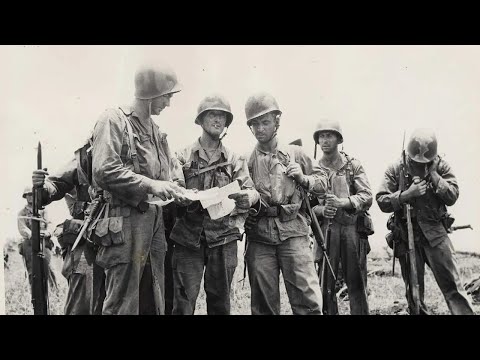
The Australian commanders on the ground saw something the experts missed. These young men had grown up in the Outback, one of the harshest environments on Earth. Survival there taught brutal lessons: keep going when everything hurts, when water is gone, when the sun cooks you alive. Giving up meant dying—so you never gave up. Not ever. Not for any reason. As the first battles began, the commanders made a radical decision: throw out the rule book completely. Forget the British tactics designed for European fields. In the jungle, you’ll be lucky to see 30 feet ahead. Most fights happen at 15 yards or less—close enough to see the fear in another man’s eyes.
They cut the weight of packs from 70 pounds to 40, allowing men to move 12 miles a day through terrain where other armies managed only three or four. They taught silent movement—not a word, not a cough, not even the click of metal. Sound carried like a bell in the jungle; the quiet side lived, the noisy side died. But the most shocking change was what happened when ammunition ran low. Every army taught: when bullets run out, retreat or surrender. The Australians decided that was wrong. “When your bullets run out, you have two choices,” they told their men. “You can die running away, or you can make the enemy die first. Fix your bayonets. Grab your entrenching tools. Those shovels are not just for digging anymore—they are weapons. And if you lose those, pick up rocks, pick up sticks, use your hands. But never stop fighting. Never give the enemy a single inch of ground for free.”
The first real test came in August 1942 at Isurava. 400 Australians dug in on a ridge. Below them, 4,000 Japanese troops prepared to attack. The math was simple and terrible: 10 enemy soldiers for every defender. The Japanese had been winning every jungle battle for eight months straight. They expected to crush through in hours. Instead, the battle lasted four days of the most brutal close-range fighting imaginable. The Australians held their fire until the Japanese were so close they couldn’t miss—20 yards, 15 yards, sometimes 10. They weren’t trying to win; they knew they couldn’t. They were trying to make the Japanese pay such a high price that the advance would slow, would hesitate, would give Australia more time. When it was over, each Australian had fired an average of just 10 rounds per engagement. Yet for every one Australian killed, three Japanese soldiers died. The defenders were outnumbered 10 to 1, but the attackers were dying three times faster.
American observers reviewing the reports assumed there was a mistake. Numbers like that didn’t happen in jungle warfare. Japan had been proving for months that Western armies couldn’t compete in the jungle. Yet here were 400 untrained Australian militia doing exactly that. Back at MacArthur’s headquarters, the reports were met with deep suspicion. The tactics seemed reckless and undisciplined—charging with shovels and bayonets, fighting at 15 yards instead of 300, moving in complete silence. These were not the methods of a professional army. American units preparing for their own jungle operations questioned whether they should learn anything from troops who ignored so many basic rules. The War Department sent observers who predicted disaster. They wrote that the Australian approach might work for a few days or weeks but would eventually fall apart. Modern warfare was won with firepower and technology, not hand-to-hand fighting and improvised tactics.
But one man saw something different. General Thomas Blamey, commander of all Australian forces, was a hard man who had fought in World War I. When he read about the 39th Battalion, he didn’t see chaos or recklessness. He saw innovation born from absolute necessity. He saw soldiers who refused to lose even when every rule said they should. Blamey ordered his staff to document everything—every tactic, every technique, every lesson learned—and suggested that American and British forces might benefit from understanding how these young militia were staying alive against impossible odds.
Then came September 1942 and a place called Brigade Hill. This was when the American observers finally saw what the Australians were really capable of. The Japanese attacked in waves, thousands of troops pushing up the slopes. The Australians fired back with everything they had. But the attack kept coming. Hours passed. The pile of empty casings grew higher. Officers shouted for men to conserve ammunition, to make every shot count. Still the attack continued. And then, after 36 hours of constant fighting, something happened that changed everything. The Australians ran out of bullets. Completely out. Not low on ammunition—not rationing the last few rounds—actually, totally, completely out.
By every rule of warfare ever written, the battle was over. The defenders had fought bravely, but now they had to retreat or surrender. Those were the only options. The American liaison officers, watching from a nearby position, expected to see the Australians fall back. Instead, they heard something that made their blood turn cold. They heard an Australian officer screaming orders to fix bayonets. They heard the sound of hundreds of shovels being pulled from packs. And then they heard something that seemed impossible. They heard the Australians charging forward, running toward the enemy, not away from them.
What happened next lasted only minutes, but the American observers would remember it for the rest of their lives. 400 men with no bullets attacked 4,000 men who still had plenty of ammunition. They charged straight into Japanese positions with bayonets fixed and entrenching tools raised like axes. The fighting was so close that rifles became clubs. Men wrestled in the mud, shovels clanged against rifle stocks. The sound was nothing like normal combat. It was the sound of metal on metal, men screaming, bodies crashing through undergrowth. And when the Japanese finally pulled back, when they retreated down the hill, the Australians still held Brigade Hill. They held it with empty rifles and bent shovels and bloody hands. But they held it.
The American officers sent their reports back to headquarters. One lieutenant colonel wrote that the Australians fought like wounded animals, absolutely fearless. A war correspondent who witnessed part of the battle wrote that when the Aussies ran out of ammunition, that was when they got angry, when they really started fighting. A Marine observer, a man who had seen combat in the Pacific and thought he understood toughness, wrote something his commanders initially refused to believe. He wrote that he had just watched the most terrifying display of fighting spirit he had ever witnessed in his entire military career.
The numbers told a story that seemed almost impossible to believe. Before the Australians developed their new jungle tactics, Allied forces in the Pacific were achieving a jungle combat effectiveness rating of just 23%. After the Australians started fighting their way, their effectiveness jumped to 67%. They were now winning two out of every three fights. Even more shocking was the casualty exchange ratio. For every single Australian soldier killed, more than three Japanese soldiers died. The force that was supposed to melt like chocolate in the heat was instead destroying one of the most feared armies in the world.
By November 1942, the Australian tactics had spread to 18,000 troops fighting across New Guinea. What started with 400 desperate militia had become the standard way that Australian forces fought in the jungle. Officers who had once mocked the “choco” were now begging to learn their methods. American units started requesting Australian advisers to teach them how to move silently, how to fight at close range, how to survive when everything seemed lost. The Australian military began producing specialized equipment based on what the Kokoda fighters had proven worked in real combat. 50,000 machetes were ordered, designed specifically for jungle fighting. 35,000 entrenching tools were modified with reinforced edges, officially recognizing that these tools were now weapons as much as they were shovels.
The most vivid proof of how effective these tactics were came in October 1942 at Eora Creek. The fighting there showed exactly what the Americans meant when they called the Australians terrifying. The rain had been falling for three days straight without stopping. Everything was soaked. Clothes never dried. Skin turned white and soft from constant wetness. The temperature was 95 degrees and the humidity so thick it felt like trying to breathe underwater. Soldiers moved through the jungle in single file because the undergrowth was too dense to walk side by side. The only sound was rain hitting leaves and the occasional snap of bamboo underfoot. Then the silence shattered. A Japanese patrol and an Australian patrol walked right into each other at a bend in the trail. The distance between them was less than 30 feet.
For 90 seconds, the jungle exploded with gunfire. Muzzle flashes lit up the green shadows. Bullets tore through leaves and bark. Men shouted and screamed, and then as suddenly as it started, the shooting stopped. Both sides had emptied their rifles. In any other army, this would be the moment when soldiers retreated, fell back, tried to reload and regroup. Instead, the Australians charged forward with a sound that froze the Japanese in place. It was not an organized battle cry. It was something more animal than human—a roar of pure rage and determination.
What happened next lasted maybe two minutes but felt like hours to anyone caught in it. The sound of steel on steel rang through the jungle as bayonets clashed with rifle stocks. Entrenching tools swung through the air with sickening thuds. Men grappled in the mud, rolling through puddles, clawing and punching. An Australian soldier’s rifle broke in half. He kept fighting with the splintered stock, using it like a club. Another man lost his entrenching tool in the chaos and picked up a rock the size of his fist. The Japanese troops, who had been winning every jungle engagement for nearly a year, broke first. They pulled back. They retreated. They left the trail to the Australians.
When the medics arrived 30 minutes later, they found Australian soldiers sitting in the mud, shaking from exhaustion and adrenaline. Their knuckles were bloody and swollen. Their entrenching tools were bent from the force of impact—metal twisted out of shape from hitting bone and equipment. Some men gripped their empty rifles so tightly that their fingers had cramped and locked in place. They had to pry the weapons out of their own hands. This was what fighting looked like when ammunition was gone. This was what the Americans were witnessing and reporting back to headquarters in messages that seemed too extreme to be true.
The quotes from American observers grew more intense with each battle. Lieutenant Colonel Bert Zemer, who had flown bombing missions across the Pacific and considered himself tough, wrote that the Aussies fought like they were personally offended by the enemy’s existence. A war correspondent who had covered fighting in Europe and North Africa watched an Australian unit hold a position for eight hours with almost no ammunition. He wrote in his dispatch that when their ammo ran out, that was when they got angry—that was when the real fighting began. A Marine observer named Captain James Sullivan was sent specifically to evaluate whether American forces should learn Australian tactics. He watched a single Australian platoon—just 35 men—hold off a Japanese company of 200 for an entire day. In his official report, he wrote something his commanders initially thought was an exaggeration for effect. He wrote that he had just watched the most savage display of close-quarters combat in the history of modern warfare and that every Marine in the Pacific should be trained in Australian methods immediately.
The Japanese noticed too, and their response proved just how effective the Australian tactics really were. Japanese commanders started issuing specific warnings about Australian units. Documents captured later in the war showed that Japanese soldiers called the Australians “forest demons.” Officers told their men to avoid engaging Australian positions if at all possible. If you must attack Australians, the orders said, do it with overwhelming force and be prepared for casualties three times higher than normal. One Japanese soldier’s diary, found on his body after a battle, contained a note that was later translated. It said that fighting the Australians was different from fighting other Allied troops. The Australians, he wrote, did not stop fighting when they should. They did not understand when they were beaten. Trying to defeat them was like trying to stop a flood with your bare hands.
The scale of what the Australians accomplished over four months shocked military analysts. 625 Australians died defending the Kokoda Track. The number was terrible. Every single one of those young men mattered. But the Japanese lost over 12,000 soldiers trying to take the same ground. The math was brutal and clear. For every Australian killed in action, the Japanese lost 19 men. An untrained militia force of mostly teenagers had inflicted casualties at a rate that professional armies with years of experience could not match. The Japanese advance toward Port Moresby, which every expert predicted would take three weeks at most, took four months and ultimately failed completely. Australia was never invaded. The turning point of the Pacific War happened on a muddy jungle track defended by men who were never supposed to win anything.
Other Allied forces began studying what the Australians had done. British officers arrived to observe training exercises. Chinese units requested Australian instructors. Even the Americans, who had the largest and best-equipped military in the world, started sending soldiers to learn from these bush fighters. The weapons factories in Australia changed their production schedules based on what worked in actual combat. Lighter packs, stronger shovels, quieter equipment. Everything was redesigned around the lessons learned in the jungle. The military experts who had predicted the Australian tactics would fail went silent. Some wrote new papers explaining why the tactics worked. Others simply stopped talking about their earlier predictions. The facts on the ground were impossible to argue with. The chocolate soldiers had not melted. They had become the most effective jungle fighters in the entire Pacific theater.
And still the Americans kept writing reports about what they witnessed. Each one trying to capture something that seemed impossible to put into words. How do you explain the moment when men with no ammunition charge towards certain death and somehow survive? How do you describe the sound of shovels being used as weapons? How do you measure the kind of fighting spirit that treats running out of bullets not as the end of the battle, but as the beginning of something even more desperate and determined? The observers kept trying to find the right words, but the truth was simple and terrible and magnificent all at once. They had watched human beings decide that losing was simply not acceptable, no matter the cost, no matter the odds, no matter what the rule book said about when you were supposed to give up.
The transformation spread faster than anyone expected. By February 1943, just five months after Kokoda, the US Marine Raiders were training in Australian jungle tactics—America’s elite learning from the same militia the experts had dismissed. The British formed the Chindits and requested Australian instructors. Chinese forces preparing to defend their homeland asked for the same. The tactics born with 400 desperate teenagers had become the foundation for how every Allied soldier would fight in the jungle.
In 1944, the US Army made it official. Field Manual 72-20, the Doctrine for Jungle Warfare, contained the close-range engagement procedures, silent movement techniques, and shovel-fighting instructions developed on the Kokoda Track. Historians later calculated that 75% of American jungle training traced directly back to Australian innovations. The country with the smallest military had taught the largest how to win.
The recognition came slowly for the men themselves. In 1943, the 39th Battalion received the US Presidential Unit Citation—a rare honor for a non-American unit—but the public never really heard about it. After the war, the survivors went home to their farms and small towns. Most never talked much about what they had done. When they did, people often didn’t believe them.
But among those who understood combat, the Kokoda fighters became legends. They had learned the difference between soldiers and warriors: soldiers fight with weapons, but warriors fight with will. The greatest weapon, the observers concluded, is not something you carry—it is something you embody.
So here is the question that lingers long after the guns fell silent: when everything you have runs out, what is left inside you?
Report this article
Select a reason for reporting:






