Have you ever wondered what German soldiers truly thought of their allies and enemies during World War II? Who did they fear the most? Which ally did they respect above all others? The answers reveal a fascinating and often surprising picture of the men who fought for the Third Reich.
From the blistering deserts of North Africa to the frozen steppes of the Eastern Front, German soldiers formed stark, sometimes brutal opinions about the men fighting beside them and against them. These views, captured in letters, diaries, and postwar interviews, expose a web of contempt, admiration, and grudging respect that shaped the war’s outcome.
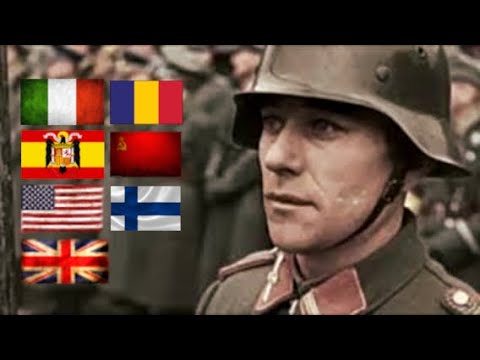
Take, for instance, their Italian allies. The alliance, sealed in the “Pact of Steel” in May 1939, was supposed to be a partnership of equals. But it didn’t take long for German soldiers to view their Italian comrades with barely concealed disdain. “The Italians are not doing anything at all and have no desire to fight,” one German soldier wrote. “They are a bunch of cowards and chickens.” Such sentiments were widespread, with many Germans believing that 130,000 Italians were worth perhaps only 10,000 German soldiers.
Yet not all allies were held in such low regard. The Romanians, who fought alongside Germany from the very first days of Operation Barbarossa, earned a reputation for courage and commitment. “They are brave and extremely dedicated soldiers,” a German officer noted. Despite suffering nearly half a million casualties, the Romanians remained loyal until the tide turned and they were forced to switch sides in 1944.
But it was the Spaniards who truly captured German admiration. The Blue Division, composed of volunteers fighting under German command, astonished their hosts with their ferocity. At the battle of Krasny Bor in February 1943, the Spaniards held off a Soviet force five times their size. “The Spaniards are good and very frightening soldiers,” a senior German commander remarked. Their internal cohesion and fighting spirit were praised as exemplary.
On the other side of the ledger, German soldiers held their British enemies in high esteem. “The English are very tough soldiers in combat,” one German noted. “If you dressed an Englishman in a German uniform, you wouldn’t notice the difference.” However, this respect did not extend to British generals, whom Field Marshal von Rundstedt criticized as overly cautious and stuck in World War I tactics.
As the war dragged on, German opinions of their enemies continued to evolve. The Americans, initially dismissed as cowardly and lacking in martial spirit, would soon prove otherwise. And on the Eastern Front, the Soviets transformed from primitive adversaries into feared opponents. “The Russians fought like true fanatics and rarely allowed themselves to be defeated,” a German soldier admitted. “They are warriors without souls.”
These assessments, fair or not, offer a window into the minds of men at war. They reveal prejudices, hard-won respect, and the brutal realities of combat that forged such judgments. But what drove these perceptions? And how did they change as the war turned against Germany?
The answer lies partly in the brutal school of the Eastern Front, where the Wehrmacht’s encounters with the Red Army shattered many preconceptions. During the opening weeks of Operation Barbarossa, German troops encountered Soviet soldiers who seemed poorly led, ill-equipped, and unprepared for the ferocity of the German advance. Prisoners by the hundreds of thousands seemed to confirm the Nazi propaganda narrative of Slavic inferiority. Yet as autumn turned to winter and the advance stalled before Moscow, a different reality emerged.
German soldiers began to write home about Soviet troops who fought to the last bullet, who emerged from burning buildings to continue firing, who refused to surrender even when surrounded. “The Russian is a soldier who does not know fear,” one infantryman recorded in his diary. Another noted with grim admiration: “They die standing up, and they kill until the last moment.” This grudging respect grew as the war turned into a war of attrition, where the Red Army’s seemingly inexhaustible manpower and willingness to absorb catastrophic losses became a weapon in itself.
But the German view of their Soviet enemy was never simple admiration. It was laced with fear and dehumanization, a toxic brew that made the war in the East uniquely savage. “The Russian is not a human being in the way we understand it,” a junior officer wrote, reflecting the ideological indoctrination that permeated the Wehrmacht. “He is a beast of the steppe, and we must treat him as such.” This dual perception—respect for the Soviet soldier’s fighting spirit combined with a refusal to see him as fully human—helped fuel the atrocities that marked the Eastern Front.
On the Western Front, the evolution of German attitudes toward the Americans followed a different trajectory. The initial contempt, born of the disasters at Kasserine Pass in early 1943, gradually gave way to a more sober assessment. By the time of the Normandy campaign, German commanders were noting a dramatic improvement in American tactical proficiency and fighting spirit. “The Americans have learned quickly,” a panzer commander observed. “They no longer run when we push them. They dig in and call down fire from the sky.”
Yet the Germans never quite developed the same respect for the Americans that they held for the British or the Soviets. Part of this stemmed from the overwhelming material advantage the Americans enjoyed—the endless streams of tanks, trucks, and aircraft that seemed to appear from nowhere. “They fight with machines, not with hearts,” one German officer complained. “Any nation with such factories could win.” This sentiment allowed German soldiers to dismiss American victories as the product of industrial might rather than martial skill, preserving their own sense of superiority even in defeat.
As the war entered its final year, these carefully constructed hierarchies of respect and contempt began to crumble under the weight of reality. The Germans who had once mocked the Italians found themselves fighting alongside the remnants of Mussolini’s army in the defense of northern Italy. The Romanians, once praised as brave allies, had switched sides and were now fighting against them. And the Soviets, once dismissed as subhuman hordes, were advancing relentlessly toward Berlin.
In the end, the German soldier’s assessment of his allies and enemies reflected something deeper than military judgment. It revealed a worldview built on hierarchy and contempt, one that could not survive contact with the war’s brutal realities. The Italians were not cowards, but men sent to fight a war their nation was not prepared for. The Soviets were not soulless fanatics, but soldiers defending their homeland with a ferocity born of desperation. And the Americans were not soft, but citizens who had crossed an ocean to fight for a cause larger than themselves.
Perhaps the most telling shift occurred with the Germans’ view of the British, the enemy they had respected most consistently. “The Englishman fights cleanly and bravely,” a Wehrmacht captain wrote from Normandy. “He is our best enemy.” Yet even this admiration had limits. As the bombing campaign against German cities intensified, and as British commandos raided the Atlantic Wall, the tone in soldiers’ letters hardened. “They call it chivalry,” one officer noted bitterly, “but their bombers kill our women and children while their generals boast of honor.”
What emerges from these accounts is not a simple ranking of enemies, but a portrait of men trying to make sense of a war that defied comprehension. The German soldier who praised the Soviet’s fanaticism was the same man who described him as a beast. The officer who respected the British Tommy also resented the RAF’s bombs falling on his hometown. These contradictions were not hypocrisy—they were the natural result of fighting a war on multiple fronts, against enemies whose courage could not be denied even as their destruction was sought.
Curiously, the Germans reserved a special sort of respect for the Finns, their co-belligerents in the north. “The Finns are the finest soldiers in Europe after ourselves,” a mountain division officer declared, a rare compliment that placed an ally nearly on par with German troops. Finnish ski patrols, their mastery of the forests, and their quiet, uncomplaining endurance in temperatures that froze German weapons all earned genuine admiration. “They do not boast,” another soldier observed. “They simply kill Russians and disappear into the snow.”
But if the Finns earned respect, the Hungarians earned something closer to pity. German officers who watched Hungarian units collapse under Soviet pressure in 1944 described them as “brave but hopelessly equipped and led.” One staff officer wrote with weary resignation: “The Hungarian fights well for a day, then remembers he is hungry and goes home.” Such comments revealed a deeper truth about the alliance system: the Germans judged their partners not by their courage alone, but by how closely they resembled German soldiers in discipline, equipment, and ruthlessness.
As the Red Army pushed into Hungary and the Balkans, the German soldier’s world shrank to his own squad, his own trench, his own survival. The grand assessments of allies and enemies gave way to more immediate concerns. “I no longer care what the Italian thinks or the Romanian does,” a wounded sergeant wrote from a field hospital in early 1945. “I care only that the man beside me has ammunition and will not run.”
This narrowing of perspective was perhaps the war’s final lesson for the German soldier. The hierarchies of contempt and respect, so carefully constructed in the war’s early years, dissolved in the face of annihilation. The enemy at the gate was no longer a nationality to be judged, but a force of nature to be endured.
Still, the question remains: were these German assessments fair? Did they reflect genuine observation, or simply the prejudices of an army that had been taught to see itself as superior? The answer, like so much about the war, depends on who is asked—and what they chose to remember.
In the end, the German soldier’s judgments of his allies and enemies were never purely objective. They were shaped by ideology, by the trauma of combat, and by the desperate need to believe in one’s own superiority even as defeat loomed. The Italians, mocked as cowards, were often poorly led and equipped, sent to fight a war their nation was not ready for. The Soviets, feared as soulless fanatics, were simply defending their homeland with a ferocity born of desperation.
“The Englishman fights cleanly and bravely,” a Wehrmacht captain wrote from Normandy. “He is our best enemy.” Yet even this admiration had limits. As British bombs fell on German cities, the tone hardened. “They call it chivalry, but their bombers kill our women and children.”
What emerges is not a simple ranking of enemies, but a portrait of men trying to make sense of a war that defied comprehension. The soldier who praised Soviet fanaticism was the same man who called him a beast. The officer who respected the British Tommy also resented the RAF. These contradictions were not hypocrisy—they were the natural result of fighting a war on multiple fronts, against enemies whose courage could not be denied even as their destruction was sought.
As the Red Army pushed into Berlin, the grand assessments gave way to survival. “I no longer care what the Italian thinks or the Romanian does,” a wounded sergeant wrote in 1945. “I care only that the man beside me has ammunition and will not run.” The hierarchies of contempt and respect dissolved in the face of annihilation.
So what do you think? Were these German assessments fair, or simply the prejudices of an army taught to see itself as superior? Let me know in the comments.
Report this article
Select a reason for reporting:






