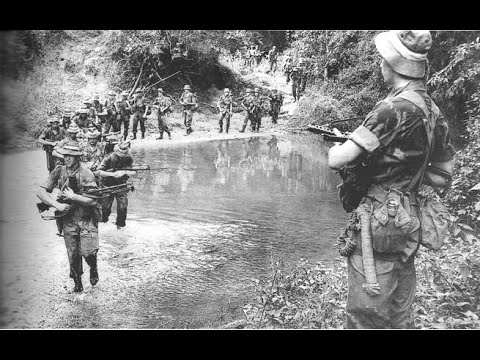
They say in war the enemy wears a uniform, but in Vietnam, some of the deadliest threats didn’t carry rifles or speak Vietnamese. They slithered, crawled, buzzed, and bit. They lived in the mud, in the trees, in the boots of exhausted men, and sometimes they killed without making a sound.
Australian soldiers, especially the SAS, were no strangers to jungle warfare. They had fought in Malaya and Borneo. They had trained for heat, for rain, for mud. But nothing prepared them for the invisible enemies of Vietnam. The kind that didn’t shoot at you. They just waited for you to step too close or lie down in the wrong place or ignore that strange itching on your leg.
One patrol lost a man not to gunfire, but to a bite from something no one ever saw. He simply went pale, began to shake, and slipped into unconsciousness. Hours later, the team had to decide whether to carry him through thick jungle under threat of detection or leave him behind. No bullet, no firefight, just venom, heat, and silence.
In the steamy green hell of Phuoc Tuy or along the border near Laos, the jungle was more than terrain. It was an ecosystem designed to break men physically, mentally, and spiritually. The enemy could be hiding 20 meters away or living in your boot. This is the story of wildlife, the invisible enemy, the snakes, leeches, insects, and parasites that turn the jungle into a living battlefield.
For the Australian SAS, surviving Vietnam meant fighting more than the Viet Cong. It meant surviving the jungle itself, and it didn’t care if you lived or died. Because in Vietnam, sometimes the jungle was the deadliest enemy of all.
To most outsiders, the jungle looked like just another kind of terrain: green, dense, unpredictable. But for the soldiers who fought in Vietnam, especially the Australians who patrolled deep in its heart, the jungle was something else entirely. It wasn’t just an environment. It was a predator. One that never slept, never showed its face, and never forgave a single mistake.
Vietnam’s jungles weren’t like the humid rainforests of Malaya or Borneo that Australian SAS had trained in. They were darker, wetter, louder, and somehow more alive. The canopy above filtered sunlight into a constant green haze. Beneath it, the world was a soup of rotting leaves, tangled vines, and standing water filled with larvae and disease. The air never dried. Nothing stayed clean. Every scratch risked infection. Every breath pulled in spores. Every patch of ground could be the last one you ever stood on.
You didn’t just walk through this jungle. You negotiated with it step by step, breath by breath. Even the most hardened SAS operators, men trained to live off the land and move unseen, found themselves outmatched by the sheer hostility of the Vietnamese wilderness. The jungle didn’t need to fight you. It just needed to wear you down. And it did.
Every movement became a calculation. Is that just a branch or is it a bamboo viper coiled in ambush? Is that itch from a mosquito bite? Or is a leech crawling up your inner thigh? Can I lie down here for an hour? Or will an entire column of fire ants eat through my skin while I sleep?
And worst of all, you couldn’t show fear. A patrol couldn’t afford to break discipline just because something hissed in the dark or crawled into your boot. Crying out, swatting, even flinching could give away your position. So, you suffered in silence because the jungle listened.
Worse still, the jungle smelled you. Australian soldiers quickly learned that even their own gear worked against them. Standard issue soaps, detergents, even the metal smell of gun oil could alert animals and enemy trackers long before you arrived. SAS teams stopped using soap altogether. They rolled in mud to cover their scent. They hung their sweat-soaked clothes in trees to let them rot, to become part of the jungle. But it was never enough. The jungle always found a way in. Through the soles of your boots, the sleeves of your blouse, the rim of your canteen. It soaked into your skin, your lungs, your soul.
The SAS understood this better than most. They didn’t try to beat the jungle. They learned to respect it, to fear it, to adapt. Because if you didn’t, it would kill you long before the enemy ever got the chance. And it wouldn’t need a bullet to do it. Just a bite, a sting, a fever that started in your toes and worked its way toward your brain while you slept in silence.
The jungle wasn’t evil. It was just hungry, and it never stopped hunting.
There are two kinds of fear in the jungle. The fear you hear coming and the fear that waits without a sound. Snakes belong to the second kind. For Australian SAS patrols operating deep in enemy territory, few things caused more quiet dread than Vietnam’s venomous snakes. You could prepare for firefights. You could train for ambushes, but you couldn’t always spot the thing that might kill you from a low branch or under your sleeping mat.
The bamboo viper, small, green, and nearly invisible in the foliage, was a master of camouflage, perched silently on branches just above eye level. It blended perfectly with the jungle’s filtered light. One SAS scout described crawling through a patch of bamboo when his face stopped inches from a pair of slitted eyes. The snake never moved. Neither did he. For over a minute, man and predator remained frozen until the viper, perhaps bored or disinterested, slowly slipped away. Not every man was that lucky.
Unlike in open combat, snake bites didn’t come with warning. You might feel a sharp prick on the ankle or nothing at all. Then the burning would start, then the shaking, then the blur in your vision, and in the jungle, there was no cavalry coming, no medevac in 30 minutes, no field hospital down the road. If you were deep in a recon mission, the nearest help could be days away. And that’s if you dared call for extraction, risking the whole team’s position.
The Malayan pit viper and cobra brought different dangers. The pit viper loved leaf litter, striking ankles from beneath. Cobras could stand and flare from meters away, but sometimes stayed hidden under logs or ruins, striking when a curious hand reached into the wrong shadow. And then there was the banded krait, beautiful, patterned, and almost graceful. But its neurotoxic venom was fast and final. One SAS trooper was bitten while setting a claymore mine in dense undergrowth. He died within an hour, slipping into respiratory paralysis while his team was forced to watch. The jungle stayed silent throughout.
Snakes didn’t just kill, they disrupted. A single bite could bring a patrol to a halt. The victim had to be carried. Every movement slowed. The team’s footprint increased. The risk of detection soared. In some cases, teams had to make brutal decisions. Risk the mission and all their lives or leave the bitten man behind. Veterans remembered those moments with a haunted clarity. “We didn’t hate the snakes,” one said years later. “They were just doing what snakes do, but we never stopped fearing them because unlike a soldier with a gun, they didn’t care who you were. They didn’t think. They didn’t miss. They just struck.” And if they got you, it was already too late.
In the Vietnamese jungle, snakes weren’t just animals. They were traps with eyes, coiled assassins in a war that didn’t need to see you to kill you. And the only warning you got was the sound of your own heartbeat, right before it stopped.
If snakes were the silent assassins of the jungle, then Vietnam’s insects and parasites were its torturers. Slow, persistent, merciless. They rarely killed outright, but they broke down morale, discipline, and even sanity. For Australian soldiers, especially SAS patrols lying motionless within arm’s reach of enemy forces, these tiny creatures became some of the most insidious enemies they ever faced.
The first tormentors they met were leeches. Land leeches, tree leeches, river leeches. They didn’t care where you walked, crawled, or slept. They found you always, and they didn’t wait for you to stop moving. They dropped from leaves. They launched from wet ground. They crawled inside boots, crotches, ears, even armpits. One SAS trooper described a moment during a silent observation stop when he felt something cold and slimy wriggling deep between his toes. He couldn’t move, couldn’t twitch, couldn’t even hiss in discomfort. He lay there for hours as the leech fed, swelling until it bulged against the fabric of his sock.
Leeches didn’t hurt. That was the worst part. They numbed their bite. You only realized they were there when your blood was already soaking through your shirt or dribbling down your leg. And once they detached, the wound wouldn’t close for hours. Every patrol had men with bloodstained ankles or thighs. It wasn’t deadly, but it was draining, literally and mentally.
Then came ants. Not the harmless kind. Not the kind you brushed off. Vietnam’s jungle had fire ants that could turn a footstep into a scream trapped behind clenched teeth. Entire nests could swarm a man in seconds if he shifted weight onto the wrong patch of ground. For a regular infantryman, this was agony. For an SAS trooper on a silent ambush line, it was torture. There were documented cases of soldiers forced to endure hundreds of bites while remaining perfectly still because moving meant compromising the entire team.
And if ants weren’t enough, the jungle had wasps and bees whose nests hung low and camouflaged, waiting to explode in a frenzy if disturbed. One patrol stumbled too close to a ground wasp nest while setting up an observation post. The stings came fast and merciless. Faces swelled, eyes shut, lips ballooned. Yet they kept silent because noise meant death.
Night was no refuge. Mosquitoes whined endlessly. Sandflies left welts that turned into infections. Spiders crawled across exposed skin. Men learned not to slap, not to scratch, not to react. Pain became background noise. Another sound to quiet in the mind. And that was the true danger. These creatures didn’t kill the body, they killed focus. Incessant patrol had to remain invisible for hours, sometimes days. But a man fighting ants under his shirt or a hornet sting under his eye wasn’t thinking about camouflage or foot traffic. He was thinking about agony, about panic, about escape.
In this way, the jungle didn’t need venom or claws to win. It only needed persistence. Because in Vietnam, the wildlife didn’t just attack the flesh. It attacked the mind. And the mind was far easier to break.
The bullets weren’t always what killed you. Sometimes it was a scratch. In the Vietnamese jungle, even the smallest wound could become a death sentence—not because of the cut itself, but because of what crawled into it afterward. Jungle rot was the quiet reaper. It started as a rash, then skin peeled, then it split, exposing raw flesh to dirt and bacteria. Men walked on feet that bled into their socks.
Some of the worst cases didn’t even come from cuts. In rivers and swamps, leeches thinner than shoelaces would swim up the urethra or into the rectum, anchoring inside. You wouldn’t know until you started urinating blood. A medic would later find the culprit, bloated and black, lodged where no knife could reach safely.
And then there was the air itself. Just breathing could cause infection. Some men developed persistent coughs that wouldn’t go away. Others grew fevers that had no name, no clear origin, just heat that rose in waves through the night. You’d wake up shivering in 35-degree heat, unable to eat, unable to walk, and still have to crawl through bamboo the next morning.
But the SAS learned something most units never did. You don’t beat the jungle. You become part of it. They banned soap and rubbed themselves in mud and charcoal. They slept off the ground, rotated dry socks, drilled drainage holes in their boots. They trained to endure fire ants crawling across their stomachs without flinching. “The jungle is a test,” one instructor said. “Pass it and you’re invisible. Fail it and it eats you alive.”
By the time a patrol emerged, mud-caked and hollow-eyed, they didn’t look like soldiers anymore. They looked like something the jungle had grown. And in a way, they were. The jungle didn’t hate you. It just didn’t care if you lived. And that made it the most honest killer of them all.
Have you ever faced a threat that never showed its face—and won?
Report this article
Select a reason for reporting:






