Hans Müller stared at the bandaged stump where his left leg used to be, the stench of infection filling the cramped, cold room. It was December 1944, and the German military hospital in occupied France had run out of morphine, clean bandages, and hope. “I can’t do more,” Dr. Weber whispered, his hands trembling. “You’ll have to learn to walk on crutches—if you survive.”
Hans was 23, a soldier who had believed in the thousand-year Reich. His mother had sewn his uniform with pride. Now, that same uniform hung torn on a chair, and his father’s lucky Iron Cross felt like a cruel joke. The Nazi Party had abandoned men like him—amputees were “useless” unless they could fight. But propaganda posters on the wall promised that the Americans were weak, spoiled, and would torture their prisoners.
Three days later, American tanks rolled into the village. Hans expected rifles aimed at his head. Instead, a young medic with gentle eyes knelt beside him and spoke broken German: “You’re in pain. We’ll help you.” Hans didn’t understand. These were supposed to be the monsters. Yet the medic’s hands were soft as he examined the wounds.
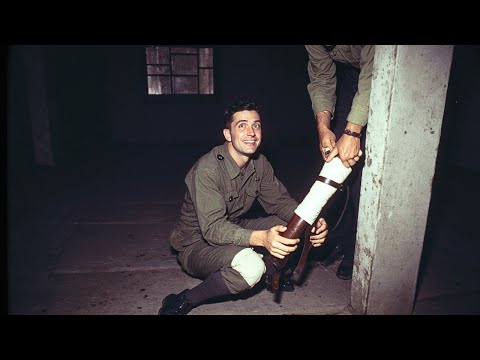
Within an hour, Hans was carried into a clean American ambulance—soft cushions, warm blankets, a heater. He received real painkillers for the first time in months. At the aid station, American doctors treated German POWs alongside their own wounded. A surgeon cleaned his stump with skill and supplies German hospitals hadn’t seen in years. “You’ll be fine. We’ll take good care of you,” the doctor said in fluent German.
Hans wanted to ask why. Why waste precious medical supplies on enemies? But he was too weak to speak. After two weeks, he was strong enough to be shipped to a POW camp in America. The journey across the Atlantic on a hospital ship filled him with dread. He had heard America was a wasteland of poverty and crime. He expected a broken country struggling to survive.
The train ride from New York Harbor to Camp Concordia, Kansas, took three days. Hans pressed his face against the window and stared in shock. Endless cornfields stretched to the horizon. Fat cows grazed in green pastures. Huge factories blew smoke into the sky, running day and night. Cities sparkled with electric lights that had been dark in Germany for two years. He saw American women in clean dresses with full faces, children playing in parks instead of working in factories. “This can’t be real,” he whispered to another prisoner. “The Americans are supposed to be weak and poor.” The older man, Klaus, shook his head. “I was thinking the same. Everything we were told was a lie.”
When the train finally stopped at Camp Concordia, Hans felt his world turn upside down. The POW camp looked like a small American town—clean barracks, electric lights, guards who carried rifles but didn’t aim them. “Welcome to Camp Concordia. You will be treated according to the Geneva Convention,” an officer said in fluent German. “Three meals a day, medical care, recreational activities. Those needing special medical attention will be sent to the hospital immediately.”
Hans raised his hand on his crutches. The officer approached and looked at his missing leg with concern, not disgust. “We have an excellent prosthetics program here. Our doctors will fit you with a limb. You’ll walk again.” Hans’s knees trembled. In Germany, only high-ranking Nazis got prosthetics. Ordinary soldiers were left to crawl or die. As he was helped toward the camp hospital, a terrifying question burned in his mind: if everything he’d been told about Americans was wrong, what else had the Nazi Party lied about?
The camp hospital smelled of soap and medicine instead of death and infection. Hans hobbled through the front door on his crude wooden crutches and stopped, stunned. The floors were so clean they reflected the ceiling lights. White walls gleamed without a speck of dust. Through the windows, he saw nurses in crisp uniforms walking between beds where German prisoners lay on real mattresses covered with white sheets.
A gray-haired American doctor with gentle eyes approached. His uniform was neatly pressed, his hands soft and clean—not rough and stained like the German doctors Hans had known. “I’m Dr. Patterson. I understand you need a prosthetic. Let me examine your wound and see what we can do for you.”
Hans was led into an examination room larger than most German hospital wards. The doctor had him lie on a padded table covered with fresh paper. Dr. Patterson unwrapped Hans’s bandages with gentle fingers. Hans expected the American to frown at the smell or show disgust. Instead, the doctor nodded with professional interest. “The healing is coming along well. Your stump has the right length for a good prosthetic. We can begin the process next week.”
Hans could barely speak. “You have prosthetics for prisoners here?” Dr. Patterson looked confused by the question. “Of course. Why would we let you suffer when we can help you walk again? You’re still a human being.”
A nurse wheeled in a cart full of medical supplies. Hans counted enough bandages to treat fifty men. Bottles of medicine filled three shelves. In Germany, these supplies would have been rationed to last six months. Here, the nurse handled them as if they were inexhaustible. “Doctor, a new shipment of prosthetic materials just arrived from Chicago,” she said in English, then turned to Hans and spoke in careful German: “We have everything we need to make you the best artificial leg in America.”
Hans felt dizzy. A special shipment of prosthetic materials from Chicago alone? He had heard Chicago was just one of dozens of huge American cities. How many prosthetics were being made in this vast country? How many wounded men were receiving help while their nation fought wars on three continents?
The next morning, Hans was taken to the prosthetics workshop. He expected a small room with basic tools. Instead, he entered a factory-sized building filled with amazing machines. Electric saws cut wood with perfect precision. Lathes shaped metal parts that gleamed like jewelry. Workbenches stretched along the walls, covered with artificial arms and legs in various stages of completion.
The workshop buzzed with constant activity. Hans counted twelve German prisoners working alongside eight American technicians. Everyone wore safety glasses and clean aprons. The smell of fresh sawdust mingled with leather and metal polish. Bright electric lights illuminated every corner, banishing the shadows that would have made delicate work impossible.
The American technicians worked side by side with the German prisoners who had been trained to help. The German prisoners wore clean work clothes and their bellies were full. They smiled and joked as they worked. Hans had not seen German soldiers smile in over a year.
A German prisoner named Werner, who had lost his right arm, approached Hans. Werner’s artificial arm moved so smoothly that Hans almost didn’t notice it. The prosthetic was painted to match Werner’s skin tone exactly. The fingers could bend and grip. Even the fingernails looked real. “Welcome to the miracle factory,” Werner said with a smile. “Six months ago, I thought my life was over. Now look at me. I can write letters, eat with a fork, even play cards. These Americans are magicians!”
Hans watched in amazement as a technician measured an artificial leg for another German prisoner. The technician used precise tools to get measurements accurate to the millimeter. He recorded everything carefully in a notebook. The prosthetic being fitted had joints that moved like a real knee. The foot was carved to look exactly like a human foot, complete with toes and even tiny veins painted on the surface.
Hans asked Werner, “How much does this cost?” Werner laughed. “Cost? This is America, Hans. They have so much of everything that they give it away for free, even to their enemies. Do you know what the technician told me yesterday? He said the cost of the materials for my arm is more than most German families earn in six months, but they make dozens of them every week.”
That day, Hans was scheduled for his first prosthetic fitting. Dr. Patterson and two technicians worked for two hours creating a plaster mold of his stump. They covered every rough part with sheep’s wool softer than any fabric Hans had ever touched. They asked him about pain and comfort every few minutes. The care they provided surpassed anything Hans had experienced, even in Germany during peacetime.
While the mold dried, Hans was taken to the physical therapy room. The room was larger than the entire German field hospital where he had lost his leg. Parallel bars stretched along padded mats. Exercise equipment lined the walls. Mirrors covered every surface so patients could monitor their progress.
Two German prisoners were learning to walk again on the parallel bars. American therapists coached them with inexhaustible patience. One therapist spent thirty minutes helping an elderly German man take just three steps. The American showed no frustration or anger. He simply kept encouraging the man to try again. “That’s it, Heinrich. Feel the weight shift to your good leg. Now trust the prosthetic. It will hold you.”
Hans watched a young German prisoner about his own age walking across the room on two artificial legs. The man had lost both legs to American bombing, but now he moved almost naturally. He even ran a few steps away from Hans. “The hardest part is believing it’s real,” the young man said. “I keep waiting to wake up from this dream. In Germany, men like us would be begging on street corners. Here, they’re teaching us to run again.”
The young man sat down and lifted his trouser leg to show Hans the craftsmanship. The two artificial legs were works of art. Carved wood formed the main structure, but metal joints moved with engineering precision. Leather padding protected his skin. Adjustable straps allowed for a perfect fit. “Look at this,” the young man said, pointing to tiny screws and springs in the knee joint. “Every piece is handmade. The American who made these legs spent two full weeks on the knee mechanisms alone. Two weeks of his life to help a German soldier who bombed his cities.”
Two days later, a Coca-Cola delivery truck entered the camp. Hans had heard of Coca-Cola from Nazi propaganda, which described it as a symbol of American decadence and weakness. The truck was bright red and decorated with chrome, larger and cleaner than most German military vehicles. The driver wore a neat uniform and whistled as he worked.
Hans watched from the hospital window as American guards unloaded crates of dark glass bottles. Hundreds of bottles clinked against each other as wooden crates were stacked on hand trucks. But instead of keeping the drinks for themselves, the guards distributed Coca-Cola to the German prisoners in the workshop, the hospital, and even the regular barracks.
Hans received his first bottle that afternoon. The glass was cold and smooth in his hands. The sweet, fizzy liquid was different from anything he had ever tasted. It was cold and refreshing and completely unnecessary for survival. Yet the Americans provided it generously to enemy soldiers who had been trying to kill them just months before. This extravagance shocked Hans more than the kindness.
In Germany, every piece of metal was melted down for weapons. Here, the Americans threw away bottles after a single use. They had enough sugar to make flavored water for fun. They had enough ice to keep drinks cold even in winter. Hans asked Werner as they drank their Coca-Cola in the workshop, “Why do they do this?” Werner shrugged. “I stopped trying to understand. I simply accept that everything we were told about Americans was wrong. They’re not weak because they’re kind—they’re strong because they can afford to be kind.”
Hans noticed Werner was carving a small wooden toy as they talked. The toy was a horse on wheels, painted bright red and blue. Werner worked with his artificial hand, controlling the fine movements with small muscle contractions in his forearm. Hans asked, “What’s that for?” Werner answered quietly, “For my daughter in Germany. The Americans allow us to send packages home. They even pay the postage. I want her to see what her father learned with his new hand.”
The following week, Hans received his first artificial leg. It was made of carved wood and metal, painted to match his skin tone exactly. The American technician mixed the paint himself, adding tiny amounts of red and yellow until the color was perfect. The prosthetic was secured tightly to his stump with leather straps, the leather soft and supple, dyed to match his skin.
Dr. Patterson helped Hans stand for the first time in three months. The artificial leg felt strange but solid. The weight was distributed perfectly. Hans took a careful step, then another. The knee joint moved smoothly with each motion. His eyes filled with tears—not from pain. “I thought I would never walk again,” Hans whispered. Dr. Patterson replied, “In America, we believe everyone deserves a second chance—even our enemies.”
That evening, Hans was invited to dinner in the camp’s main mess hall. He walked slowly on his new leg, still adjusting to the rhythm. The mess hall was enormous, with long tables seating a thousand men. The smell of roasting meat and fresh bread filled the space. German prisoners lined up with metal trays, just like American soldiers. But when Hans saw the food being served, he almost dropped his tray.
Thick slices of roast beef, mountains of mashed potatoes with fresh butter, green beans, and warm white bread from the oven. The American cook, a huge man with gentle eyes, smiled and pointed at Hans’s new leg. “You need strength to walk. Eat well.” Hans sat with Werner, Klaus, and Heinrich, sharing stories in broken English and German. Guards at nearby tables ate the same food.
“They’re not weak because they’re kind,” Werner said, echoing his own words. “They’re strong because they can afford to be kind.” Hans chewed slowly, tasting a truth that shattered everything he’d been taught.
That night, he stared at the ceiling, moving his artificial foot under the blanket. If Americans could build such miracles while fighting a world war, what did that say about the Reich’s lies? He closed his eyes, no longer a loyal soldier—but a man finally learning what greatness truly meant.
What would you have done if you were Hans, discovering the enemy was more human than your own leaders?
Report this article
Select a reason for reporting:






