In the annals of World War II, the deadliest armies are often measured by sheer numbers—millions of men in German, Soviet, or American uniforms. But what if we judged lethality not by size, but by efficiency per soldier? By that metric, one small nation punches far above its weight: Finland. Despite a population smaller than London’s, Finland inflicted massive casualties, primarily on the Soviet Union. But was Finland’s army proportionally the most lethal of the war? And how does it compare to other small but effective forces like New Zealand, Australia, and Canada?
The odds were absurd. In November 1939, the Soviet Union invaded Finland in what became known as the Winter War. The USSR fielded over 450,000 men, 6,000 tanks, and 3,800 aircraft. Finland had just 300,000 soldiers, almost no armor, and only 150 planes. And yet, against all logic, the Finns held the Red Army at bay for over three brutal months in Arctic conditions.
They used clever ambushes, intimate knowledge of terrain, and specialized ski troops to inflict disproportionate casualties. Estimates vary, but Soviet losses were at least 126,000 dead, possibly over 200,000. Finnish losses were under 26,000. That’s a 5-to-1 ratio in favor of the Finns. And that’s just the start.
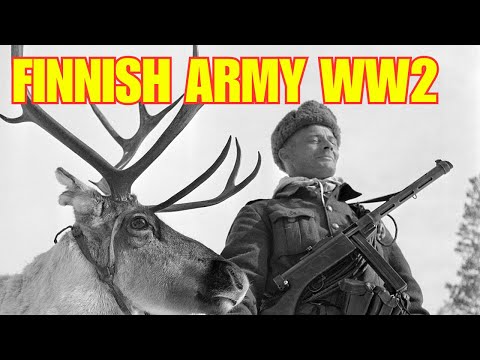
In 1941, after the Nazi invasion of the Soviet Union, Finland entered the war again in what it called the Continuation War, fighting alongside Germany—not as an Axis power, but as a co-belligerent. The Finnish goal was to regain lost territory, not conquer Moscow. In this phase, Finland continued to outperform its size. Its forces tied down over 30 Soviet divisions. In key battles like Ilomantsi in 1944, Finnish troops encircled and destroyed entire Soviet formations.
By war’s end, Finland—at its peak strength of around 530,000 troops—had inflicted well over 300,000 Soviet casualties, with some estimates as high as 500,000. That means each Finnish soldier may have caused 0.6 to 1 enemy casualties. A staggering ratio for any nation, let alone one that never fielded more than half a million men at once.
So, how does Finland compare to other small but high-performing nations? Let’s look at three Commonwealth nations: New Zealand, Australia, and Canada. New Zealand contributed around 140,000 troops and fought in North Africa, Italy, and the Pacific. They suffered around 12,000 killed and inflicted heavy casualties on Axis forces at battles like El Alamein and Monte Cassino. The Kiwis’ overall kill ratio is difficult to pin down, but they were known for toughness and effectiveness, though not at Finnish scale.
Australia mobilized around 1 million troops, with 575,000 serving overseas. These units fought with great determination in North Africa, Southeast Asia, and the Pacific. 27,000 Aussies were killed in action, and they inflicted perhaps over 200,000 enemy casualties, mostly in campaigns against Japanese forces in Papua, New Guinea, and Borneo. Australia had a large global presence, but due to the nature of jungle warfare, combat intensity varied.
Canada mobilized over 1 million service members, many of whom fought with great distinction in Europe from 1939 to 1945, most notably at Juno Beach, the Scheldt Estuary, and in Italy, during which they suffered 45,000 deaths. Total enemy losses caused are not easy to calculate, but in Normandy and the Rhineland, Canadian units inflicted tens of thousands of German casualties.
Each of these nations fought honorably in units that were both feared and respected by their enemies. But none of them were called upon to tie down an enemy superpower nearly 10 times their size the way Finland did.
Let’s break this down into raw comparisons and see just how Finland’s performance measures up.
During World War II, Finland fielded a peak force of just over 500,000 soldiers. Despite its small size, Finnish troops inflicted an estimated 300,000 to 500,000 Soviet casualties. That means that for every Finnish soldier, there was up to one Soviet casualty inflicted. Even on the conservative end, each Finnish troop accounted for more than half a Soviet loss—an astonishing ratio in any war.
Now, let’s look at Australia. They mobilized around 575,000 troops for overseas service, mainly fighting in North Africa, Southeast Asia, and the Pacific. Their forces are estimated to have inflicted roughly 200,000 enemy casualties, mostly on the Japanese. That works out to about one enemy casualty for every three Australian soldiers. Still a strong performance, but far behind Finland proportionally.
Canada, with a much larger war effort, mobilized over 1 million men and women in uniform. Their units fought valiantly in Europe, especially during the Normandy landings and the battles in the Netherlands and Rhineland. The total number of enemy casualties they inflicted is harder to pin down, but estimates suggest around 250,000 enemy losses during their campaigns. That means roughly one enemy casualty for every four Canadian troops.
Then there’s New Zealand, whose contribution, while smaller, was elite. With around 140,000 troops, they fought in some of the toughest battles like El Alamein and Monte Cassino. They likely inflicted between 50,000 and 80,000 Axis casualties, giving them a ratio somewhere between one enemy loss for every two to three New Zealanders.
So across all these cases, no army comes close to Finland’s kill-to-size ratio. It’s not just impressive—it’s extraordinary.
But raw ratios only tell part of the story. The context in which these armies fought matters just as much. Finland faced a Soviet enemy that was numerically overwhelming but often poorly led, especially in the Winter War. The Finns exploited this with brilliant tactics—motti encirclements, ski-borne hit-and-run raids, and a mastery of frozen terrain that turned the Arctic winter into an ally.
Yet the Continuation War presented a different challenge: a more experienced Red Army that had learned from its earlier mistakes. Still, Finland managed to hold the line for years, tying down dozens of Soviet divisions that could have been used elsewhere. That strategic impact—forcing a superpower to commit massive resources to a secondary front—is something no other small nation achieved to the same degree.
Australia and New Zealand, by contrast, fought in theaters where enemy numbers were often lower and supply lines stretched. Their kill ratios, while respectable, were shaped by jungle warfare and island-hopping campaigns where casualty counts were smaller in absolute terms. Canada’s war was part of a massive coalition effort, and its casualties were inflicted within the broader Allied juggernaut—meaning its individual impact is harder to isolate.
So when we ask whether Finland had the most lethal army proportionally, the answer seems to lean strongly toward yes. But there’s another factor to consider: the quality of the enemy. Finland’s opponents were Soviet conscripts, many of them poorly trained in the early years. Does that diminish the achievement? Not necessarily—war is about results, and Finland delivered results against impossible odds.
Still, historians debate the exact figures. Some argue that Soviet losses in the Winter War were even higher than official estimates, while others point out that Finnish casualty ratios in the Continuation War were less lopsided. The truth likely lies somewhere in between, but even the most conservative numbers place Finland at the top of the efficiency table.
What about other small nations often overlooked? Romania, Hungary, and Bulgaria fielded significant forces on the Eastern Front, but their kill ratios were far lower. Even elite German formations, with their superior equipment and training, rarely matched Finland’s per-soldier lethality when facing the Soviets. The Finnish case is unique because it combines a small population, a desperate defensive war, and a terrain that negated Soviet numerical advantages.
In the end, the question of proportional lethality isn’t just about numbers—it’s about impact. Finland’s army didn’t just kill more enemy soldiers per capita; it fundamentally disrupted Soviet strategic planning and preserved Finnish independence against staggering odds. That, perhaps, is the truest measure of its effectiveness.
But the story doesn’t end with raw casualty ratios. To truly understand Finland’s proportional lethality, we need to examine the tactical and strategic innovations that made those numbers possible. The Finns didn’t just fight harder—they fought smarter, turning their weaknesses into strengths and rewriting the rules of winter warfare in the process.
Consider the motti tactic—a Finnish innovation that became the stuff of Soviet nightmares. Instead of meeting the Red Army head-on, Finnish ski troops would isolate enemy columns in the dense forests, cutting them off from supply lines and reinforcements. These encirclements, called motti, allowed small Finnish units to destroy entire Soviet divisions piece by piece, like chopping down a tree limb by limb. The trapped Soviet soldiers, often lacking winter gear and food, faced a choice: surrender or freeze. Most perished.
The Finns also mastered camouflage and silent movement. Their white winter suits made them nearly invisible against the snow, while their ski-borne mobility let them strike and vanish before the Soviets could respond. Soviet conscripts, many from southern regions, were utterly unprepared for the Arctic environment. Finnish snipers like Simo Häyhä—credited with over 500 confirmed kills—became legendary, embodying the lethal efficiency of a nation fighting for its survival.
But it wasn’t just tactics. Finnish artillery, though limited in number, was used with deadly precision. During the Continuation War, Finnish forward observers became experts at calling down concentrated fire on Soviet troop concentrations, making every shell count. This economy of force—getting maximum effect from minimal resources—was a hallmark of Finnish military thinking.
What about the air war? Finland’s small air force, flying a mix of obsolete and captured aircraft, still managed to achieve a kill ratio of roughly 3-to-1 against the Soviets. Finnish pilots like Eino Luukkanen and Ilmari Juutilainen became aces many times over, proving that skill and daring could overcome numerical inferiority. Their success mirrored the ground forces’ ability to punch above their weight.
Yet, for all these achievements, Finland’s position was precarious. By 1944, the Soviet Union had turned the tide on the Eastern Front and could afford to pour resources into crushing Finland once and for all. The Vyborg–Petrozavodsk Offensive in June 1944 saw the Red Army unleash overwhelming force—hundreds of thousands of men, thousands of tanks, and massive air support—against Finnish lines.
For a moment, it seemed Finland would be overrun. But even in retreat, the Finns inflicted heavy losses, buying time for political negotiations. The Battle of Tali-Ihantala, one of the largest battles in Nordic history, saw Finnish forces—with German air support and anti-tank weapons—halt the Soviet advance. Though outnumbered and outgunned, the Finns held long enough to secure an armistice, preserving their independence.
This raises an important point: Finland’s proportional lethality wasn’t just about killing enemy soldiers. It was about achieving strategic goals against impossible odds. The Finns forced the Soviet Union to accept a negotiated peace rather than unconditional surrender—a feat no other Axis-aligned nation managed. That outcome alone sets Finland apart.
Now, let’s consider another small nation often cited for its military effectiveness: Poland. Polish forces fought on multiple fronts, including the September Campaign of 1939, the Polish Underground, and alongside the Western Allies. Yet Poland’s casualties were catastrophic, and its kill ratio—while difficult to calculate—was likely lower than Finland’s. The Polish experience was one of heroic resistance against overwhelming force, but without the same per-soldier impact.
What about the Finns’ German allies? The Wehrmacht is often regarded as the most tactically proficient army of the war, but its kill ratio against the Soviets was roughly 1-to-1.5 in the early years, declining sharply after 1943. Finland, by contrast, maintained a favorable ratio throughout, even as the Red Army improved.
So, is Finland the clear winner? The evidence strongly suggests yes. But there’s one more angle to explore: the human cost. Finland’s casualties—around 63,000 dead and 158,000 wounded—were devastating for a nation of just 3.7 million. Proportionally, that’s equivalent to the United States losing over 5 million people. The Finnish army’s lethality came at a terrible price, and the nation’s resilience in the face of such losses is as remarkable as its battlefield performance.
As we weigh these factors, the question shifts from ‘was Finland the most lethal?’ to ‘what does proportional lethality really tell us about a nation at war?’ The answer lies in the intersection of tactics, leadership, and national will—a combination that Finland perfected against all odds.
And yet, the debate over proportional lethality remains unsettled. Some historians argue that comparing kill ratios across different theaters is like comparing apples to oranges—Soviet tactics in 1939 were catastrophically poor, while the Japanese in the Pacific fought with a ferocity that inflated Allied casualty counts.
But even accounting for these variables, Finland’s numbers stand apart. No other nation inflicted casualties at such a rate relative to its mobilized strength while facing a superpower ten times its size. The Finns didn’t just survive—they made the Red Army bleed for every kilometer.
So we return to the original question: was Finland’s army proportionally the most lethal of World War II? The evidence points overwhelmingly to yes. But history is never that simple—and the men who fought in those frozen forests deserve more than a spreadsheet.
What do you think—does Finland deserve the crown, or is there another small army that history has overlooked?
Report this article
Select a reason for reporting:






