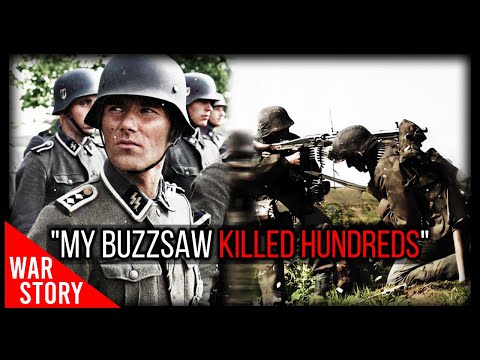
The winter of 1944 was a merciless beast, and I was its prey. As a Latvian SS legionnaire, I had seen death in a hundred forms, but nothing prepared me for the hell that awaited in the snowbound fields of Russia. My name is Mntout Blosselt, and this is my story—a tale of brutality, survival, and quiet tragedy that would test the limits of human endurance.
I had returned to the 32nd Latvian Regiment at the end of January 1944, leaving behind my time with the German 2005th Division. For a few brief days, we were stationed in a quiet Russian village, far from the front lines. It felt almost like peace had returned. We rested, smoked, laughed a little, and received our monthly rations: cigarettes, liquor, and a moment to breathe. Reinforcements trickled in from Latvia, among them a loud, boastful corporal who never stopped talking about his own bravery. Each night, he would drink heavily and sing praises of his exploits, his booming voice echoing through the house like he was already telling war stories to statues.
Then, as expected, the order came. “Prepare to move out.” I set off with two comrades to find a sled, anything to make the upcoming march easier. We found one, but it belonged to an elderly Russian couple, already loading it with their few possessions, desperate to leave. The old woman begged us with such weariness in her eyes that we simply could not take it. We walked away empty-handed, each step heavier than it should have been.
The next morning, we started our march. The weather had turned warmer, thawing the snow into wet slush. Even those with sleds struggled as they sank into the soft ground. Our boots filled with water, our socks soaked through, and the weight of our packs carved into our shoulders. We stopped often, but resting was impossible—the ground was too wet to sit or lie down. We simply stood, miserable, waiting for the order to move again.
By late morning on the 4th of February, we reached a railway station, probably Nasa, and assembled in the square. It was a proper station with a towering water tank rising high above the tracks. We thought the worst was over. “No more marching,” one of the boys shouted. “Now we ride like kings.” Bottles were passed around. The mood lifted. We cheered, laughed, even sang a little.
Then, just before we expected food, came a new order. “Prepare for combat.” The officers tried to keep us calm. It was nothing serious, they said, just a few scattered Russian units that had strayed across our intended path. We’d sweep them aside, quick and clean. We were told to leave our rucksacks in a heap on the square. I held on to my food pouch with a crust of bread and some meat paste, my water bottle filled with a harsh tangerine-flavored liqueur, and a small pouch of tobacco. That was all.
We moved out in long columns along both sides of the road. As we passed through a village, we spotted German infantry hunkered between houses and in doorways. They looked exhausted but relieved to see us. “The SS are here,” they cried, waving us forward like we were saviors.
A mile beyond that village, we came to open fields. Low wooded hills rose in the distance, maybe 400 yards ahead. German tanks were parked at the crest, barrels trained toward the unseen enemy. All seemed quiet. The snow was soaked and heavy, making the idea of digging in unthinkable. And why should we? The tanks were there. It felt safe. We waited through the afternoon, hoping this was all some miscommunication, and we’d soon be marching back to reclaim our gear. But instead, we moved further away.
It grew dark. We walked and walked through open snowbound country. Our feet were numb, the wetness seeping in with every step. Even when we stopped, there was no rest. We had to remain upright. Sleep was a fantasy. At one point, we were so cold and so tired, I thought I might collapse right there in the snow and not even care.
As we neared another village, two rifle shots rang out. Then flares burst into the night sky. We dropped to both sides of the road without needing an order. Machine guns were positioned instantly. Ammo sleds hauled into place across the snow, eyes squinted into the distance, hearts pounding, but nothing came. Finally, an officer told us the flares had been fired by friendly Germans stationed ahead. Just a false alarm. The Russians were still far off.
We continued the march, more broken with every step. Fear of the Russians didn’t compare to the craving for rest. We were warned that anyone falling behind could be captured and tortured before being shot. But in that moment, many of us silently agreed. Death didn’t sound so bad compared to this.
Eventually, we were allowed into a village house. It was packed wall-to-wall with other legionnaires. I found a spot near a window and collapsed. There was a bowl of pig fat on the ledge, still warm. I dipped my bread into it greedily. It was the best thing I’d tasted in weeks. Then I fell asleep, head against the glass, but it didn’t last. An officer’s shouting woke us. We stumbled through the tangle of men and lined up again outside. It was still night. The wind cut through our uniforms.
Then the officer accused us of theft. His watch was missing. He stood in the doorway, furious, demanding it be returned. No one moved. Someone behind me whispered, “He won’t see that watch again. It’s long gone.” The officer eventually gave up after taking down names and we were ordered to march again.
By morning, we stopped at a roadside copse. An officer told us to dig in and pointed out our defensive line. We found half-dug trenches, snow-filled and exposed. No bunkers, no cover, just earth and sky. We cleared them out, our hands raw with cold. There was no knowing how close the Russians were. We lay there, waiting for the dawn of February 4th.
As the sun rose, the ravine before us came into view. A frozen stream snaked through the bottom. The opposite ridge was lower, and behind that sat a village, perhaps 400 yards away. It looked empty. We were ordered to stay low. No fires, no movement. Two men dug a communication trench to the rear and uncovered a hidden stash—household goods buried by locals: pots, wooden spoons, even a barrel of peas and some corn. I passed around my liqueur and we chewed dried peas just to feel something warm inside.
Around noon, the regimental commander paid us a visit. Walking down the icy road, an NCO started to jump from the trench to salute, but was stopped. The enemy might be watching. That afternoon, we rotated out in small groups to a nearby village house. There was a stove, glowing and warm. We removed our boots and dried our socks. I boiled some peas with fat. They tasted like a feast. Before leaving, I filled my bottle with coffee. Then we returned to the trenches.
That night, a group of legionnaires arrived under a corporal’s command. Their task: scout the village of Pano across the ravine. The corporal asked for matches, saying he’d burn a barn used by the enemy. He kept his word. Soon flames lit the sky as the barn blazed, casting shadows across no man’s land. Yet the Russians did not come. We spent the night cold but alert, eyes scanning the darkness.
On February 6th, around noon, we were relieved and sent to rest in the rear. I had not slept in three nights. In the hut, I devoured what food I had and dropped to the floor like a stone, but even that did not last. The platoon commander woke me. I was assigned with another soldier, Leaper, to sentry duty. We drank hot coffee quickly and followed our sergeant to a trench at the top of a hill about 300 yards from the front. We were the backup, armed with a machine gun. If the Russians broke through, we were to shoot over our own men to stop them.
It was a bitterly clear night. We found some flax in the fields and used it to keep warm. One of us would sleep while the other kept watch, switching every half hour. All was silent except for the humming of Russian planes above. One drifted across the face of the moon like a massive bird, dropping only flares, never bombs, searching, watching. Then, as the flares faded and the skies went still, we were relieved. Two new men took our place. We returned to the village, exhausted and cold, just about to close our eyes when once more the call came, “Prepare for action.”
An officer gave the order. We were to move out toward Cholado to support our comrades already engaged in battle. The Russians were expected to launch a heavy assault, and our presence could make the difference between holding the line or losing the village. We lined up in the icy darkness outside the house. Extra ammunition was distributed along with hand grenades. I was handed two boxes of machine gun rounds, one in each hand. The weight was brutal, thick metal biting into my fingers with every step. But I said nothing. There was no point. We all had our burdens to carry.
We began our march, trudging through the deep snow as the wind howled between the broken fences and sagging rooftops. But before we were halfway through the village, the silence was shattered. The distant thunder of artillery suddenly exploded right above us. Shells screamed in from the sky and landed all around. Earth shook beneath our boots and the sky lit up with white-hot flashes. We ran instinctively for cover and burst into one of the nearby wooden Russian homes. The place was deserted, the only light coming from the full moon pouring through shattered windows and cracks in the wall.
For a moment there was calm. We stood silently, breath steaming in the frigid air. Then just as we stepped toward the door, a new pair of shells slammed into the ground right outside. The blast slammed us back and fragments rattled against the outer walls like handfuls of nails. We hit the floor. Then in the darkness behind me, a voice high, shaky, almost childlike, whispered, “The bread oven. It’s the safest place.” I turned to see who it was. It was the same corporal who had never stopped bragging about his own fearlessness. And now here he was, eyes wide with terror, halfway inside a peasant’s oven. He had talked like a hero, but when the steel came raining down, he followed us like a lost dog.
Once the barrage paused, we left the shelter of the village and pressed on toward Cholado. We followed a narrow dirt track that cut across open fields. In the distance ahead of us, the sound of war was unmistakable: crashing shells, hissing mortars, and the distant hammering of machine guns. As we neared the outskirts of Cholado, now perhaps only 300 yards away, the mortar fire shifted its aim. We were caught in the open, the bombs began landing directly on us. Without a word, we sprinted off the road and threw ourselves flat into the snow. I placed the two heavy ammunition boxes on either side of my head, hoping the steel would shield me if a shell landed too close.
We waited. We didn’t dare move. There were no orders, just the dreadful chorus of explosions around us, punching into the frozen earth and sending ice and mud into the air. And then we heard it: the shouting of Russian soldiers, followed by the sharp crackle of rifles, and the rhythmic, brutal bark of machine guns from within the village. There were screams, grenades, and the unmistakable mechanical tearing sound of our MG42s, the bone saws. The Russian assault was in full force, but then slowly the yelling weakened, then faded entirely. The Soviets had been thrown back. Only the deep, steady hammering of our machine guns continued, ensuring the retreat was not a temporary one.
The mortar shells landing around us became fewer and farther between. Eventually, silence returned. We gathered ourselves into small groups and cautiously moved into Cholado. Fighting still echoed through the village, but it was sporadic now. Short bursts of fire from street corners or behind houses. We moved from building to building, trying to locate our commanding officer. There were assault guns in the orchard, and a few tanks rumbled between gardens, their engines growling low. But when we asked for our lieutenant, no one could tell us where he had gone.
The houses were dark, full of driven snow and shattered glass. Each gust of wind blew through the broken windows and knocked loose more frozen shards from the panes. It felt like even the buildings were wounded. Eventually, we stumbled into a barn on the edge of the village. There, in the far corner, a candle flickered. Around it, several men were gathered. In their center sat our officer. He had been wounded during the approach. His face was pale, his uniform bloodied. He could no longer lead. Two men had already arranged for him to be transported back to the rear. As for us, the battle had passed without our involvement. The Russians had been repelled, and there was nothing left to do but follow our officer out of Cholado.
Quietly, without protest, we turned around and walked back to our village. That night, we finally slept, but not all was well. We never saw our rucksacks again—those we had left piled in the station square when the first orders came through. Later, I heard they had been burned, torched to prevent them from falling into enemy hands. What hurt most wasn’t the loss of socks or shirts, but a golden ring I had kept inside the pack. It had belonged to my mother’s mother, my grandmother. She gave it to me before I left for war. A simple blue stone set in worn gold, something precious from a time that now felt impossibly distant. It was gone now, like so many other things. And in the bitter days that followed, I could have used those socks.
The morning of February 7th, 1944, dawned bright and cold. The sky was a brilliant blue, the kind of deceptive beauty that sometimes settles over the eastern front before chaos erupts. We received fresh orders: Panova was to be attacked, and we would play our part.
At the supply point, I packed an extra hundred rounds into my coat pockets and added three rifle grenades to my belt. Beside me was Leaper again. We exchanged a glance, the kind that required no words. We were going back in.
We crossed the ravine under fire, scrambled up the opposite bank, and reached the village without resistance. The Russians had pulled back or they were dead. In one hut, a pot of cabbage and pork still simmered over the stove, as if the cook had only just stepped out.
Then the order came for us to form a defensive line in the fields we had just crossed. Leaper went back for straw to insulate our shallow trench. He was sitting on the lip, smiling, when the next shell fell. I felt a crushing blow to my back, and a sudden warmth filled my mouth. Leaper collapsed onto me, heavy and still. He had shielded me.
At the field hospital, an orderly whispered, “This one won’t live.” I smirked silently. I will not die. A shell fragment the size of a cherry was lodged in my right lung, but the doctors drained the blood, and slowly, I began to breathe again.
Spring came to Madona. My mother arrived with a cake she had baked herself. “Eat this, my son, and you will recover faster.” I walked again in the melting snow, alive, while winter ended around me.
But I knew in my bones this would be the last peaceful season Latvia would ever see. A great change was coming, and it would take everything.
What would you have held onto, when everything else was taken?
Report this article
Select a reason for reporting:






