The applause fades, the credits roll, and the adoring fans move on. But for the child stars who once lit up our screens, the silence that follows can be deafening—and devastating. Behind the glittering facade of Hollywood, a hidden world of struggle, addiction, and heartbreak awaits. These are the stories of 20 child celebrities whose lives took a dark turn after the spotlight dimmed, revealing the terrifying cost of early fame.
From Jake Lloyd, the young Anakin Skywalker who was bullied so relentlessly that he quit acting, to Amanda Bynes, whose public breakdown shocked the world, the path from child stardom to personal ruin is a well-worn one. “I’ve learned to hate it when the cameras are pointed at me,” Lloyd confessed, a sentiment echoed by many who’ve lived under the relentless glare of public scrutiny.
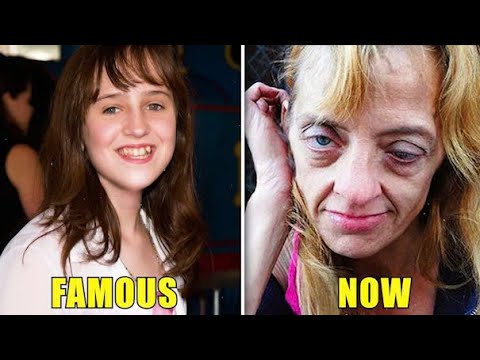
The pressure to perform doesn’t end when the director yells cut. For Edward Furlong, the rebellious teen from Terminator 2, the lack of support led him down a path of substance abuse. “I didn’t have too many people looking out for me,” he admitted. “I was almost destined for drug addiction.” His story is a stark reminder that talent alone cannot shield a child from the corrosive effects of Hollywood.
And then there are those like Drake Bell, whose legal troubles and personal scandals have overshadowed his early success. From bankruptcy to a guilty plea for child endangerment, Bell’s fall from grace has been as rapid as his rise. “I’m able to go back to my younger self and hold him,” he reflected, “just know that we get through it.” But the scars remain, both for him and for the fans who once adored him.
The stories of Judy Garland, Gary Coleman, and Lindsay Lohan further illustrate the tragic pattern. Garland was fed amphetamines to keep up with grueling schedules, leading to a lifelong battle with addiction. Coleman, once the highest-paid child actor, died broke and bitter after his family squandered his fortune. Lohan’s repeated DUIs and rehab stints became tabloid fodder, a far cry from her innocent Parent Trap days.
Yet amid the darkness, there are glimmers of hope. Demi Lovato has emerged as a mental health advocate after a near-fatal overdose. Miley Cyrus has reclaimed her narrative, using her platform to champion LGBTQ+ rights and self-acceptance. “There’s no right or wrong, success or failure,” Cyrus said, reflecting on her journey. “The real choices in life aren’t that simple.”
But for every survivor, there are those who never found their way back. The story of Sawyer Sweeten, who took his own life at 19, is a heartbreaking reminder of the isolation that can accompany early fame. “Fame is a double-edged sword,” he once said. “It gives you everything but also takes away your peace.”
As we delve deeper into these lives, the question lingers: is child stardom a blessing or a curse? The answer, it seems, depends on the support systems in place—and the luck of the draw. But one thing is certain: the road from child star to troubled adult is a path too many have traveled, and their stories demand to be heard.
Consider Mara Wilson, the beloved face of Matilda and Mrs. Doubtfire. When her mother died of breast cancer during filming, the grief was compounded by the relentless demands of production. “The day I got my diagnosis was one of the best days of my life,” she later said of her OCD and anxiety, “because I knew what I was dealing with.” She walked away from acting at twelve, choosing sanity over stardom.
Then there’s Haley Joel Osment, the boy who saw dead people. He survived the transition better than most, crediting his parents for shielding him. “I realize that I’m very lucky,” he reflected. “There were other kids who maybe didn’t have parents that looked out for them.” That single sentence explains so much about who makes it out and who doesn’t.
But not everyone had that safety net. Jodie Sweetin went from Full House‘s Stephanie Tanner to a decade-long crystal meth addiction. “I had this extra hurdle to overcome of trying to prove who I wasn’t,” she admitted. Recovery, she says, is “really looking at yourself—how do I do this better?” Today she speaks openly, turning her wreckage into a warning for others.
And then there are the cautionary tales that cut deepest. Jonathan Taylor Thomas, the heartthrob of Home Improvement, vanished at the height of his fame to attend Harvard. “It’s hard to find your identity when everyone has an expectation of who you should be,” he said quietly. His retreat wasn’t failure—it was survival.
Tatum O’Neal, the youngest Oscar winner in history, spent her childhood starved of real parenting. “I was raised in an environment where there was no way for me to be a child,” she confessed. Heroin, a public divorce, and estrangement from her father followed. Yet at her lowest, she found a strange comfort: “I’ve had a hard life, but I’m crying a lot more lately. That’s a very good thing.”
Perhaps the most chilling story belongs to Corey Feldman, who has spent decades exposing the predators lurking behind Hollywood’s curtain. “I was forced to grow up too fast. I lost my childhood,” he said. His documentary My Truth named names—and made him a pariah. Still, he keeps talking, because silence is what the industry counts on.
So what separates the survivors from the casualties? Sometimes it’s a parent who guards the door. Sometimes it’s a single teacher, a therapist, a friend who refuses to look away. And sometimes, tragically, it’s nothing at all. The camera doesn’t love you back—and when the lights go out, you’re left alone in the dark, wondering who you are without the applause.
But the industry keeps churning, and the warnings keep piling up. Consider Allison Stoner, who survived what she calls the “toddler to train wreck pipeline.” The Cheaper by the Dozen star has spoken bluntly about the harassment and eating disorders she endured on set. “Nothing was designed for me to end up normal, stable, alive,” she said—a sentence that should stop any parent cold.
Her words echo those of Billy Piper, who became a pop sensation at fifteen and later described her teenage years as “incredibly lonely and unbelievably unsafe.” The Doctor Who actress recalled being placed in “very strange, very adult situations” she would never subject her own children to. The glamour, she learned, was a mask over something far darker.
And then there’s Orlando Brown, the cheerful Eddie Thomas of That’s So Raven, whose adult life has been a revolving door of arrests—domestic violence, drug possession, and a chilling 2022 incident involving a hammer. “I just now got out of rehab,” he told Dr. Phil, his voice cracking. “I’m not doing no more time away from my kids.” Whether he can keep that promise remains an open question.
Some stories, however, refuse to end in tragedy. Drew Barrymore, who entered rehab at thirteen after a childhood of wild parties and studio neglect, clawed her way back to become one of Hollywood’s most beloved figures. “I just wanted to be loved,” she once admitted of her early rebellion. Today she owns her past—every messy, public inch of it—and uses her talk show to give others the compassion she was denied.
Robert Downey Jr. followed a similar arc. A child actor under his filmmaker father’s chaotic roof, he was handed drugs before he was old enough to understand them. Decades of addiction and prison followed before sobriety and Iron Man resurrected him. “I couldn’t have gotten sober until I was ready to be sober,” he has said, a truth that offers both hope and a hard warning.
Yet for every Downey, there is a Brad Renfro—dead at twenty-five of a heroin overdose after a childhood spent in the tabloids. Or a Dana Plato, the Diff’rent Strokes daughter who never escaped her character’s shadow and died of an overdose at thirty-four. The pattern repeats with sickening regularity, as if the industry itself were a machine designed to consume its young.
What links these lives is not weakness but exposure. The same qualities that make a child shine on camera—eagerness to please, sensitivity, imagination—make them vulnerable to exploitation. “You’re a product,” one former child star said. “And when the product stops selling, they throw it away.”
The question, then, is not whether child stardom is a blessing or a curse. It is whether the adults in the room—the parents, the agents, the directors, the audiences—will finally decide that a child’s soul is worth more than a box office number. The cameras will always be waiting. The only thing that can change is who stands between them and the child.
But the warning signs are not always obvious. Some children slip through the cracks quietly, their struggles hidden behind smiling headshots and polished interviews. “I felt like I didn’t exist,” Sawyer Sweeten once confided to a family member—words that echo long after his tragic death. His story is a chilling reminder that the most desperate cries for help often go unheard.
Others, like Joey Lawrence, fight to rebuild after the industry has moved on. “The industry can be a dark place,” he admitted, “and I was very lucky to have my family supporting me through it.” But even with support, the financial and emotional toll can be devastating—bankruptcy, lost identity, and the constant pressure to recapture a childhood glory that was never really theirs.
The survivors, though, offer a roadmap. Demi Lovato turned her near-fatal overdose into a mission, declaring, “The more you talk about mental illness, the less of a taboo it becomes.” Miley Cyrus, once a Disney puppet, now controls her own narrative, insisting, “There’s no right or wrong, success or failure.” Their resilience proves that recovery is possible—but only when the industry and its audience demand better.
So what will it take to break the cycle? Stricter labor laws, mandatory therapy, financial oversight, and a cultural shift that values a child’s well-being over a studio’s bottom line. Until then, the list of casualties will only grow. As Allison Stoner put it, “Nothing was designed for me to end up normal, stable, alive.” That is the damning truth we must confront.
The spotlight is a gift and a weapon. For every star who escapes, another is consumed. The question is no longer whether child stardom is a blessing or a curse—it’s whether we, the audience, will keep watching as another generation burns out before our eyes. Which former child star’s story moved you the most, and what do you think should change in Hollywood to protect young performers? Share your thoughts in the comments below.
Report this article
Select a reason for reporting:






