The jungle was silent that morning—too silent. Not the peaceful quiet of dawn, but the heavy, suffocating stillness of a predator holding its breath. For the men of the 2nd Battalion, 28th Infantry Regiment, known as the Black Lions, the silence was a comfort. They had been told the enemy was broken, that the B-52 strikes had shattered the 271st Regiment, that the only thing waiting for them in the dense foliage near Suoi Than was the smoldering wreckage of a defeated foe. They believed it. Why wouldn’t they? The maps said so. The briefings said so. The confident voices of their commanders said so.
But the jungle had its own truth.
On the morning of October 17, 1967, more than 200 young American soldiers marched into that green labyrinth, their boots sinking into the soft, rotting leaves, their eyes scanning for an enemy they were sure was already dead. They walked in a single file along the narrow creek bed, their rifles at the ready, their minds lulled by the belief that technology and firepower had already won the day. They were wrong. And by the time they realized it, it would be too late.
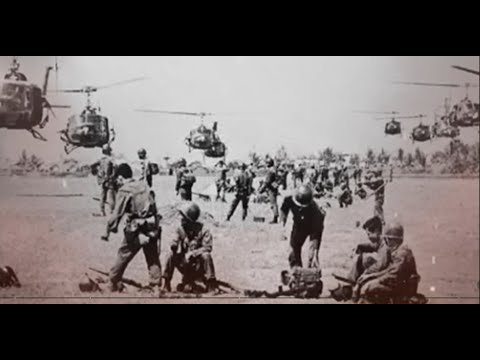
The first shots did not sound like gunfire. They sounded like breaking branches—sharp, sudden cracks that echoed through the trees. For a split second, the men of Alpha Company hesitated, trying to place the sound. Then the world erupted. Rockets screamed from hidden bunkers, machine guns tore through the underbrush, and the air filled with the deafening roar of an ambush that had been planned with chilling precision.
“They’re everywhere!” someone screamed, but the words were swallowed by the chaos.
The jungle, once a silent observer, had become a killer. The Americans were pinned down in a deadly crossfire, their radios dead, their commanders wounded, their formations shattered. Within minutes, Alpha Company ceased to exist as a fighting unit. Delta Company, rushing forward to help, walked straight into the same trap. The Black Lions were being torn apart, piece by piece, in a slaughter that would last just two hours but echo for decades.
But this is not just a story of a battle lost. It is a story of how an entire battalion vanished into the jungle, swallowed by a mistake that no one wanted to admit. It is a story of young men who walked into the green unknown, believing they were hunters, only to discover they were the hunted. And it is a story of the truth that was buried for 25 years, hidden behind official reports and quiet silences, until the survivors could no longer stay silent.
This is the story of Suoi Than—a name that most Americans have never heard, but one that the men who were there could never forget.
For the survivors of the Black Lions, the nightmare did not end when the shooting stopped. It simply changed shape. The helicopter ride out of the jungle was a blur of rotor wash, blood-soaked bandages, and the hollow stares of men who had seen too much. Some of them would never speak of that morning again. Others would spend the rest of their lives trying to explain it.
The official reports began almost immediately. They were written in the cool, measured language of military bureaucracy—phrases like “heavy contact with a numerically superior enemy force” and “the unit performed with valor under overwhelming odds.” But the men who had been there knew the truth. They had not been overwhelmed by numbers. They had been outthought, outmaneuvered, and outclassed by an enemy who understood the jungle in ways they never would.
At the divisional headquarters, the first accounts of the battle were met with disbelief. Some officers refused to accept the scale of the disaster. Others scrambled to find explanations that did not involve incompetence or failure. The intelligence had been wrong, they said. The B-52 strikes had not been effective. The enemy had been stronger than anticipated. Every excuse was offered except the truth: that the 2nd Battalion had been sent into a trap that had been waiting for them, and that the men who sent them there had ignored every warning sign.
But the truth has a way of leaking out.
In the weeks that followed, the survivors were scattered across hospitals, bases, and replacement depots. Some were sent back into the field. Others were sent home with wounds that would never fully heal. And everywhere they went, they carried with them the same question: how had it happened? How had an entire battalion been destroyed in a single morning?
The answer, they would eventually learn, was simple and devastating. The 271st Regiment had not been fleeing. They had been waiting. They had known the Americans were coming long before the first helicopter touched down. They had watched the B-52 strikes from a safe distance, had repositioned their forces, had prepared their ambush with the patience of hunters who had done this many times before. And when the Black Lions walked into the clearing near the creek, the trap had closed with a precision that left no room for escape.
For the Vietnamese, the battle was a victory born of necessity. They had not sought the fight. They had been hungry, exhausted, and on their way to a supply depot when they learned that a massive American force was approaching. They had no choice but to fight. And they had fought with everything they had.
But the story of Suoi Than is not just a story of a battle. It is a story of what happens when an army becomes so convinced of its own superiority that it stops listening to the lessons the land is trying to teach it. The Black Lions had walked into the jungle believing they were the hunters. They had learned, in the span of two hours, that they were the hunted.
The survivors of that morning would carry the weight of it for the rest of their lives. They would remember the faces of the men who did not make it out. They would remember the sound of the jungle erupting around them. And they would remember the silence that followed—the terrible, suffocating silence of a battlefield where so many had died and so few had survived.
For nearly a quarter of a century, the full story of Suoi Than remained buried. The official records were sealed. The survivors were told to move on, to forget, to let the past stay in the past. But the past does not stay buried. It waits. It festers. And eventually, it demands to be heard.
In the years that followed, the survivors of the Black Lions scattered across America, carrying their memories like shrapnel buried too deep to remove. Some became teachers, mechanics, insurance salesmen—ordinary men with extraordinary scars. They married, raised children, attended church picnics and Little League games. But the jungle never fully left them. It waited in the quiet moments: the smell of wet leaves after a rainstorm, the crack of a branch in the woods, the distant thump of a helicopter. For many, sleep was the enemy, because sleep brought the dreams.
Jim Lancer, the young corporal who had dragged Lieutenant Chesley through the mud, returned home to a small town in Ohio. He took a job at a hardware store and tried to build a life. But he found himself flinching at the sound of backfiring trucks, scanning the tree line at the edge of his own backyard. He never spoke of Suoi Than—not to his wife, not to his children, not to anyone. The words simply would not come. How do you explain to a nine-year-old boy that his father once crawled through a jungle while men died all around him? How do you describe the look in a Vietnamese soldier’s eyes—calm, almost sorrowful—as he decided not to pull the trigger?
But the silence was not unique to Lancer. Across the country, other survivors were fighting their own private wars. Some turned to alcohol. Others withdrew into themselves, becoming ghosts in their own homes. A few found solace in veterans’ groups, where they could sit in circle with men who understood without needing explanations. They did not talk about the battle. They talked about everything else—the heat, the bugs, the food. And somehow, that was enough.
The military, meanwhile, had moved on. Vietnam was still raging, and there were new battles to fight, new casualties to count. Suoi Than became a footnote in the division’s history, a brief entry in a logbook that few would ever read. The men who died there were listed as killed in action, their families notified with the standard telegram. But the circumstances of their deaths—the ambush, the chaos, the collapse of command—remained classified, hidden behind a wall of official silence.
It was not until 1992, nearly twenty-five years after the battle, that the truth finally began to emerge. A military historian named Dr. William Hammond, working on a broader study of the war, stumbled upon references to Suoi Than in declassified documents. What he found shocked him. The reports spoke of a “major engagement” that had resulted in “heavy casualties,” but the details were vague, almost evasive. Hammond began digging deeper, interviewing survivors, cross-referencing records, and piecing together the story that had been buried for so long.
His findings were published in a series of articles that ignited a firestorm of controversy. How had an entire battalion been nearly wiped out in a single morning? Why had the truth been hidden for so long? The Army, under pressure, launched its own investigation. The survivors, many of them now in their fifties and sixties, were contacted and asked to testify. Some refused, unwilling to reopen old wounds. But others—like Jim Lancer—agreed to speak.
Lancer sat in a sterile conference room in Washington, D.C., facing a panel of officers and historians. His hands trembled as he recounted the events of that morning. He spoke of the silence, the first shots, the chaos that followed. He described the faces of the men who died beside him, the sound of the jungle erupting, the terrible stillness that followed. When he finished, the room was silent. One of the officers, a young major who had never seen combat, asked him how it had felt to know that the enemy had been watching them all along.
Lancer paused, staring at the table. “It felt like we were never really in control,” he said quietly. “Not for a single moment. We thought we were the hunters, but we were the prey. And the jungle—the jungle knew it before we did.”
The investigation confirmed what the survivors had always known: the battle at Suoi Than had been a catastrophic failure of intelligence, leadership, and planning. The B-52 strikes had not destroyed the 271st Regiment; they had merely warned it. The American commanders had ignored clear signs of enemy presence. And the men of the 2nd Battalion had been sent into a trap that could have been avoided. The Army issued a formal apology, but for many survivors, it was too little, too late.
Today, a small monument stands near the site of the battle, erected by Vietnamese locals who tend the land. It bears no names, only a simple inscription in Vietnamese and English: “In memory of those who fell here, on both sides. May they rest in peace.” Survivors who have made the pilgrimage back to Vietnam describe standing in the clearing as an almost sacred experience. The jungle has reclaimed much of the battlefield—new trees have grown, the creek runs clear—but the silence remains. It is the same silence that fell on the morning of October 17, 1967, when the guns finally stopped and the survivors realized they were still alive.
For Jim Lancer, the return trip was both healing and painful. He walked the ground where he had crawled, touched the trees that had once hidden the enemy, and stood by the creek where so many of his friends had died. “I didn’t come here to forgive,” he said. “I came here to remember. To make sure they’re not forgotten.” He paused, looking out into the dense green foliage. “The jungle took them, but it didn’t take their story. Not anymore.”
Back home, Jim Lancer kept a worn photograph of the Black Lions on his mantel. He never talked about Suoi Than, but every October 17, he lit a candle and sat in silence. “Some things you carry forever,” he once told his grandson. “Not because you want to, but because they’re part of who you are.”
The jungle has long since reclaimed the battlefield, but the story of Suoi Than lives on in the memories of those who survived—and in the lessons that were never learned. For the men who walked into that green hell, the silence was the loudest sound they ever heard.
What would you have done if you were one of the Black Lions that morning?
Report this article
Select a reason for reporting:






