“You are all dead men.” The warning was delivered in perfect, chilling English by an Australian SAS tracker to a supremely confident American patrol commander in October 1967. The American officer laughed out loud. He pointed to his map, tapped his radio, and bragged about his heavy artillery. To him, the Australian was just a spooked soldier who didn’t understand modern, high-tech warfare.
Six hours later, the American patrol walked down that exact path and the unimaginable happened. But here are the details the Pentagon spent the next fifty years desperately trying to erase from the history books.
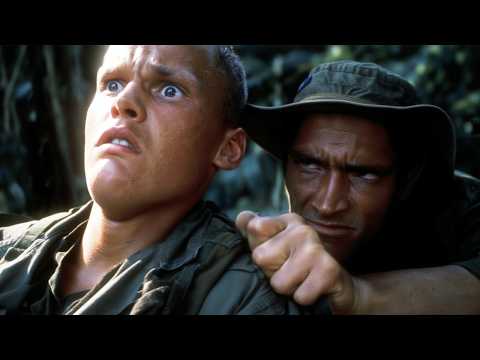
The Australian hadn’t just predicted the ambush. A four-man SAS team was lying in the mud, perfectly camouflaged, exactly 800 meters away. They saw the entire trap. They knew the enemy was waiting. They watched the whole thing unfold through their binoculars. And they didn’t fire a single shot to stop it.
Why? Why would highly trained allied soldiers stand in dead silence while a tragedy unfolded right before their eyes?
Today, we pull back the curtain on the ultra-secret archives of the Vietnam War to unravel a mystery that baffled American generals for decades. While massive US battalions equipped with the best technology on earth struggled to control the jungle, a small group of Australian elements were doing the impossible.
Armed with outdated rifles, dead silence, and fermented fish sauce, they were quietly achieving a staggering 600-to-1 kill ratio. They were so effective that official Viet Cong training manuals literally gave their forces a three-word order regarding the Australians: Do not engage them.
But the real secret of the Australians isn’t just about how they fought. It’s about a deeply uncomfortable truth that American high command refused to accept—a stubborn pride that ultimately cost 47,000 souls.
You need to hear this story from beginning to end, because what these four men knew about the jungle will completely change how you view the entire Vietnam War.
Let’s begin.
The story starts in the suffocating, oppressive atmosphere of Phuoc Tuy Province as the calendar turned to the hot October of 1967. Inside a cramped, poorly ventilated command tent, the unbearable stench of cheap cigarette smoke hung thick in the humid air, mingling harshly with the sharp chemical smell of military insect repellent.
An American captain, radiating unwavering confidence and ultimately toxic faith in his own strategic brilliance, spread a heavily worn topographic map on a rough wooden table. His finger moved with aggressive certainty along a thick red line marking Route 15, an old French dirt road cutting straight through the dense, brutal tropical forest toward the remote village of Dat Do.
The commander loudly assured his subordinate leaders that this terrain was easy—boasting of clear sightlines for rapid helicopter evacuation and the reassuring presence of heavy artillery support just 3 kilometers from their current coordinates. According to his textbook-perfect plan, the heavily armed patrol would move with lightning speed, sweep the designated sector of all enemy elements, and return victorious to their fortified base long before sunset.
To the American high command, this was a completely standard search-and-destroy operation, seemingly copied word-for-word from the pages of basic training manuals handed to new recruits.
The massive, multi-billion-dollar American military machine had grown dangerously accustomed to relying entirely on overwhelming firepower, unmatched technological superiority, and the reassuring sound of air support constantly circling overhead. The officers sincerely believed that no guerrilla force would ever dare challenge a modern unit capable of summoning a devastating barrage of heavy artillery or a squadron of armed helicopters in an instant.
The polished commanders, sitting comfortably in their secure, well-lit headquarters, arranged their forces on the maps as if solving a simple math puzzle, completely and fatally ignoring the brutal, unpredictable realities of the dense Asian jungle. In their highly sanitized version of reality, Route 15 seemed the absolute perfect choice, ensuring rapid movement and near-zero risk to the enlisted men under their command.
But this immense, deeply rooted arrogance was secretly paving the way for one of the most devastating disasters, which military officials would spend the next few decades desperately trying to erase from the history books.
In the darkest corner of the stifling tent sat a man completely motionless, one who did not share this prevailing optimism at all and refused to utter a single word of agreement. This silent observer was Sergeant Harry Mitchell, a deeply experienced operator from the 3rd Squadron of the elite Australian Special Air Service Regiment, who had spent the past eight grueling months continuously observing the aggressive tactics of his American allies.
During his long deployment in this highly hostile region, the seasoned specialist had already witnessed this same overconfident scenario repeat itself 17 separate times, and each instance ended in absolute, heartbreaking tragedy.
Mitchell spent exactly 12 seconds staring intently at the proposed patrol route before delivering his final, chilling assessment in a voice completely devoid of human emotion. The veteran Australian warrior stated coldly that every man sent down that road was doomed to a tragic end, clearly warning the commanders that they were leading their troops into an inescapable nightmare.
His sharp professional instincts immediately caught minute, terrifying details that the arrogant American strategists, obsessed with firepower, had completely overlooked. Ultra-secret reconnaissance photos taken by spy satellites exactly 48 hours earlier showed suspicious, surgical changes in the tree line—clear preparations for creating open lanes for dense crossfire. Furthermore, all traces of natural bird activity had completely vanished from that sector of the jungle, and local woodcutters had been avoiding that stretch of road for over a full week.
Every environmental clue, every subtle disturbance in the natural rhythm of the dense forest was practically screaming that a massive, fully prepared enemy battalion was lying in wait. To a man who read the wild like an open book, Route 15 wasn’t a comfortable path—it was a brilliantly designed trap no human could survive intact.
Yet this terrifying professional warning only elicited a condescending annoyance from the American leadership, an annoyance that quickly turned into public, humiliating mockery. The American commander actually let out a loud, derisive laugh in the face of his veteran allied advisor, his harsh voice echoing off the walls of the heavy canvas briefing tent.
The commander’s loyal sergeants immediately joined the chorus of mockery, loudly whispering that these elite Australian operators had turned into paranoid patients seeing imaginary enemies behind every shadow. In their flawed perspective, the great American military had no need to hide from poorly equipped adversaries or spend days crawling through thick mud like frightened animals.
The American tactical doctrine was based entirely on mechanized infantry, flawless radio communications, absolute air superiority, and enough explosives to level an entire city block. Compared to this massive high-tech fleet, the small Australian four-man teams—carrying outdated World War II rifles and rubbing their uniforms with fermented fish sauce to mask their scent—seemed like laughable relics of a forgotten era.
The commander rolled up his topographic map theatrically, coldly thanked Mitchell for his unwarranted concern, and made it clear that the strategic discussion was now definitively closed. The Australian specialist rose silently from his folding chair and walked out of the command tent into the stifling heat, knowing with absolute certainty that he was completely powerless to prevent the impending tragedy.
Exactly 6 hours after that taunting conversation, 32 young American soldiers from the 1st Battalion of the 16th Infantry Regiment marched out of their fortified base with their heads held high. They were stepping confidently straight toward the most devastating, fortified trap seen in Phuoc Tuy Province throughout all of 1967.
The fierce firefight that followed lasted for a short, agonizing 11 minutes, but in that brief sliver of time, the entire situation deteriorated into terrifying chaos where a safe withdrawal became mathematically impossible. 21 American soldiers fell on the jungle floor, and they would never return home. Their desperate calls for the promised air support faded completely amidst the roaring thunder of enemy fire.
But the most dark and disturbing element of this nightmare wasn’t the heavy loss of life, but the ultra-secret truth that senior Pentagon officials tried to bury under mountains of classified documents. Those fortunate few who somehow survived that hellish ordeal were left with deep, permanent psychological scars that top military psychiatrists spent the next four decades meticulously documenting.
The official post-battle reports, rushed through the offices of high-ranking generals, contained massive redactions and deliberately distorted the grim reality of what actually happened under the jungle canopy. The American military-industrial complex systematically scrubbed its historical archives of any inconvenient facts that might reveal the fatal flaws in their heavily promoted tactical doctrine.
No officially sanctioned historian dared to explain why enemy guerrilla forces considered the Australian specialists untouchable ghosts, while massive American battalions suffered catastrophic losses repeatedly on the same patches of ground. The honest truth was too humiliating for the leadership to publicly acknowledge, because it completely shattered the carefully constructed illusion of invincible, technologically superior American infantry.
The shockingly unbelievable reality is that the Australian sergeant hadn’t just made a lucky strategic guess based on his seasoned intuition and environmental observations. He knew exactly the precise location of every hidden firing position the enemy had meticulously built to destroy the American patrol along that fateful dirt road.
His deeply camouflaged reconnaissance unit had been stationary at densely concealed observation points exactly 800 meters from Route 15 for the previous 72 hours. They had watched with their own eyes as enemy forces planted directional explosives, precisely calculated overlapping fields of fire, and accurately lined up heavy mortar shells to ensure maximum destruction.
Mitchell knew the exact, terrifying number of enemy fighters eagerly waiting inside that kill zone—tracking precisely 243 highly trained fighters from the 5th Battalion of the 274th Regiment. And while high-ranking American generals sipped warm coffee comfortably in their air-conditioned, heavily fortified offices, four brave men in the jungle were suffering unimaginable moral torment.
The Australian intelligence team possessed extremely precise information about enemy ammunition stocks, had memorized their encrypted radio frequencies by heart, and could predict with second-by-second accuracy when the main explosives would detonate. Yet Harry Mitchell and his highly skilled team were completely paralyzed and unable to prevent the impending disaster due to the suffocating bureaucratic constraints that bound their hands.
Strict American military doctrine prevented a small four-man allied element from effectively engaging an enemy force of this massive size. Rigid communication protocols forbade the Australian operators from breaking their deep operational silence to warn a commander who had publicly mocked and rejected their intelligence just hours earlier. Moreover, the highest levels of Australian Special Forces command forbade their elite teams from compromising deep-range reconnaissance missions just to help a conventional allied force that refused to listen.
Trapped inside this horrifying bureaucratic nightmare, Mitchell and his three highly decorated brothers-in-arms were forced to remain completely paralyzed inside their deeply camouflaged hides. Corporal Danny Webb, Private Kevin Harrison, and Private Michael Chen spent hours staring intently through their high-powered binocular lenses as 32 vibrant young Americans walked straight into a calculated, precisely executed kill zone.
At exactly 1423 hours, the first explosive round struck the advancing American platoon, and immediately after that impact, the quiet jungle erupted into an unimaginable storm of flying shrapnel. This horrific event couldn’t even be accurately described as a normal military engagement. It was a cold, methodical, and brilliantly coordinated destruction, executed with terrifying surgical precision by brilliant enemy tacticians.
But this tragic outcome was merely the inevitable, expected result of months of intensive surveillance by enemy forces on the highly predictable, extremely noisy American military machine. The brilliant enemy commander had spent countless weeks meticulously dissecting American patrol doctrines, analyzing their rigid movement patterns, standardized radio protocols, and expected medical evacuation procedures.
He fundamentally understood the psychological weaknesses of his opponents, knowing with absolute certainty that the moment the first shots rang out, American forces would instinctively cluster together, desperately seeking the false comfort of physical proximity. He accurately calculated that the trapped men would immediately scream over their radios for heavy artillery and rescue helicopters—a desperate move that would force them to remain frozen in exposed, heavily targeted positions.
This devastating trap was deliberately set in the worst possible geographical location for the Americans, where they were too close to enemy forces to safely use heavy artillery, and covered by vegetation too dense for rescue helicopters to penetrate safely. The physical distance to the nearest large friendly artillery base was also too great, causing any hopes of rapid ground reinforcements arriving to save the trapped men to fade away before the catastrophe was complete.
The trapped American soldiers suddenly realized the desperation of their situation and fought with an astonishing, heartbreaking level of suicidal courage, trying in vain to change their doomed fate. They unleashed a massive barrage of return fire on their invisible attackers, expending their entire ammunition supply at a frantic rate until their heavy packs were completely empty in less than 4 minutes.
Panicked radio operators screamed continuously for intensive bombardment, but those massive explosive shells landed harmlessly in empty patches of ground over 200 meters from the actual enemy fortifications. The desperate young men screamed until their voices gave out, begging the heavens for medical evacuation helicopters that were physically unable to land due to the formidable vegetation and dense enemy crossfire.
Their tragic end unfolded in a highly predictable, standard pattern, so much so that enemy army trainers later included this engagement in their training manuals as the ultimate textbook example of how to exploit American tactical stubbornness.
And throughout this world-shaking tragedy, while the American unit was systematically annihilated piece by piece, the true masters of jungle warfare continued their silent, painful observation. Harry Mitchell’s elite team remained completely concealed just 800 meters from the heart of this raging chaos, without changing their position, moving a single leaf, or firing a single shot.
The four Australian professionals maintained a nearly superhuman level of absolute discipline, completely refusing to reveal their positions even as they watched men their own age fall under a storm of fire that sounded like the roar of heavy industrial machinery gears.
This deep, terrifying level of restraint and cold, calculated professionalism is exactly what distinguished the Australian Special Operations methodology from any other armed organization present in the region. This was the hidden, fiercely protected tactical doctrine that stunned Pentagon analysts spent the next fifty years frantically trying to decode, copy, and ultimately erase from all public records.
The ultra-secret military intelligence vaults will forever hide the humiliating truth: that the highly touted American strategy became completely useless, while their quiet allies possessed complete and total knowledge of every enemy movement. Every horrifying detail of this great tragedy carried an extremely uncomfortable truth—that unlimited financial budgets and advanced technology are utterly worthless without a deep, precise understanding of the unique psychology of guerrilla warfare.
The resourceful Australian scouts understood this fundamental truth far better than anyone else on earth, precisely because their unique survival methods had been honed in much harsher, more brutal environments where a single wrong step meant permanent disappearance.
They had brilliantly learned how to completely suppress their basic human instincts in order to execute their assigned objectives flawlessly, essentially transforming into emotionless ghosts capable of blending seamlessly into the natural environment deep behind enemy lines.
The absolute disaster on Route 15 was just one of countless pieces of evidence that the immense pride and blind arrogance of generals sitting in comfortable chairs had cost an unacceptable, staggering price for the brave young men deployed on the muddy front lines. And while thousands of grieving American families wept for their lost sons, the stubborn military bureaucracy continued sending new battalions straight into those same traps, violently and proudly refusing to acknowledge the clear, undeniable superiority of a foreign but unimaginably effective survival tactic.
The deeply buried, ultra-secret reason behind the survival of these four Australian operators from that nightmare, while heavily armed American forces fell like wheat before the scythe, completely shattered every fundamental principle of modern warfare.
The shocking truth that Pentagon strategists desperately tried to hide from the American public is that these two allied nations were fighting two completely different wars using utterly incompatible military philosophies.
The American military, deeply influenced by the large-scale conflicts of World War II and the Korean War, approached combat as a massive, measurable engineering problem. Their extremely rigid doctrine dictated that they simply find enemy forces, pin them in place with overwhelming firepower, and then ultimately wipe them off the map using unimaginable brute force.
This deeply flawed, measurable, and constantly repeated approach made their military-industrial complex completely dependent on massive fleets of helicopters, heavy artillery batteries, and strategic bomber squadrons to achieve what they mistakenly believed was guaranteed victory.
Every American general sitting in a safe, air-conditioned office measured his strategic success obsessively through highly inaccurate body counts and bizarre kill ratios calculated directly from the massive amount of explosives expended in the field. They sincerely believed that absolute technological dominance and endless financial resources could easily crush a rebellion specializing in guerrilla warfare, completely ignoring the complex psychological and environmental realities of fighting deep in tropical forests.
American patrols announced their presence to the entire jungle almost instantly, aggressively hacking their way through dense vines with heavy machetes, communicating loudly over unencrypted radios, and constantly relying on the annoying roar of air support above them to keep them safe. They moved through the dense foliage like a massive, extremely loud, and deeply blind elephant, confidently expecting smaller, less equipped enemy forces to surrender before their overwhelming technological superiority.
But the extremely shocking truth, which the arrogant American leadership completely refused to accept, is that the Australian Special Forces adopted a methodology that was more ancient, quieter, and infinitely more terrifying.
Oh, the Australian Special Air Service completely rejected the disastrous American engineering model, choosing instead to treat every jungle patrol as a high-stakes psychological hunting expedition. Their ultra-secret doctrine required operators to become practically invisible, to locate enemy forces before the enemy even suspected their presence, and to study their expected routines so precisely that the Australians understood the enemy better than they understood themselves.
These deeply patient, specialized soldiers struck only at the moment of ultimate weakness, or silently chose not to strike at all, completely refusing to engage in any supposed fair fight. To me, this radically different, almost predatory approach was not developed in modern military academies, but was born during the brutal Malayan Emergency between 1948 and 1960, where British and Commonwealth forces faced a deeply rooted communist insurgency.
In those merciless forests, the traditional tactics of large-unit sweeps and massive firepower failed completely, forcing Commonwealth commanders to desperately search for a new, unconventional style of survival.
The astonishing secret weapon that sparked a complete revolution in Australian tactical doctrine didn’t come from a multi-million-dollar research lab, but directly from the deep ancient wisdom of Aboriginal trackers from Australia’s remote Northern Territory. These spiritual tribal hunters possessed an almost supernatural ability to read the natural environment exactly as modern city dwellers read brightly colored street signs with ease.
They could easily identify humans by analyzing the microscopic compression patterns of footprints left in soft mud, and detect the faint, distinctive scent of enemy camps from astonishing distances exceeding two kilometers. This was by no means some legendary magic, but a highly systematic, scientific analysis of smoke dispersal patterns, lingering cooking odors, and the specific locations of field latrines.
These astonishing Aboriginal masters taught a small, receptive group of Australian soldiers their fundamental, unyielding principle: the merciless dense jungle is not your enemy, but your most powerful and perfectly concealed weapon. And this ancient, profound lesson ultimately led to the creation of the most extreme, controversial, and effective sensory deprivation doctrine in modern military history.
This stark, undeniable contrast between the two military cultures was clearly embodied in what internal documents referred to as the “sensory signature” principle—a concept the American forces completely and catastrophically ignored.
Traditional American infantry units deployed in Vietnam constantly used a massive array of highly odorous products, including government-issued soap, strong deodorants, chemical insect repellent, thick shoe polish, synthetic gun oils, lit cigarettes, and canned field rations. Each of these common items generated a powerful, highly distinctive chemical signature that was easily detectable from astonishing distances in the humid, stagnant jungle environment.
Experienced Viet Cong trackers could literally smell a heavily armed American patrol approaching clumsily from over a kilometer away. Not because they possessed supernatural senses, but simply because the Americans were loudly announcing their exact location like massive radio beacons broadcasting on all available frequencies. American forces were essentially moving targets announcing their arrival long before firing a single shot, making them extremely easy prey for pre-set ambushes.
The Australian operators, fully leveraging the profound wisdom of their Aboriginal teachers, adopted a radical, physically disturbing routine that completely erased their human signature from the dense jungle environment. Exactly 72 hours before any deep reconnaissance operation, every member of the patrol completely stopped using any scented hygiene products, deliberately allowing their natural body odors to completely take over.
But they went much further in terms of personal hygiene. These dedicated soldiers began rubbing intensely fermented fish sauce—the extremely pungent anchovy paste that forms the basis of all local Vietnamese cuisine—directly into their combat uniforms and bare skin. They completely altered their internal body chemistry by eating exclusively local rice and vegetables for several consecutive days before the mission, ensuring that their sweat no longer carried the distinct, obvious smell of a Western diet.
They even went to the extreme of cutting the heels off standard combat boots entirely and wearing them backwards, creating highly confusing footprints that appeared to be walking in the exact opposite direction of their actual path. This terrifyingly unnatural level of absolute dedication to concealment turned these four-man patrols into something the enemy forces genuinely considered supernatural.
The Australian operators moved through the dense, brutal terrain at speeds impatient American commanders considered absurdly slow, often advancing only 100 meters in a single hour. They deliberately stopped after every few slow, painstaking steps, listening intently to the natural rhythm of the jungle, carefully observing any subtle disturbance in the leaves, and constantly analyzing their surroundings for any hidden threats.
Within this extremely slow, deliberate rhythm, they completely ignored the sensitive wild creatures, causing the heavily armed soldiers to be treated as non-threatening elements of the natural environment rather than dangerous human intruders. This perfect, almost magical level of camouflage and absolute silence earned them a terrifying, deeply respected nickname among the enemy’s mythical ranks, who began referring to the Australian patrols as “Ma Rung”—which translates directly to the terrifying phrase “Ghosts of the Jungle.”
This ominous nickname began appearing frequently in ultra-secret captured enemy documents, always accompanied by a genuine, tangible tone of absolute fear and deep respect. The definitive, undeniable proof of this terrifying reputation was unexpectedly discovered when American military intelligence miraculously recovered an ultra-secret, detailed training manual of the North Vietnamese Army in late 1967.
This highly revealing document contained specific, detailed tactical instructions for engaging various allied military forces operating throughout the contested region. The section dedicated to tactics for confronting American units spanned 12 pages, detailing their expected patrol routes, rigid radio procedures, helicopter landing zones, and flawed artillery coordination patterns.
However, the section providing instructions for dealing with the terrifying Australian Special Air Service units consisted of three very short, direct sentences that completely stunned the arrogant American analysts. Enemy high command literally directed its capable forces to: “Avoid contact. Report the location to higher command. Do not pursue them under any circumstances.”
But the stiff, arrogant American generals completely refused to accept this tangible proof of Australian methodology, even when confronted with the most astonishing, undeniable statistical evidence. Secret, hidden operational statistics reveal a disturbing truth that completely shatters the carefully crafted heroic narrative surrounding the massive American military intervention.
A typical American infantry battalion operating in Phuoc Tuy Province, consisting of about 400 heavily armed soldiers supported by massive support elements, struggled to achieve an average of only 17 enemy casualties per month. Yet achieving this shockingly low number required the massive American unit to consistently suffer between 12 and 15 devastating casualties of its own, creating a tragic, unsustainable cycle of continuous losses.
In stark, almost unbelievable contrast, a full squadron of the Australian Special Air Service, consisting of only 64 operators divided into 16 small patrols, achieved results that defied all traditional military logic. These highly concealed, extremely quiet teams were averaging 43 confirmed enemy casualties per month, while brilliantly maintaining a casualty rate of between zero and two.
The mathematical difference in operational effectiveness was astonishing, humiliating, and impossible for arrogant American planners to rationalize; costly, high-profile American combat operations achieved a tragic, ineffective ratio of 1.4 enemy casualties for every loss of their own. Secret, unconventional Australian operations achieved an astonishing, seemingly impossible operational ratio exceeding 600 to 1.
Yet, despite this massive, undeniable mountain of mathematical evidence, high-ranking American commanders regularly and loudly rejected Australian tactical methods, describing them as too slow, overly cautious, and lacking the desire to engage the enemy forcefully. They simply could not comprehend a military doctrine that prioritized deep patience, absolute silence, and precise intelligence gathering over massive explosions, large body counts, and reckless frontal assaults.
This catastrophic clash of military cultures reached a breaking point the morning after the Route 15 massacre, when the frustrated Australian patrol finally returned to its fortified base. Harry Mitchell, despite his extreme exhaustion and strong composure, prepared a highly detailed and comprehensive intelligence report on the massive ambush he had silently observed.
This valuable document contained precise coordinates for every hidden enemy firing position, identified the types of heavy weapons used, accurately estimated the size of the enemy force, and provided recommended targeting data for immediate artillery strikes. The emotionally charged American battalion commander, who had just lost 21 young men in that avoidable ambush, snatched the intelligence file and angrily read only four short paragraphs.
In a sudden, unprofessional fit of rage, the devastated American officer threw the detailed report across his cramped office, glaring intensely at the silent Australian soldier standing before him. He loudly and fiercely demanded to know why the well-trained Special Forces team, possessing precise information on the enemy’s location, had failed to attack the enemy forces and save the doomed American patrol.
This aggressive, shameful accusation embodied the fundamental, tragic misunderstanding that ultimately cost thousands of brave American soldiers’ lives over seven long years of brutal, flawed combat operations. Mitchell’s four-man team was equipped with outdated Korean War-era rifles, possessed only one radio, carried basic rations sufficient for four days, and had only 280 rounds of ammunition for everyone.
They completely lacked heavy grenades, possessed no light machine guns, carried no portable mortars, and had no anti-armor weapons to confront a massive, heavily fortified enemy force. Facing a prepared, aggressive force of 243 enemy soldiers equipped with heavy weapons, the small Australian team would have been completely annihilated in less than 90 violent seconds had they foolishly opened fire.
But the veteran Australian completely refused to offer this logical, deep tactical explanation to the angry, grieving American commander. Mitchell simply maintained his cold, unsettling gaze, looking directly into the emotional American officer’s eyes, and delivered a profound response that remained secretly circulated among Special Operations personnel for three astonishing decades.
The veteran fighter stated coldly that his elite team had not been deployed into that brutal jungle to die a romantic, famous heroic death. He declared firmly and unapologetically that the sole purpose of their deep silence, astonishing patience, and unpopular tactics was to win the conflict completely and definitively.
This profound, highly controversial statement highlighted an unbridgeable philosophical gap between two completely different military cultures fighting on the same side of a massive global conflict. The deeply entrenched American military culture celebrated aggressive bravery under heavy fire, the romance of the last stand against impossible odds, and constantly demanded visible but flawed heroic acts.
The secretive Australian Special Operations culture completely rejected those dangerous concepts, rigorously celebrating sheer survival, mission accomplishment, and ensuring every fighter returned home safely. Highly ambitious American commanders thirsted for large, inaccurate body counts to justify their flawed strategies to waiting politicians in Washington.
Patient Australian commanders demanded exclusively precise, actionable intelligence that could be used to systematically dismantle enemy infrastructure without risking the life of a single allied soldier. American doctrine measured its operational success primarily and rigorously based on the massive, inflated numbers of enemy dead they claimed to have defeated using vast quantities of expensive explosives. Australian doctrine measured its absolute success exclusively by the number of friendly casualties they successfully avoided, considering every lost allied life a profound, absolutely unacceptable strategic failure.
The secret, suppressed combat results proved beyond any doubt which of the two controversial approaches actually succeeded in the reality of jungle counterinsurgency warfare. The peak of this undeniable proof occurred during the massive, secret military engagement known as Operation Coburg, which took place in January 1968.
Deeply concealed Australian patrols silently infiltrated the highly contested Bien Hoa Province and successfully identified a massive, heavily armed enemy force the size of a regiment, consisting of approximately 2,000 dedicated fighters. This massive enemy formation was powerfully preparing to launch a devastating, highly coordinated surprise attack against vulnerable allied positions near the strategic Long Binh base.
This vital, war-saving intelligence did not come from giant spy planes or expensive electronic surveillance equipment, but directly from six small four-man patrols that had been silently observing the massive enemy movements for 11 continuous, grueling days. These astonishing operators maintained complete concealment, counted enemy soldiers with extreme precision, accurately mapped hidden supply routes, precisely located camouflaged command centers, and pinpointed heavy mortar positions with flawless surveyor-like accuracy.
Confident American military planners exploited this detailed, perfect intelligence to deploy an entire massive brigade of 4,000 heavily armed soldiers, supported by full artillery and dominant air cover, into completely hidden defensive positions. When the massive, confident enemy force launched its violent assault, they walked blindly straight into a zone of precise, coordinated total destruction that made the Route 15 tragedy look like a minor, insignificant skirmish.
The devastating, coordinated allied response was so decisive that it resulted in confirmed enemy losses exceeding 1,400 trained fighters, completely and astonishingly removed from the battlefield. In stark contrast, the well-prepared, precisely positioned American forces suffered a total of only nine tragic casualties during the intense, devastating eight-hour engagement.
But the arrogant, protective American military bureaucracy could not bear the humiliating truth that their massive, famous victory depended entirely on foreign intelligence. Every piece of precise targeting information, every critical coordinate that made this massive, devastating ambush possible, came directly from those concealed Australian patrols that never fired a single shot.
Yet the official United States military history, documenting the massive success of Operation Coburg, barely mentioned the critical, essential contributions of their highly skilled allied partners. The flawed, heavily redacted post-battle reports focused exclusively and aggressively on devastating American firepower, coordinated helicopter attacks, and the overwhelming, destructive effectiveness of their heavy artillery batteries.
Those individuals in the six small patrols, who spent 11 grueling days lying silently in the cold mud, positioned so close to enemy forces that they could clearly hear their personal conversations, received no public recognition at all. In a deeply insulting, arrogant display of bureaucratic erasure, the astonishing, unprecedented achievements of those 24 Australian operators were permanently reduced to two short, insignificant sentences, buried deep within a massive 40-page classified document.
This systematic pattern of absolute suppression was not merely an accidental bureaucratic error made by bumbling government employees. When brilliant Pentagon analysts began reviewing the ultra-secret operations of the early 1970s, they faced a terrifying statistical nightmare that directly threatened the entire American military identity.
How could only 64 Australian specialists achieve miraculous operational results, while fully armed American brigades needed to replicate them? The very real, deeply humiliating answer was that the highly touted American tactical culture was completely unsuitable for a specific type of tropical jungle warfare. Consequently, these revealing reports were immediately classified as secret documents.
The shocking statistics were buried deep in dusty archives, and the devastating analyses were strictly limited to individuals possessing the highest security clearances. No one. But even the most highly decorated American officers, who later exposed this massive cover-up, completely failed to grasp the terrifying, astonishing psychological cost of this flawless Australian methodology.
Sergeant Harry Mitchell and his dedicated team spent the rest of 1967 conducting deeply tense, deep reconnaissance patrols across the brutal Phuoc Tuy Province. They silently observed hidden enemy movements, submitted their completely ignored intelligence reports, and repeatedly watched their American allies walk blindly into tragic ambushes they had accurately predicted days in advance.
Slowly and painfully, with each grueling mission, these astonishing operators stopped feeling human, descending into a dark mental abyss from which there was no return. But the disturbing personal consequences of this silent war continued to destroy these brave men long after they left the humid jungles.
This terrifying psychological transformation was neurological in nature, not merely a metaphorical figure of speech invented by journalists seeking catchy headlines. Contemporary military psychiatrists studying surviving veterans of these special operations successfully identified a unique trauma pattern, specific only to these deep reconnaissance specialists.
Soldiers who spend long, agonizing periods completely immersed in enemy territory while maintaining absolute silent discipline suffer permanent, highly destructive changes to their brain chemistry. Their natural stress response systems become permanently hyperactive, destroying their fundamental ability to comfortably handle safe social situations in the civilian world, and tragically losing the ability to hold normal conversations.
They abandon any natural emotional expression and permanently lose the ability to trust any civilian authority structures. Corporal Danny Webb, who served bravely as the team’s deputy commander and Mitchell’s skilled assistant, spent 43 consecutive days on a continuous, completely silent jungle patrol during the brutal year of 1968.
This agonizing endurance marathon still holds an unbroken record in Australian Special Operations history, but the physical and psychological toll was truly horrifying. He returned to the fortified base a shocking 42 pounds lighter than when he began his mission.
His entire body was covered in painful tropical ulcers, and he was completely unable to speak above a hoarse whisper, even when in complete safety. It took a heartbreaking three months of intensive psychological therapy before this shattered hero could even attempt to sleep without clutching a loaded weapon within reach.
His intensely loyal comrade, Private Kevin Harrison, developed a highly disturbing compulsive behavior where he would suddenly freeze completely in place in the middle of a normal conversation for up to a terrifying 30 seconds. He would stand like a statue, listening intently for faint danger sounds that didn’t exist at all outside his deeply traumatized mind.
This compulsive habit never faded, ultimately destroying his family when his grieving wife filed for divorce in 1972, citing his complete inability to make eye contact or even acknowledge her existence. This once-proud warrior died completely alone in 1998, having suffered a tragic estrangement from his children and barely living on meager disability payments.
While Private Michael Chen miraculously managed to be the only member of this legendary patrol to maintain any functional social relationships after his terrifying tour of duty. However, he was also the only member who actively sought intensive, immediate psychological intervention the moment he returned home, spending six grueling months in therapy before even attempting to reintegrate into civilian society.
When curious journalists asked him decades later about his desperate decision to seek professional help, his blunt answer sent chills down their spines. He admitted coldly that he felt his body and soul fading away, stating that acting like a ghost was no longer just a clever tactic—it was the terrifying reality of what he had permanently become.
Yet the darkest secret of their unbelievable success lies not only in what they endured, but in the horrifying psychological terror they unleashed on their opponents. This terrifying cost of tactical perfection pushed the elite Australian operators into a very dark, morally ambiguous territory that military historians have officially refused to acknowledge.
Enemy guerrilla forces had a highly disturbing habit of mutilating their fallen opponents as a brutal form of psychological warfare, leaving victims in grotesque arrangements specifically designed to terrorize opposing forces. Young, inexperienced American recruits, many just teenagers fresh out of high school, witnessed these atrocities and immediately lost all combat effectiveness due to pure, unadulterated panic.
In response to these terrifying tactics, the silent Australian patrols began a horrifying, precisely calculated campaign of psychological confrontation, exceeding all traditional rules of engagement. Official documents about these actions remain extremely scarce, with most relevant reports still classified even after 60 years, but veteran whispers and sealed files paint a disturbing picture of a psychological war fought in the shadows.
Silent Australian patrols began leaving enemy bodies in highly specific, terrifying poses, precisely designed to send a terrifying message to enemy commanders. These opponents were deliberately arranged to suggest supernatural power, creating a terrifying illusion of an enemy who could strike without warning and vanish into thin air.
A controversial, secret 1968 incident involved a specialized four-man patrol silently tracking a high-ranking officer for nine consecutive days through the jungles. The ghost patrol never revealed its presence, maintaining perfect camouflage and accurately documenting the officer’s daily routine until they understood his psychology better than he understood himself.
On the decisive ninth day, they eliminated him with a single precise silenced shot from an astonishing distance exceeding 400 meters. Yet the opponent was discovered several days later, deliberately placed in the exact same location he had visited exactly 8 days earlier.
This was mathematically and logistically impossible, suggesting a power that his unseen attackers could predict his movements with divine, supernatural accuracy. This devastating psychological effect on enemy forces was exactly what Australian commanders had coldly planned from the beginning, converting pure panic into an unmatched tactical weapon.
Secret documents discovered in 1969 clearly showed that enemy forces were openly refusing to enter certain coordinates on their tactical maps. They avoided these areas not because of heavy artillery or intensive sweeping, but because these areas were associated in their minds with the terrifying activity of the Ghosts of the Jungle.
Pure fear was successfully converted into a tactical tool that was infinitely more effective than the most expensive bombing campaigns the Pentagon could fund. But the immense moral weight of using these unconventional, terrifying methods created deep psychological fissures within Australian Special Operations culture that remain to this day.
The veterans who carried out these shadowy operations still bear a heavy burden of guilt that no modern psychological therapy can completely erase. They realize on a mental level that unconventional warfare certainly requires unconventional, sometimes ethically questionable methods to achieve operational victory.
They logically understand that their terrifying actions ultimately saved countless allied lives by disrupting enemy operations and breaking their will to continue the conflict, but they simply cannot escape a sleepless, haunting realization that they deliberately instilled terror, sacrificing a part of their humanity in their brutal pursuit of tactical perfection.
Sergeant Mick would never speak publicly about his highly decorated, trauma-filled service after finally returning to civilian life. He quietly retired from active military service in 1973, accepting a completely ordinary job as a surveyor in the vast emptiness of Western Australia.
He died from acute liver disease in 2004, carrying the dark secrets of his legendary patrol operations directly to his grave. Yet his personal papers, later donated to the National Archives, contained one highly disturbing diary entry from 1968 that brutally embodied the weight of their psychological burden.
He wrote with shocking honesty that they had become exactly the terrifying thing they were fighting against, with the only difference being that they were much better at it. This deeply disturbing moral ambiguity is the uncomfortable truth that patriotic American military historians systematically and deliberately erase from all popular narratives about the conflict.
The comfortable, sanitized Hollywood story always portrays massive American forces as flawless, heroic defenders of freedom, failed only by weak politicians and unfair media coverage. In this highly fictional, arrogant narrative, the extremely effective Australian forces appear merely as minor characters who contributed small tactical tricks, but never changed the overall course of the conflict.
The densely documented statistical evidence tells a completely different, deeply humiliating story—one the Pentagon desperately wants to remain forgotten forever. The incredibly successful Australian tactical doctrine represented a comprehensive, crushing refutation of the entire arrogant American military culture.
Every fundamental assumption made by the proud American commanders about jungle warfare was systematically and undeniably disproven by 64 silent operators who flatly refused to fight according to traditional rules. Brigadier Bernard Trainor, who served as a highly decorated officer and later became a respected military historian, published an ultra-secret analysis in 1978 that Pentagon leadership immediately and fiercely suppressed.
His undeniable final conclusion was completely devastating to the pride of the military-industrial complex that orchestrated the entire disastrous campaign. He accurately calculated that American forces suffered approximately 47,000 tragic combat casualties that were completely preventable and could have been entirely avoided.
These brave young men would have survived if the military establishment had simply adopted the perfect Australian methodology in 1965 instead of arrogantly rejecting it as insufficiently aggressive. Forty-seven thousand lost futures were the horrifying statistical price of pure institutional arrogance, yet the massive bureaucratic suppression campaign succeeded flawlessly for decades, keeping the public completely unaware of their leadership’s catastrophic failures.
Modern military academies still study this specific conflict as a comfortable lesson about wavering political will and the supposed dangers of negative media influence. The gross tactical failures, the ridiculously predictable patrol routes, the blind reliance on heavy explosives instead of smart intelligence, and the stubborn rejection of proven allied methods rarely appear in official curricula.
When the legendary Australian operations are mentioned, they are heavily marginalized as specialized tactics unsuitable for large-scale conventional forces, but the most infuriating historical shift occurred 30 years later, exposing the absolute hypocrisy of the highest-ranking generals who originally mocked these methods.
Elite American Special Operations forces completely restructured their tactical doctrine in the 1980s and 1990s around the same principles the Australians had already mastered in 1967. The widely celebrated modern legendary elements of Delta Force and SEAL Team 6 essentially execute the same deep reconnaissance and silent cultural adaptation doctrines that Mitchell’s team used decades earlier.
The highly effective methods that arrogant American commanders loudly mocked in hot tents in 1967 miraculously became the absolute foundation of American military dominance by the turn of the new century. But it tragically took 36 long years, countless destroyed lives, and multiple humiliating military disasters to finally overcome the toxic institutional resistance to acknowledging that an ally had far better ideas.
Mitchell’s cold, calculated warning about the fateful Route 15 represented something much bigger and deeper than a single tactical prediction. It was a fundamental, unavoidable challenge to the deeply flawed essence of American military identity, requiring a complete shift in how they viewed the very concept of war.
Publicly accepting his astonishing assessment would have required the proud generals to openly admit that smaller, quieter, much slower operations consistently achieve incomparably better results. It would have forced the highest levels of command to finally acknowledge that poorly equipped Third World guerrilla fighters could easily outmatch the most technologically advanced, most highly funded military on earth through superior patience and flawless tactical discipline.
So, instead of adapting and evolving, the arrogant American commanders laughed out loud, dismissing the vital warning as the paranoid hallucination of an overly cautious foreigner. As a result, 32 vibrant young men confidently walked straight into a devastating trap that had been precisely mapped, accurately documented, and perfectly predicted by allied professionals whose life-saving advice was casually tossed into the trash.
This tragic, infuriating pattern repeated itself tragically day after day, month after month, throughout seven painful years of continuous, deeply flawed combat operations. The last Australian Special Operations patrol quietly withdrew from the region in October 1971, carrying its flawless operational statistics to highly classified, heavily restricted government archives.
When those astonishing numbers finally surfaced in the late 1990s, they powerfully confirmed what the veterans had known silently all along. The highly secret Australian operations consistently achieved the highest absolute operational success, the lowest casualty rates, and the most reliable intelligence gathering compared to any military force deployed on that theater.
Yet the deeply stubborn American military doctrine deliberately ignored every single one of those invaluable lessons until it was too late. The precise methods that could have decisively won the conflict were already available, demonstrated daily by their silent allies, perfectly documented in ignored post-operation reports, and proven beyond any doubt through undeniable statistical evidence.
Those 21 brave Americans who never returned from Route 15 in October 1967 did not fail due to any lack of personal courage or rigorous physical training. They fell because their educated commanders flatly refused to learn from the silent forces who had already flawlessly mastered the brutal environment, the hidden enemy, and the savage tactics necessary for survival.
They were lost forever because the deeply flawed American military culture valued loud, aggressive action far more than precise, carefully calculated intelligence gathering. They didn’t survive that fateful day because publicly admitting that someone else possessed superior methods was psychologically unacceptable to a leadership that wrongly measured victory by the massive tons of explosives detonated.
The incredibly disciplined Australian patrol, which had accurately predicted that tragedy, spent 72 silent hours watching the devastating ambush materialize exactly before their eyes. They documented every hidden enemy position with extreme precision. They accurately calculated the overlapping fire patterns with surveyor-like precision, and submitted urgent reports that could have easily prevented every tragic casualty.
And they had to watch through their binocular lenses as men their own age walked blindly into the vicious firefight they had predicted with accuracy down to the very second. That is the true, horrifying cost of unrestrained institutional arrogance, proving that toxic pride mattered far more than actual evidence.
The legendary “Ghosts of the Jungle” truly earned their terrifying reputation through flawless methods, which American forces quietly adopted three full decades later—time during which those tactics could have radically changed history. The absolute terror enemy forces felt toward Australian patrols was based on cold mathematical reality, knowing that attempting to engage them always resulted in catastrophic one-sided destruction for minimal gains.
But the overconfident American commanders in 1967 foolishly viewed this astonishing patience as cowardice, completely mistaking precise tactical intelligence for paranoid delusion. They indifferently ignored the urgent warnings and confidently marched their brave troops through the very muddy paths the silent Australians had already identified as certain death traps.
Mitchell’s three-word predictions were not dramatic words or theatrical speeches intended to frighten his allies; they were a cold, undeniable professional assessment from an elite specialist. He knew exactly what would happen because he had seen it happen 17 times before.
The condescending laughter that greeted his vital warning was not healthy skepticism toward an untested theory. It was a blind, foolish rejection of a precisely documented, undeniable reality. And 32 young men paid the price for that arrogant rejection with their entire futures.
Their tragic fate was sealed on a muddy road they should never have taken, all because of a toxic pride that couldn’t bear the thought of someone else knowing more than them.
The final irony? The Australian patrols never sought recognition. They vanished into the archives, their methods classified, their warnings ignored. But the jungle remembers. And so does history.
Today, as modern special forces train in the same silent doctrines, the ghosts of Route 15 still whisper a question: How many more lives will be sacrificed before pride gives way to wisdom?
Report this article
Select a reason for reporting:






