What happened to the science fiction shows that once promised the future but vanished from memory? The 1980s exploded with bold ideas, cyber nightmares, and alien paranoia. Some survived as legends. Others slipped through time cracks, leaving only static and cult devotion behind.
These are the lost experiments that dared too much, confused networks, and quietly disappeared. From immortal wanderers to digital heroes, from reptilian invaders to alien refugees, these shows challenged audiences and predicted futures nobody wanted to face.
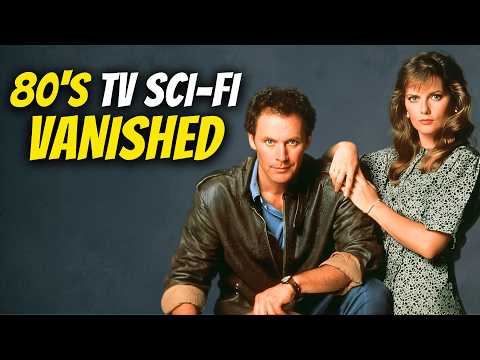
Take The Phoenix (1982). It followed Bennu, a mysterious immortal who awakens in contemporary America after sleeping for centuries beneath the desert. He is not a superhero. He is not a villain. He is a man out of time, haunted by memory loss and ancient rituals. The show moved slowly, favoring atmosphere over spectacle. Each episode blended archaeology, mysticism, and science fiction, suggesting immortality as a curse rather than a gift. The network wanted action; the show delivered mystery. That mismatch sealed its fate.
Then there was Ottoman (1983), which looked like a toy commercial but hid a surprisingly prophetic idea. A police computer program becomes self-aware and generates a glowing digital hero who can enter the real world. Long before virtual avatars and AI assistants, the show imagined code walking the streets. Critics mocked it. Audiences were confused. But beneath the flashy surface was a question television was not ready to ask: What happens when artificial intelligence becomes independent? Ottoman was logical, idealistic, and morally rigid. He solved crimes by rewriting physics and exposing human corruption. His digital nature allowed him to bend reality, but his understanding of humanity remained incomplete. That tension gave the series its soul.
V (1983) seemed like a flashy alien invasion spectacle. Spaceships hovered peacefully. Visitors promised technology and unity. Humanity welcomed them. Then the masks came off—literally. The reptilian aliens were not just invaders; they were fascists. The show mirrored propaganda, collaboration, and resistance with chilling clarity. It transformed science fiction into political warning. Despite massive initial success, the expanded series struggled. Networks pushed for ongoing spectacle. The sharp metaphor dulled. Ratings fell. The show became a memory rather than a movement.
Otherworld (1985) opened with a simple nightmare: an ordinary American family is pulled into a parallel dimension while on vacation. There is no wizard, no prophecy, no way home. What they find instead is a fractured world divided into sectors, each ruled by its own cruel logic. Unlike fantasy adventure shows of the era, this series refused escapism. Every sector reflected a distorted version of human society—surveillance states, corporate rulers, weaponized religion and science. The family could never stay long because safety never lasted. The brilliance of Otherworld lay in its restraint. Monsters were rare. Violence was implied rather than glorified. Fear came from systems, not creatures.
Misfits of Science (1985) treated superpowers as accidents. A group of young outcasts with unusual abilities are recruited by a government scientist to investigate strange phenomena. They are not heroes; they are experiments that survived. The tone was strange and uneven—some episodes leaned playful, others drifted into quiet tragedy. Powers caused isolation, not fame. Characters feared exposure more than villains. Society did not celebrate difference; it hunted it. What made the show memorable was its emotional honesty. Each character carried damage. One could manipulate electricity but could not touch others safely. Another possessed telekinesis but struggled with self-control. Power always came with consequence.
Max Headroom (1987) did not look like television. It looked like a warning broadcast from the future. Set in a dystopian media-controlled society, the show followed journalists navigating censorship, corporate power, and digital manipulation. At its center was Max, a sarcastic artificial intelligence created from a human mind. He mocked authority, questioned reality, and exposed lies. He was not comic relief; he was the conscience of the show. The series attacked television itself. Advertising ruled culture. News was entertainment. Truth was negotiable. The show suggested that media would eventually stop informing society and start shaping it completely. This was too much for mainstream audiences. The pacing was aggressive. The dialogue was sharp. The ideas were unsettling. Ratings struggled. The network lost patience.
Captain Power and the Soldiers of the Future (1987) looked like a toy-driven action show. In reality, it was one of the bleakest visions of the future ever broadcast to children. Set after humanity has already lost a war against machines, the series opens with genocide already complete. Cities are ruins. Human survivors hide like ghosts. The enemy has won. The villains were not aliens; they were artificial intelligences born from human arrogance. Lord Dread ruled through drones, propaganda, and psychological warfare. He did not conquer through explosions; he erased identity and history. What shocked audiences was the tone. Characters died. Civilians were executed. Moral compromise was constant. The heroes were not winning; they were delaying extinction. Every victory felt temporary and costly.
These are just a few of the lost experiments that dared to challenge audiences and predict futures nobody wanted to face. They vanished from schedules, but not from history. Sometimes the most important warnings are the ones television tried to forget.
The interactive toy component caused confusion. Viewers were told to shoot the screen during episodes. Parents assumed it was harmless entertainment. Then children watched characters suffer trauma, loss, and moral collapse. Complaints followed. Advertisers fled. Networks panicked. The show was quietly removed despite strong cult interest. Yet its ideas were startlingly mature. It explored AI domination long before it became a cultural fear. It portrayed war as psychological erosion rather than glory. Captain Power warned that technology does not turn evil suddenly. It becomes efficient first.
War of the Worlds (1988) made one bold decision. Humanity lost. The aliens did not retreat. They occupied Earth. Set in a post-invasion world, the series followed a resistance group operating in the shadows. Cities were rebuilt under alien control. Humans collaborated to survive. Rebellion was fragmented and fragile. The show rejected optimism. Every episode reinforced the cost of resistance. Victory was rare. Betrayal was common. Compromise was unavoidable. This was not heroic science fiction. It was occupation drama. The aliens were cold and bureaucratic. They ruled through systems, not terror. Human collaborators justified obedience as pragmatism. The series asked uncomfortable questions about survival under tyranny.
Audiences struggled with the premise. Viewers expected familiar invasion tropes. Instead, they received serialized despair. Networks interfered. The tone shifted in later seasons. The damage was done. Despite its troubled run, the series deserves re-evaluation. Its depiction of occupation mirrors real-world history. It shows how resistance fractures under pressure. It shows how invaders win by making themselves necessary. Modern dystopian television owes a debt to this forgotten experiment. It dared to imagine defeat as the beginning, not the ending.
Probe (1988) was science fiction without spectacle. No lasers, no aliens, no explosions. Instead, it centered on logic, observation, and scientific deduction. The protagonist was a brilliant, reclusive scientist recruited to solve mysteries that defied conventional explanation. Each episode treated science as drama. Problems were solved through hypothesis, experimentation, and skepticism. Supernatural explanations were dismissed. Knowledge was power, and ignorance was danger. The tone was calm and cerebral. Dialogue replaced action. Ideas replaced effects. It trusted the audience to think. That trust proved fatal. Networks found it slow. Advertisers found it inaccessible. Viewers trained on spectacle tuned out. The show vanished after a brief run.
Yet Probe anticipated modern prestige television. Its structure mirrors later crime dramas and intellectual thrillers. It respected intelligence and process. It portrayed science as a human struggle rather than a magic trick. Today it feels timeless. In an era obsessed with realism and procedural detail, Probe would thrive. In the 80s, it was invisible. It did not fail creatively. It failed because it assumed television audiences were ready to think.
And then there was Alien Nation (1989), which arrived quietly and left quietly—fitting for a series about outsiders trying to survive in plain sight. Set after an alien slave ship crashes on Earth, the show imagined a future where extraterrestrial refugees are forced to integrate into American society. Not as conquerors. As immigrants. The aliens, called Newcomers, were physically different, chemically vulnerable, and culturally misunderstood. They required special food. They reacted badly to saltwater. They lived under constant suspicion. The series paired a human detective with a Newcomer officer, creating a partnership built on distrust, necessity, and gradual respect.
What made the show exceptional was its refusal to hide the metaphor. Racism, economic exploitation, and cultural fear drove every storyline. Crimes were rarely simple. Motives were shaped by discrimination and desperation. The aliens were not symbols. They were people navigating an unwelcoming world. The tone balanced police procedural structure with social commentary. Episodes tackled hate crimes, labor abuse, and institutional bias. Unlike many science fiction shows, the future setting did not soften the message. It sharpened it. Audiences responded modestly, but networks grew nervous. The themes were heavy. The pacing was thoughtful. The spectacle was secondary. Despite strong writing, the series was cancelled after one season.
Yet its afterlife was remarkable. Television movies continued the story. Fans kept it alive. Its influence echoed through later genre dramas that blended science fiction with social realism. Today, Alien Nation feels more relevant than ever. It reminds viewers that fear of the other never disappears. It simply changes shape. The show did not fail because it lacked imagination. It failed because it held up a mirror too clearly.
So what binds these ten lost series together? Not failure—not really. Each one asked a question the 1980s refused to answer. The Phoenix whispered that immortality is loneliness. Ottoman insisted that intelligence without ethics is dangerous. V warned that tyranny arrives smiling. The pattern is unmistakable: wherever a show trusted its audience to think, the network pulled the plug.
Otherworld predicted algorithmic control. Max Headroom predicted truth as entertainment. Captain Power predicted machines that win by becoming efficient. Probe predicted a world that would eventually crave procedure over spectacle. Alien Nation predicted that the fear of the other never dies—it only changes shape. Every warning landed. Every show was buried.
These experiments were not cancelled because they were bad. They were cancelled because they were early. They arrived before the culture could catch up, before audiences were ready to see their own future staring back from the screen. The 1980s wanted neon and heroes. These shows offered mirrors and warnings.
But time has a way of vindicating the forgotten. Streaming resurrects them. Fans trade bootlegs like relics. And every modern dystopia owes them a quiet debt. The static never fully erased them. It only waited.
So the question isn’t whether these shows were right. The question is whether we’re finally ready to watch them—or whether we’ll keep burying the warnings that television tried so hard to forget. Which of these lost futures do you think we’re living in right now?
Report this article
Select a reason for reporting:






