In the sweltering jungles of Vietnam, where the air hung thick like soup and even a breath could give away your position, survival often came down to one thing: not being seen, not being heard, and not being smelled. So why did the Australian Special Air Service Regiment, elite among the elite, stop shaving, stop showering, and start smelling like the jungle itself? It wasn’t laziness. It wasn’t poor discipline. In fact, it was the exact opposite. It was calculated, purposeful, deadly.
While many American soldiers arrived in Vietnam with hygiene kits full of deodorants, aftershave, scented soap, and foot powder, the Australians, particularly their SAS patrols, were throwing those same items out. Not just out of their packs, but out of their doctrine altogether. To the untrained eye, this seemed insane. Why would hardened soldiers willingly embrace the stench of sweat, dirt, and rot in a jungle teeming with insects, disease, and 90% humidity? Because as the war unfolded, it became terrifyingly clear. The Viet Cong and NVA could smell the Americans coming. Not figuratively, literally.
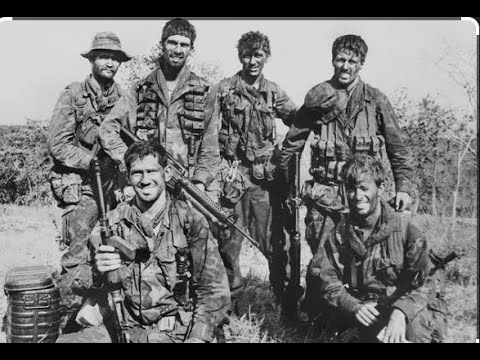
Vietnamese guerrillas who had lived in the jungle their whole lives developed an uncanny ability to detect unfamiliar scents. Foreign toothpaste, laundry detergent, cigarette smoke, mosquito repellent, even the faint sweetness of canned rations or chewing gum. In the absence of clear trails or sound, they relied on scent like hunters in the dark. To them, a freshly washed foreigner didn’t smell clean. He smelled wrong. He smelled like target.
And the consequences were lethal. There were patrols that never came back. Ambushes triggered by nothing more than the drifting trace of soap carried on the wind. Soldiers who were careful with sound, careful with light, but forgot about smell. And in the jungle, that was fatal.
Australian SAS teams learned this early. They watched American units move through the forest in tight columns, clean, polished, deodorized, and get lit up. They saw NVA troops sniff the air like wolves and melt into ambush positions before a single leaf had rustled. The Australians began to realize what few others did. The jungle was alive, and it could betray you if you didn’t learn how to disappear inside it.
So, the SAS made a radical decision. They stopped washing. They let their sweat and skin oils build. They let their uniforms absorb the smell of mud, leaves, and fire. They blended not just visually, but chemically into the environment. Their scent became jungle. Their presence undetectable. And to them, it wasn’t disgusting. It was smart. It was tactical. It was the difference between being a ghost in the green or a corpse on the trail.
This was the philosophy of the Australian SAS in Vietnam. Everything that makes you clean makes you detectable. And everything that makes you uncomfortable, stinking, sweaty, filthy, might just keep you alive. Because in a place where the enemy hunted you by smell, smelling like death was better than smelling like soap.
To understand why Australian SAS stopped shaving and showering in Vietnam, you have to understand where they were fighting. The jungle wasn’t just thick, it was alive. Every leaf dripped moisture. Every footstep sank into damp black mud. The air didn’t move. Sounds didn’t travel far, but smells did. This wasn’t a battlefield of open fields and sweeping maneuvers. It was a world where a man could disappear 5 ft away. Vision was often useless. Hearing was distorted by rain, insects, and thick undergrowth. But scent, scent traveled. And in this suffocating maze of bamboo, rotting vines, and rain-soaked foliage, even the faintest trace of soap could float for hundreds of meters.
To survive here, you had to vanish completely. Not just from sight and sound, but from scent. And for the men of the Australian SAS, that meant embracing something most soldiers are trained to avoid, becoming feral.
Unlike conventional infantry units, SAS patrols operated in extreme isolation. Four to six men would be inserted deep into enemy-controlled jungle, often for weeks at a time. Their missions were brutal in scope and simplicity. Observe, stalk, ambush, survive. There were no front lines, no backup, and no margin for error. The jungle was their battlefield, and also their cloak.
Every movement was calculated. Every breath, every footfall, every rustle of gear could mean death. And over time, they began to realize it wasn’t just what you did that could give you away, it was what you smelled like.
American soldiers, by contrast, came from a different environment and a different war-fighting doctrine. Most were rotated into Vietnam without jungle warfare experience. They brought with them the comforts of home, hygiene routines, scented toiletries, clean uniforms, canned rations. They didn’t realize those same comforts could betray them.
There are dozens of accounts from SAS operators, and even American recon units, who tell the same story. You could smell some US units before you ever saw them. One SAS veteran recalled detecting an American patrol moving 100 meters away, not by noise, not by movement, but by the faint smell of shaving cream drifting through the vines.
Worse still, the enemy could smell them, too. The Viet Cong and North Vietnamese Army weren’t just fighters, they were hunters. Many had grown up in those jungles. They knew the smells of the forest, the rotting leaves, the animal dung, the human sweat of a local farmer, and they could tell when something foreign entered their world. Scent was their early warning system.
To them, the chemically sterile, deodorized, minty fresh scent of American troops wasn’t clean. It was alien. It was dangerous. It screamed, “Here comes the enemy.”
And so, the SAS adapted. They stopped using soap. They let their beards grow. They wore the same uniform for weeks. When water was available, they rinsed, but never scrubbed. No scented products, no cologne, no aftershave. Their goal was not just to stay quiet, but to smell like they belonged in the jungle.
One senior patrol commander even ordered new team members to ditch all hygiene products before a mission. “If I smell you,” he said flatly, “they’ll smell you first.”
This wasn’t about being unclean. It was about becoming invisible to all five senses. The jungle didn’t care if you were dirty. It cared if you were alive. And if your scent gave you away, you wouldn’t be alive for long.
For the Australian SAS, you don’t win in the jungle by being clean. You win by disappearing. And that started with smelling like everything else the jungle forgot to kill.
For the Australian SAS, disappearing wasn’t just a tactic. It was a mentality, a philosophy of war honed long before Vietnam. They didn’t enter the jungle to fight like conventional soldiers. They entered to become part of the terrain itself, to erase every sign that a human being had ever passed through.
And to truly disappear, they embraced an idea most soldiers never consider. If the enemy can smell you, you don’t exist as a soldier. You exist as prey.
Scent discipline became as critical as fire discipline. A bar of soap was as dangerous as a flashlight. A spritz of deodorant was as reckless as firing a rifle by accident. Clean was a weakness. Clean was predictable. Clean was American.
One veteran put it bluntly: “We weren’t trying to look like ghosts. We were trying to smell like them.” By ghost, he meant the Viet Cong, fighters who slipped through the bush without leaving so much as a footprint.
This was the SAS philosophy of disappearance. To survive the jungle, you didn’t dominate it. You submitted to it. You became part of it. And the moment you embraced that truth, the jungle stopped trying to kill you and started hiding you.
So ask yourself: in a world that constantly demands you stand out, what would you be willing to give up to truly vanish?
Report this article
Select a reason for reporting:






