On a cold November day in 1918, inside the opulent Schönbrunn Palace, a 31-year-old emperor signed away not just a throne, but an entire world. With a single stroke of a pen, Charles I ended 650 years of Habsburg rule. Within months, his family would be stripped of their titles, exiled from their homeland, and forbidden by law from ever setting foot in Austria again. Their palaces would be seized, their fortunes confiscated, and their very name treated as a crime.
But this wasn’t just the imperial family’s tragedy. Thousands of aristocratic families across what had been Europe’s largest empire—princes who commanded armies, countesses whose jewels had been passed down for centuries, dukes who ruled estates larger than small countries—were about to discover that history has no sentimentality. Some lost everything. Some fled with suitcases full of jewels. Some adapted and survived to become billionaires in the modern age. And some are still fighting legal battles today, more than a century later.
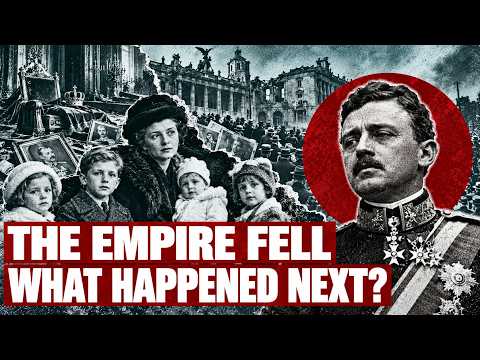
To understand what happened after the fall, you have to understand what fell. The Habsburg empire wasn’t just a country; it was a sprawling multi-ethnic patchwork stretching from the snowy peaks of the Tyrol to the shores of the Adriatic. For over six centuries, this family had ruled through strategic marriages, calculated wars, and a kind of institutional patience that outlasted rivals. At its peak, Austria-Hungary contained around 52 million people speaking a dozen languages.
And sitting on top of this entire system was a small, extraordinarily privileged group of noble families. They weren’t just rich—they were practically parallel governments. The Esterházys owned so much land in Hungary that their income sometimes exceeded that of the emperor himself. The Liechtensteins held estates across Moravia and Bohemia that would, by modern standards, be worth tens of billions. The Schwarzenbergs controlled vast tracts of Bohemian forest and farmland. These weren’t new money families, either. Many had been accumulating wealth since the medieval period, their fortunes compounded by centuries of inheritance, strategic marriages, and loyal service to the crown.
Then came the First World War. By October 1918, after four years of mechanized slaughter, the empire was finished. Ethnic minorities broke away to form new nations: Czechoslovakia declared independence, the South Slavs united into Yugoslavia, Hungary split off, and Poland rose from the dead. On November 11, 1918, Emperor Charles I signed what has to be one of the most carefully worded documents in European history. He didn’t technically abdicate—he simply renounced any participation in affairs of state. But by then, it didn’t matter. The next day, German Austria was declared a republic. The imperial dream was over.
Within weeks, Charles and his family were quietly bundled off to Switzerland, then eventually to the island of Madeira off the coast of Portugal, where Charles would die in 1922 at just 34 years old, allegedly of pneumonia, allegedly broke, his wife Zita selling her jewelry to pay the funeral expenses. He left behind a nine-year-old boy named Otto, who would become one of the most fascinating figures of the 20th century. But we’ll get to him.
Now, here’s where things get really interesting. The new Austrian Republic wasn’t content with just ending the monarchy. They wanted to make sure it could never come back. And so, on a single day—April 3, 1919—the Austrian parliament passed not one, but two laws that would permanently reshape Austrian society.
The first was the Habsburg Law. This law dethroned the entire House of Habsburg-Lorraine, exiled every single member of the dynasty from Austrian territory, and confiscated all their property to the state. If any Habsburg wanted to return, they had to formally renounce all claims to the throne and acknowledge themselves as loyal citizens of the Republic.
The second law, passed on the exact same day, was the Adelsaufhebungsgesetz—the Law on the Abolition of Nobility. This one went even further. It didn’t just strip the Habsburgs of their titles; it abolished nobility itself. Every count, every baron, every prince in Austria lost their legal title. The use of noble particles like “von” and “zu” became illegal. If you called yourself Count von Something, you could be fined up to 20,000 Austrian Kroner or face up to six months in prison.
And here’s the thing: Austria took this far more seriously than Germany did. In the German Weimar Republic, noble titles simply became part of the family surname. You could still be a prince—it just didn’t mean anything legally. But in Austria, the Republic drew a line in the sand. Titles weren’t just stripped of meaning; they were erased.
Imagine for a moment what this felt like. One day, you’re Count Johann Nepomuk von Something. Your family has held this title since the 1600s, and your business cards, your calling cards, your correspondence, even your gravestone, all carry this centuries-old identity. The next day, you’re just Johann Nepomuk Something. The lower nobility especially found this devastating. For civil servants and professionals who had spent decades earning their noble status, often as a reward for state service, the abolition felt like a slap in the face. One source from the time quotes a federal president calling the abolition “childish” because it did not hit those it was supposed to hit.
And here’s an interesting detail. Princess Fanny Starhemberg, speaking about the whole thing, reportedly said, “To us, the official abolition is quite irrelevant because with or without the titles, we will always remain the Starhembergs.” That one quote captures the entire reality of what happened. The law could strip the titles, but it couldn’t strip the money, the land, the connections, the manners, the social capital that these families had been accumulating for centuries. In some ways, that was the whole point.
Now, there was one exception to the Habsburg law worth mentioning. The province of Burgenland, which became part of Austria in 1921 after being transferred from Hungary, was explicitly exempted from the expropriation provisions. This matters because it’s where the Esterházy family had many of their core holdings. More on that in a moment. But for the Habsburgs themselves, the sentence was total. Every castle, every hunting lodge, every piece of imperial property was transferred to the Austrian state. The dynasty that had ruled for over six centuries now had to beg for permission to even visit their homeland.
There’s another dimension to this collapse that often gets overlooked, and that’s what happened to the Jewish nobility of Austria. Over the 19th century, the Habsburg emperors had elevated a significant number of Jewish bankers, industrialists, and financiers to noble rank. Families like the Rothschilds, the Wertheimsteins, the Gutmanns, and the Wetzelers had earned baronies and other titles in recognition of their service to the empire. When the nobility was abolished in 1919, these families lost their legal status just like everyone else. But their real catastrophe was still coming. Within two decades, the Nazi takeover of Austria would strip them of everything, including, in many cases, their lives. The Jewish aristocracy of Vienna, which had been one of the most culturally sophisticated groups in all of Europe—patrons of Freud and Mahler and Klimt—was essentially destroyed between 1938 and 1945. Those who fled, like the Rothschilds, scattered across Britain, America, and Switzerland. Those who stayed were murdered. This isn’t a side footnote. It’s a central part of understanding what happened to the Austrian aristocracy because an entire class of noble families was wiped from the map not through legislation, but through genocide.
So, what did these families actually do? Well, the responses varied wildly. Some families, particularly those with land in what became Austria proper, simply adapted. They lost their titles officially but kept their wealth and their social standing. They attended the same clubs, married within the same circles, maintained the same servants. In the cafes of Vienna, you still called the former countess by her title. In the courtrooms and the opera houses, old habits died hard. Many Austrian aristocrats worked as civil servants, became doctors, lawyers, or professors. Some went into business. Others essentially retired to their remaining country estates and tried to live quietly off whatever assets they had left.
But for families whose land was concentrated in the new successor states—Czechoslovakia, Hungary, Yugoslavia, Poland, Romania—the situation was far more complicated. These were now foreigners in countries that often viewed the old Habsburg nobility as symbols of oppression, as representatives of the ethnic German overlords who had held down the Slavic peoples for centuries. And so, the land reforms began. In Czechoslovakia, the new republic implemented a sweeping land reform program throughout the 1920s. The idea was simple on paper: the vast estates of the old aristocracy would be broken up and the land redistributed to peasants. In practice, it was often a brutal transfer of wealth from one ethnic group to another. The Liechtenstein family, for example, lost approximately two-thirds of their Czechoslovak holdings in this first wave of land reform during the interwar period. The Schwarzenbergs saw their vast Bohemian estates significantly diminished. And this was before anyone had even heard the name Beneš decrees.
Hungary went through its own convulsions with the brief communist Hungarian Soviet Republic in 1919 nationalizing noble estates before being overthrown. Yugoslavia implemented land reforms that cut deeply into the holdings of German and Hungarian-speaking aristocrats. Poland did similar things in Galicia. By the mid-1920s, the economic foundation of the old Habsburg aristocracy had been fundamentally shaken, though many families still clung to significant wealth.
And this is where we need to talk about Otto von Habsburg, because his story captures the whole arc of what happened. Born in 1912, Otto was six years old when his father renounced imperial power. He grew up in exile, bouncing from Switzerland to Madeira to Spain to Belgium, raised by his devoutly Catholic mother Zita, who taught him languages and prepared him to someday reclaim the throne. His mother believed, right up until her death in 1989, that the Habsburgs would be restored. Otto himself was more realistic, but he never stopped being politically active.
In 1935, Austria briefly repealed the Habsburg Law, returning some property under the Dollfuss and Schuschnigg regimes, who hoped monarchist sentiment might resist the Nazi threat. Otto became an outspoken opponent of Hitler. When the Nazis annexed Austria in 1938, Otto’s name was on their arrest list. The Gestapo issued what amounted to a death sentence against him. He fled to the United States, where he lobbied Roosevelt and other Allied leaders.
But here’s a brutal twist. When the Nazis took over Austria, one of their first acts was to formally cancel the 1935 restoration of Habsburg property. The imperial family had briefly gotten some estates back, and now the Nazis seized them all over again. Then, after the war, when Austria was liberated and the republic restored, the 1919 Habsburg Law came back into force.
In 1955, during negotiations for the Austrian State Treaty, the Soviet Union specifically demanded that the Habsburg Law be made part of the treaty. The Soviets were terrified that monarchist sentiment might lead to a restoration. So they locked the anti-Habsburg provisions into Austria’s constitutional foundation. This is why, even today, the law remains in force.
Otto spent decades in exile. He was only allowed to visit Austria again in 1966—five years after formally renouncing his claim to the throne in 1961. Think about that. He was born in 1912 and couldn’t legally enter his own homeland until he was 54 years old. He lived most of his life at Villa Austria in the Bavarian town of Pöcking, Germany, where he died in 2011 at the age of 98.
In his later years, he had an extraordinary second act as a member of the European Parliament from 1979 to 1999, representing Germany, where he became a passionate advocate for European unification. He played a quietly important role in the fall of the Iron Curtain, helping to organize the Pan-European Picnic in August 1989 that opened a border crossing between Hungary and Austria and allowed hundreds of East Germans to flee to the West. His funeral in Vienna in 2011 drew heads of state from across Europe.
The current head of the family is his son Karl von Habsburg, born in 1961, who took over as head of the House of Habsburg-Lorraine on January 1st, 2007. And here’s a telling detail about just how strict the Austrian laws still are. In 2019, Karl was actually fined by the Vienna municipal government because his personal website was called Karl von Habsburg.at. The use of the particle “von” violated the 1919 law on the abolition of nobility. The 100-year-old statute was still enforceable, and the court converted the original 20,000 kroner fine into modern euros and made him pay.
Now, let me tell you about one family that figured out how to survive. Possibly the most successful adaptation story in all of Austrian aristocracy belongs to the Esterházy family. For centuries, the Esterházys were among the wealthiest families in the entire Habsburg empire, with vast estates spread across what is today Austria, Hungary, and Slovakia. They were patrons of Haydn, who worked for them for nearly 30 years. Their palace at Eisenstadt and their fortress at Forchtenstein were legendary.
When the empire fell, the Esterházys faced the same challenges as everyone else, but they had one critical advantage. Because much of their core holdings were in Burgenland, which was explicitly exempted from the 1919 expropriation laws when it joined Austria in 1921, they got to keep a significant portion of their property. But then came World War II and its aftermath. The Esterházy holdings in Hungary and Slovakia were nationalized by communist governments. Prince Paul V Esterházy, the head of the family at the time, was arrested by the Hungarian communist regime in 1948 and sentenced to 15 years in prison on fabricated charges. He was released after the 1956 Hungarian uprising. The family’s Hungarian holdings were essentially lost forever.
But in Austria, the Esterházys hung on to their Burgenland estates. Then in 1989, something remarkable happened. Melinda Esterházy, the Hungarian-born widow of the childless Prince Paul V, began reorganizing the surviving family wealth. She transferred everything into three private foundations—a structure that protects the assets from inheritance disputes and keeps them intact across generations. In 2001, these foundations established the Esterházy Betriebe, a modern corporate holding company that manages everything. Melinda died in 2014, and today the enterprise is run by her nephew, Stefan Ottrubay, who serves as general director.
And here are the numbers. As of 2014, the net total assets of the Esterházy group were valued at approximately 800 million euros. On top of that, there are cultural assets like Schloss Esterházy in Eisenstadt and Burg Forchtenstein that are essentially impossible to value in money terms. The Esterházy cultural institutions alone attract more than half a million visitors annually. The family’s estate is today the largest private land holding in Austria. Think about that for a moment. A family that lost its titles in 1919, lost its Hungarian estates to communism after 1945, still managed to maintain the single largest private land holding in the entire country and runs a modern corporate operation worth close to a billion euros. That is what we mean when we say social capital is harder to confiscate than legal titles.
But if the Esterházy story is one of adaptation and survival, the Liechtenstein story is one of catastrophic loss and ongoing legal warfare. Here’s the setup. The House of Liechtenstein is unique in one critical way. They were the only Austrian noble family that actually had their own sovereign territory—the tiny principality of Liechtenstein, tucked between Switzerland and Austria. This technically made them a reigning royal house of their own country. But the vast majority of their actual wealth—land, castles, art collections, agricultural estates, forests—was in Bohemia and Moravia, in what became Czechoslovakia after 1918.
During the interwar period, they lost roughly two-thirds of their Czechoslovak holdings to land reform. But the real catastrophe came in 1945. After the war, Czechoslovak President Edvard Beneš issued a series of decrees authorizing the confiscation of property belonging to ethnic Germans and Hungarians. The theory was collective punishment for the Nazi occupation. The problem was that the Beneš decrees were applied extremely broadly, often with little regard for whether individuals had actually collaborated with the Nazis.
Prince Franz Josef II of Liechtenstein, who ruled the principality from 1938 to 1989, was declared to be an ethnic German under the decrees. This was absurd on multiple levels. Franz Josef II was a citizen of neutral Liechtenstein, head of a sovereign state that had never been part of either Germany or Czechoslovakia, and had officially remained neutral throughout the war. Liechtenstein even gave refuge to around 500 White Russian soldiers at the war’s end rather than hand them over to Soviet forces. Regardless, the Czechoslovak government seized everything the Liechtensteins owned in the country. This included the UNESCO-listed Lednice and Valtice Chateau Complex in Southern Moravia, one of the most spectacular architectural ensembles in Central Europe. It included vast forests. It included art collections that had been accumulated over 400 years. The total value, in modern terms, was enormous—possibly billions of euros.
What’s interesting is that the Liechtenstein family never accepted this. They’ve been fighting the confiscation in court for decades. In 2001, they took Germany to the International Court of Justice in The Hague over a painting by the Dutch master Pieter van Laer that had been confiscated by Czechoslovakia and lent to a German museum. In 2018, the Prince of Liechtenstein Foundation filed lawsuits in 26 different Czech district courts seeking the return of specific properties. In October 2023, the Brno Regional Court of Appeal rejected the family’s property claims, upholding the confiscations. In April 2024, the Czech Constitutional Court similarly rejected a Liechtenstein lawsuit challenging the legitimacy of the confiscations. The family has even filed a complaint with the European Court of Human Rights. As of today, the legal battle is still ongoing. The Liechtensteins have offered the Czech state out-of-court settlements. The Czech government has rejected them. And so, one of the most important aristocratic families in Central European history continues to litigate nearly 80 years after their property was taken.
Now, let’s talk about the Schwarzenbergs, because their story has yet another arc. The Schwarzenberg family was one of the greatest noble houses of Bohemia, with estates centered around Southern Bohemia and the famous Český Krumlov Castle. Like the Liechtensteins, they faced successive waves of expropriation. The interwar land reforms in Czechoslovakia took a significant portion of their holdings. Then, after World War II, the Beneš decrees took most of what remained. But here’s where it gets interesting. Not every member of the Schwarzenberg family went into exile. Ernst Schwarzenberg, who had inherited certain estates from his uncle Frederick II in 1936, actually stayed in Czechoslovakia even after losing everything to the communists. He was imprisoned twice by the regime. He lost all his assets, and he still refused to leave the country.
His cousin, Karel Schwarzenberg, became perhaps the most prominent member of the family in the post-communist era. Born in Prague in 1937, Karel went into exile in Austria as a child when the communists took over. He grew up in the Czech émigré community, served as chancellor to Václav Havel after the Velvet Revolution, and later became the Czech Republic’s foreign minister from 2007 to 2009, and again from 2010 to 2013. He even ran for president of the Czech Republic in 2013, finishing a close second in the runoff. Karel died in November 2023 at the age of 85. His story is remarkable because it shows how some descendants of these old families didn’t just survive—they circled back and reclaimed positions of real political influence in the new democratic states that had once expropriated their ancestors.
The Thurn und Taxis family is another story worth touching on, though they were technically more German than Austrian. For centuries, this family had held an imperial monopoly on the postal service across much of the Holy Roman Empire. When the Prussian state forcibly bought out their postal rights in 1867, the family received a massive settlement that they wisely invested in forests, land, and later industrial holdings in Bavaria. By the time the empire fell, they were headquartered in Regensburg. They lost their titles officially but kept most of their wealth. Prince Albert I of Thurn und Taxis ruled the house for 64 years, from 1888 to 1952, navigating the family through both World Wars. Today, the family remains extraordinarily wealthy, with the current head, Albert II of Thurn und Taxis, inheriting one of the largest private fortunes in Germany when his father died in 1990.
Let’s touch briefly on some of the other great Austrian noble houses whose fates followed similar patterns. The Starhemberg family, whose quote I mentioned earlier, is a good example. They had been Austrian nobles since the medieval period and had produced the famous defender of Vienna during the 1683 Turkish siege, Count Ernst Rüdiger von Starhemberg. In the interwar period, Prince Ernst Rüdiger Starhemberg became one of the leaders of the Heimwehr, a right-wing paramilitary movement, and briefly served as vice chancellor of Austria under Dollfuss. His political trajectory shows how some aristocrats tried to turn their old prestige into new political power in the chaotic interwar years, often with disastrous results.
The Auersperg family, another ancient house with extensive holdings in both the Austrian lands and in what became Yugoslavia, saw their Slovenian estates taken by Yugoslav land reform in the 1920s and then entirely confiscated after World War II. The Trauttmansdorff family lost their vast Czech holdings to the Beneš decrees. The Lobkowicz family of Bohemia had their estates seized by the communists in 1948, though some property was returned after 1989, and the family’s famous art collection is now exhibited in Prague Castle.
Each of these stories follows a similar arc: legal titles stripped in 1919, property eroded through interwar land reforms, catastrophic losses between 1938 and 1948, and then either exile and reinvention in the West or quiet continued existence as diminished but still recognizable families in Austria itself.
Let’s zoom out and think about what happened economically to the broader Austrian aristocracy. The pattern that emerges is that geography was destiny. Families whose core holdings were concentrated in Austria proper or Burgenland generally kept significant wealth even if they lost their titles. Families whose holdings were spread across the successor states faced a cascading series of catastrophes. First, the collapse of the empire itself, which eliminated the court positions, pensions, and government jobs that had sustained many smaller noble families. Then, the interwar land reforms, which hit holdings in Czechoslovakia, Yugoslavia, Hungary, and Poland. Then, the Nazi era, which was particularly devastating for Jewish-origin noble families, many of whom were murdered in the Holocaust. Then, the postwar expulsions and the Beneš decrees, which wiped out virtually all remaining aristocratic property in Czechoslovakia. Then, four decades of communist rule across Eastern Europe, during which any remaining noble property was absorbed into the state.
By the 1950s, the practical reality was that only families with meaningful holdings in Western Europe—particularly in Austria, Germany, and Liechtenstein itself—had any serious wealth left. And many families simply disappeared from history, their descendants becoming middle-class professionals indistinguishable from any other citizens of modern Austria.
There’s an interesting statistic about this. One academic study found that descendants of the pre-1919 nobility are approximately six times more likely to hold high positions in the current Austrian business elite than the general population. So the social and economic advantages—the networks, the educational privileges, the family connections—have persisted even without the legal titles. The Starhemberg quote from 1919 turned out to be prophetic. The titles were abolished, but the Starhembergs are still, in all the ways that actually matter, the Starhembergs.
There’s another layer here worth exploring, and that’s the diaspora networks that formed in exile. When the empire fell, the Austrian aristocrats who fled or lost their estates didn’t just scatter randomly. They formed tight-knit communities in specific places. There was a significant Habsburg loyalist community in Switzerland throughout the 1920s and 1930s. Munich became home to many exiled Austrian and Hungarian nobles. After World War II, the United States gained a substantial contingent of former Austro-Hungarian aristocrats, including Otto von Habsburg himself during the war years. These communities maintained their own newspapers, their own social clubs, their own charitable organizations. They intermarried heavily, with the result that many of today’s European noble families have at least one branch that traces back to this diaspora experience. The Habsburg family alone has produced descendants who married into virtually every reigning or formerly reigning royal house of Europe. Otto’s seven children with Princess Regina of Saxe-Meiningen married into German, Georgian, Swedish, and other noble families. The pattern repeated across the aristocracy. Marriage became the primary tool for preserving the social fabric, even as the political and legal structures that had sustained these families crumbled around them.
So, what are the broader implications of all this? First, the Austrian experiment is one of the most radical examples in European history of a society trying to completely dismantle its aristocratic class through legislation. Germany abolished noble privileges but let the titles survive as surnames. France had executed much of its aristocracy during the revolution but gradually allowed titles to come back in social usage. Britain, of course, still has an active peerage system to this day. Austria chose a different path, and that path remains controversial. There have been proposals, including from monarchist circles, to repeal the Habsburg Law on the occasion of the 100-year anniversary of the Republic in 2018. These proposals have gone nowhere, partly because the law is embedded in the Austrian State Treaty, and partly because there’s no political will to challenge it.
Second, the Austrian aristocracy’s fate raises uncomfortable questions about property rights and historical justice. The Beneš decrees in particular remain a sore point in Central European politics. They were implemented as a form of collective punishment against ethnic Germans and Hungarians, many of whom had actually resisted the Nazis. Some of the confiscations were clearly unjust by any reasonable standard. But reversing them 80 years later would be extraordinarily difficult, both legally and politically. The Czech Republic, Slovakia, and Hungary have all generally refused to reopen these questions, worried about the precedent of returning massive estates to a handful of wealthy families when millions of ordinary people have built lives on that confiscated land.
Third, the story illustrates something important about the nature of wealth itself. Legal title can be stripped overnight. Property can be confiscated. Castles can be converted into museums. But social capital—education, privilege, family networks, cultural knowledge—these things are far more durable. The old Austrian aristocracy adapted, intermarried with wealthy industrialists, sent their children to the best universities, and quietly preserved their influence through hundreds of informal mechanisms. The Order of the Golden Fleece, which Karl von Habsburg still heads as Grand Master, remains a powerful networking organization among European old money. The Austrian Order of Saint George, revived by the Habsburg family in 2008, serves similar functions. Private foundations, like those used by the Esterházys, provide legal structures that keep family wealth intact across generations in ways that even heavy inheritance taxes cannot touch.
And then there’s the quietest victory of all. More than a century after the Habsburg laws stripped them of their titles and territories, the former imperial family is more popular in Austria today than at almost any point since the empire fell. Otto von Habsburg’s state funeral in 2011 drew massive public attention. The Habsburg name is used freely in cultural contexts, in historical societies, in tourism. Schönbrunn Palace, the former imperial summer residence, is one of Austria’s top tourist attractions, generating hundreds of millions of euros in revenue from tourists who come to see how the Habsburgs lived. The imperial crown, scepter, and other regalia are on display in Vienna’s imperial treasury. The dynasty that was supposed to be erased by the republic has become one of the country’s primary cultural exports.
The old aristocracy didn’t disappear. It evolved. The counts and barons who lost their titles in 1919 became bankers, industrialists, academics, diplomats, politicians. Their descendants run foundations, sit on corporate boards, and discreetly maintain the networks their great-grandparents built. The Habsburgs themselves transitioned from being rulers to being symbols—from being in charge of history to being custodians of history.
And when you walk through Vienna today, past the Hofburg, past the great palaces of the Ringstraße, past the discreet townhouses in the first district where old family names still appear on brass plaques, you’re seeing the ghost of an aristocratic world that was supposed to end in 1919, but that quietly persisted in a thousand ways, waiting for history to catch up with it. The empire is gone. The titles are illegal. But the families remain, carrying with them the knowledge that the longest game is almost always won by whoever can afford to wait.
If you made it this far, I’d love it if you’d leave a crown emoji in the comments so I can see who stuck around for the whole story. And please, if you enjoyed this one, hit that subscribe button to help the channel grow. There’s so much more history like this to explore, and your support genuinely means the world to me. Thanks so much for watching, and I’ll see you in the next one.
But here’s the question that lingers long after the last palace door has closed: if a law can erase a title overnight but not the family that carried it for six centuries, who really won the war between republic and aristocracy—and are we still living in its aftermath today?
Report this article
Select a reason for reporting:






