In the desolate expanse of the Registan Desert, under a moonless sky, the silence was shattered by the roar of aircraft engines. It was late November 2001, and a small group of Britain’s elite Special Air Service (SAS) troops were about to embark on a mission that would become the largest SAS operation since World War II—yet few have ever heard of it.
As the planes touched down on a hastily prepared airstrip, the soldiers knew they were racing against time. Their target: a sprawling al-Qaeda compound nestled at the foot of a mountain, 190 miles southwest of Kandahar. Intelligence suggested it was a hub of terrorist activity, a place where opium funded terror and where crucial intelligence might be hidden. But the Americans had dismissed the raid as unworthy of effort. It was only thanks to British Prime Minister Tony Blair’s insistence that the mission was greenlit.
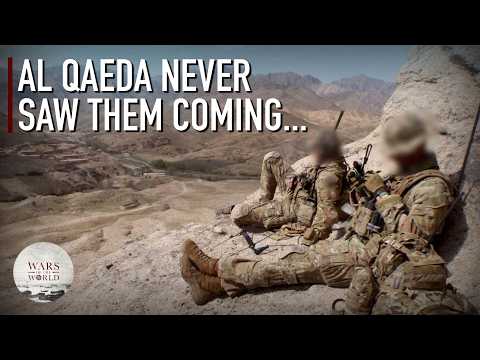
The stakes were impossibly high. The facility was heavily fortified with trenches, bunkers, and caves, defended by 80 to 100 battle-hardened foreign fighters. The SAS teams—A and G Squadrons—would have to assault in broad daylight, with only an hour of air support available. No reconnaissance had been possible; maps were inadequate. Yet the commanding officer of 22 SAS accepted the task without hesitation.
“Surrender was the last thing on their minds,” one veteran later recalled. “They would run out of the front line while firing. It was something out of the First World War.”
As dawn broke on the morning of the assault, the men of A Squadron moved forward in heavily armed Land Rovers, their hearts pounding against their ribs. The initial airstrike had destroyed the plant’s depot, sending plumes of smoke into the sky, but the enemy was far from broken. Bullets whizzed past as they dismounted and began their advance across rocky terrain, each step a dance with death.
G Squadron had set up a bullhorn formation, encircling the facility to provide cover fire. But the resistance was fierce. Insurgents fought with a ferocity that stunned the seasoned soldiers. “If they had a breath left in them, they would be trying to shoot you,” another SAS member recounted. The battle raged for four hours, a chaotic symphony of gunfire, explosions, and shouts.
Despite the intensity, the SAS pressed on. They cleared trenches, breached caves, and finally reached the headquarters. There, they seized laptops and documents that would later prove invaluable in the fight against al-Qaeda. But as they searched, more insurgents closed in, and with air support too risky to call in, snipers took matters into their own hands, picking off the enemy one by one.
When it was over, four SAS troops had been wounded, but none were killed. The enemy dead numbered between 18 and 73, with dozens more captured. The mission was a success—yet the strategic importance of the facility has never been fully explained. What secrets did those documents hold? And why has this operation remained shrouded in secrecy for so long?
As the last helicopter lifted off, carrying the wounded and the intelligence, the desert returned to its silent vigil. But the echoes of that day would linger in the memories of those who fought—and in the annals of military history, waiting to be told.
The weeks that followed were a blur of debriefings, medical evaluations, and the quiet satisfaction of a job done well. Back at their base in Hereford, the men of A and G Squadrons were told to keep their mouths shut. No press. No photographs. No mention of the Registan Desert or the opium plant that had burned for hours after they left.
But secrets have a way of leaking, especially in the small, tight-knit world of special operations. Whispers reached the ears of journalists, and soon enough, a trickle of details began to emerge. A four-hour firefight. A bullhorn formation. Snipers picking off insurgents from the caves. The story was too good to stay buried forever.
“Then we extracted and bombed the hell out of it,” one veteran said, years later, his voice flat and matter-of-fact. That single sentence became the mission’s unofficial epitaph.
Yet for all the praise heaped upon the SAS, questions lingered like smoke in the desert air. Why had the Americans been so reluctant? What exactly was in those laptops and documents? And why, after all these years, has the strategic value of that remote facility never been fully explained?
Some analysts have speculated that the opium plant was more than just a drug operation. It may have been a financial hub for al-Qaeda, a place where heroin profits were laundered into weapons and safe houses. Others believe the documents recovered contained names of operatives and plans for future attacks that were never made public.
But the most tantalizing theory is that the facility held something else entirely—something that neither the British nor the Americans wanted to discuss. A former intelligence officer, speaking on condition of anonymity, hinted that the raid had uncovered evidence of links between al-Qaeda and certain regional powers. “It was the kind of thing that could start a war or end one,” he said. “So they buried it.”
Whether that is true or simply the romanticizing of a secret mission, the men who were there know one thing for certain: they had done their job. They had fought in the largest SAS operation since World War II, and they had won.
But victory, as they would soon learn, comes with its own complications. The intelligence they had seized was already being analyzed by MI6 and the CIA, and the results would shape the next phase of the war on terror. New targets were being drawn up. New missions were being planned.
And somewhere in the corridors of power in London and Washington, a decision was being made—one that would send the SAS back into the Afghan wilderness, deeper and more dangerous than before.
The men of A and G Squadrons barely had time to unpack their kit before the next set of orders arrived. The intelligence seized from the Registan facility had been rushed through analysis, and the results were alarming. The documents and laptops revealed a network of al-Qaeda safe houses stretching across eastern Afghanistan, each one stocked with weapons, cash, and communications equipment. More disturbing still, they pointed to a planned attack on a British embassy in the Gulf—timed to coincide with the new year.
“We thought we were done,” one squadron member later admitted. “But the paperwork we grabbed? It was a goldmine. And goldmines attract attention.”
Within days, the SAS was ordered to prepare for a second mission. This time, the target was a compound near the Pakistani border, believed to be a transit point for fighters and supplies. Unlike the opium plant, this site had been scouted—but only from the air. The terrain was rugged, the enemy was expected to be numerous, and the window for action was narrow.
The Americans, still smarting from their earlier skepticism, offered additional air support. But the British commander declined. “We’d learned our lesson,” he reportedly said. “Air support is a fickle friend. We wanted to do this our way.”
On the night of December 10th, 2001, two troops of SAS soldiers boarded helicopters bound for the border region. The flight was low and fast, skimming the desert floor to avoid radar. The men sat in silence, each lost in his own thoughts. Some prayed. Others checked their weapons for the hundredth time.
They landed two miles from the target and began the long, cold march toward the compound. The moon was a thin sliver, casting just enough light to see the outlines of the mountains ahead. Every sound seemed amplified—the crunch of boots on gravel, the distant bark of a dog, the whisper of wind through the rocks.
As they crested a ridge, the compound came into view. It was smaller than expected, a cluster of mud-brick buildings surrounded by a low wall. But there were guards—at least a dozen—patrolling the perimeter. And somewhere inside, intelligence suggested, were two mid-level al-Qaeda operatives responsible for logistics and financing.
“We could have called in an airstrike,” one of the troop commanders later said. “But we needed those men alive. They knew things. Names, locations, plans. Dead men tell no tales.”
The assault began at 3:00 a.m. Snipers took out the guards on the wall with silent precision, their suppressed rifles barely making a sound. Then the assault teams moved in, breaching the compound’s gate with a small explosive charge. The blast was deafening in the quiet night, and within seconds, the compound erupted in chaos.
Insurgents poured out of the buildings, firing wildly. The SAS responded with controlled bursts, moving from room to room, clearing each one with practiced efficiency. Grenades were tossed into doorways. Shouts in Arabic and Pashto echoed through the corridors. The fighting was close and brutal—knife-work at times, as ammunition ran low and men grappled in the dark.
One SAS soldier was cornered in a narrow hallway by two insurgents. He fired, dropped one, but the other lunged at him with a knife. “I don’t remember much after that,” he said. “Just the sound of my mate’s rifle and then the guy falling off me.”
By dawn, the compound was secure. The two al-Qaeda operatives had been captured alive, though one was badly wounded. Documents were seized—ledgers, letters, maps—and loaded onto the helicopters that arrived to extract the teams. The SAS had suffered three wounded, none critically. The enemy dead numbered at least twenty.
But as the helicopters lifted off, the men couldn’t shake the feeling that they had only scratched the surface. The intelligence from the Registan raid had led them here, and the intelligence from this raid would lead them somewhere else. The war on terror was not a single battle but a long, grinding campaign with no clear end.
“We were chasing ghosts,” one veteran reflected. “Every time we caught one, two more appeared. And the politicians kept asking for more.”
Back in London, the captured operatives were handed over to MI6 for interrogation. The information they provided was said to be significant—but, as with the Registan raid, the details were classified. The public would never know the full story.
What is known is that Operation Trent and the missions that followed cemented the SAS’s reputation as one of the world’s premier special forces. They had proven they could operate deep behind enemy lines, in hostile terrain, against a determined foe—and win.
Yet for the men who were there, the memories are not of glory or medals. They are of cold nights, burning buildings, and the faces of fallen comrades. They are of the quiet moments between battles, when the only sound was the wind and the distant echo of gunfire.
And they are of the secrets they carry—secrets that, if revealed, might change everything we think we know about the war on terror.
Years later, the men of A and G Squadrons still gather once a year in a quiet pub in Herefordshire. They don’t talk about medals or headlines. They talk about the ones who didn’t come home—and the ones who did, carrying invisible wounds.
“We did what we were asked,” one of them says, staring into his pint. “But nobody ever told us why.”
The Registan raid remains a footnote in the official histories—a four-hour firefight, a handful of wounded, a trove of intelligence that vanished into the vaults of Whitehall. The opium plant is long gone, swallowed by the desert. The caves are empty. The documents, if they still exist, are sealed away from prying eyes.
But the question lingers, unanswered and unsettling: if the truth about Operation Trent were finally declassified, would it vindicate the men who fought there—or reveal something darker about the war they were sent to wage?
Report this article
Select a reason for reporting:






