One famous child star earned millions before turning 10, but the law let his own parents take it all. One court case changed how Hollywood treats kid actors forever. Do you know what really happens to a child’s money once the cameras stop rolling?
Behind the glitz and glamour of Hollywood, a sinister pattern repeats with chilling regularity. Child stars are built up, used up, and discarded—often with devastating consequences.
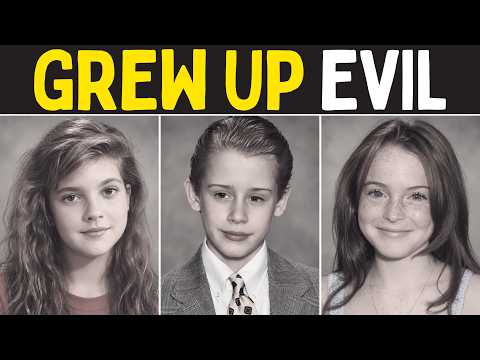
Take Lindsay Lohan. At 12, she was a revelation in The Parent Trap. By 2004, she was the template for teen stardom, earning $7.5 million a movie before she was old enough to drink. Then the machine did what it always does when the product stops being profitable: it dropped her.
Between 2007 and 2012 came two DUI arrests, a revolving door of rehab stints, and jail sentences. Directors stopped insuring her. Audiences stopped defending her. For a decade, the most naturally gifted actress of her generation was better known as a punchline.
Britney Spears was infrastructure by 20. Baby One More Time sold 13 million copies. Then came 2007—the head shaving, the umbrella, the paparazzi photos that sold millions while the woman in them was clearly drowning. In January 2008, she was hospitalized on a psychiatric hold. And that’s when the truly strange part began.
A conservatorship gave her father legal control of her career, her money, even her kitchen. For 13 years, one of the best-selling artists on the planet needed a court’s permission to spend her own salary. She finally testified in 2021 and told a judge she felt exploited. She begged for her life back.
Macaulay Culkin did everything right. Home Alone grossed over $285 million in the US alone. By 14, he was being paid $8 million a film—the highest salary ever given to a child actor. Then, at 14, he walked away. Behind the scenes, his parents had never married, and they split into a bitter legal war over custody of the kids and control of his fortune.
By 1995, the fight was so toxic that the biggest child star on Earth refused to work until it ended. The industry’s verdict was cruel anyway: people said he had lost his touch. In truth, he had lost the one thing no salary could buy back—a childhood that wasn’t for sale.
Drew Barrymore was famous before she could talk. At six, she was the little girl who made E.T. audiences cry. By nine, she was drinking. By 12, she was using cocaine. At 13, she was in rehab. As a young teen, she went to court and legally emancipated herself from both parents. The world’s most famous child had become its most famous cautionary tale.
The comeback wasn’t a comeback at first. It was survival work. She took bad girl B-movies like Poison Ivy because nothing respectable would have her. Then she slowly outworked everyone.
Amanda Bynes was Nickelodeon’s kid. She was discovered at 10 on All That and handed her own variety show at 13. Then, around 2012, the headlines turned. A DUI, hit-and-run charges, a small fire in a stranger’s driveway. Each incident was stranger than the last, and each one was consumed by a public that had spent a decade laughing at her sketches.
What followed was a conservatorship that lasted nine years. Years later, Amanda confirmed what had actually been happening: she was battling serious mental illness. It had nothing to do with being a bad person. It had everything to do with a brain that needed treatment no one had arranged in time.
The pattern is unmistakable. A child becomes a product. The product stops selling. The child gets discarded. The same public that cheered the rise buys tickets to the fall. And almost nobody in this video chose to be famous before they could even spell the word.
But the machine doesn’t always announce itself with a scandal. Sometimes it just goes quiet. Jonathan Brandis was 17 when SeaQuest DSV made him the young heart of primetime. Thousands of fan letters arrived every week. Then the show ended, and the industry performed its oldest trick: it simply stopped calling.
In November 2003, Brandis died after an attempt to take his own life. He was 27. The dream factory printed his face by the million when he was 17. By 27, it had stopped answering the phone.
River Phoenix seemed like proof the machine didn’t have to eat its children. By 15, he was the soul of Stand by Me. By 18, he had an Oscar nomination for Running on Empty. He was vegan, straight edge, the most morally serious young actor of his generation.
On October 31, 1993, he collapsed outside the Viper Room and died at 23 of a drug overdose. The industry had spent years casting him as its conscience. It turned out no one had ever actually listened to it—including, in the end, him.
Then there are the ones who survive, and their stories are stranger still. Todd Bridges was the third child in that famous Diff’rent Strokes living room, Willis, the older brother with all the answers. When the show ended, Willis was typecast and Todd was lost. Cocaine took the wheel. In the late ’80s, he was charged with attempted murder and acquitted.
But Todd Bridges is who this entire list has been building toward, because he’s the one who lived. Twenty-six years clean and sober. His own production company. A wife and two kids. Every day, by his own account, he speaks to thousands of students about drugs, peer pressure, and the road back.
The curse took Gary Coleman. It took Dana Plato. Todd Bridges is what survival looks like. He walks back into the fire every single day on purpose to pull somebody else out.
And then there’s the law itself. Every statute has a story, and this one belongs to a 7-year-old. In 1921, Jackie Coogan played opposite Charlie Chaplin in The Kid and became almost overnight the most famous child on Earth. At 23, he sued his own mother and stepfather and discovered nearly all of his earnings were gone—spent on cars, real estate, and their new life.
His real victory came in 1939 when California passed the Child Actors Bill, the first law in American history requiring a portion of a child performer’s earnings to be set aside. Everyone in the industry still calls it the Coogan Act, and it protects every child working in Hollywood today.
Coogan kept working his whole life, most famously as Uncle Fester in The Addams Family, until his death in 1984. The only thing Hollywood ever let Jackie Coogan keep from his childhood was his name on the law. They took everything else.
Decades later, the law had decayed. That’s where Paul Petersen comes in. Petersen was Jeff Stone on The Donna Reed Show from 1958 to 1966 and a top 40 hitmaker while still a teenager. When the show ended, the standard collapse followed. Then came February 1990 and the death of his friend Rusty Hamer.
Petersen paid for Hamer’s funeral. Then he did something no one else on this list did: he built a permanent institution out of the grief. A Minor Consideration, founded that same year, has spent three decades protecting child performers—pushing Coogan Law reforms through state legislatures, rescuing stolen money, intervening with kids in crisis, and mentoring the ones the industry is finished with.
He’s still doing it. He was one of the kids who made it out, so he has spent the rest of his life holding the door open. He’s the one who had to go to the funerals.
But the machine keeps running. In 1983, a tiny, wide-eyed child actor named Emmanuel Lewis became an overnight sensation as the title character on Webster. A rare growth hormone condition kept him small his entire life—a fact the show leaned into for comedy and that tabloids never stopped commenting on. He earned real money during the run. By his own later accounts, control over that money did not stay in his hands for long.
After Webster ended in 1989, steady work became difficult to find, partly because casting directors could not see past the character and partly because his condition limited the kinds of roles Hollywood was willing to offer an adult who still looked like a child. In 2013, he was arrested for illegal possession of a firearm, a charge tied to an earlier felony conviction. He has largely stayed out of the public eye since.
Unlike some names on this list, there is no clean redemption arc reported publicly, and there is no tragic ending, either. There is simply a man in his 50s who spent his childhood as one of the most photographed small children in America, and who has spent every year since trying to be seen as anything else.
The pattern is never one big scandal. It’s the same machine over and over. A child becomes a product. The product stops selling. The child gets discarded. The same public that cheered the rise buys tickets to the fall.
And yet, the machine has never been the whole story. For every name that ended in a pauper’s grave or a tabloid punchline, there is another who clawed back a life the industry never intended them to have.
Drew Barrymore hosts a daytime show with her own name on the marquee. Todd Bridges speaks to thousands of students a year. Paul Petersen still answers the phone when a former child star has nowhere else to turn.
Jackie Coogan lost nearly everything, but his name became the law that protects every kid who came after him. That is the quiet revenge of this whole ugly history: the people Hollywood used up are the ones who built the safety net.
So when the next wide-eyed seven-year-old signs a contract they cannot read, the question is no longer whether the machine will try to eat them. It is whether the adults in the room will let it.
Which story hit you hardest—and which name do you think belongs on this list that we missed? Drop your answer in the comments below.
Report this article
Select a reason for reporting:






