On May 21, 1945, British soldiers stopped a shabby man carrying a forged passport. He was Heinrich Himmler, architect of the Holocaust. Within hours, he was dead—biting into a cyanide capsule. But while Himmler chose suicide, thousands of his SS comrades vanished into the chaos of postwar Europe, slipping through the cracks of justice.
Some were captured and faced trial. Others were summarily executed by vengeful soldiers. But many more simply disappeared—into the crowds, across borders, or into the welcoming arms of sympathetic regimes. The SS may have been declared a criminal organization, but its members were far from extinct.
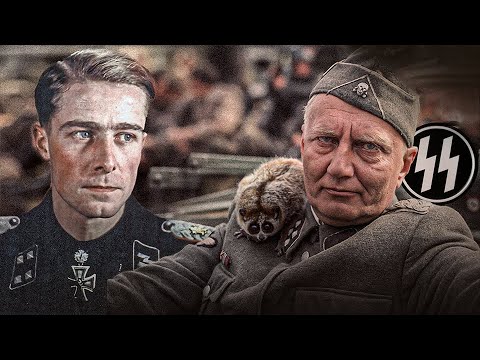
The Nuremberg trials, held between 1945 and 1946, tried 22 top SS leaders. But the vast majority of SS men never saw a courtroom. Of the 70,000 involved in concentration camp crimes, only about 1,650 were ever tried. That’s less than 3 percent. The rest? They melted away.
Some fled to South America, where Juan Perón’s Argentina welcomed them with open arms. Adolf Eichmann, the architect of the Final Solution, lived openly in Buenos Aires under a false name until Mossad agents captured him in 1960. “I will leap into my grave laughing,” he reportedly said, “because the fact that I have the death of five million Jews on my conscience gives me extraordinary satisfaction.”
Others, like Josef Mengele, the “Angel of Death” of Auschwitz, evaded capture for decades. He drowned in Brazil in 1979, never having faced a judge. Franz Stangl, commandant of Treblinka, was finally caught in 1967 and sentenced to life—but died in prison just a year later.
But how did they do it? The postwar chaos was a perfect cover. Borders were porous, documents easily forged. A network of former SS members, aided by sympathetic clergy like Bishop Alois Hudal in Rome, provided false papers and escape routes. The so-called “ratlines” funneled fugitives to Italy and then to South America.
Yet the story is more complex than a single shadowy organization. “There certainly were various kinds of Nazi aid organizations after the war,” notes British writer Guy Walters. “It would be surprising if there weren’t.” The chaos of defeat, the lack of resources, and the onset of the Cold War all conspired to let justice slip away.
Even as the war ended, the killing continued. In the final months, SS guards forced tens of thousands of prisoners on death marches, shooting those who fell behind. Approximately 350,000 prisoners died in the last five months of the war—nearly 30 percent of all concentration camp deaths. And as the Allies closed in, SS men often massacred remaining prisoners before fleeing westward.
Some SS members were captured and tried—but many more simply disappeared. The question remains: how many lived out their lives in peace, never answering for their crimes? The hunt for justice would stretch across continents and decades, but for thousands of SS men, the war ended not with a bang, but with a quiet escape.
The trials that did happen were often frustratingly lenient. In West Germany, the prosecution of Auschwitz guards didn’t truly begin until the 1960s. Even then, many former SS members were called as witnesses but never charged. The results, despite the efforts of dedicated prosecutors in places like Ludwigsburg, were described as extremely modest.
In Poland, the story was different. From 1946 to 1949, around a thousand suspects were extradited, primarily from the American zone. Of the 673 charged, the most famous was Rudolf Höss, the first commandant of Auschwitz. On April 2, 1947, he was sentenced to death in Warsaw. He was hanged at the very camp he had commanded.
The Kraków trial of the Auschwitz garrison followed. Of 40 defendants, 23 received death sentences. Yet for lower-ranking guards, the most common sentence was just three years—handed down 203 times. Death and life imprisonment were relatively rare, given in only 6.1 percent of cases.
In East Germany, only one major Auschwitz trial took place. Dr. Horst Fischer was sentenced to death in 1966. In Austria, four former SS members from the Auschwitz garrison were brought to trial in 1972. All were acquitted.
But the most dramatic manhunt was yet to come. While Eichmann had been captured in Argentina, another name haunted the files of every Allied intelligence agency: Josef Mengele. The doctor who had selected victims on the ramp at Auschwitz, who had conducted grotesque experiments on twins, had vanished.
He fled Germany in April 1949, aided by a network of former SS men. In Genoa, he obtained a passport from the International Committee of the Red Cross under the false name Helmut Gregor. He sailed to Argentina that July. By 1958, he had moved to Paraguay, and by 1960, to Brazil. Former Luftwaffe pilot Hans-Ulrich Rudel helped him each step of the way.
Mengele lived in Brazil for nearly two decades. He suffered a stroke while swimming and drowned in 1979. He was never brought to justice. His grave was not identified until 1985, and DNA later confirmed his identity.
But it wasn’t only South America that offered refuge. Thousands of former Nazis, including SS members, fled to the United States under the guise of refugees. Some used forged documents. Others were quietly employed by American intelligence agencies.
Operation Paperclip is the most famous example, but it was only the tip of the iceberg. SD officer Wilhelm Höttl, Eichmann’s aide Otto von Bolschwing, and accused war criminal Theodor Saevecke all found work with American intelligence. The logic was brutally simple: they were anti-communist, and that was enough.
As CIA officer Harry Rositzke later admitted, “It was a visceral business of using any bastard as long as he was anti-communist.” The willingness to recruit such men meant, in his words, that “you didn’t look too closely at their credentials.”
The Soviets played the same game. Former SS personnel were quietly absorbed into East German security structures and used for subversive operations against the West. Operation Teutonic, for instance, spread rumors and chaos in Allied-occupied Germany using men who only months earlier had worn the runes of the SS.
But the most enduring myth of the postwar era was something else entirely: Odessa. The Organization of Former SS Members—if it existed—was said to be a vast, shadowy network that smuggled war criminals to Latin America. Simon Wiesenthal and others speculated about its reach.
British writer Gitta Sereny, who interviewed dozens of SS men, considered the story false. She attributed the escapes to postwar chaos and the Vatican network run by Bishop Hudal. Yet she conceded that various Nazi aid organizations certainly existed. “It would be surprising if there weren’t,” she wrote.
And what of the SS men who stayed in Germany? Many simply went home. They changed their names, grew beards, found work in factories and offices. Some even rose to prominence in the new Federal Republic. Former SS officers served in the West German police, judiciary, and intelligence services.
One chilling example: Hans Globke, who had helped draft the Nuremberg race laws, became a senior aide to Chancellor Konrad Adenauer. The men who had built the machinery of genocide were now building the bureaucracy of democracy.
For the survivors, justice remained elusive. Of the tens of thousands who served in the camps, only a fraction ever stood trial. The Cold War had divided the world, and both sides were more interested in the next war than the last one.
But the hunt never truly stopped. Nazi hunters like Wiesenthal and later the Simon Wiesenthal Center continued to track fugitives. In the 1970s and 1980s, a handful of elderly men were finally brought to court—more than thirty years after their crimes.
Yet for every conviction, there were a dozen quiet deaths in comfortable beds. The SS had been declared a criminal organization, but its members had scattered like ashes in the wind.
The numbers tell their own grim story. Of the roughly 70,000 men and women who served in the concentration camp system, only a small fraction ever faced a judge. Estimates suggest fewer than 1,700 were ever tried. The rest lived out their lives in anonymity, their crimes buried beneath the rubble of a defeated Reich.
Some, like the guards of Auschwitz, were pursued for decades by prosecutors in Ludwigsburg. Yet even those investigations often ended without charges. Witnesses died. Evidence vanished. Memories faded. And the courts, burdened by the sheer scale of the horror, struggled to assign individual guilt.
In the end, the story of the SS after the war is not one of justice triumphant. It is a story of partial accountability, of political expediency, and of quiet escapes. The Cold War demanded new allies, and old sins were often forgotten.
But the survivors never forgot. For them, every trial—no matter how late—was a small victory. Every name spoken aloud was a defiance of the silence. And the hunt for the last remaining perpetrators continues even today.
So we are left with a haunting question: when the machinery of murder is dismantled, what happens to the men who built it? Do they vanish into history—or do they simply wait, hidden in plain sight, until the world stops looking? What do you think—was justice served, or was it simply outlasted?
Report this article
Select a reason for reporting:






