In the early morning fog of September 27, 1605, the fate of the Polish-Lithuanian Commonwealth hung by a thread. Carl IX of Sweden, with 11,000 men arranged in disciplined pike squares, believed he had cornered a small, ragged Polish force near the village of Kircholm. But he was wrong. Dead wrong.
The Polish commander, Jan Karol Chodkiewicz, had only 3,600 men—2,600 cavalry and 1,000 infantry. Outnumbered nearly three to one, he needed a miracle. Or a trap.
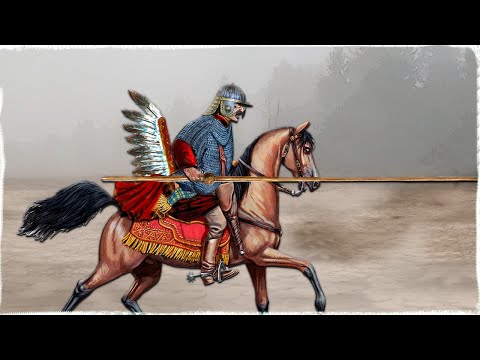
Chodkiewicz sent his light cavalry to skirmish, then ordered his force to close ranks, appearing even smaller than it was. For four hours, they waited. The Swedes, unwilling to let the Poles escape, pushed forward onto the plain. That was the moment Chodkiewicz had been waiting for.
“Suddenly, the Polish horsemen turned their mounts and smashed into the Swedish infantry squares.” The charge was not meant to break the infantry—not yet—but to throw it into chaos. Meanwhile, on the flanks, the winged hussars charged home with devastating effect. Within half an hour, the Swedish cavalry was in full retreat, and the hussars turned on the infantry center. The result was a massacre.
Kircholm was just one of many decisive victories for the Polish winged hussars, who dominated the battlefields of Eastern Europe for over a century. Yet despite their success, many Western historians viewed the heavy cavalry as a relic of a bygone era—a symbol of Eastern backwardness. The famous Maurice of Orange had even banned the mounted lancer from the Dutch army in 1597, convinced that pike and shot were the future of warfare.
But the hussars were not medieval dinosaurs. Their techniques and weaponry were a direct response to the changing face of war. Mounted on swift, resilient horses, they wielded a lance nearly a meter and a half longer than the medieval variant—lighter, designed to shatter on impact. They carried a straight pointed sword, a curved saber for slashing, and bows that could be fired while galloping in any direction. They were a precision instrument of shock and maneuver.
“If East European methods were backward,” historian Robert Frost noted sarcastically, “they were remarkably effective.”
The hussars proved their worth time and again, even against Western-style armies. At Klushino in 1610, an outnumbered Polish force of 5,500 hussars and 1,000 light cavalry faced 25,000 to 30,000 Muscovites and 5,000 to 7,000 Western mercenaries led by Jacob De la Gardie, a man who had studied under Maurice of Orange himself. The Poles charged head-on, shattering the Muscovite left flank, then turned on the Swedish infantry. “They handed us the victory,” a contemporary witness recalled, “for as they came at us, we were in some disorder, and immediately having fired their carbines, they wheeled away to reload. We did not wait—we charged with only our sabers in our hands.”
The hussars won the day, proving that Western methods were no magic elixir. But eleven years later, a new challenger would emerge: Gustavus Adolphus of Sweden. His reformed army would pose a fresh challenge to the winged hussars, forcing them to adapt once again.
How would the hussars fare against the Swedish king’s innovations? And what would become of the most feared cavalry in Europe?
To understand the hussars’ resilience, one must first grasp the strange terrain they fought on—a landscape that seemed to mock the tidy pike squares of the West. Robert Frost notes that as late as 1750, half of Lithuania was forest and marsh. In the borderlands with Muscovy, where most of the fighting took place, that figure rose to seventy percent.
Vilnius and Smolensk lay 430 kilometers apart. The Dnieper was 580 kilometers from Vilnius, 625 from Bryansk. In such vast, broken country, slow-moving infantry columns were a liability. Cavalry, by contrast, could cover ground, forage wide, and strike without warning.
This was not backwardness—it was adaptation. The hussars were not merely survivors of a medieval past; they were a response to the specific demands of Eastern warfare. Their horses, a crossbreed of Eastern and Western stock, were smaller but swift and resilient—perfect for long marches through forests and marshes.
Yet the hussars did not fight in isolation. Their effectiveness depended on coordination with light cavalry, infantry fire, and a sophisticated supply system. During the siege of Pskov in 1581, every company sent a fifth of its strength to form raiding parties of 120 horses. These units ranged astonishingly far—by September, forty to seventy kilometers in one direction; by December, 210 to 280; by January, up to 350. The round trip took nearly a month. An infantry army would have starved or abandoned the siege.
At Koknese in 1601, Polish cavalry beat off a Swedish relief army while maintaining the siege. At Klushino, the hussars proved they could stand against Western mercenaries trained in Dutch methods. “If Klushino demonstrated anything,” Frost concludes, “it was that Western methods were no magic elixir.”
But Gustavus Adolphus had learned from these defeats. He taught his cavalry to charge home with steel in hand, abandoning the caracole. He had his infantry dig field fortifications. He would not be caught unprepared again.
In 1621, the Swedish king entered the stage—and the hussars would face their sternest test yet.
The first clashes came in Livonia, where Gustavus Adolphus had learned the hard lessons of Kircholm and Klushino. His cavalry no longer trotted forward to fire pistols and wheel away—they charged at the gallop, sabers drawn, mirroring the very tactics the hussars had used to humble the West. “The Swedes had learned to fight the Polish way,” one observer noted grimly.
Yet the hussars did not simply fade. At Wallhof in 1626, Gustavus caught a Polish force divided and unprepared, and the hussars suffered a rare defeat. But the lesson was not that heavy cavalry was obsolete—it was that the hussars needed mass, coordination, and open ground to work their magic. When those conditions returned, so did their victories.
In the years that followed, the winged hussars adapted once more. They fought in smaller, nimbler units, used terrain to mask their approach, and struck at the flanks and rear of Gustavus’s reformed formations. At Trzciana in 1629, they caught the Swedish cavalry in the open and shattered it, proving that the old charge still had teeth.
Historians still debate the hussars’ place in the military revolution. Michael Roberts and Geoffrey Parker argued that Western pike-and-shot reforms were the true engine of modernization. But Robert Frost and others have pushed back, insisting that the East was not backward—it was different, and its cavalry was a rational response to vast distances, sparse roads, and relentless raids.
“The hussars were not the last remnants of the Middle Ages,” Frost wrote. “Their techniques and weaponry were as much a response to changes in contemporary warfare as were those of Western pike-and-shot formations.”
The winged hussars would go on winning victories for decades—most famously at Vienna in 1683, when they arrived to break the Ottoman siege and save the city. But the story of how they adapted to Gustavus Adolphus, and how the Swedish king in turn reshaped the art of war, is a tale of its own.
For now, the hussars remained a force to be reckoned with—a living answer to the question of whether cavalry could still rule the battlefield in an age of gunpowder and pike.
But the story of the winged hussars does not end with the Thirty Years’ War. In the decades that followed, their legend only grew—and their charges became the stuff of terror for enemies across Europe.
At Vienna in 1683, the Ottoman Empire had laid siege to the Habsburg capital for two months. The city was on the brink of collapse. Then, on September 12, a relief army led by King Jan III Sobieski of Poland descended from the Kahlenberg heights. At the head of the charge rode 3,000 winged hussars—the largest concentration ever assembled.
“They came down like a torrent,” a witness wrote, “and the Turks, who had never seen such horsemen, broke and fled.” The siege was lifted, and Europe was saved. The hussars had proven, one last time, that shock cavalry could still decide the fate of empires.
Yet the world was changing. Firearms grew more lethal, infantry formations more disciplined, and the vast plains of Eastern Europe were gradually crisscrossed with roads and fortresses. The hussars adapted, but their days as the decisive arm were numbered. By the late 18th century, the Polish-Lithuanian Commonwealth itself had been partitioned out of existence, and the winged hussars faded into memory.
But their legacy endured. Gustavus Adolphus had copied their charge; later commanders studied their campaigns. “The hussars were not a relic,” Frost insisted, “but a solution—one that the West eventually learned to respect.”
In the end, the winged hussars were neither backward nor obsolete. They were a product of their time and place—a brilliant answer to the brutal realities of Eastern warfare. And when the moment came, they rode to save Vienna, and with it, a continent.
So what do you think? Were the winged hussars the greatest cavalry of the early modern age—or simply a lucky anomaly in an age of gunpowder? Let us know in the comments below.
Report this article
Select a reason for reporting:






