Before cancel culture, before social media, there was a different kind of destruction happening in Hollywood. The studio system didn’t just make stars—it broke them. Today, we’re exposing 10 actors who built empires on screen but lived in terror off it. Their crime? Loving the wrong person. Some fought back, others disappeared, and a few paid the ultimate price. This isn’t gossip. This is history Hollywood tried to bury.
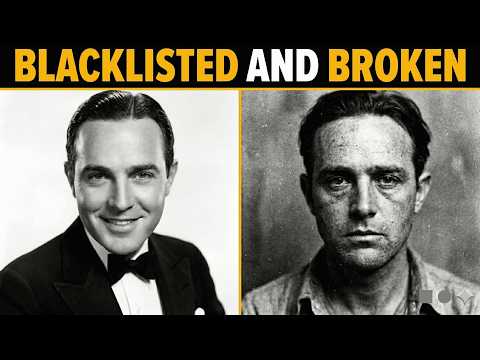
William Haines was the number one box office draw in America from 1926 to 1931, a wise-cracking charmer who owned the screen. MGM’s Irving Thalberg called him the future of romantic leads. But Haines had a secret that wasn’t really a secret: he lived openly with his partner Jimmy Shields. Hollywood insiders knew, partied at his house, and loved him anyway. That’s how big he was.
Then 1933 happened. The Motion Picture Production Code rolled in with its morality crackdown, and Louis B. Mayer, MGM’s ruthless studio head, called Haines into his office with an ultimatum: marry a woman in a fake arrangement, dump Jimmy, or lose everything. Haines looked Mayer dead in the eye and delivered the most savage response in old Hollywood history. He said he’d gladly give up his boyfriend as soon as Mayer gave up his wife. Game over. Mayer fired him immediately, and the Hays Office blacklisted him across Hollywood. At 33, one of America’s biggest stars was done.
But here’s the twist: Haines won. He and Jimmy started an interior design business that became more successful than his film career ever was. He decorated homes for Joan Crawford, the Reagans, and the US Ambassador’s residence in London. He lived with Jimmy for 47 years until his death in 1973. Six months later, heartbroken Jimmy took his own life. They’re buried side by side. Crawford called them the happiest marriage in Hollywood. It was.
George Maharis made Route 66 the ultimate bad boy heartthrob of the early 1960s. That smoldering intensity, those dark eyes, the leather jacket cool as he cruised America in a Corvette. Maharis wasn’t just hot—he was dangerous in the best way. Emmy-nominated in 1962, recording hit songs, this Greek kid from Hell’s Kitchen had Hollywood eating out of his hand. Then it all went to pieces faster than anyone could believe.
First came the hepatitis. Maharis got sick in 1962, allegedly from diving into a disgusting Universal Studios pond that hadn’t been cleaned in years. The producers showed zero mercy. They forced him back to work too soon, made him film scenes in freezing ocean water while still recovering. He complained about the brutal hours, the lack of care, and suddenly the producers turned on him. They called him difficult, accused him of faking illness, tried to trap him in his contract. But the real betrayal came when they learned he was gay. Producer Herbert Leonard felt completely duped, and the trust evaporated.
Maharis fought his way out of the contract and thought he’d bounce back. Wrong. December 1967, Maharis was arrested for lewd conduct with another man. The charge got reduced, but the damage was done. Then November 1974, another arrest in a Los Angeles gas station restroom. This time the cops and press went nuclear. They reported it as a perversion charge, named his partner, a hairdresser, made sure everyone knew exactly what happened. Tabloids had a field day. And just like that, George Maharis was unhireable.
The casting offices stopped calling. His film career, which had shown promise with movies like The Satan Bug, completely dried up. He did guest spots on Fantasy Island and Murder, She Wrote, but the leading man roles never came back. Maharis blamed those arrests for destroying everything he’d built. He lived quietly, painted, and died in 2023 at 94. But he never recovered the career Route 66 promised him.
Tab Hunter was the definition of 1950s heartthrob perfection. Blond, chiseled, wholesome as apple pie. Warner Brothers called him the sigh guy because girls literally swooned. He starred in Battle Cry, Damn Yankees, had a number one hit with “Young Love,” and received 62,000 Valentines in 1956. The studio system built him into an icon. But in 1950, before fame hit, 19-year-old Hunter got arrested at a party in Beverly Hills. Cops raided what they called a gathering of gay people. Hunter claimed he just went for free food, saw some guys dancing with guys, then boom—arrested for disorderly conduct.
Five years later, when Hunter was at his peak, the tabloid Confidential magazine ran the story on their cover, calling it a limp-wristed pajama party. The career killer? His own agent, Henry Willson, sold him out. Willson was furious Hunter left him for new representation, and Confidential was about to expose Rock Hudson, Willson’s bigger client. So Willson cut a deal: feed them Hunter’s arrest story to protect Hudson.
Hunter thought his career was over the moment that issue hit newsstands. But timing saved him. That same month, Photoplay magazine, which had way bigger circulation, put Hunter and Natalie Wood on the cover as the year’s most popular new stars. The positive press drowned out the scandal. Warner Brothers circled the wagons, his movies kept making money, and Hollywood decided the bottom line mattered more than the whispers.
But Hunter paid for it in other ways. He fake-dated Debbie Reynolds and Natalie Wood. Insiders joked about Natalie Wood and Tab wouldn’t. He had a secret relationship with Anthony Perkins that ended when Perkins chose career over love. Hunter bought his way out of his Warner contract in 1959, hoping for better roles. Huge mistake. Without studio protection, his career faded hard. He did dinner theater, had a heart attack from stress, then got a second life in 1981 when John Waters cast him opposite Divine in Polyester. Hunter came out officially in his 2005 memoir and lived openly with his partner Allan Glaser for over 30 years until his death in 2018. But those early years? Pure survival mode.
Rock Hudson spent 30 years as America’s ultimate romantic leading man, kissing beautiful women on screen while living in absolute terror that anyone would discover the truth. Giant, Pillow Talk, Magnificent Obsession—Hudson defined the handsome heterosexual hero. Universal Studios crafted his image so perfectly that grandmothers across America fantasized about him. But every single day, Hudson lived with the fear that exposure would destroy everything.
So he did what the studio demanded. He married Phyllis Gates in 1955, a lavender marriage arranged to kill the rumors. It lasted three years, just long enough to do the job. Behind closed doors, Hudson had relationships with men his entire life. But he was trapped in the prison his fame built. He couldn’t go to gay bars, couldn’t be seen with partners, couldn’t live honestly without risking total career annihilation. His agent, Henry Willson—the same guy who sold out Tab Hunter—kept Hudson’s secret locked down tight, but secrets that big don’t stay buried forever.
In 1984, Hudson was diagnosed with AIDS when the disease was still a death sentence and maximum stigma. He tried to keep it quiet, flew to France for experimental treatment, but his deteriorating appearance made hiding impossible. July 1985, a publicist confirmed Hudson had AIDS, and the news exploded worldwide. America’s leading man was gay and dying.
The revelation shattered his carefully constructed image and changed the global conversation about AIDS overnight. Hudson died three months later at age 59. But his forced outing did something powerful. It made AIDS real to millions of Americans who’d ignored the crisis. Ronald Reagan, Hudson’s friend, finally started talking about the epidemic. Hudson’s death probably saved lives by forcing awareness, but the tragedy is he never got to live openly, never got to be himself without fear. He sacrificed his truth for stardom, and that’s what Hollywood demanded back then.
Montgomery Clift wasn’t just talented—he was revolutionary. A Place in the Sun, From Here to Eternity, The Heiress. Clift brought raw vulnerability to the screen that made Brando look like a student. Method acting before anyone knew what to call it. Directors worshipped him, audiences were mesmerized, and Hollywood predicted he’d be the greatest actor of his generation. But Clift was drowning in conflict about his identity. He knew he was attracted to men, had relationships with both men and women, but growing up Catholic and coming up in the 1940s meant that self-knowledge felt like damnation.
The turning point was brutal. May 1956, Clift left a dinner party at Elizabeth Taylor’s house, got in his car drunk, and smashed into a telephone pole. His face was destroyed. Taylor literally saved his life by reaching into his throat and pulling out teeth that were choking him. Surgeons rebuilt his face, but Clift was never the same. The accident gave him a reason to spiral. He became dependent on pills and alcohol. His performances grew erratic, and the guilt about his identity ate him alive.
He’d show up on sets barely functional, yet somehow still delivered devastating performances like his role in Judgment at Nuremberg. Friends like Taylor never abandoned him, but they watched helplessly as he disintegrated. Studios stopped calling because the insurance was too risky. Clift retreated to his New York brownstone, a shell of the magnetic star he’d been. He died alone in 1966 at just 45 years old. The official cause was a heart attack, but everyone knew the truth. Hollywood’s homophobia plus his own internal torture had killed him slowly over ten years. Clift never got to accept himself, never had the freedom to just exist, and that impossibility destroyed one of cinema’s greatest talents. Elizabeth Taylor said it best: “He was the victim of a society that wouldn’t let him breathe.”
Norman Bates made Anthony Perkins immortal, but that same fame became his prison. Perkins had the perfect blend of boy-next-door charm and unsettling intensity that made Psycho terrifying. After Hitchcock’s masterpiece, though, Perkins should have had his pick of roles. Instead, he spent 30 years dodging rumors, marrying actress Berry Berenson in 1973, raising two sons, and pretending tabloids weren’t constantly speculating about his private life. Perkins had been closeted his entire career, and the pressure was suffocating.
Here’s what makes his story gut-wrenching. Perkins had a relationship with Tab Hunter in the 1950s, but when Paramount found out, they made it clear the romance had to end. Career came first for Perkins, always. He even stole a role Hunter desperately wanted because ambition mattered more than loyalty. Hunter forgave him years later, understanding the impossible position they were both in, but it showed how deeply the fear ran. Perkins would do anything to protect his image, including sacrificing love.
He kept working, directed films, then did Psycho sequels, but the whispers never stopped. Unauthorized biographies outed him. Gossip columns discussed him constantly. Yet Perkins never publicly confirmed anything. Then came the devastating ending. In 1992, Perkins died from AIDS-related complications at age 60. Only then did the full truth come out. His widow revealed he’d been diagnosed years earlier but kept it secret, terrified even in death of full exposure. Perkins spent his entire life performing—not just on screen, but in every moment, never allowing himself to be seen. The man who played cinema’s most famous hidden killer lived as a prisoner of his own secrets.
Ramon Novarro was MGM’s answer to Rudolph Valentino after Valentino’s shocking death in 1926. Novarro had it all: exotic good looks, smoldering presence, and genuine talent that worked in both silent films and talkies. Ben-Hur‘s 1925 chariot race made him a superstar. But MGM marketed him as the ultimate ladies’ man while knowing full well he was gay. Studio fixers worked overtime keeping the secret, arranging dates with actresses, planting stories, doing whatever it took to maintain the fantasy.
As the Production Code tightened in the 1930s and younger stars emerged, Novarro’s career faded. He lived quietly in Los Angeles, mostly forgotten by Hollywood. Then tragedy struck in the most brutal way possible. Two brothers, Paul and Tom Ferguson, heard rumors that Novarro kept a fortune hidden in his house. They showed up pretending to be interested in him, then tortured the elderly actor for hours. There was no fortune. The brothers beat Novarro to death with a lead Art Deco dildo in his own bedroom.
The murder became a tabloid sensation, and the press had a field day with every ugly detail—outing Novarro posthumously and turning his death into lurid entertainment. He’d survived Hollywood’s golden age by staying closeted, only to have his dignity stripped away in death.
Nigel Hawthorne built one of the most respected careers in British theater and film. Then came The Madness of King George in 1994, a performance so transcendent it earned him an Oscar nomination. That’s when the British press destroyed him. During the Oscar campaign, tabloids outed Hawthorne against his will, publishing details about his 20-year relationship with his partner, Trevor Bentham. They didn’t ask permission, didn’t consider his privacy—just ran the story because it would sell papers.
Hawthorne attended the Oscars with Trevor by his side, making a quiet statement, but he lost the award to Tom Hanks. He never fully forgave the press for stealing his moment.
Paul Lynde was comedy gold. That acidic tongue and flamboyant delivery made him the center square on Hollywood Squares. Everyone in Hollywood knew he was gay, yet he could never say it out loud. The fear of losing his career kept him trapped in performative ambiguity. Off-screen, Lynde struggled with severe alcoholism and crushing loneliness. He died of a heart attack in 1982 at 55, alone in his home. The man who made millions laugh spent his final years unable to live authentically.
Charles Gray made a career out of playing sophisticated menace—Blofeld in Diamonds Are Forever, the Criminologist in Rocky Horror. Unlike some actors who eventually spoke about their private lives, Gray never did. Within the industry, it was widely assumed he was gay, but he never confirmed or denied anything. He maintained absolute discretion until his death in 2000. Gray’s silence was its own form of resistance, but that silence came at a cost. He never experienced the freedom that later generations would fight for.
Ten stars, ten different outcomes, but all of them paid the price for living in a Hollywood that worshipped perfection and punished truth. Some, like Haines and Hunter, found happiness eventually. Others, like Clift and Novarro, met tragic ends. And many lived in constant fear until their deaths. The question is: how many brilliant performances did we never see because talented actors were destroyed before they could reach their potential? Do you think Hollywood has actually changed—or did it just get better at hiding the damage?
Report this article
Select a reason for reporting:






