The desert sky over White Sands Missile Range was a flawless blue, broken only by the distant drone of three F/A-18s. Inside the cockpit, the pilot’s eyes locked on the target coordinates. “Aero, get ready to lock your target.” The reply came instant: “Affirm. Locking on target now.” A heartbeat later, the order was given. “Drop.” The AGM-154 JSOW fell away, its wings snapping open as it began its silent, deadly glide. This was just a drill—but the weapon itself was the culmination of a century of obsession, a dream of a flying torpedo that could strike from beyond the horizon.
That dream began not with computers or jets, but with a rickety biplane packed with explosives. The Kettering Bug, born in the carnage of World War I, was the first crude attempt at a cruise missile—a 120-kilometer-range flying bomb that was never used in combat. But the idea refused to die. By 1944, Germany had launched over 9,500 V-1 flying bombs, each one a pulse-jet-powered terror that rained down on London. The V-1 was simple, cheap, and deadly effective. It set a new standard: a jet-powered flying bomb, mass-produced, with reasonable accuracy and a decent payload. The world would never be the same.
America raced to catch up. The TDR-1, a wooden drone controlled from a Grumman Avenger via a telephone dial and a TV receiver, was deployed to the Pacific in 1944. It scored 21 direct hits out of 37 launches—a stunning success for its time. But complexity killed the project. Then came the JB-2 Loon, a reverse-engineered V-1, and the Matador, the first operational US cruise missile. The Matador could carry a nuclear warhead 1,100 kilometers, but its radio guidance was easily jammed. “It was deemed quite impractical,” historians note. Yet each failure taught valuable lessons.
The 1950s were a decade of wild ambition and crushing disappointment. The Snark, an intercontinental cruise missile, was so unreliable that one test missile flew south from Florida and was found years later in the Brazilian jungle. The Navajo, a Mach 3 ramjet, cost $800 million before being cancelled—but its inertial navigation system and rocket booster would later power NASA’s Thor and Atlas rockets. The Hound Dog, however, succeeded. Deployed on B-52s, it served for two decades as both a nuclear strike weapon and a decoy, paving the way for the modern cruise missile.
By the 1970s, a revolution in engine technology changed everything. Dr. Samuel Williams’s WR-19 turbofan weighed just 31 kilograms but produced 430 pounds of thrust—ten times that of similar-sized engines. This breakthrough enabled a new generation of small, long-range missiles. The Air Force’s AGM-86 and the Navy’s Tomahawk were born. The Tomahawk, designed to fire from torpedo tubes, would become the most famous cruise missile in history. Its guidance system—inertial navigation, terrain mapping, and digital scene matching—was so accurate that “if planners supplied the missile with sufficient digital tracking data, all would go well.”
In 1991, the world watched in awe as Tomahawks and AGM-86s streaked toward Baghdad on the first night of Desert Storm. “This proved to be an overwhelming success,” and cruise missiles became an essential part of American military power. The decade that followed saw them used again and again—Iraq, Afghanistan, Bosnia—each conflict refining the art of precision standoff strike. But the story was far from over. A new generation of stealthy, hyper-accurate missiles was already on the drawing board.
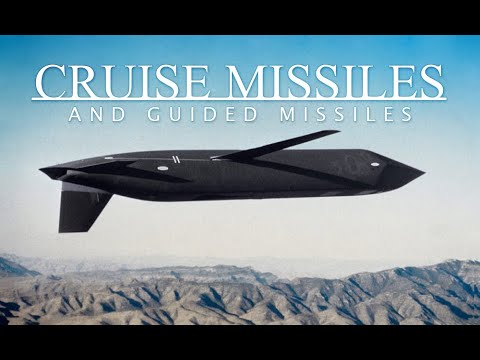
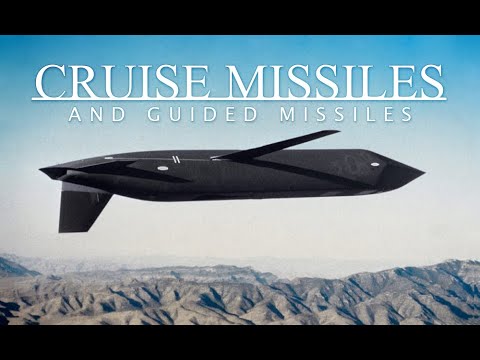
The new generation arrived quietly, almost without fanfare. In 2002, the AGM-158 JASSM entered the scene—a weapon that traded brute force for stealth, its angular body designed to slip past radar rather than overwhelm it. With a GPS-inertial brain and an infrared seeker for the final approach, it could be carried internally by the B-2, externally by the F-35, or even rolled out the back of a C-130. The cruise missile had become a shape-shifter, adapting to any platform that could lift it.
Meanwhile, the AGM-154 JSOW—the very weapon falling toward the White Sands target in the F/A-18’s wake—occupied a different niche. “It’s an unpowered, winged glide weapon,” engineers explained, a low-cost alternative for medium-range precision strikes. Depending on release altitude, it could glide 12 to 70 nautical miles, filling the gap between a dumb bomb and a million-dollar Tomahawk. Not every target needed a Ferrari; sometimes a well-aimed brick was enough.
Europe and Asia were not idle. Norway’s Naval Strike Missile caught the US Navy’s eye, leading to the Joint Strike Missile for the F-35. The German-Swedish KEPD 350 and the Franco-British Storm Shadow brought deep-strike stealth to European air forces, each carrying a penetrating warhead designed to burrow into hardened bunkers before detonating. Storm Shadow would see combat from Iraq to Libya to Syria—and then, most consequentially, in Ukraine.
It was in Ukraine that the cruise missile’s next chapter was being written in real time. Ukraine’s FP-5 Flamingo emerged as a startling indigenous design—a large, low-altitude ground-launched missile with a reported 3,000-kilometer range and a warhead weighing over a ton. Military analysts noted its straight wings and over-fuselage turbofan with a mixture of admiration and unease. “It bears a superficial resemblance to the V-1,” one expert observed, “a reminder that modern precision guidance has transformed an old concept into something far more capable.”
The Flamingo’s simplicity was its genius. Mass-producible, cheap, and capable of reaching deep into enemy territory, it represented a shift in the cruise missile’s role—from a weapon of superpowers to a tool of asymmetric warfare. “The combination of heavy payload, long range, and simple construction marks a significant step,” analysts concluded, “with important operational and strategic implications.”
Private industry was racing to keep up. Anduril’s Barracuda family—software-defined, air-breathing, expendable—promised rapid manufacture and flexible launch from aircraft, ships, or land. “Barracuda aims to be cheaper and faster to produce than legacy cruise missiles,” its designers claimed, a critical factor if large numbers were needed in a prolonged conflict. L3Harris’s Wolfpack family split the difference: the Red Wolf for precision strikes, the Green Wolf for electronic warfare and decoy missions, both launchable from helicopters, ships, or ground platforms.
Russia, meanwhile, had its own answers. The Kalibr family—ship, submarine, air, and ground-launched—drew comparisons to the Tomahawk, though it differed in one key respect: “The biggest difference is the Kalibr being supersonic capable,” achieving greater strike range. The Kh-101, with its terrain-hugging profile and electronic warfare defenses, became a staple of Russian air campaigns. And the Kh-69, first used operationally in early 2024, carried a reduced radar signature and GPS-GLONASS guidance, targeting stationary infrastructure with chilling effectiveness.
But the most unsettling development came from the north. The 9M730 Burevestnik—NATO designation SSC-X-9 Skyfall—was a nuclear-powered, ground-launched cruise missile that, on October 21st, 2025, completed a 14,000-kilometer, 15-hour flight. Flying at 50 to 100 meters altitude on an evasive non-ballistic trajectory, it promised effectively unlimited range and the ability to evade modern missile defenses. “It underscores a deliberate Russian challenge to missile defense architectures,” one strategic analyst warned, “and a recalibration of mutual deterrence.”
Back at White Sands, the JSOW found its mark. A distant puff of dust rose from the desert floor, and the F/A-18 pilot banked away, mission complete. The drill was over in seconds—but the weapon he had released was the product of a hundred years of trial, error, and relentless ambition. From the Kettering Bug’s rickety frame to the Burevestnik’s nuclear heart, the flying torpedo had come full circle. And somewhere in a design bureau, an engineer was already sketching the next iteration.
The pilot’s radio crackled as the second F/A-18 lined up for its run. “Two, in hot. Rifle.” Another JSOW fell away, wings unfolding against the pale desert sky. On the ground, range officers tracked the weapon’s glide path on their monitors, ticking off each milestone—separation, wing deploy, terminal dive. The data would be pored over for weeks, fed back into the endless cycle of refinement that had defined the cruise missile since its inception.
What the officers could not see was the invisible architecture guiding that glide. Every modern cruise missile carries within it a lineage of failures—the jamming-prone radio links of the Matador, the film-strip terrain maps of the Mace, the jungles of Brazil where a rogue Snark came to rest. Each dead end had been mapped and avoided. Each breakthrough had been absorbed and improved. The JSOW gliding toward its target was, in a very real sense, a conversation with the dead.
That conversation had grown louder in recent years. “The war in Ukraine has become a laboratory,” a defense analyst noted, “for everything from $50,000 drones to million-dollar cruise missiles.” Both sides fired Storm Shadows and Kalibrs, Kh-101s and modified Neptune anti-ship missiles turned land-attack weapons. Russia rained Kalibrs on Ukrainian power stations; Ukraine struck back with whatever it could improvise or import. The cruise missile had become a tool of attrition as much as precision.
This attritional logic was reshaping procurement. “The era of the exquisite, hundred-million-dollar missile may be ending,” one strategist warned. The Barracuda and Wolfpack families pointed toward a different future—weapons built for mass production, designed to be expended in swarms rather than fired one at a time. The Pentagon had begun quietly funding programs for what it called “affordable mass,” a phrase that would have baffled the engineers of the Snark. Precision had once meant scarcity; now it might mean abundance.
Yet the old giants were not standing still. The Tomahawk Block V, upgraded with new seekers and a two-way datalink, could now be retargeted mid-flight and loiter over a battlefield waiting for orders. “It’s no longer a fire-and-forget weapon,” a Navy officer explained. “It’s a networked munition.” The missile that had once been a flying torpedo had become something closer to a pilotless aircraft—one that could be recalled, redirected, or told to wait.
And then there were the hypersonics, waiting in the wings. The line between cruise missile and hypersonic glide vehicle was blurring. Russia claimed its Tsirkon had been fired in anger; China paraded its DF-100; the US tested its AGM-183 repeatedly. Each of these weapons flew faster than Mach 5, turning the old cruise missile logic of stealth and terrain-hugging on its head. Speed, not silence, would be the new defense.
But for all the talk of hypersonics, the subsonic cruise missile remained the workhorse. It was cheap enough to build in the thousands, accurate enough to hit a single window, and versatile enough to launch from a submarine, a bomber, a truck, or a helicopter. “The V-1’s children have outlived their critics,” a historian wrote. “And they show no sign of retiring.”
As the third F/A-18 released its JSOW, the range fell silent. “Three away. Good tone. Tracking.” The missile arced toward the target, a speck against the dunes. Then the radio crackled with the words every engineer dreaded: “Lost link. Switching to autonomous.” The JSOW’s onboard brain took over, comparing terrain with its stored map, correcting course without human help.
It struck the target dead center. “Direct hit. All three away, all three on target.” The pilots banked for home, their jets shrinking into the blue. On the ground, analysts reviewed the data. The lost link had been a test—a deliberate severing of the umbilical to prove the weapon could think for itself.
That was the real revolution, the one the Kettering Bug’s designers could never have imagined. The flying torpedo had learned to hunt alone. From the V-1’s crude compass to the Burevestnik’s nuclear heart, the journey had been one of ever-greater autonomy—and ever-greater consequence.
As the last F/A-18 vanished over the horizon, a range officer closed his laptop. “Next time,” he murmured, “we’ll let the swarm decide for itself.” The desert wind erased the tire tracks, but the question lingered: when the missile no longer needs a pilot, who answers for its choices?
Report this article
Select a reason for reporting:






