The Chinese commander marked his defensive map with casual confidence on the night of October 4th, 1951. Height 317 needed no reinforcement on the eastern slope. The gradient there approached vertical, a wall of frozen rock and ice-slicked forest that would stop any army before bullets could. He stationed 12 men to watch that cliff. 12 men against the impossible.
500 Australian soldiers were already moving through the darkness below. Their fingers bleeding against frozen roots. Boots sliding on black ice. They were coming for him, and he would never hear them until bayonets found flesh.
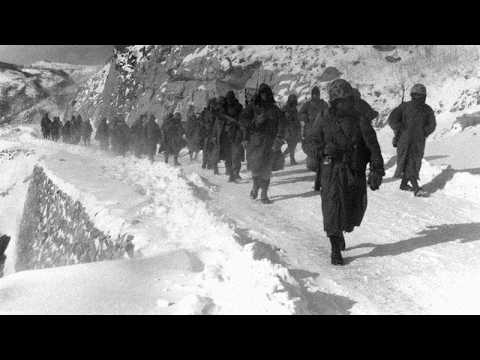
Operation Commando had been grinding forward for days through the Korean mountains when 3rd Battalion, Royal Australian Regiment received orders that made veteran sergeants laugh out loud. Take Maryang San. The fortress that had swallowed artillery barrages without flinching. The height where Chinese machine guns covered every approach with interlocking fields of fire so perfect that assault meant suicide.
British staff officers had drawn neat arrows on their maps showing the obvious routes. The western slopes where men could at least walk upright before they were cut down. Lieutenant Colonel Frank Hassett looked at those arrows and threw the map across the table.
Hassett had spent weeks studying Maryang San through binoculars and captured documents. The Chinese had transformed it into a masterpiece of defensive engineering. Deep bunkers tunneled into the granite could survive anything short of a direct hit from naval guns. Communication trenches connected every position allowing rapid reinforcement. The western and southern approaches had been registered by mortars down to individual boulders. Every piece of cover already targeted. Every possible route pre-sighted for slaughter.
A conventional assault would feed men into a meat grinder. Hassett had no intention of being conventional.
The eastern face of Maryang San dropped away at angles that made experienced mountaineers wince. Loose scree gave way to patches of stunted forest clinging to near vertical granite. October had brought killing frosts that coated every surface with ice, turning dangerous terrain into something approaching impossible. Chinese defensive planners had dismissed this approach entirely. No force could climb it carrying weapons and ammunition. No commander would risk his battalion on such foolishness. The assumption was so obvious it required no discussion.
Hassett built his entire battle plan around proving it wrong.
The orders that filtered down to company commanders on October 4th seemed designed to produce a mutiny. The battalion would climb the eastern cliff in darkness. No preliminary artillery bombardment to announce their intentions. No illumination rounds to light the way. They would carry everything they needed because resupply would be impossible until the heights were secure. When they reached the Chinese positions, they would attack with grenades and bayonets in fog so thick that calling artillery support would risk obliterating their own men.
The sergeants who had laughed earlier stopped laughing when they realized Hassett was serious.
Temperature readings that night showed minus 15° as the battalion assembled in the valley below Maryang San. Frost crystallized on rifle barrels within minutes of leaving shelter. Breath turned to ice crystals that sparkled briefly before falling like tiny diamonds. The fog rolled in from the valleys so thick that men lost sight of each other at arm’s length. Perfect conditions for a disaster. Perfect conditions for what Hassett intended.
0300 hours. 500 men began moving toward a cliff face that Chinese intelligence had dismissed as impassable. Single file along goat tracks that barely deserved the name. Each soldier keeping one hand on the pack of the man ahead because the fog erased everything beyond arm’s reach. Weapons slung across backs caught on branches and rocks. Ammunition pouches dug into ribs with every lurching step upward. The weight of grenades and rifle magazines turned basic movement into an endurance test.
Absolute silence. Not a word. Not a curse. Just the ragged breathing of men engaged in the most physically demanding climb of their lives.
The first 100 meters nearly broke them. Ice-slicked rock offered no purchase for boots designed for marching on flat ground. Men hauled themselves upward hand over hand, fingers going numb, grip failing, sliding backward in miniature avalanches of frozen scree before catching themselves on roots or rocks. The cold seeped through every layer of clothing and settled into bones with malicious persistence. Sweat from exertion froze against skin creating a layer of ice inside uniforms.
Still, they climbed. Meter by agonizing meter. Hour by endless hour.
The Chinese sentries on the eastern slope had drawn the most boring duty in the entire defensive network. Nothing ever happened on the cliff face. Nothing could happen. They stamped their feet against the cold and dreamed of warm food and rotation to rear areas. The fog was too thick to see anything anyway.
When shapes began materializing from the white wall at distances measured in single meters, the sentries had perhaps two seconds to process what they were seeing.
Two seconds was not enough.
Australian soldiers emerged from the fog like something from a nightmare. Frost covered their faces. Ice crusted their uniforms. They moved with the desperate energy of men who had pushed beyond exhaustion into some place where ordinary physical limits no longer applied. Grenades flew into bunker openings before defenders could raise weapons. Bayonets found marks with surgical precision. The outer defensive line ceased to exist in a storm of close-quarters violence that lasted minutes and left no Chinese survivors able to raise an alarm.
The noise carried. Sound travels strangely in fog, muffled and directionless. But the explosions and screaming reached the main defensive positions higher on the slope. Chinese soldiers scrambled for weapons and firing positions, suddenly aware that something impossible was happening below them. Machine guns began sweeping the approaches, firing blind into the murk at enemies they could hear but not see. Mortars coughed rounds down the slope at maximum angle.
The element of surprise had bought the Australians access to the heights. Now, they had to fight for every additional meter.
The nature of combat changed in the fog-shrouded trenches of Maryang San. Firefights happened at grenade-throwing distance or closer. Men stumbled into enemy positions without warning. Weapons jammed in the frozen air. Mechanisms clogged with ice that formed faster than numbed fingers could clear. The carefully rehearsed tactics of fire and movement became irrelevant when visibility dropped to nothing. What remained was something more primal. Rifle butts and entrenching tools. Bayonets and bare hands. The willingness to close with an enemy and destroy him at ranges where missing was impossible.
Delta Company found the breakthrough. A gap in the trench network where Chinese engineers had relied on the terrain to provide defense. The Australians poured through like water finding a crack in a dam. Suddenly, the defenders faced enemies behind them. Among them, appearing from the fog in every direction. Unit cohesion collapsed. Chinese soldiers who had been fighting confidently from prepared positions found themselves surrounded and dying. The retreat toward the summit became a rout.
0900 hours. The summit of Maryang San flew no flag because the Australians had not brought one. The men who had climbed the impossible cliff and fought through the impossible defenses collapsed against rocks and in captured bunkers too exhausted to celebrate. They had done what Chinese military intelligence declared could not be done. They had perhaps two hours before the counterattack came. Two hours to transform a captured position into a fortress pointing the other direction.
The Chinese response was inevitable and immediate. Maryang San dominated too much terrain to be surrendered without a fight. Runners had reached rear headquarters with news of the disaster. Fresh troops were already moving forward. Entire companies committed to retaking the height regardless of cost.
The first counterattack hit at early afternoon. Waves of infantry swarming up the western slopes that the Australians had declined to use. Now, those killing grounds worked in reverse. Chinese soldiers learned why their predecessors had fortified this position so heavily. The approaches were death traps from either direction.
Ammunition became critical before sunset. 3rd Battalion had carried what they could up the cliff. They had supplemented stocks with captured Chinese weapons and ammunition. Neither source was inexhaustible. Men found themselves counting rounds, making every shot count, holding fire until targets closed to ranges where missing was nearly impossible. Some positions went silent simply because the defenders had nothing left to shoot. When Chinese assault troops advanced on those positions, they found Australians waiting with bayonets fixed and a willingness to fight hand-to-hand that bordered on enthusiasm.
Darkness brought no relief. Chinese commanders launched night assaults with troops trained specifically for such operations. They crept through the fog until they could throw grenades into Australian positions. Close-quarters fighting erupted along the entire perimeter. Men grappled in darkness, identifying friend and foe by helmet shape and voice and pure desperate instinct. The password system broke down within minutes of the first contact. Survival depended on training that had become reflexive and a determination that refused to acknowledge the possibility of defeat.
The hours between midnight and dawn compressed into a single continuous nightmare. Chinese assault waves came and were broken. Australian positions overrun and then retaken. Wounded men who could still hold rifles remained on the line because there was nowhere to evacuate them and no one to spare for carrying. The cold intensified as the night wore on, reaching temperatures that caused weapons to malfunction and exposed skin to freeze on contact with metal.
Through it all, the line held. Bent in places, threatened everywhere, but never broken.
Dawn on October 6th revealed a moonscape of craters and bodies. Chinese casualties covered the approaches to the Australian perimeter in positions that spoke of desperate courage meeting immovable defense. The survivors of the assault units huddled in whatever cover they could find, too depleted to advance, too proud or too terrified of their officers to retreat without orders. The Australians held a perimeter that had shrunk during the night, but remained intact. Both sides gasped for breath and waited for what came next.
What came next was everything the Chinese could throw at a single hilltop. The final assault of October 6th committed every available reserve unit to retaking Maryang San. Artillery that had been silent during the confused night fighting opened with concentrated barrages. Mortar bombs walked across the summit in patterns designed to suppress defensive fire. Behind the barrage came infantry in numbers that dwarfed everything the previous day had produced.
Chinese commanders had decided that the height would be retaken regardless of the price.
The price proved higher than anyone anticipated. Australian rifle fire opened at ranges that made every bullet count. Machine guns positioned during the brief lull between attacks swept the approaches with interlocking fire that left no dead ground. Grenades flew in arcs perfected by two days of continuous combat. Chinese soldiers fell in windows and waves, each assault breaking against defenses that had been strengthened between attacks by men who understood that their lives depended on properly positioned rocks.
The attacks came for hours. They achieved nothing except lengthening the casualty lists and exhausting ammunition supplies on both sides. Mid-afternoon brought silence that seemed almost painful after so many hours of continuous noise. The Chinese had withdrawn. Not for regrouping, not for repositioning. Withdrawn because continuing the assault meant destroying units that were needed elsewhere.
Maryang San remained in Australian hands.
The cost had been significant, but nowhere near what conventional tactics would have demanded. Chinese losses approached 500 or more. An entire regiment rendered combat ineffective. A defensive network built over months reduced to rubble and corpses. The strategic implications rippled outward from that single hilltop. Neighboring Chinese positions that had depended on Maryang San for observation and mutual support suddenly found themselves exposed. The entire sector defensive scheme began unraveling. Operation Commando achieved objectives that had seemed ambitious when planned, transforming the front line in ways that would persist until the armistice years later.
Robert O’Neill wrote the official history of Australian involvement in the Korean War with the measured precision his profession demanded. His description of Maryang San abandoned precision for something approaching awe. 3rd Battalion had achieved one of the most impressive victories ever won by any Australian battalion. Outstanding command. Tactical mastery. Ruthless application of infantry weapons against a numerically superior enemy in positions of enormous natural strength. These were not words a military historian used lightly. They reflected an action that defied conventional analysis.
The men who climbed Maryang San returned eventually to ordinary lives in a nation that preferred to forget the war they had fought. Farmers and factory workers, clerks and tradesmen. Ordinary Australians who had discovered on a frozen Korean mountain that they were capable of extraordinary things when circumstances demanded everything they had to give. Some never spoke of what they experienced. Others talked freely, ensuring the story would outlive them.
The Chinese commander who laughed at his maps on October 4th disappeared from historical records. His confidence in the eastern cliff as an impossible barrier died with his men on the morning of October 5th.
Twelve sentries against the impossible. The impossible climbed past them in darkness and fog and freezing cold. The impossible took their positions with grenades and bayonets. The impossible held those positions against everything a Chinese army could throw at a single hilltop. The impossible won because 500 Australian soldiers refused to accept that losing was an option.
Somewhere in the archives, in faded pages and aging memories, the story persists. Men who should not have been able to climb that cliff climbed it. Men who should not have been able to hold those heights held them. The fog lifted eventually. The ice melted. The bodies were recovered and the wounded evacuated. But the echo of what happened on Maryang San carries forward through generations of soldiers who inherited a proud history and a demanding standard.
The diggers did what could not be done. They always have.
What would you have done, staring up that frozen cliff in the dark, knowing the only way out was through?
Report this article
Select a reason for reporting:






