The radio crackled with desperation. A young soldier, pinned down by enemy fire in the open desert, whispered into the handset, his voice trembling: “We need air support. Now.” Miles away, a pilot in the cockpit of an A-10 Warthog heard the call. He banked hard, the aircraft’s distinctive silhouette slicing through the sky. This is the story of the plane that troops on the ground call their guardian angel—and the enemy calls a nightmare.
For decades, the A-10 has been the unsung hero of close air support. Its mere presence can turn the tide of battle. But how did this ungainly aircraft become the most beloved—and feared—machine of its kind? Through the eyes of the pilots who flew it and the soldiers it saved, we uncover the legend.
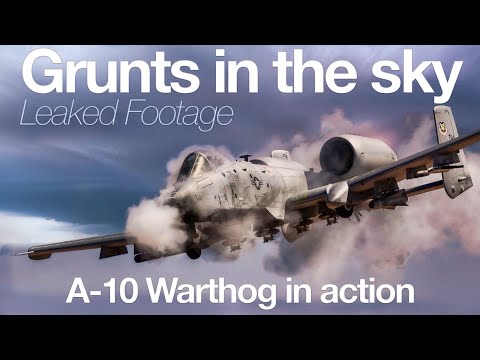
It began with a model kit in a hobby shop in 1979. A high school kid, fascinated by aviation, spotted a Revell box with an unusual plane on it: the A-10. “What in the world is that?” he wondered. Little did he know, that moment would set him on a path to become one of the first A-10 pilots.
Years later, as a young lieutenant, he faced a choice: F-15E or A-10? “Which patch am I going to have on my shoulder on Friday?” his instructor asked. The answer was always the A-10. And when Desert Storm erupted, that 26-year-old pilot would etch his name in history, destroying a record number of Iraqi tanks.
But the A-10’s story isn’t just about Cold War tank-killing. It’s about the bond between the pilot and the guy on the ground. “My whole soul and being is that guy on the ground,” says one pilot. “He could be an 18-year-old kid with a rifle. I’m here to protect him.”
In the mountains of Afghanistan, that bond was tested. A platoon on patrol near the village of Espandi walked into an ambush. Precise enemy fire pinned them down in the open desert. They called for help, and the A-10s answered.
“We hear him get scared,” recalls a pilot. “We hear the bullets fly. We hear him take cover.” The A-10’s gun—the infamous GAU-8 Avenger—roared to life. Its sound alone is enough to make insurgents flee. “It’s the sound of freedom,” says a soldier. “It’s the sound of ‘don’t mess with me.'”
The A-10 isn’t pretty. It’s slow, low, and ugly. But it’s the only aircraft built solely for this mission. And when the sky growls, the enemy knows what’s coming.
As one pilot puts it: “You forget you never forget when you look down and realize someone is trying to shoot you down, and you have to kill him first.” The A-10 has proven itself time and again as a nightmare for the enemy. Its presence alone can hold them at bay.
But the story doesn’t end here. The A-10’s legacy is still being written, one mission at a time. And the troops on the ground know: when they hear that distinctive brrrt, they’re not alone.
The pilot’s voice came through the radio, calm and steady despite the chaos below. “I have your position south of the tree line. Rolling in hot.” The A-10 banked sharply, its nose dipping toward the desert floor. On the ground, the pinned-down soldiers heard the faint whistle of the engines growing louder, then the unmistakable roar of the GAU-8 Avenger.
Brrrt. The sound tore through the air like a chainsaw cutting through sheet metal. Dirt and sand erupted in a line, marching toward the enemy positions. The insurgents scattered, their ambush broken in seconds. “Good hit, good hit,” the forward air controller called out, his voice finally steady. “They’re running.”
For the soldiers in the desert, it was over as quickly as it began. But for the pilots overhead, the work was just starting. They circled high above, watching for any sign of regrouping. “Same remarks, same restrictions,” the controller confirmed. “We’re moving to the extraction point.”
That night, back at the base, the pilots debriefed. The mission was textbook—a perfect example of what the A-10 was built for. But one of the younger pilots lingered by the aircraft, running his hand along the worn fuselage. “You know what the infantry call us?” he asked. “They call us their guardian angels.”
But the A-10’s future wasn’t always certain. In the decades after Desert Storm, budget cuts and shifting priorities threatened to retire the fleet. “They wanted to replace us with faster jets,” one veteran pilot recalled. “But faster doesn’t mean better when you’re trying to protect a guy on a rooftop in Fallujah.”
The A-10 proved its worth again and again—in Iraq, Afghanistan, Syria. Its ability to loiter for hours, to get low and slow, to put eyes on the target when no one else could—that was something no F-35 could replicate. The troops knew it. They wrote letters. They petitioned Congress.
And the old Warthog kept flying. “Every time they try to retire it, something happens,” a maintenance chief laughed. “A war breaks out, or a general flies one and falls in love. That plane has nine lives.”
But the pilots who fly it know the truth. It’s not about the aircraft. It’s about the promise. The promise that when a soldier calls for help, someone will answer. That the sky will growl, and the enemy will run. That the guardian angel is always watching.
As one pilot put it, staring at the sunset over the desert: “You don’t fly the A-10 for the glory. You fly it for the guy on the ground. And as long as he needs us, we’ll be there.”
The radio crackled again. Another call. Another mission. The pilots climbed back into their cockpits, the engines spooling up with that familiar whine. The Warthog was ready.
The maintenance crews called it the graveyard shift—the hours before dawn when the flight line was quiet and the desert cold bit through flight suits. A young crew chief named Ramirez walked the row of parked A-10s, his flashlight beam sweeping across the worn paint and patched panels. Each aircraft carried its own scars, its own stories. Some had bullet holes patched over, others had names stenciled near the cockpit—the soldiers they’d saved, the pilots they’d lost.
Ramirez stopped at aircraft 458, the oldest in the squadron. “She’s got more hours than any jet in the Air Force,” he said to no one in particular. He ran his gloved hand along the nose, where a crude drawing of a hog’s tusks had been painted decades earlier. The crew had repainted it so many times the lines were slightly off, but nobody ever fixed it. It was a badge of honor.
That morning, the briefing room buzzed with a different kind of energy. A new batch of pilots had arrived—fresh out of training, their flight suits still stiff and their boots unscuffed. They sat in the front row, eyes wide, as the squadron commander walked to the podium.
“You’ve all heard the stories,” he began, his voice gravelly from years of radio calls. “The tanks in ’91. The ambush in Espandi. The sound that makes insurgents drop their weapons and run.” He paused, letting the silence settle. “But none of that matters if you forget why we’re here.”
He pointed to a photograph on the wall—a grainy image of a soldier in the desert, helmet off, waving at the sky. “That’s Sergeant Miller. He was pinned down outside Fallujah for six hours. His squad was running low on ammo. He called for air support, and we answered. When he heard that gun, he cried. Not because he was scared—because he knew he was going to live.”
The room was silent. One of the new pilots, a young woman with a determined jaw, raised her hand. “Sir, what if we can’t save them? What if we’re too late?”
The commander nodded slowly. “Then you carry that with you. Every pilot does.” He tapped his chest. “But you don’t let it stop you from answering the next call. That’s the job.”
After the briefing, the new pilots walked out to the flight line. Ramirez was there, waiting by aircraft 458. He handed the young woman a helmet, its visor scratched from years of use. “This one belonged to Captain Mitchell,” he said. “He flew her in Desert Storm. Said she never let him down.”
The pilot took the helmet, turning it over in her hands. “Why are you giving it to me?” she asked.
Ramirez shrugged. “Because you asked the right question. The ones who don’t ask—they’re the ones who get people killed.” He stepped back, gesturing toward the cockpit. “She’s yours now. Treat her right.”
As the sun rose over the desert, the engines spooled up one by one, their whine growing into a deafening roar. The new pilots taxied out to the runway, their hearts pounding. The Warthog was ready to fly again.
The young pilot climbed into the cockpit, the worn helmet fitting snugly over her headset. She ran through the pre-flight checklist, her hands moving with practiced precision, but her mind drifted back to Ramirez’s words. “Treat her right.” She glanced at the faded tusks painted on the nose and felt the weight of every pilot who’d sat here before her.
The tower crackled to life. “Hog 458, you’re cleared for takeoff.” She pushed the throttles forward, and the old jet lumbered down the runway, gathering speed with a stubborn, ungraceful determination. As the wheels lifted off the tarmac, she felt something shift in her chest—a sense of belonging she hadn’t expected.
Hours later, back on the ground, she found Ramirez in the hangar. “She flew like a dream,” she said, still buzzing. He just smiled and handed her a small tin of paint. “Then you’ll be the one to touch up the tusks,” he said. “That’s the tradition.”
She painted carefully, the crude lines slowly coming back to life. Other pilots gathered to watch, sharing stories of their own first flights, their own close calls. The hangar felt less like a workplace and more like a family reunion.
As the sun set, the squadron commander appeared, a worn leather journal in his hand. “This belonged to Captain Mitchell,” he said, opening it to a page filled with names—soldiers, pilots, crew chiefs. “Every name here is someone this plane brought home. Now it’s your turn to add to it.”
The young pilot took the pen, her hand steady. She wrote her own name at the bottom of the list, then closed the journal. “I’ll do my best,” she said quietly. The commander nodded. “That’s all we ever ask.”
And so the legacy continued—not in grand ceremonies or headlines, but in the quiet moments between missions. In the roar of the gun, the crackle of the radio, the steady hum of engines over distant deserts. The A-10 wasn’t just a plane. It was a promise.
As the last light faded, the flight line fell silent once more. But somewhere in the darkness, a radio crackled to life. Another call. Another soldier in need. And the Warthog was ready.
What do you think—does the A-10 deserve its legendary status, or is it time for a new guardian angel?
Report this article
Select a reason for reporting:






